Salmos 144
Geeshsha Mas'aafaa · Toque num versículo para ver as referências cruzadas.
S'oonuwaa Mazimuriyaa
Daawite s'aafeeddawaa
1Med'inaa Goday, ta zaallay galatetto! I ta kushiyaa olaw,
ta birad'd'etuwaakka tooraw loohissee.
2I taana siik'iyaa S'oossaanne ta geessuwaa;
I ta miis'aanne taana ashshiyaawaa.
I ta gonddalliyaanne taani bak'ataade attiyaa sa'aa.
Kawutetsatuwaa I taw moodissiyaawaa.
3Abeet Med'inaa Godaw,
neeni aw k'oppiyaa Asay I ayee?
Neeni naagetiyaa asaa na'ay ayee?
4Asay itti gede c'arkkiyaa c'arkkuwaa mala;
Aa gallassatukka aad'd'iyaa kuwaa mala.
5Abeet Med'inaa Godaw, ne saluwaa daakaade duge wod'd'a!
Wogga deretuwaa bochcha; unttunttukka c'uwattino!
6Walk'k'antsaa yeddaade ne morkkatuwaa laala!
Ne wonddaafiyaa pootsaa yeddaade unttuntta yederssa!
7Bollaanna ne kushiyaa duge yeddaade,
taana c'iimmo haatsatuwaappe goochchaade kessa;
allaga asatuwaa kushiyaappe taana wotsa akka.
8Unttunttu tumuwaa haasayikkino,
C'aak'k'iiddekka wordduwaa haasayiino.
9Abeet S'oossaw, taani
new ooratsa yetsaa yes's'ana;
tammu bak'etsaan waas'etteedda diitsaan new diis's'ana.
10Kaatetoo s'oonuwaa immaasa;
ne k'oomaa Daawita ashshaasa.
11Taana iitaa mashshaappe ashshaasa;
allaga asatuwaa kushiyaappe taana wotsa akka.
Unttunttu tumuwaa haasayana giide c'aak'k'iiddekka,
wordduwaa haasayiino.
12Nu attuma naanatuu,
barenttu yalagatetsan dolk'k'idolk'k'iide,
dic'c'iyaa mitsaa mala gidino.
Nu mac'c'a naanatuukka kaatiyaa golliyaa zooziyaan,
alleek'k'oo esseedda tuuk'iyaa mala gidino.
13Nu diyyetuu,
daro dumma dumma k'ommo katsaan kumino;
nu dembbatuwaan de'iyaa dorssatuu sha"aa,
tammu sha"aa yelino.
14Nu miizzatuu birassino;
unttunttu sal"eesenan yelettiide c'orattino.
Nu ogetuwaan dagama waasuu sisettoppo.
15Ha yewuu tumu haniyaa asatuu,
anjjetteeddawantta.
Unttunttu S'oossay Med'inaa Godaa gidiyaa asatuu
anjjetteeddawantta.
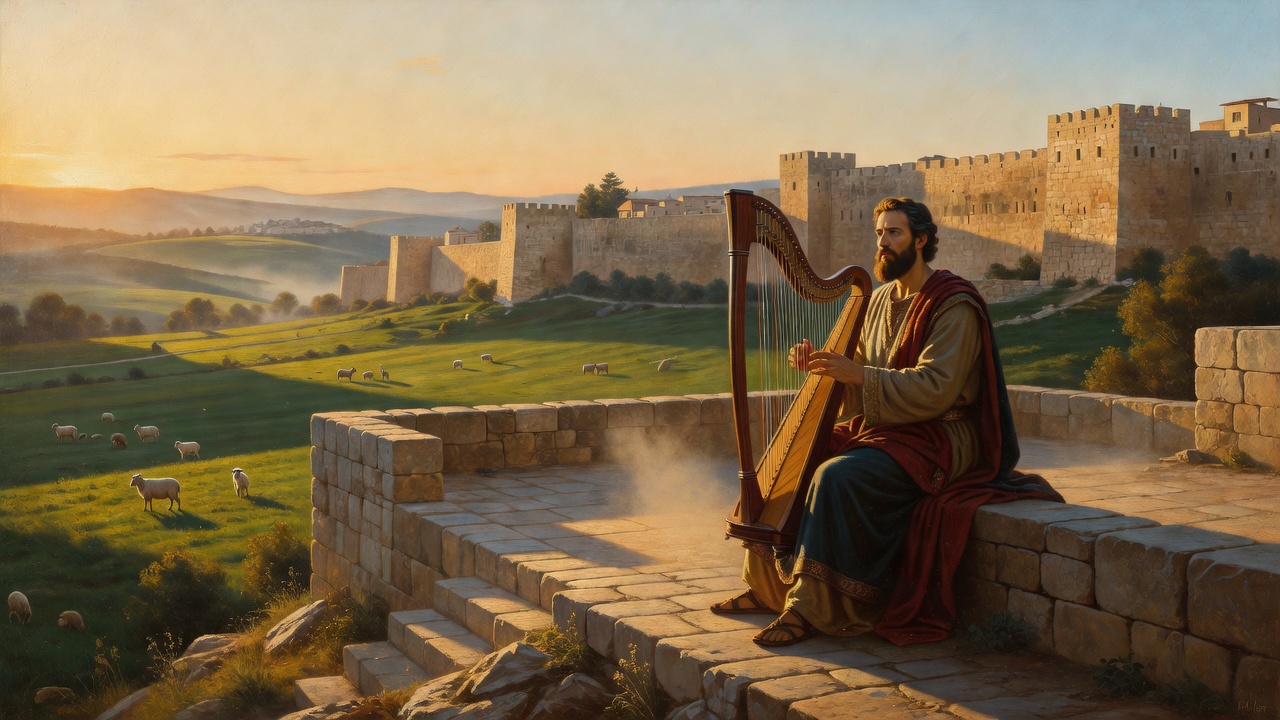
Você sabia?
A oração de um rei por libertação e prosperidade
- O salmo é atribuído a Davi, que combina súplicas por libertação militar com louvor musical, prometendo cantar um cântico novo a Deus ao som de uma harpa de dez cordas.Fontes: David · o próprio texto bíblico
- O texto reflete sobre a fragilidade humana, descrevendo o homem como um sopro e a vida humana como uma sombra passageira em contraste com a majestade e o poder divinos.Fontes: o próprio texto bíblico
- A seção final vislumbra a segurança da comunidade e a fartura agrícola, pedindo filhos vigorosos, celeiros cheios, rebanhos que se multiplicam e cidades com muros intactos, livres de invasões ou cativeiro.Fontes: o próprio texto bíblico
Notas escritas com auxílio de IA a partir de fontes abertas (Theographic Bible Metadata, CC BY-SA 4.0; Easton’s Bible Dictionary, domínio público) e revisadas antes de publicar.
Créditos e licença desta tradução
Geeshsha Mas'aafaa
The Holy Bible in the Dawuro language of Ethiopia, Latin script
copyright © 2024 The Word for the World International
Language: (Dawro)
Contributor: The Word for the World International
This translation is made available to you under the terms of the
Creative Commons Attribution Share-Alike license 4.0.
You have permission to share and redistribute this Bible translation in any format and to make reasonable revisions and adaptations of this translation, provided that:
You include the above copyright and source information.
If you make any changes to the text, you must indicate that you did so in a way that makes it clear that the original licensor is not necessarily endorsing your changes.
If you redistribute this text, you must distribute your contributions under the same license as the original.
Pictures included with Scriptures and other documents on this site are licensed just for use with those Scriptures and documents.
For other uses, please contact the respective copyright owners.
Note that in addition to the rules above, revising and adapting God's Word involves a great responsibility to be true to God's Word. See Revelation 22:18-19.
2025-05-01
Fonte: http://ebible.org/dwrl/ · eBible.org