Mateus 9
Beibel: okanisi tongo · Toque num versículo para ver as referências cruzadas.
Masaa Jesesi deesi wan lanman
1Ne bakadati, ne Masaa Jesesi go a boto, ne a abaa go na abaase, na a foto pe a be e tan. 2Fa i si a doo, ne wan duupu sama tyai wan lanman a daagi tapu kon ne en, fu a deesi en. Ma namo, di Masaa Jesesi si fa den sama di tyai a man kon de e biibi en taanga, ne a taigi a man taki: “Man, ná feele! I kisi paadon fi i takuudu anga ogii kaba.”
3Ma wan duupu leliman fu Dyuweiti de ape, yee san Masaa Jesesi taki. Ne den kuutu a ini den ati taki: “Ai sipowtu e kosi Masaa Gadu! We, moo so poli fu poli Gadu nen á de!”
4Ma Masaa Jesesi sabi ala san den e pakisei. Ne a piki den taki: “Fu saide u e pakisei ogii fu mi a ini u ati ini so du? 5Meke mi akisi u. Fu taigi wan sama taki, a kisi paadon fi en takuudu anga ogii, efu fu taigi en taki, ‘Opo taampu waka!’ on di moo taanga? 6Ma u mu sabi taki, a Manpikin di saka kon toon libisama ya abi makiti a goontapu, fu gi sama paadon fu takuudu anga ogii.” Ne a daai, ne a taigi a lanman taki: “Opo taampu! Teke i daagi waka go a osu!” 7We, ne a lanman opo, ne a go a osu. 8Den somen sama di be de ape foondoo te, a fika feele gi den. Den gafa Masaa Gadu fu di a gi libisama a gaan makiti ya.
Masaa Jesesi kai Mateyesi fu kon // toon bakaman fi en
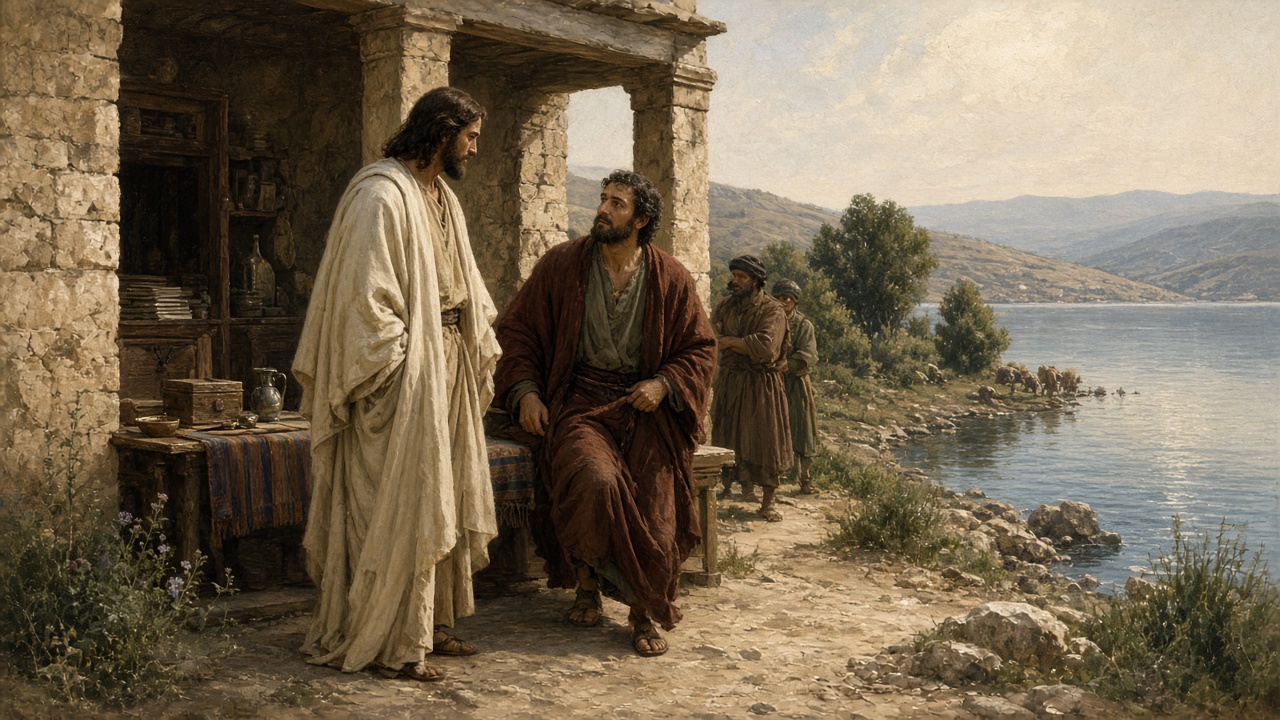
9Namo, ne Masaa Jesesi komoto de e waka e gwe. Di a waka te wan pisi, ne a si Mateyesi sidon ne en kantoo e piki lantimoni. Ne a kai en taki: “Man, waka a mi baka!” Ne wanten, ne Mateyesi opo waka ne en baka.
10Ne moo lati, ne Mateyesi kai Masaa Jesesi anga den taa bakaman fi en, fu den go nyan ne en osu. Da fa i si den go de, da wanlo taa sama di e piki lantimoni enke Mateyesi seefi anga sama di be e tyai polinen a kondee, be de ape tu. 11Namo di den Faliseiman si Masaa Jesesi sidon anga den sama ya, ne den akisi den bakaman fu Masaa Jesesi taki: “Fa a waka a mesiti fu u e mosoo enseefi so anga den man di e piki lantimoni anga den taa polinen man de, te a mu sidon a tafaa anga den e nyan seefi?”
12Namo Masaa Jesesi yee san den e akisi den bakaman fi en. Ne a taigi den taki: “Meke mi akisi u wan sani. San u pakisei dataa de fu du? Na fu deesi sikiman ofu fu deesi sama di de gusontu?” 13Ne a taigi den taki: “Faliseiman! U mu go leli san wan fositen apaiti takiman fu Masaa Gadu be sikiifi. Bika a be sikiifi taki: ‘U á mu denki taki, na te u kii meti boon begi mi, da u e dini mi kaba. Nono! Mi wani u abi tyali ati fu libisama, e fii anga den.’ Bika mi á kon a goontapu fu kai den bunbun sama, ma mi kon fu kai den sama di sabi taki, den libi á bun.”
Johanisi a Dopuman sende den // bakaman fi en go a Masaa Jesesi
14We, wan taa dei, ne den bakaman fu Johanisi a Dopuman kon a Masaa Jesesi. Ne den taki: “Wi enke bakaman fu Johanisi, wi anga den Faliseiman lobi de sondee nyan, fu begi Masaa Gadu. Ma saide den bakaman fi yu seefi nái de sondee nyan fu begi Masaa Gadu tu?”
15Namo, Masaa Jesesi piki den anga wan ageisi toli. A taki: “I sabi te wan man e toow, da ai oli wan toow osu. Da ai kai en mati fu kon nyan piisii anga en. We, i denki den mati sa sidon de sondee nyan? Nono! Ma, i sabi on ten den mati fi en o de sondee nyan? Na te sama kon puu a man di e toow a den mindii tyai gwe fosi.”
16Ne Masaa Jesesi taki baka taki: “I sa nai nyun pisi koosi anga gaandi wan mokisa? Nono! Bika a nyun pisi o ali a gaandi pisi piiti. Da a piiti o bigi moo di be de kaba. 17Soseefi, den nái teke nyunyun meke win lai a ini wan gaandi metibuba saka. Bika a nyunyun win o soopu, da a saka ná o poi soopu moo, fu di a gaandi kaba. Da te den lai a win go a ini, da a o basi towe ala. Da a kon taki, i lasi a saka, i lasi a win. Ma te i poti nyunyun meke win a ini nyunyun saka, da te a win o soopu, da a saka seefi o soopu tu. Da ná wan fu den di o lasi.”
Masaa Jesesi deesi wan uman, // a weki wan dede tu
18Namo wan edeman fu wan Dyu keliki kon sutu kini a Masaa Jesesi fesi e kee taki: “Masaa! Wan pikin umanpikin fu mi dede dyonson dyonson ya a osu. Ma mi e biibi taki, yu poi weki en baka.” 19We, ne Masaa Jesesi komoto anga den bakaman fi en, ne den e go makandii anga a edeman fu a keliki, na a edeman ya osu.
20Na pasi den de, ne wan uman lon kon a Masaa Jesesi baka. A uman ya be abi wan lasi buulu siki, fu twalufu yali langa kaba. Namo a bendi go oli a koosi mofu fu Masaa Jesesi. 21Da ai pakisei taki: “Efu mi fende Masaa Jesesi koosi oli pikinso namo, mi o kon bun.”
22We, ne Masaa Jesesi daai luku wanten, ne a si a uman. Ne a taigi en taki: “Uman! Ná feele! Fu di i biibi mi so taanga, da i kon bun kaba.” Fa i si Masaa Jesesi taki so, a uman betee kaba.
23We, den waka pikinso moo. Ne den go doo a osu fu a edeman fu a Dyu keliki. Ne Masaa Jesesi si somen sama e pee wan pee enke tuka anda. Da na so den e kee wan gaan kee de tu. 24Namo Masaa Jesesi go taigi den taki: “U pasa gwe a doo anga u sani di u e meke! Bika a pikin á dede, na siibi ai siibi.” We, di Masaa Jesesi taki so, ne den sama kii en anga lafu. 25Ma di ala sama komoto a doo, ne Masaa Jesesi go a ini a kambaa pe a dede pikin didon. Ne a oli a dede pikin ana, paa. Fa i si a kaba oli en, a pikin opo sidon wanten. Na weki a pikin weki kon a libi baka de so. 26We, a nyunsu fu a gaan foondoo toli ya paati esi esi na a hii pisiwataa anda.
Masaa Jesesi deesi tu beendiman
27Namo, ne Masaa Jesesi daai e gwe. Ma tu beendiman lon kon ne en baka. Da den e bali taki: “Yu Bakaten Manpikin fu Kownu Dafeti paansu! Gaantangi! Yeepi wi anga a tyali ati di yu abi fu wi!”
28Ma Masaa Jesesi waka go doo a osu, pe a be e tan. Ma soseefi den beendiman seefi de ne en baka go doo, te a ini a osu. Namo Masaa Jesesi akisi den taki: “U e biibi taki, mi poi deesi u tuu?”
Namo den piki en taki: “Masaa! Wi e biibi dati tuutuu!”
29We, ne Masaa Jesesi lobi ana a den ain, saa. Ne a taki: “Da na san u biibi taki mi o du, sa pasa.” 30Fa i si Masaa Jesesi kaba taki so, den beendiman ain opo waa, den kon e si. Ma Masaa Jesesi wasikoi den taki: “U á mu go taigi ná wan sama.” 31Ma anga ala fa a bali den de seefi, toku den paati a mofu na a hii pisiwataa, te ala sama kon sabi.
Masaa Jesesi deesi wan babawman
32We, ne di den tu sama gwe, ne den tyai wan babawman kon a Masaa Jesesi, fu a deesi en tu. Bika wan takuu jeje be de na a sama ya tapu, e tapu en mofu fu a á poi taki. 33We, ne Masaa Jesesi yaki a takuu jeje puu ne en tapu. Ne a kon bun wanten baka, te ai taki. Ne den sama kon e foondoo te, den e taki: “Fu senten di Islayeli Kondee de, noiti so wan sani be pasa ya so wanten.”
34Ma den Faliseiman taki: “Wi Faliseiman dati sabi fa ai du puu takuu jeje a sama tapu. Na saatan, a basi fu didibii e yeepi en, fu puu den takuu jeje.”
Masaa Jesesi e tyali gi den sama di // á sabi Masaa Gadu
35Namo, Masaa Jesesi dati e waka e lontu a den foto foto anga den kondee kondee fu a hii pisiwataa anda. Da ai leli den sama a ini den Dyu keliki, a Bun Nyunsu di e taki, fu a Nyun Tii fu Masaa Gadu. Soseefi, da ala pe a doo, da ai deesi sikiman anga sama di be abi nowtu de. 36Ma fa a si den somen sama e kon ne en, ne tyali fu den sama kisi en te, ná sipowtu. Bika a si taki, den sama tan enke fa i sabi sikapu e waka buuya buuya sondee wan soluguman, fu solugu den. 37We, ne Masaa Jesesi taigi den bakaman fi en taki: “Somen sama de, di abi yeepi fanowdu. Den de enke wan gaan goon nyanyan di de lepi lepi fu koti poti a baakoto. Ma wookoman á de ipi sai. 38We, u mu begi a Masaa fu a wooko, meke a sende wookoman go na a wooko fi en.”
Você sabia?
Misericórdia, cura e vinho novo
- Mateus, filho de Alfeu, era publicano, ou seja, cobrador de impostos, em Cafarnaum. Jesus, ao subir da beira do lago, passou pela coletoria onde Mateus estava sentado e disse: “Segue-me”. Antes, ele era conhecido como Levi; nesse mesmo dia ofereceu um grande banquete, descrito como uma despedida, a Jesus, aos discípulos e, provavelmente, a muitos dos seus antigos companheiros.Fontes: Matthew · o próprio texto bíblico
- Os que perguntam por que eles e os fariseus jejuam com tanta frequência, enquanto os discípulos de Jesus não jejuam, são discípulos de João Batista. João é chamado o precursor; era de descendência sacerdotal, seu pai Zacarias sacerdote do turno de Abias e sua mãe Isabel uma das filhas de Arão.Fontes: John the Baptist · o próprio texto bíblico
- Uma cronologia situa a cura do paralítico, o chamado de Mateus, a pergunta sobre o jejum e a parábola dos odres no ano 28 d.C.Fontes: Healing the Man with Palsy · Jesus Calls Matthew · Fasting Question · Parable of the Winseskins
Notas escritas com auxílio de IA a partir de fontes abertas (Theographic Bible Metadata, CC BY-SA 4.0; Easton’s Bible Dictionary, domínio público) e revisadas antes de publicar.
Lugares deste capítulo
- Sea of Galilee · 32.819, 35.590 · versículo 1
Só aparecem lugares com identificação de alta confiança (90% ou mais segundo as fontes acadêmicas reunidas pelo OpenBible). Mapa da época: DARE (Digital Atlas of the Roman Empire), CC BY 4.0; mapa atual: © colaboradores do OpenStreetMap; lugares: OpenBible.info (CC BY 4.0).
Créditos e licença desta tradução
Beibel: okanisi tongo
New Testament in Eastern Maroon Creole (NS:djk:Eastern Maroon Creole)
copyright © 2009 Wycliffe Bible Translators, Inc.
Language: Eastern Maroon Creole
Translation by: Wycliffe Bible Translators, Inc.
Eastern Maroon Creole
djk
Suriname
Copyright Information
© 2009, Wycliffe Bible Translators, Inc. All rights reserved.
This translation text is made available to you under the
terms of the Creative Commons License: Attribution-Noncommercial-No Derivative Works.
( http://creativecommons.org/licenses/by-nc-nd/3.0/ )
In addition, you have permission to port the text to different file formats, as long as you
do not change any of the text or punctuation of the Bible.
You may share, copy, distribute, transmit, and extract portions
or quotations from this work, provided that you include the above copyright
information:
You must give Attribution to the work.
You do not sell this work for a profit.
You do not make any derivative works that change any of the actual words or punctuation of the Scriptures.
Permissions beyond the scope of this license may be
available if you contact
us with your request.
The New Testament
in Eastern Maroon Creole
© 2009, Wycliffe Bible Translators, Inc. All rights reserved.
This translation is made available to you under the terms of the
Creative Commons Attribution-Noncommercial-No Derivatives license 4.0.
You may share and redistribute this Bible translation or extracts from it in any format, provided that:
You include the above copyright and source information.
You do not sell this work for a profit.
You do not change any of the words or punctuation of the Scriptures.
Pictures included with Scriptures and other documents on this site are licensed just for use with those Scriptures and documents.
For other uses, please contact the respective copyright owners.
2014-04-22
Fonte: http://ebible.org/djkNT/ · eBible.org