João 3
Beibel: okanisi tongo · Toque num versículo para ver as referências cruzadas.
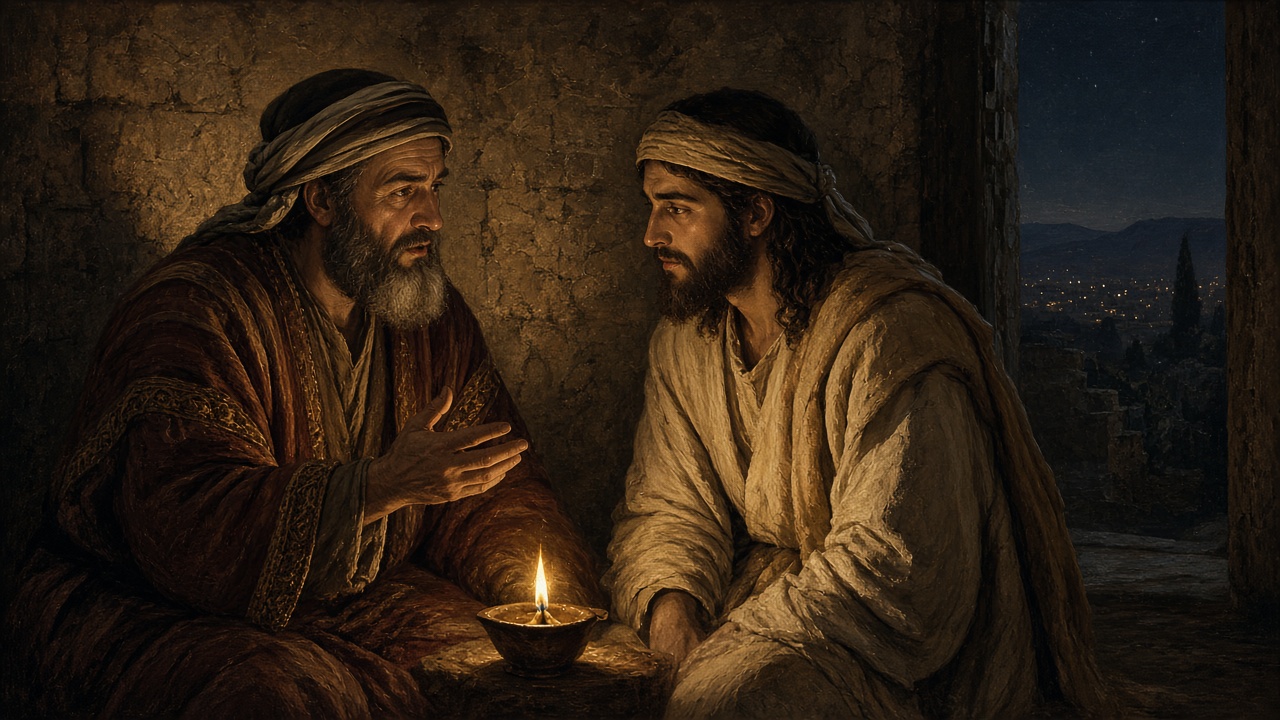
Nikodeimisi fufuu pasi kon a Masaa Jesesi
1Wan Faliseiman be de, den be e kai Nikodeimisi. Da Nikodeimisi na be wan gaan edeman fu den Dyu. 2We, ne a kon a Masaa Jesesi a wan neti, di ala peesi dunguu kaba. Ne a taigi Masaa Jesesi taki: “Labai! Wi sabi taki yu na wan leliman di Masaa Gadu sende kon. Bika ná wan sama di poi du den sani di yu e du, efu Gadu á de anga en.”
3Ne Masaa Jesesi piki en taki: “We, tuutuu mi e taigi yu taki, efu wan sama á meke baka ete wan toon fu fende wan nyun libi, da a ná o poi go si a Nyun Tii fu Masaa Gadu.”
4Ne Nikodeimisi piki en taki: “Fa wan sama o du meke baka, te a gaandi kaba? A sa go ne en mma bee baka fu a meke en di fu tu toon?”
5Ne Masaa Jesesi piki en taki: “Fu tuu mi e taigi yu taki, efu wan sama á meke baka ete wan toon, a wan hii taa fasi anga wataa anga Jeje, a ná o poi go si a Nyun Tii fu Masaa Gadu. 6Sama di meke a libisama fasi, a libisama fasi a o de. Ma sama di a Jeje fu Masaa Gadu meke, da na Gadu fasi a o de. 7We, fa mi taigi i de taki, yu mu meke baka ete wan toon, da a á mu foondoo yu. 8Winta e wai go a pe a wani. Na a bali fi en namo yu e yee. Ma yu á sabi na on pe a komoto efu na on pe ai go. We, na letiso a de anga ibii sama di a Jeje fu Masaa Gadu a tapu meke baka ete wan toon. Yu nái si a nyunyun meke efu fusutan en, leti enke fa yu nái fusutan a winta. Ma yu sabi taki sowan sani pasa tuu.”
9Ma Nikodeimisi piki en taki: “Fa den sani ya o du pasa?”
10Ne Masaa Jesesi piki en taki: “Yu na wan gaan leliman fu Islayeli Kondee, ne yu á sabi den sani ya?” 11Fu tuu mi e taigi yu taki: “Wi sabi san wi e taki. Bika na den sani di wi si, wi e taki. Ma u á wani biibi san wi e taigi u. 12We, efu u nái biibi mi, te mi e taki anga u fu den sani fu goontapu ya, da fa u o biibi, te mi o taki anga u fu den sani fu Gadu Kondee a tapu?
13“Bika ná wan sama be opo go a Masaa Gadu Kondee a tapu boiti a Manpikin di saka kon toon libisama ya.
14“We, leti enke fa Mosesi be meke a kopoo sineki opo poti a hei a ini a sabana, na soseefi den o opo a Manpikin di saka kon toon libisama ya, poti a hei tu. 15Da, ibiiwan sama di o biibi a mi, da yu o fende a libi fu tego a Masaa Gadu.
16“We, bika Masaa Gadu lobi goontapu te, ne a gi den a wankodo Manpikin fi en, fu ibiiwan sama di e biibi ne en á mu go lasi, ma fu den fende a libi fu tego. 17Bika fa Masaa Gadu sende en Manpikin kon a goontapu ya, da a á sende en kon fu a kuutu libisama. Ma a sende en kon fu a puu libisama a dede meke den fende a libi fu tego. 18Da, efu wan sama e biibi a ini a Manpikin fu Masaa Gadu ya, da a ná o kisi sitaafu. Ma sama di nái biibi a ini en, da a kuutu i kaba fi i kisi a sitaafu de. Da a o kuutu yu fu di yu á biibi a ini a nen, fu a wankodo Manpikin di Masaa Gadu sende kon gi u. 19Da disi na a sitaafu: Bika a de so taki Masaa Gadu be sende a leti fi en kon a goontapu, ma libisama á be wani a leti ya. Pe fu dati, ne den de fu den a dunguu, bika den á be wani fika den ogii libi fu den fu kon a ini a leti. 20Bika wan sama di e du ogii, na wan sama di buuse leti. A ná o kon seefi a pe a leti sa kai ne en fu den wooko fi en kon a kiin. 21Ma sama di e libi letiopu, ná abi toobi fu kon a ini a leti. Da na so a o soi taki ai du san Masaa Gadu taki.”
Johanisi a Dopuman soi baka sama a Masaa Jesesi
22Ne bakadati, ne Masaa Jesesi anga den bakaman fi en go a Judeja pisiwataa. Ne en anga den de ape fu wan pisiten. Ne Masaa Jesesi dopu den sama de. 23Ma Johanisi a Dopuman á be go a dunguu osu ete. Da na so enseefi be e dopu sama tu na a peesi di den e kai Enon, koosube fu a kondee di den e kai Salim. Bika a peesi be abi tyaipi wataa. Da somen sama be kon ne en tu fu a dopu den. 25Da a seefi yuu ten de, ne den bakaman fu Johanisi anga wan Dyu de a wan gaan sitee kwali fu den. Da den be de na a sitee fu san den mu du fu den kon kiin a Gadu fesi. 26Ne den bakaman fu Johanisi kon ne en, ne den taigi en taki: “Labai! I sabi a sama di i be taigi wi somen sani fi en? A de na abaase anda e dopu sama. Da ala den sama fiya e go ne en. Na a sama di i be taigi wi somen sani fi en.”
27Ma Johanisi piki den taki: “Ná wan libisama sa du wan sani, efu a ná Masaa Gadu a tapu seefi de anga en. 28U seefi á be yee di mi be taki, mi a ná a Kelestesi, ma na sende Masaa Gadu sende mi kon ne en fesi, no? 29Te wan sama toow anga wan uman, ne en na a man fu a uman. Ma a man o abi wan mati di e seeka ala sani gi en na a toow dei. A ná en o toow anga a uman, ma na seeka namo ai seeka sani gi en. Te a kaba seeka sani, da a o go de fi en a wanse pii fu yee a toowman tongo. Da te a yee en tongo, da a o piisii gaan piisii. We, na a gaan piisii di a mati fu a toowman e piisii de, na so miseefi e piisii tu. 30Bika a sama de mu kon moo anga moo a fesi fu teke peesi, ma mi mu go moo anga moo a baka.
A sama di komoto Gadu
31“Bika a sama di komoto a Gadu a tapu hei moo ala sama. Ma sama di meke a goontapu, na fu goontapu namo a de. Da na goontapu toli namo a o go e taki. 32Ma a sama di komoto a Masaa Gadu hei moo ala taa sama. Da a sama de e taki fu san a si anga san a yee. Ma toku, ná wan libisama wani teke sani ai taki. 33Ma, efu wan sama teke den sani di ai taki, da sowan sama e soi kiinkiin taki san Masaa Gadu taki na wan tuutuu sani. 34Bika a sama di Masaa Gadu be sende kon a goontapu e taki den sani di Masaa Gadu gi en fu taki. Bika Masaa Gadu á be gi wi a Jeje fi en afu afu, ma a be gi enmi en hiihii. 35A Tata lobi a Manpikin fi en. Da a poti ala sani a ini en ana. 36Da, efu wan sama e poti biibi na a Manpikin fu Masaa Gadu ya, da i abi a libi fu tego kaba. Ma, efu wan sama á wani poti biibi na a Manpikin fu Masaa Gadu ya tapu, da i ná o fende a libi fu tego ya. Bika a atiboon fu Masaa Gadu de a yu tapu kaba.”
Você sabia?
O novo nascimento e o testemunho de João
- Nicodemos, cujo nome significa "o povo é vencedor", era fariseu e membro do Sinédrio. Ele foi a Jesus de noite para conhecer melhor o seu ensino, e o Evangelho o chama de líder dos judeus; Jesus se dirige a ele como mestre de Israel.Fontes: Nicodemus · o próprio texto bíblico
- Depois dessa conversa, Jesus e seus discípulos foram para a região rural da Judeia, que sob os romanos era a mais meridional das três divisões da Palestina. João também batizava em Enom, perto de Salim, porque ali havia água em abundância; Salim, cujo nome significa "pacífico", ficava a oeste do Jordão. Enom significa "fontes", e o Dicionário Bíblico de Easton (1897) situa o lugar provavelmente perto da nascente superior do Wady Far'ah, um vale aberto cheio de fontes que vai do monte Ebal até o Jordão.Fontes: o próprio texto bíblico · Judea · Aenon · Salim
- Neste capítulo, João diz a seus discípulos que não é o Cristo, mas que foi enviado adiante dele, e a narrativa observa que ele ainda não tinha sido preso. O Dicionário Bíblico de Easton (1897) o descreve como o precursor de Jesus, de descendência sacerdotal, e diz que sua missão foi objeto de profecia.Fontes: o próprio texto bíblico · John the Baptist
Notas escritas com auxílio de IA a partir de fontes abertas (Theographic Bible Metadata, CC BY-SA 4.0; Easton’s Bible Dictionary, domínio público) e revisadas antes de publicar.
Lugares deste capítulo
- Jerusalem · 31.777, 35.234 · versículo 22
- Judea · Hoje: Judea 1 · 31.777, 35.234 · versículo 22
- Jordan · Hoje: Jordan River · 31.761, 35.558 · versículo 26
Só aparecem lugares com identificação de alta confiança (90% ou mais segundo as fontes acadêmicas reunidas pelo OpenBible). Mapa da época: DARE (Digital Atlas of the Roman Empire), CC BY 4.0; mapa atual: © colaboradores do OpenStreetMap; lugares: OpenBible.info (CC BY 4.0).
Créditos e licença desta tradução
Beibel: okanisi tongo
New Testament in Eastern Maroon Creole (NS:djk:Eastern Maroon Creole)
copyright © 2009 Wycliffe Bible Translators, Inc.
Language: Eastern Maroon Creole
Translation by: Wycliffe Bible Translators, Inc.
Eastern Maroon Creole
djk
Suriname
Copyright Information
© 2009, Wycliffe Bible Translators, Inc. All rights reserved.
This translation text is made available to you under the
terms of the Creative Commons License: Attribution-Noncommercial-No Derivative Works.
( http://creativecommons.org/licenses/by-nc-nd/3.0/ )
In addition, you have permission to port the text to different file formats, as long as you
do not change any of the text or punctuation of the Bible.
You may share, copy, distribute, transmit, and extract portions
or quotations from this work, provided that you include the above copyright
information:
You must give Attribution to the work.
You do not sell this work for a profit.
You do not make any derivative works that change any of the actual words or punctuation of the Scriptures.
Permissions beyond the scope of this license may be
available if you contact
us with your request.
The New Testament
in Eastern Maroon Creole
© 2009, Wycliffe Bible Translators, Inc. All rights reserved.
This translation is made available to you under the terms of the
Creative Commons Attribution-Noncommercial-No Derivatives license 4.0.
You may share and redistribute this Bible translation or extracts from it in any format, provided that:
You include the above copyright and source information.
You do not sell this work for a profit.
You do not change any of the words or punctuation of the Scriptures.
Pictures included with Scriptures and other documents on this site are licensed just for use with those Scriptures and documents.
For other uses, please contact the respective copyright owners.
2014-04-22
Fonte: http://ebible.org/djkNT/ · eBible.org