Atos 15
Beibel: okanisi tongo · Toque num versículo para ver as referências cruzadas.
Fa biibi Dyu suku fu tyai buuya kon gi foluku di á de Dyu
1Ma wantu Dyu komoto a Judeja kon leli sani de. Den taki, fu taa foluku mu toon biibisama, da den mu koti maiki a manpeesi gi en, enke fa Mosesi weiti taki. Sondee dati, den ná o poi fende yeepi, fu go doo a libi fu tego. 2Di Pawlesi anga Balnabasi bali den, ne a sitee bigi. A kon fu den biibiwan sende Pawlesi anga Balnabasi anga wantu taawan ete gwe a den apaiti bosikopuman anga gaansama fu biibiwan keliki a Jelusalem Foto, fu kuutu a sani. 3Den seeka den anga san den abi fanowdu, fu gwe. Ne den pasa a pisiwataa fu Finisiya anga Samaliya tu. Den e taigi biibiwan di den miti, fa Masaa Gadu e wooko anga taa foluku. A opo pasi fu den teke biibi tu. Ai switi gi den di e yee en.
4Na so den kon doo Jelusalem Foto. Ne den apaiti bosikopuman anga den gaansama fu biibiwan keliki ape puu den moimoi a boto. Ne den taigi denseefi ala fa Masaa Gadu teke den, tyai go wooko a mindii fu taa foluku. 5Ma wantu biibi Dyuwan be de ape di oli a biibi fu Faliseiman sama ete. Den opo sitee wanten anga den taki, fu taa foluku mu toon biibisama, da den mu koti maiki a manpeesi gi en, enke fa Mosesi taki.
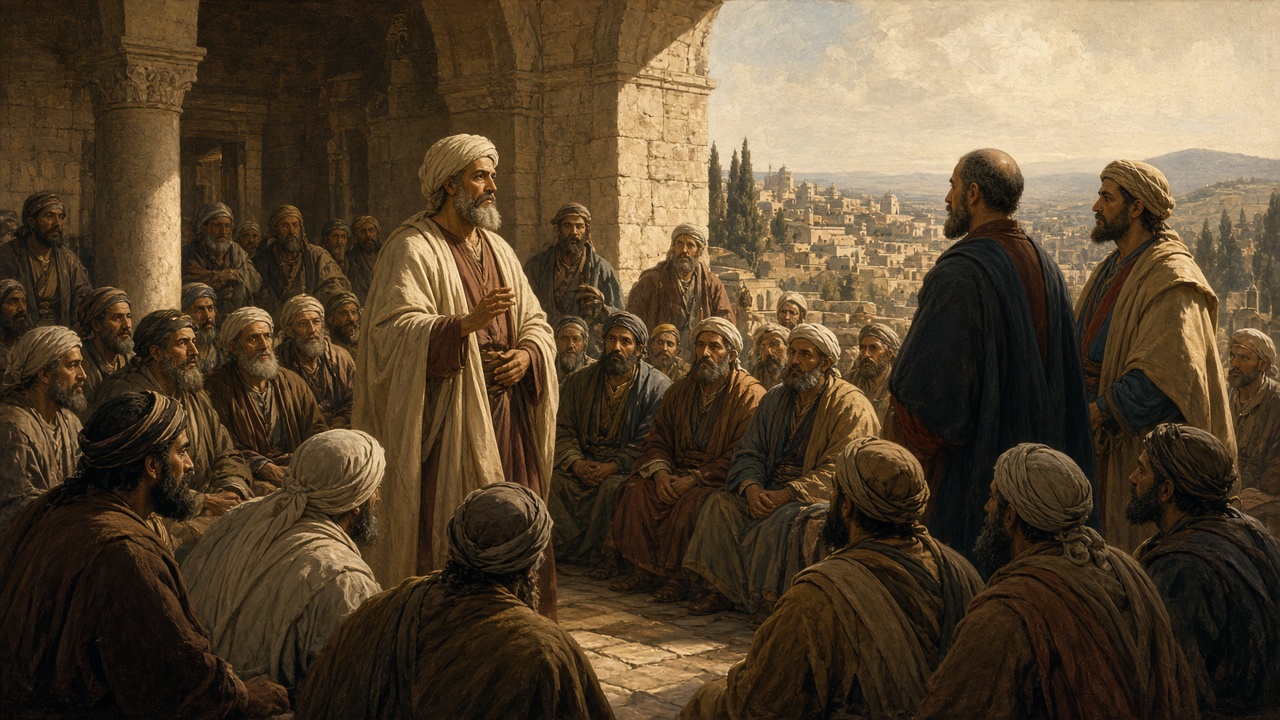
6A sitee ya bigi te, ne den apaiti bosikopuman anga gaansama fu biibiwan keliki mu bendi a wanse, fu wegi a toli luku. 7A sitee ya be bigi. Bika ibiiwan fu den se e denki en fasi. Namo Peitilisi opo taampu a mindii taki: “Lobi biibiwan! U sabi a pisiten ete, di Masaa Gadu be puu mi seefi go gi taa foluku en Bun Nyunsu, meke den biibi? 8A soi de taki, na a ati fu sama ai luku, fu si efu a wani dini en. Da ai gi dati en Apaiti Jeje soi dati. Mi de kotoigi si fa a wooko so anga taa foluku enke fa a wooko anga wi Dyu ya tu. 9Dati e soi taki, wi enke Dyu anga taa foluku na a seefi biibiwan gi en. Bika na di den teke biibi enke wi Dyu meke a wasi denseefi ati kiin puu takuudu anga ogii.” 10Peitilisi soi ete taki: “Wi ná o poi sitee anga fa wi si a wooko anga taa foluku. Mi be si taki, a á poti taa ibi gi den, fu tyai. Da meke wi á peefuu dwengi den so, en ati o boon a wi. Weiti fu Mosesi na sani di wi avo doo wi seefi á poi oli fende yeepi. 11Na biibi namo wi ya teke, ne u fende a yeepi, di wi Masaa Jesesi teke gaan bun ati fasi namo luku wi. Da na so taa foluku mu poi teke biibi namo, fu fende a yeepi ya tu.”
12Di a kaba soi den so, ne a hii peesi de pii. Namo Balnabasi anga Pawlesi teke soi den ala fa Masaa Gadu wooko anga den a mindii fu taa foluku. A meke den du somen foondoo sani soi enke maiki taki, a de anga den.
13Namo den kaba taki, ne Jakowbesi seefi piki taki: “Biibiwan! U aliki mi! 14Fa Simon soi de, da u e si taki, Masaa Gadu e puu taa foluku sama kon toon wan nyun sowtu foluku enke sama fi en. 15A be piki fositen apaiti takiman fu sikiifi taki, dati musu fu pasa. 16Den be sikiifi taki:
‘Moo lati bakadati, da mi o daai kon baka,
fu seeka a booko osu paansu sama fu Dafeti.
Da a lulu pisi fu dati o taampu baka
fu dini mi enke fositen.
17Da na so taa foluku sama o fende pasi fende mi suku fu dini.
Da denseefi o tyai nen taki, den de mi sama.
Na so mi Masaa Gadu di o du a sani ya seefi taki.
18Mi taki a fesi langa ten kaba taki, a sani musu fu pasa.’ ”
19Jakowbesi soi ete taki: “We, di enseefi taki so, da mi ya seefi e si taki, taa foluku mu poi toon biibisama sondee fu wi Dyu biibiwan poti ibi a den tapu, fu oli Dyuweiti. 20Ma a bun fu sikiifi wan biifi soi den taki: Biibiwan! Ná mosoo anga nyanyan, di poti enke paiman gi afokodeei gadu. Wai a pasi gi ibii sowtu motyo fasi. Ná nyan meti di kii sondee koti neki towe a buulu. Ná nyan buulu buulu sani. 21Ala dati weiti taki, di Masaa Gadu be gi Mosesi fika gi wi. Dyusama e leisi ala dati ibii kina dei, taawan a taawan baka a ibii Dyu keliki fu ibii foto. Komoto a wi avo doo wi fu tide.”
A biifi di komoto a Jelusalem fu soi san biibiwan di á de Dyu mu oli
22Namo, den apaiti bosikopuman anga gaansama fu biibiwan keliki fiti makandii, meke Pawlesi anga Balnabasi gwe baka na Antiyokiya. Ne den puu tu biibiwan fu sende go anga den. Dati na Silasi anga Judasi di den e kai Balisabasi tu. Biibiwan be e lesipeki den tu man ya tuutuu. 23Den meke den man de tyai wan biifi go anda taki:
Fa ai go taa foluku biibiwan na Antiyokiya Foto! Soseefi Siliya pisiwataa anga Silisiya pisiwataa. Wi enke apaiti bosikopuman anga den gaansama fu biibiwan keliki dise, na lobi biibi baala fu u anda.
24U yee dise taki, wantu biibi Dyuwan komoto a Jelusalem Foto ya kon leli u sani anda, di wi ya á sende den, fu taki. Den tyai buuya fuduwali u anda tuutuu. 25Na dati meke wi dise fiti fu puu wantu man sende kon a u anda, makandii anga Balnabasi anga Pawlesi, di u dise lobi tuutuu. 26Bika den poti den libi a dede mofu seefi anga a wooko di den e du fu bali wi Masaa Jesesi Kelestesi nen. 27U fende en fanowdu, fu sende Judasi anga Silasi kon anga den. Da den sa taigi u anda mofu mofu san u sikiifi na a biifi ya.
28A de san a Apaiti Jeje di e tii wi soi wi. Wi enke Dyu á mu poti ibi a taa foluku biibiwan tapu, fu oli Dyuweiti tu. Ma u sikiifi ya san namo namo u mu oli. 29Ná mosoo anga nyanyan di gi afokodeei gadu. Ná nyan buulu buulu sani. Ná nyan meti di kii sondee fu koti neki towe a buulu. Wai a pasi gi ibii sowtu motyo fasi. Sama di e oli den sani ya wooko bun kaba.
Noti moo enke bigi odi!
Den kai den biibiwan a wan kuutu
30Di den kaba sikiifi a biifi, ne den bali odi makandii. Ne den gwe na Antiyokiya Foto. Namo den kai den biibiwan anda makandii a wan kuutu. Ne den teke a biifi langa gi den. 31Ne den biibiwan de leisi te a kaba. A piisii den tuutuu. Bika a gi den taanga, meke den biibi kisi moo kaakiti.
32Judasi anga Silasi na be biibiwan di abi a kaakiti fu Masaa Jesesi piki den san fu taki. Da den taigi den biibiwan ape sani di gi den taanga, meke den biibi kisi moo kaakiti. 33Den tan ete wantu dei anga den de. Ne den yuu doo fu gwe. Namo den biibiwan de sende den gwe baka a den di be sende den kon de. Den go poti den a boto, fu bali adyosi taki, meke Masaa Gadu seigi a waka fu den. 34Ma Silasi dati taki, a nái gwe moo ete. Ne Judasi wawan gwe.
Pawlesi anga Balnabasi paati waka
35Pawlesi anga Balnabasi dati de na Antiyokiya Foto de go doo. Den e bali a bosikopu gi ala sama de. Den e leli den biibiwan de sani moo fini fini tu. 36Ma baka wan pisiten, ne Pawlesi piki Balnabasi fu den go luku den biibiwan na ala den foto pe den be gi a bosikopu baka. A wani den go luku fa ai go anga den biibi. 37Namo Balnabasi piki taki: “A bun!” Ma a wani den mu tyai Johanisi di den e kai Maakusi tu, fu waka anga den baka.
38Ma Pawlesi piki taki: “Nono!” Bika na a seefi Maakusi ya be e wooko anga den kaba. Ne di den be wooko pasa na a pisiwataa fu Pamfiliya, ne a á be wani go doo. A fika a wooko ape gi den wawan fu tyai doo. 39Balnabasi namo namo wani den tyai Maakusi. Pawlesi tan taki, nono! Na so toobi kon a den mindii, ne den paati waka. Balnabasi teke Maakusi tyai anga en. Pawlesi dati teke boto abaa a ze gwe na a gaan tabiki kondee Sipolosi. 40Pawlesi teke Silasi tyai, fu bigin waka wooko anga en. Den biibiwan ape begi gi den, fu Masaa Gadu teke gaan bun ati fasi namo luku den, a pe den e go. Ne den gwe a waka tapu. 41A waka fu Pawlesi gwe a Siliya pisiwataa fosi. Bakadati, a go pasa Silisiya pisiwataa. Fa ai waka so, na so ai go a den biibiwan a den peesi peesi pe ai pasa, fu taki anga den, meke den biibi kisi nyun kaakiti.
Você sabia?
O concílio sobre os crentes gentios
- A controvérsia começou em Antioquia, às margens do Orontes, cerca de trezentas milhas ao norte de Jerusalém, cidade que então ocupava o terceiro lugar entre as cidades do Império Romano, depois de Roma e Alexandria. A caminho do concílio, Paulo e Barnabé passaram pela Fenícia, uma faixa litorânea de cerca de cento e vinte milhas, e pela Samaria. Uma nota cronológica data o Concílio de Jerusalém em 46 d.C.Fontes: Antioch (Syria) · Phenicia · o próprio texto bíblico · Jerusalem Council
- O Easton's Bible Dictionary (1897) afirma que Tiago, a quem chama de irmão ou parente próximo de Jesus, dirigia a igreja em Jerusalém e presidiu o concílio sobre os gentios. A carta que se seguiu foi endereçada aos crentes gentios em Antioquia, na Síria e na Cilícia. A Cilícia, província de origem de Paulo e província marítima romana no sudeste da Ásia Menor desde 67 a.C., incluía sua cidade natal, Tarso.Fontes: James (Brother of Jesus) · o próprio texto bíblico · Cilicia · Paul
- Judas, chamado Barsabás, e Silas, também conhecido como Silvano, eram profetas e homens de destaque da igreja de Jerusalém, enviados para confirmar pessoalmente a decisão do concílio. Um desentendimento posterior e acirrado por causa de João Marcos, primo de Barnabé, separou os dois missionários: Barnabé levou Marcos e embarcou para Chipre, enquanto Paulo escolheu Silas. Uma nota cronológica data essa separação em 47 d.C.Fontes: o próprio texto bíblico · Silas · John Mark · Paul and Barnabas part ways
Notas escritas com auxílio de IA a partir de fontes abertas (Theographic Bible Metadata, CC BY-SA 4.0; Easton’s Bible Dictionary, domínio público) e revisadas antes de publicar.
Lugares deste capítulo
- Antioch · Hoje: Antioch on the Orontes · 36.227, 36.172 · versículos 1, 22, 23, 30, 35
- Judea · Hoje: Judea 1 · 31.777, 35.234 · versículo 1
- Jerusalem · 31.777, 35.234 · versículos 2, 3, 4, 22, 23, 33
- Phoenicia · 33.271, 35.196 · versículo 3
- Samaria · Hoje: Samaria 2 · 32.276, 35.195 · versículo 3
- Cilicia · 36.913, 34.892 · versículos 23, 41
- Syria · Hoje: Syria 2 · 33.511, 36.306 · versículos 23, 41
- Pamphylia · 37.000, 31.000 · versículo 38
- Cyprus · 35.000, 33.000 · versículo 39
Só aparecem lugares com identificação de alta confiança (90% ou mais segundo as fontes acadêmicas reunidas pelo OpenBible). Mapa da época: DARE (Digital Atlas of the Roman Empire), CC BY 4.0; mapa atual: © colaboradores do OpenStreetMap; lugares: OpenBible.info (CC BY 4.0).
Créditos e licença desta tradução
Beibel: okanisi tongo
New Testament in Eastern Maroon Creole (NS:djk:Eastern Maroon Creole)
copyright © 2009 Wycliffe Bible Translators, Inc.
Language: Eastern Maroon Creole
Translation by: Wycliffe Bible Translators, Inc.
Eastern Maroon Creole
djk
Suriname
Copyright Information
© 2009, Wycliffe Bible Translators, Inc. All rights reserved.
This translation text is made available to you under the
terms of the Creative Commons License: Attribution-Noncommercial-No Derivative Works.
( http://creativecommons.org/licenses/by-nc-nd/3.0/ )
In addition, you have permission to port the text to different file formats, as long as you
do not change any of the text or punctuation of the Bible.
You may share, copy, distribute, transmit, and extract portions
or quotations from this work, provided that you include the above copyright
information:
You must give Attribution to the work.
You do not sell this work for a profit.
You do not make any derivative works that change any of the actual words or punctuation of the Scriptures.
Permissions beyond the scope of this license may be
available if you contact
us with your request.
The New Testament
in Eastern Maroon Creole
© 2009, Wycliffe Bible Translators, Inc. All rights reserved.
This translation is made available to you under the terms of the
Creative Commons Attribution-Noncommercial-No Derivatives license 4.0.
You may share and redistribute this Bible translation or extracts from it in any format, provided that:
You include the above copyright and source information.
You do not sell this work for a profit.
You do not change any of the words or punctuation of the Scriptures.
Pictures included with Scriptures and other documents on this site are licensed just for use with those Scriptures and documents.
For other uses, please contact the respective copyright owners.
2014-04-22
Fonte: http://ebible.org/djkNT/ · eBible.org