1 Coríntios 10
Beibel: okanisi tongo · Toque num versículo para ver as referências cruzadas.
Fowtu fu avo gaansama
1Biibiwan! Pakisei wi avo gaansama. U sabi fa ala den be waka makandii komoto a saafu a Egepte Kondee anga Mosesi! Masaa Gadu poti wan woluku a den fesi a tapu, fu kibii den. A piiti a ze a mindii dee wan pasi fu waka abaa. 2Ne ala den pasa anga a woluku a ini a ze wataa. Na so den dopu toon sama fu Mosesi. 3Masaa Gadu solugu ala den anga wan apaiti sowtu nyanyan di ai towe ibii neti komoto a tapu wan foondoo sowtu jeje fasi. 4A poti wan apaiti sowtu siton fu wataa lon wan foondoo sowtu jeje fasi, fu fende diingi. Dati be de Kelestesi seefi di be e waka anga den na ala pe den e go. 5Ma toku a moo gaanse fu den á tyai denseefi piisii Masaa Gadu. Na dati meke a hii sabana doti be tiingi ala se anga dedewan fu den di kai fika de.
6A hii toli de meke fu wasikoi wi nownow, fu luku bun! Bika fu sani á mu waka so anga wi, da wi á mu meke takuu losutu tyai wi du ogii enke den. 7Meke wi á dini falisi gadu enke somen fu den. Bika Masaa Gadu Buku sikiifi taki: “A foluku poti enseefi fu nyan diingi fesa gi falisi gadu. Den e opo dansi fanya fanya tu.” 8We, meke wi á teke motyo fasi enke son fu den. Ne Masaa Gadu be mu kii twenti a dii dunsu (23.000) fu den a ini wan dei namo. 9Meke wi á tesi Masaa enke somen fu den. Ne a be mu puu sineki go nyan den kii. 10Meke wi á kaagi a Masaa yesi enke somen fu den. Ne a be sende wan Engel*f3* fi en go kii den kaba a soso. 11Ala den sani de pasa, fu wasikoi wi san u á mu du. Ne Masaa Gadu meke den sikiifi fika gi wi, na a pisi yuu ten pe goontapu de fu kaba ya!
12Bika son sama sa denki taki, a taampu taanga a ini biibi. Ma luku bun! Tesi e suku fu towe i puu a Masaa Gadu pasi. 13Ma den tesi ya á taanga moo san taa libisama e tyai. Soseefi Masaa Gadu de fitoow fasi fu meke dati á sa bigi pasa u. Ai meke wan pasi tu, fu waka pasa tesi.
Wai a pasi gi falisi gadu!
14Mi lobi biibiwan! Na dati meke, wai a pasi gi falisi gadu! 15Mi sikiifi a sani ya fu taki anga u enke sama anga fusutan. Da teke den keli luku efu na tuu. 16Luku fa wi e membee a dede fu Kelestesi. Makandii wi e teke wan kan win diingi gi daa, fu membee en buulu di mokisa wi ala. Wi e teke wan beele nyan gi daa, fu membee en sikin di mokisa wi ala. 17Da fa na wan beele namo wi e booko pisipisi nyan e soi fa wi ala na awan kodo sikin fu Kelestesi. Winsi fa wi ipi seefi, ma ibiiwan na wan pisi fu a sikin. 18Biibiwan! A ini Islayeli Kondee, da Dyusama e kii meti begi Masaa Gadu. Da ala sama di nyan dati mokisa anga Masaa Gadu di abi a apaiti begi tafaa, pe den kii dati.
19We, mi á wani taki, falisi gadu de wan sani. Meti di kii fu nyan begi falisi gadu seefi á de wan sani tu. 20Ma sabi taki, meti di kii fu nyan begi falisi gadu, na wan sani fu dini takuu jeje. Da fa dati á de gi Masaa Gadu, da mi á wani u mokisa useefi anga en. 21Bika wi e diingi awan kodo kan win fu membee Masaa. Da fa u sa mokisa dati fu nyan sani di poti enke paiman gi takuu jeje? 22Bika, da u e dwengi Masaa, fu dyalusu. Ma fa u denki, u si enke u taanga moo Masaa, fu poi kibii gi en sitaafu?
Fa fu tyai wini gi taawan
23Bika mi ya komoto a katibo, fu poi du ala san mi wani. Ma ala san mi wani du á bun fu tyai yeepi gi taawan. 24Da meke ibiiwan á suku fu wooko fu yeepi en wawan namo. Ma san yu e du mu poi yeepi wan taawan.
25Luku fa wenkii lai anga meti fu bai nyan. Da bai nyan seefi sondee fu konsensi piki yu taki, na meti di kii fu nyan begi falisi gadu. 26Bika Masaa Gadu Buku sikiifi taki: “Na Masaa Gadu abi goontapu anga ala san fuu en.”
27We, da sama di á de biibisama sa kai yu a tee. Go nyan efu yu wani. Winsi san den puu gi yu, nyan sondee konsensi piki yu taki, na meti di kii fu nyan begi falisi gadu. 28Ma efu wan sama bali piki yu taki: “Na meti di kii fu nyan begi falisi gadu, yu e nyan!” Da ná nyanmi en, fu lesipeki a sama de anga ala en konsensi. 29Mi á wani taki, na di fi yuseefi konsensi fu lesipeki de. Ma na di fu a taawan. Winsi i taki, yu á de a katibo! I sa nyan a sani! Sama konsensi ná abi leti fu kaagi den fu dati.
30I gi Masaa Gadu daa kaba fu nyan a sani. Da sama á mu poi kaagi yu taki, i e nyan wan sani di á bun! 31Ma yee ya! Winsi san de fu nyan ofu diingi ofu du seefi, meke a waka fu taawan sa poi gi Masaa Gadu gaandi. 32Ma ná du sani fu bangula taawan tyai futu go naki. Winsi na Dyusama ofu taa foluku ofu na a kulu biibiwan fu Masaa Gadu seefi. 33Wooko enke fa mi nái suku fu du wan enkii sani di mu yeepi miseefi namo. Ma na fu yeepi ala taawan, meke Masaa Gadu sa puu denseefi a takuudu anga ogii tu.
Você sabia?
Advertências do deserto e a mesa do Senhor
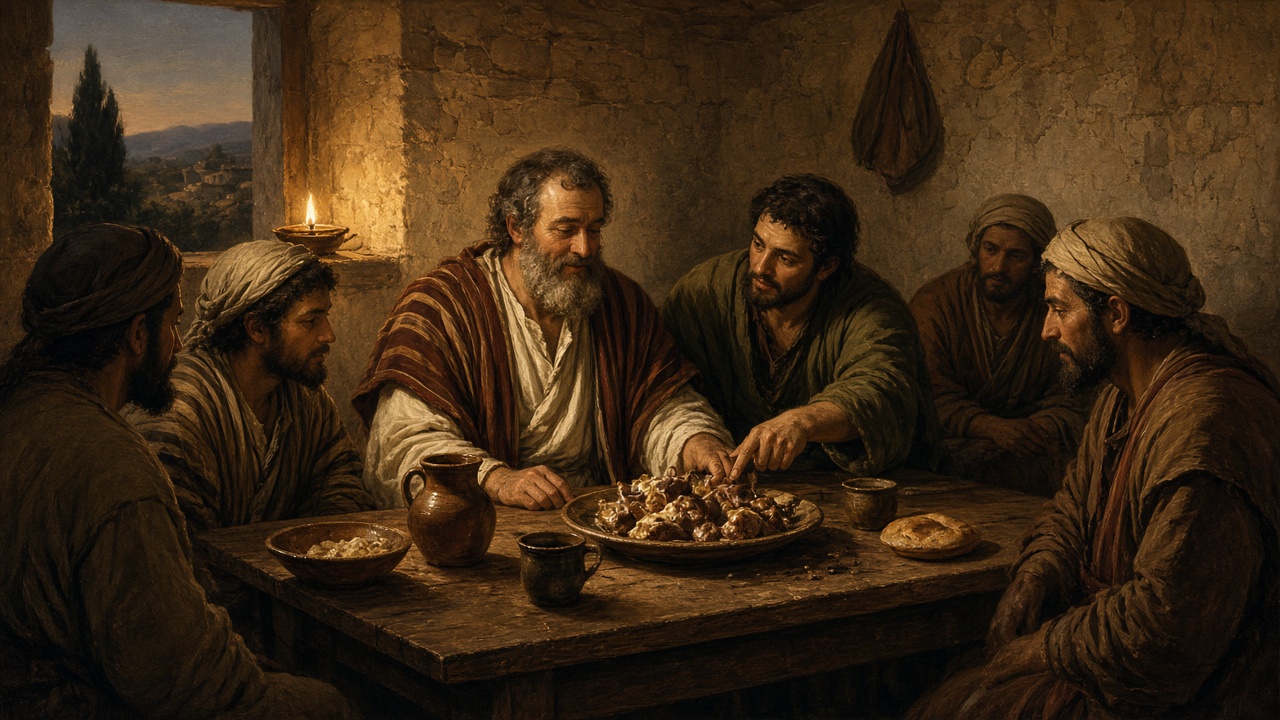
- Paulo diz que não quer que os coríntios ignorem que os antepassados estiveram todos debaixo da nuvem e passaram todos pelo mar, e que foram batizados em Moisés na nuvem e no mar. Todos comeram o mesmo alimento espiritual e beberam a mesma bebida espiritual da rocha espiritual que os acompanhava, e ele afirma que essa rocha era Cristo.Fontes: o próprio texto bíblico
- Paulo diz que Deus não se agradou da maioria deles, pois foram abatidos no deserto. Ele menciona a idolatria, a imoralidade sexual em que vinte e três mil morreram num só dia, o ato de pôr Cristo à prova, que trouxe morte por serpentes, e as queixas, punidas pelo anjo destruidor, e chama esses fatos de exemplos registrados como advertências.Fontes: o próprio texto bíblico
- Ele chama o cálice da bênção e o pão que é partido de participação no sangue e no corpo de Cristo, e afirma que os sacrifícios dos pagãos são oferecidos a demônios, não a Deus, de modo que as duas mesas não podem ser partilhadas. O que se vende no mercado de carne pode ser comido sem levantar questões de consciência, pois "Do Senhor é a terra e a sua plenitude", mas, se alguém disser que foi oferecido a ídolos, convém recusar por causa da consciência dessa pessoa.Fontes: o próprio texto bíblico
Notas escritas com auxílio de IA a partir de fontes abertas (Theographic Bible Metadata, CC BY-SA 4.0; Easton’s Bible Dictionary, domínio público) e revisadas antes de publicar.
Créditos e licença desta tradução
Beibel: okanisi tongo
New Testament in Eastern Maroon Creole (NS:djk:Eastern Maroon Creole)
copyright © 2009 Wycliffe Bible Translators, Inc.
Language: Eastern Maroon Creole
Translation by: Wycliffe Bible Translators, Inc.
Eastern Maroon Creole
djk
Suriname
Copyright Information
© 2009, Wycliffe Bible Translators, Inc. All rights reserved.
This translation text is made available to you under the
terms of the Creative Commons License: Attribution-Noncommercial-No Derivative Works.
( http://creativecommons.org/licenses/by-nc-nd/3.0/ )
In addition, you have permission to port the text to different file formats, as long as you
do not change any of the text or punctuation of the Bible.
You may share, copy, distribute, transmit, and extract portions
or quotations from this work, provided that you include the above copyright
information:
You must give Attribution to the work.
You do not sell this work for a profit.
You do not make any derivative works that change any of the actual words or punctuation of the Scriptures.
Permissions beyond the scope of this license may be
available if you contact
us with your request.
The New Testament
in Eastern Maroon Creole
© 2009, Wycliffe Bible Translators, Inc. All rights reserved.
This translation is made available to you under the terms of the
Creative Commons Attribution-Noncommercial-No Derivatives license 4.0.
You may share and redistribute this Bible translation or extracts from it in any format, provided that:
You include the above copyright and source information.
You do not sell this work for a profit.
You do not change any of the words or punctuation of the Scriptures.
Pictures included with Scriptures and other documents on this site are licensed just for use with those Scriptures and documents.
For other uses, please contact the respective copyright owners.
2014-04-22
Fonte: http://ebible.org/djkNT/ · eBible.org