Apocalipse 6
Lëk yam · Toque num versículo para ver as referências cruzadas.
Thɛny
1Guɔ Manh Amääl tïŋ ke kuem thaany tueŋ kam thɛny kadhorou, ku piɛŋ län tök kam lääi kaŋuan pïr ke lueel röldït apɛi cït mär ë deŋ, “Bäär!” 2Ku tiɛ̈ŋ piny, go ya mathiäŋ ɣer yen tiɛ̈ŋ, ku raan cath ë ye amuk dhaŋ ke wiɛth, ku gɛ̈m ajöm ë bɛ̈ny bï tääu yenhom. Ku jiël bï la pinynhom, cït kɛ̈ny cï tɔŋ dhoŋ ku cop kɔc ater.
3Ku kuem Manh Amääl thaany ë rou thok, ku piɛŋ län pïr ë rou ke jam röldït ëlä, “Bäär!” 4Ku bɔ̈ mathiäŋ thith bei tɛ̈wën. Ku raan cath ë yeen acï gäm riɛl bï kɔc cɔl aathär pinynhom, ku bï kɔc röt nɔ̈k ë röt. Ku gɛ̈m paldït ye kɔc thɔ̈r.
5Ku ben Manh Amääl thaany ë diäk kuem, ku piɛŋ röl ë diäk län pïr ke lueel, “Bäär!” Ku tiɛ̈ŋ piny, go ya mathiäŋ col yen tiɛ̈ŋ ku raan cath ë ye amuk wënh ye käŋ them yecin. 6Guɔ kë cït röl raan piŋ ke jam kam lääi kaŋuan pïr yiic ku lueel, “Aduŋ abïk yen ariöp akäl tök, ku aduuk kadiäk ayiëër kek ariöp akäl tök. Ku duɔ̈kkë tiim ye miök yök thïn ku tiim ye cam rɛc.”
7Ku ben Manh Amääl thaany ë ŋuan kuem thok, ku piɛŋ röl län ë ŋuan pïr ku lueel, “Bäär!” 8Ku tiɛ̈ŋ mathiäŋ cïn kït la gɛi, ku raan cath ë ye ala rin, “Thou,” Ku rin kɔ̈k cɔl, “Piny ë Thou,” Ke buɔɔth cök ke cïï yiic mec. Keek aake cï gäm riɛl bïk tɛ̈cït abaŋ ŋuan kɔc pinynhom yiic nɔ̈k ë tɔŋ ku cɔk, ku tuaany, ku lääi roor.
9Ku ben Manh Amääl thaany ë dhiëc kuem thok, ku tiɛ̈ŋ wëi kɔc wäär cï nɔ̈k ariäk cök rin cï kek wɛ̈t Nhialic gam puɔ̈u ëbën, ku yekë luɛɛl. 10Go wëi kiu röldït apɛi ku luelkë, “Bɛ̈ny yïn ala cök ku yïn ë yic! Ye nɛn bï yen rot jäl looi ba kɔc pinynhom tɛ̈m awuɔ̈c rin cï kek ɣo nɔ̈k?” 11Go ŋɛk kamken aa gäm alanh ɣer, ku lëk ke bïk tïït tɛ̈thin-nyɔɔt ɣet tɛ̈ bï akuën kɔc lui ke ke, ku miɛ̈thakën kek ke bï nɔ̈k ëbën cïmënden, jäl tuɔ̈ɔ̈m.
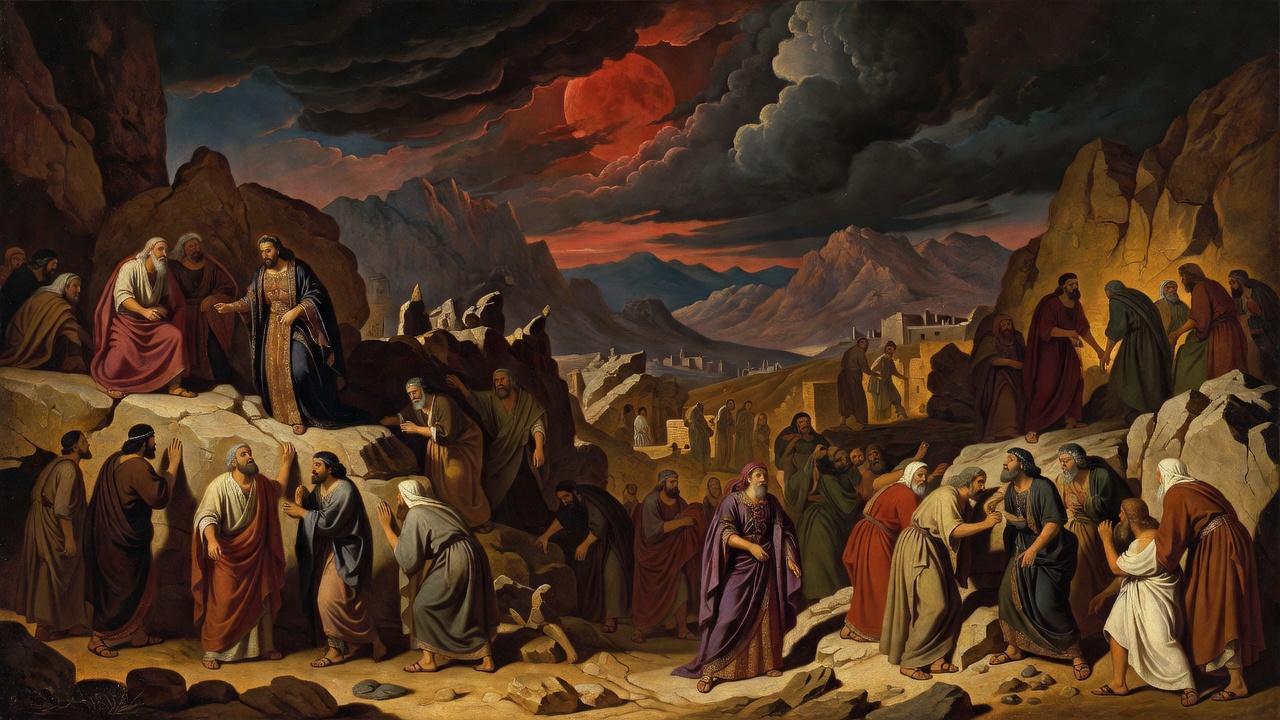
12Ku tiɛ̈ŋ Manh Amääl ke kuem thaany ë dätem thok. Ku ya ayiɛ̈ɛ̈kyiɛ̈ɛ̈k pinydït tet yen loi rot, ku loi akɔ̈l rot bï cuɔl cït alanh col, ku wel pɛɛi yenyin bï ya malual cït riɛm. 13Ku lööny kuɛl piny nhial cïmën ŋam cï luɔk ye yom tɛŋ piny tɛ̈ yiɛ̈ɛ̈k yen tim. 14Ku dol nhial rot ciɛ̈t ye athöör ku mɛ̈r, ku nyɛɛi kuɔ̈r ku golgol tɔ̈ wïïr röt ë nyiɛ̈nken yiic. 15Go bänyŋaknhïïm ë pinynhom, ku bäny mɛ̈c, ku bäny apuruuk ku ajiɛɛk, kɔc thiek yiic ku aloony, ku kɔc cie aloony them bïk thiaan ë kuɔ̈r yiic, tɛ̈dë ke ye kuɔ̈r nhïïm. 16Ku yekë cööt kuɔ̈r yiic ku aleel yiic, ku luelkë, “Aa wek kuɔ̈rkä kuɔ̈mkë ɣonhïïm bï raan rɛ̈ɛ̈r ë thööc nhom ɣo cïï tïŋ. Ku Manh Amääl acïï bï lëu bï ɣo bɛn tɛ̈m awuɔ̈c. 17Ee yic aköldït bï Nhialic ku Manh Amääl raan ëbën tɛ̈m awuɔ̈c acï bɛ̈n, ku acïn raan bï awuɔ̈c kënë göök?”
Você sabia?
A Abertura dos Seis Selos
- Os primeiros quatro selos revelam quatro cavaleiros em cavalos branco, vermelho brilhante, preto e amarelo, convocados um a um pelos quatro seres viventes. Cada cavaleiro traz uma aflição distinta sobre a terra, desde a conquista e a retirada da paz até a fome generalizada, a peste e a morte.Fontes: o próprio texto bíblico
- O terceiro cavaleiro segura uma balança, acompanhado por uma proclamação que fixa o preço de uma medida de trigo ou três de cevada em um denário, refletindo uma grave escassez e racionamento de alimentos enquanto o azeite e o vinho são poupados.Fontes: o próprio texto bíblico
- Com a abertura do quinto e do sexto selos, o foco se volta para as almas dos mártires debaixo do altar e, em seguida, para imensas convulsões cósmicas e terrestres que levam pessoas de todas as classes sociais a se esconderem em cavernas nas montanhas.Fontes: o próprio texto bíblico
Notas escritas com auxílio de IA a partir de fontes abertas (Theographic Bible Metadata, CC BY-SA 4.0; Easton’s Bible Dictionary, domínio público) e revisadas antes de publicar.
Créditos e licença desta tradução
Lëk yam
New Testament in Dinka, Southwestern (SU:dik:Dinka, Southwestern)
copyright © 2006 Wycliffe Bible Translators, Inc.
Language: Dinka, Southwestern
Translation by: Wycliffe Bible Translators, Inc.
Dinka, Southwestern
dik
Sudan
Copyright Information
© 2006, Wycliffe Bible Translators, Inc. All rights reserved.
This translation text is made available to you under the
terms of the Creative Commons License: Attribution-Noncommercial-No Derivative Works.
( http://creativecommons.org/licenses/by-nc-nd/3.0/ )
In addition, you have permission to port the text to different file formats, as long as you
do not change any of the text or punctuation of the Bible.
You may share, copy, distribute, transmit, and extract portions
or quotations from this work, provided that you include the above copyright
information:
You must give Attribution to the work.
You do not sell this work for a profit.
You do not make any derivative works that change any of the actual words or punctuation of the Scriptures.
Permissions beyond the scope of this license may be
available if you contact
us with your request.
The New Testament
in Dinka, Southwestern
© 2006, Wycliffe Bible Translators, Inc. All rights reserved.
This translation is made available to you under the terms of the
Creative Commons Attribution-Noncommercial-No Derivatives license 4.0.
You may share and redistribute this Bible translation or extracts from it in any format, provided that:
You include the above copyright and source information.
You do not sell this work for a profit.
You do not change any of the words or punctuation of the Scriptures.
Pictures included with Scriptures and other documents on this site are licensed just for use with those Scriptures and documents.
For other uses, please contact the respective copyright owners.
2014-04-22
Fonte: http://ebible.org/dikNT/ · eBible.org