João 7
Nǫ̀htsı̨̨ Nı̨̨htł'è · Toque num versículo para ver as referências cruzadas.
Zezì dzędeè gha Jerusalem ts'ǫ̀ èhtła
1Eyı hagòjà tł'axǫǫ̀ Zezì Galılee nèk'e hazǫǫ̀ nàhtła. Israel got'ı̨į̀ gha k'aodèe weweè hagı̨ı̨wǫ t'à, Judea nèk'e ts'ǫ̀ ade ha nıwǫ-le. 2Israel got'ı̨į̀ gıts'ǫ dzędeè k'e kǫ̀ą nàgehge ts'ǫ̀ nıwà-le agodaade. 3Zezì wechı gıts'ǫ̀ hadı, “Judea nèk'e ts'ǫ̀ aąde. Hanì-ı̨dè enıìyah hoı̨htsı̨ı̨ sìı necheekeè gıghàeda ha. 4Dǫ t'asìı wehłè nıwǫǫ sìı dǫ naàhtǫ eghàlaeda nıìle. Enıìyah hoı̨htsı̨ nı̨dè dǫ hazǫǫ̀ neghàıdà agı̨ı̨le,” gıìhdı. 5Wechı kò gıgha ehkw'ı-ahodı-le t'à hagıìhdı ı̨lè.
6Eyıt'à Zezì gots'ǫ̀ hadı, “Sı̨ segha ı̨łaà whìle hǫt'e, hanìkò naxı̨ sìı t'alàa-sìı k'e naxıgha hòɂǫ hǫt'e. 7Dıı nèk'e dǫ hazǫǫ̀ naxıdzagı̨ı̨hwhǫ ha dìì, hanìkò sı̨ nàowołı̨ı̨ k'ę̀ę̀ eghàlageeda gèehsı̨ t'à, sedzagı̨ı̨hwhǫ. 8Naxı̨ kǫ̀ta Jerusalem nàsı̨ ts'ǫ̀ aahdè. Įłaà segha eyı nèhòkw'ı-le t'à jǫ whıhda ha,” gòhdı. 9Hadı t'à Zezì Galılee nèk'e ı̨dè aìda.
10Hanìkò wechı Jerusalem ts'ǫ̀ geède tł'axǫǫ̀ Zezì ededı̨ sı ekǫ èhtła, hanìkò dǫ naàhtǫǫ̀ ajà. 11Jerusalem ekǫ dzędeè hołè ekò Israel got'ı̨į̀ gha k'aodèe Zezì hak'egeet'į̀. K'aodèe dǫ hazǫǫ̀ dageehke, “Eyı dǫ asį̀į̀ weahɂı̨?” gògedı.
12Hanìkò dǫdeè nı dǫ łǫ Zezì ghǫ ełets'ǫ̀ gogede. Dǫ mǫ̀hdaa hagedı, “Dǫ nezı̨ hǫt'e,” mǫ̀hdaa hagedı, “Į̀le ne, eghǫyaeɂàa-dǫǫ̀ elı̨ ne,” gedı. 13Hanìkò Israel got'ı̨į̀ gha k'aodèe ts'àgeejı̨ t'à, dǫ wı̨ı̨zìı Zezì ghǫ xàyagehtı ha gı̨ı̨wǫ-le.
Zezì Nǫ̀htsı̨kǫ̀-gocho gà dǫ hoghàehtǫ
14Įłè dzęahta ts'ǫ̀ dzędeè hołèe sìı tanı nìhǫǫwo ekò, k'ǫǫ̀t'a Zezì Nǫ̀htsı̨kǫ̀-gocho gà dǫ hoghàehtǫ ha ekǫ èhtła. 15Israel got'ı̨į̀ gha k'aodèe weyatıì gıìkw'o ekò gıgha enıìyah t'à hagedı, “Eyı dǫ hoghàweètǫ-le kò, dànì t'à t'asìı k'èezǫ nǫǫ̀?” gedı.
16Zezì gots'ǫ̀ hadı, “Sı̨ sedahxà dǫ hoghàehtǫ nıìle. Amìı sı̨ı̨hɂàa sìı wedahxà dǫ hoghàehtǫ hǫt'e. 17Amìı Nǫ̀htsı̨ k'èı̨t'e ha sìı asį̀į̀ Nǫ̀htsı̨ wedahxà gohde, hanì-le-ı̨dè ededahxà gohde, yek'èezǫ ha hǫt'e. 18Dǫ ededahxà godee sìı dǫ nayeet'ı̨ gha at'ı̨ hǫt'e. Ekò amìı yı̨ı̨hɂàa sìı yıızì nezı̨ ehtsı̨ gha at'ı̨ nı̨dè, eyı dǫ sìı ehkw'ı gode hǫt'e. Eyı dǫ sìı hots'ì nıìle. 19Moses Nǫ̀htsı̨ nàowoò naxıghàı̨ɂǫ hǫt'e, hanìkò naxıta ts'ǫ dǫ ı̨łè kò eyı nàowo k'èı̨t'e nıìle. Eyıt'à dànìghǫ ełaàsèahwhı ha dahwhǫ nǫǫ̀?”
20Dǫdeè nı gots'ǫ dǫ mǫ̀hdaa hagıìhdı, “Įnìłı̨ı̨ nets'ǫ̀-èlı̨. Amìı ełaànìhwhı ha ghǫ aı̨dı,” gıìhdı.
21Zezì gots'ǫ̀ hadı, “Enıìyah ı̨łè hòwhıhtsı̨ t'à sets'àahyeh laahjà. 22Hanìkò naxı̨ Moses gokwǫ̀ nàt'à nàowoò naxıghàı̨ɂǫ t'à Nǫ̀htsı̨ Dzęę̀ k'e dǫzhìa gıkwǫ̀ k'e nàaht'à hǫt'e. (Moses ededı̨ xàè nàgoet'àa nàowoò naxıghàı̨ɂǫ nıìle, naxıcho Abraham, Isaac eyıts'ǫ Jacob gıts'ǫ nàowo hǫt'e.) 23Moses wenàowoò nàahzhì ha-le dahwhǫ t'à Nǫ̀htsı̨ Dzęę̀ k'e dǫzhìa nàweet'àa sìı naxıgha t'asanìle hǫt'e. Ekò sı̨ Nǫ̀htsı̨ Dzęę̀ k'e dǫ deghàà k'aàt'ıì ahɂı̨ nı̨dè dànìghǫ weghǫ sets'ǫ̀ ààhch'e? 24T'asìı wègaat'ı̨ zǫ ghàà dǫ sınìyaahtı-le, ehkw'ı zǫ k'ę̀ę̀ dǫ sınìyaahtı,” Zezì gòhdı.
Asį̀į̀ Zezì Chrıst hǫt'e?
25Hadı ekìıyeè k'e Jerusalem gots'ǫ dǫ mǫ̀hdaa hagedı, “Dǫ ełaàgıìhwhı ha gı̨ı̨wǫ ı̨lèe sìı eyı nìı̨t'e?” ełègeedı, 26“Eyı dǫ jǫ wheda xè dǫnı ts'ǫ̀ gode hanìkò k'aodèe t'asagıìhdı-le. Chrıst hǫt'e gı̨ı̨wǫǫ̀ agejà nì-ghǫ agı̨ı̨t'e? 27Hanìkò eyı dǫ edı̨į̀ gots'ǫ at'ı̨ı̨ sìı wek'èts'eezǫ hǫt'e. Chrıst nììtła nı̨dè edı̨į̀ gots'ǫ at'ı̨ı̨ sìı dǫ wı̨ı̨zìı yek'èezǫ ha nıìle,” gedı.
28Zezì ı̨łaà Nǫ̀htsı̨kǫ̀-gocho gà dǫ ts'ǫ̀ godeè ekò dǫnı ts'ǫ̀ hòtł'ò hadı, “Hęɂę, sek'èahsǫ, eyıts'ǫ edı̨į̀ gots'ǫ aht'ı̨ı̨ sìı wek'èahsǫ hǫt'e. Sı̨ sedahxà jǫ whıhda nıìle. Amìı sı̨ı̨hɂàa sìı ededı̨ sìı ehkw'ı hǫt'e. Naxı̨ wek'èahsǫ nıìle, 29hanìkò sı̨ wets'ǫ aht'ı̨ eyıts'ǫ jǫ ts'ǫ̀ sı̨ı̨hɂà hǫt'e t'à, wek'èehsǫ hǫt'e,” gòhdı.
30Zezì hadı t'à Israel got'ı̨į̀ gha k'aodèe dageechı ha hogeèhdzà, hanìkò ı̨łaà wegha nèhòkw'ı-le t'à dǫ wı̨ı̨zìı t'asayį̀į̀là-le. 31Eyı hagot'ı̨, hanìkò dǫ łǫ ehkw'ı adı gı̨ı̨hwhǫǫ̀ agejà t'à hagedı, “Chrıst nììtła nı̨dè dıı dǫ nahk'e enıìyah łǫ hohtsı̨ ha nì? Į̀le sǫnı,” gedı.
32Pharısee gı̨ı̨lı̨ı̨ sìı dǫ hagedıì ełets'ǫ̀ gogede gogıìkw'o. Eyıt'à yahtıı-gha-k'aodèe eyıts'ǫ Pharısee gı̨ı̨lı̨ı̨ sìı Zezì dageechı ha Nǫ̀htsı̨kǫ̀-xogııhdıı-dǫǫ̀ kayagı̨ı̨htı.
33Zezì dǫ ts'ǫ̀ hadı, “Whaà-lea gots'ǫ̀ zǫ naxıxè whıhda ha hǫt'e, eyı tł'axǫǫ̀-ı̨dè amìı sı̨ı̨hɂàa sìı wets'ǫ̀ anahde ha. 34Sekak'eaht'į̀ ha, hanìkò segòahɂà ha-le, eyıts'ǫ edı̨į̀ whıhdaa sìı ekǫ ts'ǫ̀ aahde ha dìì,” Zezì gòhdı.
35Israel gha k'aodèe ełets'ǫ̀ hagedı, “Eyı dǫ wegots'ìhɂà ha-le, dı t'à, edı̨į̀ ts'ǫ̀ ade ha ghǫ adı. Gòet'ı̨ eyıì-le nèk'e Greece got'ı̨į̀ ta nàgedèe sìı gots'ǫ̀ ade ha nì? Ekǫ hoghàgoehtǫ ha nì? 36Dıı hadıı sìı dàdıì-adı, ‘Sekak'eaht'į̀ ha, hanìkò segòahɂà ha-le,’ eyıts'ǫ ‘Edı̨į̀ whıhdaa sìı ekǫ aahde ha dìì,’ eyı dàdıì-adı?” gedı.
37Dzędeè gha nǫǫde dzęę̀ nàtsoo wheɂǫ k'e Zezì dǫnı ts'ǫ̀ hòtł'ò hadı, “Amìı tı ghaewıı sìı sets'ǫ̀ awede gà tı wedǫ̀. 38Amìı wegha ehkw'ı aehsı̨ı̨ sìı tı wet'à ts'eedaa wedzeè yìı gots'ǫ xàı̨lı̨ ha. Hanì Nǫ̀htsı̨ Nı̨htł'è k'e dek'eèhtł'è,” Zezì gòhdı. 39Zezì ayìı ghǫ godee sìı Yedàyeh Nezı̨ı̨ ghǫ godeè-adı. Dǫ hazǫǫ̀ ehkw'ı adı yı̨ı̨hwhǫǫ sìı nǫǫde-ı̨dè Yedàyeh Nezı̨ı̨ gık'e ade ha. Zezì ı̨łaà yak'e ts'ǫ̀ ajà-le t'à Yedàyeh Nezı̨ı̨ dǫ k'e ajà-le.
40Dǫ mǫ̀hdaa Zezì hadı gıìkw'o ekò, hagedı, “Eyı dǫ nakwenàoɂǫǫ deè elı̨ ne sǫnı,” gedı.
41Ekò dǫ mǫ̀hdaa hagedı, “Chrıst awèts'edı là eyı at'ı̨,” gedı. Hanìkò dǫ mǫ̀hdaa hagedı, “Chrıst Galılee nèk'e gots'ǫ at'ı̨ ha dìì ne. 42Nǫ̀htsı̨ Nı̨htł'è k'e dıı hanì dek'eèhtł'è: Chrıst wèts'edıı sìı k'àowocho Davıd wèot'ı̨ gots'ǫ dǫ ı̨łè ade ha, eyıts'ǫ kǫ̀ta Bethlehem wegǫ̀hłı̨ ha, ekǫ k'àowocho Davıd nàı̨dè t'à,” gedı. 43Eyıt'à Zezì wets'ıhɂǫ̀ dǫ ełek'ę̀ę̀ agı̨ı̨wǫ-le agejà. 44Dǫ mǫ̀hdaa wedaìtį̀ ha gı̨ı̨wǫ, hanìkò dǫ wı̨ı̨zìı gıxèlaìdı-le.
Israel got'ı̨į̀ gha k'aodèe gıgha ehkw'ı-ahodı-le
45Nǫǫdea, Nǫ̀htsı̨kǫ̀-xogııhdıı-dǫǫ̀ nageèhde, yahtıı-gha-k'aodèe eyıts'ǫ Pharısee gı̨ı̨lı̨ ts'ǫ̀ anagejà. Eyı nègı̨ı̨de ekò k'aodèe dagogeehke, “Dànìghǫ jǫ nèweahtı̨-le?” gògedı.
46“Dǫ wı̨ı̨zìı eyı dǫ lanì goı̨de whìle,” Nǫ̀htsı̨kǫ̀-xogııhdıı-dǫǫ̀ hagedı.
47Eyıt'à Pharısee gı̨ı̨lı̨ı̨ sìı hagògedı, “Naxı̨ sı naxıghǫyaèhɂǫ nì-ghǫ aahdı?” gògedı. 48“K'aodèe gots'ǫ hanì-le-ı̨dè Pharısee gı̨ı̨lı̨ı̨ gots'ǫ dǫ wı̨ı̨zìı ehkw'ı adı gı̨ı̨hwhǫ nıìle. 49Hanìkò dǫ hazǫǫ̀ Moses wenàowoò k'ègeezǫ-le sìı gha ehkw'ı adı. Eyı k'èxa gıgha hoìla ha,” gedı.
50Dǫ ı̨łè Nıcodemus wìyeh Pharısee gı̨ı̨lı̨ı̨ goxè wheda elı̨ hǫt'e. Ededı̨ ı̨dì Zezì ts'àèhtła ı̨lè. Nıcodemus dagoehke, hadı, 51“Gonàowoò k'ę̀ę̀ ha nı̨dè, dǫ weghǫ nàyaetı-le et'ıì, hoìla gha wesınìyats'ehtı nì?” gòhdı.
52K'aodèe gıts'ǫ̀ hadı, “Nı̨ sı Galılee got'ı̨į̀ anet'e nì? Enı̨htł'è wek'eyaąhtı nı̨dè, Galılee nèk'e gots'ǫ nakwenàoɂǫǫ nììtła ha nıìle wek'èı̨zǫ ha ı̨lè,” gıìhdı.
53Eyı tł'axǫǫ̀ hazǫǫ̀ edekǫ̀ ts'ǫ̀ nageèhde.
Você sabia?
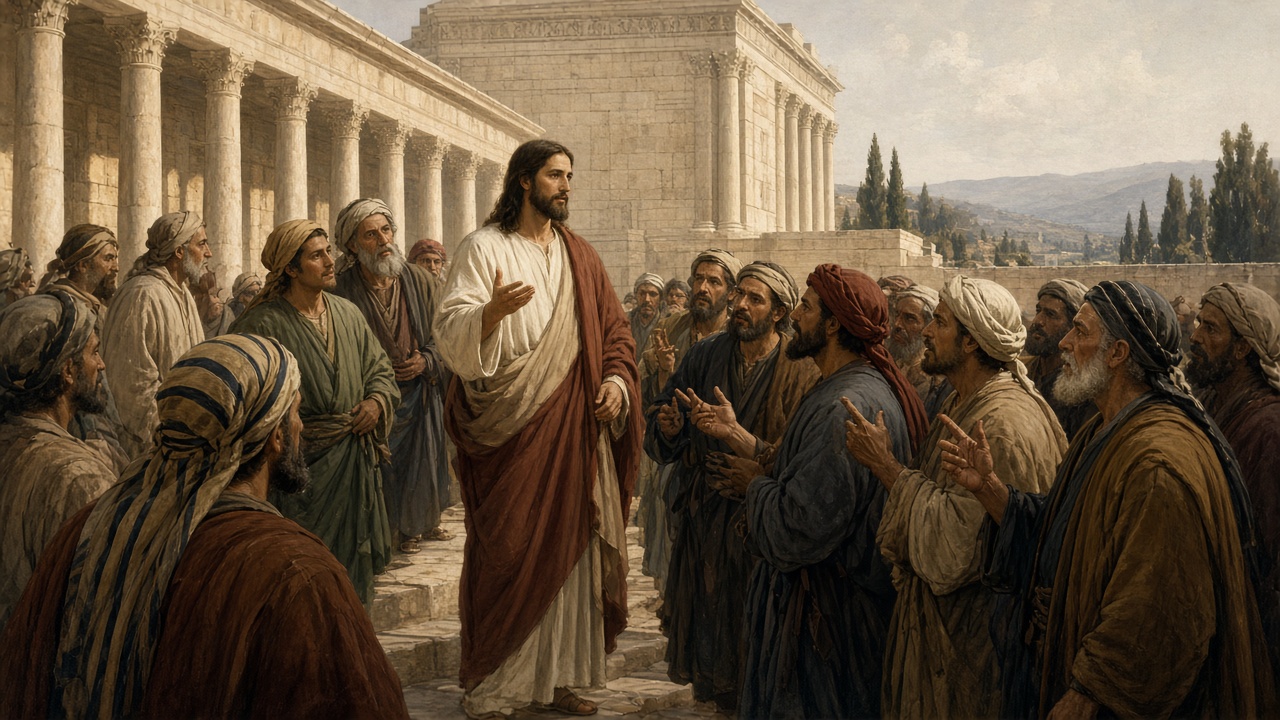
Jesus na Festa dos Tabernáculos
- Quando se aproximava a Festa judaica dos Tabernáculos, uma festa de sete dias, Jesus permaneceu na Galileia e evitou a Judeia, onde queriam matá-lo. Naquele tempo, a Judeia era a mais meridional das três divisões romanas da Palestina, distinta da Galileia e da Samaria; mais tarde ele subiu à festa em segredo e ensinou nos pátios do templo.Fontes: o próprio texto bíblico · Feast of Tabernacles · Judea
- A multidão estava dividida sobre o lugar de onde viria o Cristo. Alguns diziam que as Escrituras o colocam na linhagem de Davi e em Belém, a aldeia onde viveu Davi, oitavo e mais novo filho de Jessé; outros objetavam que ele não podia vir da Galileia, região há muito chamada Galileia dos gentios, e os fariseus insistiam que nenhum profeta vem de lá.Fontes: o próprio texto bíblico · David · Galilee
- Nicodemos, fariseu e membro do Sinédrio, já tinha ido a Jesus de noite. Quando os guardas enviados para prender Jesus voltaram sem ele, Nicodemos protestou e perguntou se a lei deles condenava um homem antes de ouvi-lo e de apurar o que ele tinha feito.Fontes: o próprio texto bíblico · Nicodemus
Notas escritas com auxílio de IA a partir de fontes abertas (Theographic Bible Metadata, CC BY-SA 4.0; Easton’s Bible Dictionary, domínio público) e revisadas antes de publicar.
Lugares deste capítulo
- Galilee · 32.760, 35.527 · versículos 1, 3, 9, 41, 52
- Judea · Hoje: Judea 1 · 31.777, 35.234 · versículos 1, 3
- Jerusalem · 31.777, 35.234 · versículo 25
- Bethlehem · 31.704, 35.208 · versículo 42
Só aparecem lugares com identificação de alta confiança (90% ou mais segundo as fontes acadêmicas reunidas pelo OpenBible). Mapa da época: DARE (Digital Atlas of the Roman Empire), CC BY 4.0; mapa atual: © colaboradores do OpenStreetMap; lugares: OpenBible.info (CC BY 4.0).
Créditos e licença desta tradução
Nǫ̀htsı̨̨ Nı̨̨htł'è
Dogrib: Dogrib Genesis & New Testament New Testament & Portions of Old Testament
copyright © 2009 Canadian Bible Society
Language: Dogrib
Translation by: Canadian Bible Society
Tłı̨chǫ Genesis and New Testament
About Tłı̨chǫ
Tłı̨chǫ (Dogrib) is a Na-Dene (Athabaskan) language. It is spoken by the First Nations Tłı̨chǫ people in the Northwest Territories in Canada. It has the largest number of speakers of any of the Aboriginal language communities in the NWT, and is one of the official languages of the Northwest Territories.
About This Translation
This translation includes the book of Genesis and the New Testament in Tłı̨chǫ. The first edition of the Tłı̨chǫ New Testament was published in 2003. It was a historic event, as it was the first time in more than a hundred years that a complete New Testament was published for one of the Dene First Nations in the Territories. The first edition was well received and quickly sold out. In the meantime the book of Genesis had been completed. Consequently, the 2008 reprint of the Tłı̨chǫ New Testament included Genesis.
Though this translation of the New Testament and Genesis took a total of ten years, the people who worked on it built on years of labor invested by the Tłı̨chǫ people, elders, priests and missionaries, translators, educators, and linguists. The material contained in this book was checked and approved by consultants from Wycliffe Bible Translators and the Canadian Bible Society.
If you are interested in obtaining a printed copy of this Bible, please contact the Canadian Bible Society at http://www.biblescanada.com .
Copyright Information
Dogrib Genesis and New Testament © 2003, 2008 Canadian Bible Society
The text of the Bible in Tłı̨chǫ that appears in this electronic format or website is for personal use only.
Up to five hundred (500) verses of the Bible text in any form (written, visual, electronic or audio) may be quoted without permission. The quoted verses may not be more than 50% of a complete book of the Bible, or more than 25% of the total text of the work in which they are quoted. Prior written permission must be obtained for any other use of the text. Copyright acknowledgement must in all cases appear on the title or copyright page.
For more information on copyright conditions or to apply, visit http://www.biblesociety.ca/copyright .
This translation is made available to you under the terms of the
Creative Commons Attribution-Noncommercial-No Derivatives license 4.0.
You may share and redistribute this Bible translation or extracts from it in any format, provided that:
You include the above copyright and source information.
You do not sell this work for a profit.
You do not change any of the words or punctuation of the Scriptures.
Pictures included with Scriptures and other documents on this site are licensed just for use with those Scriptures and documents.
For other uses, please contact the respective copyright owners.
2014-04-22
Fonte: http://ebible.org/dgrDOGNT/ · eBible.org