João 4
Nǫ̀htsı̨̨ Nı̨̨htł'è · Toque num versículo para ver as referências cruzadas.
Zezì Samarıa gots'ǫ ts'èko ts'ǫ̀ gode
1Pharısee gı̨ı̨lı̨ı̨ sìı Zezì, John-Baptıst nahk'e dǫ łǫ k'ètaìdzı̨ eyıts'ǫ wecheekeè łǫ ajà ghǫ gıìkw'o. 2Hanìkò Zezì ededı̨ dǫ k'ètaìdzı̨-le, wecheekeè aget'ı̨. 3Zezì hagedı ghǫ ıìkw'o ekò Judea nèk'e gots'ǫ naèhtła, Galılee nèk'e ts'ǫ̀ anajà.
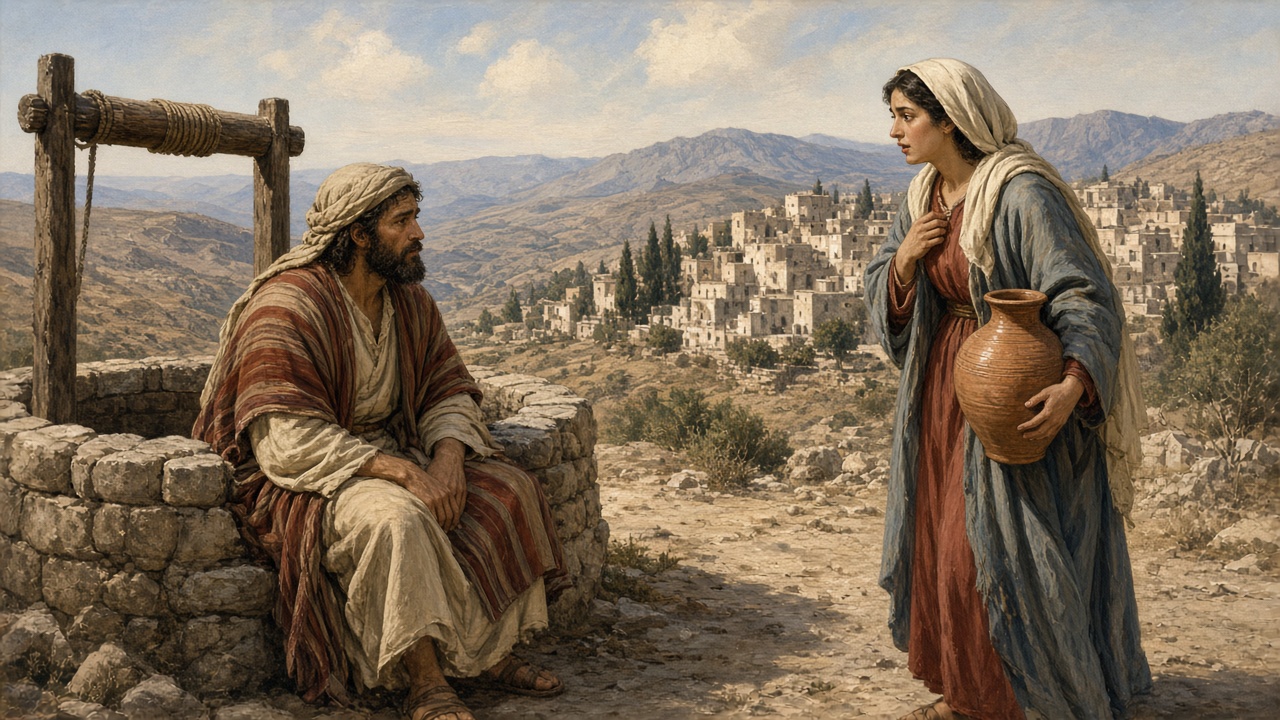
4Samarıa nèk'e gok'egı̨į̀de, hanì gıgha hòɂǫ t'à. 5Eyı nèk'e kǫ̀ta Sykar ts'ǫ̀ nègı̨ı̨de. Jacob, dèè edeza Joseph ghàı̨ɂǫǫ sìı ts'ǫ̀ gǫǫwà-le hǫt'e. 6T'akwe whaà Jacob dèè goyìı tı-ts'ìhchıı-k'è gòhtsı̨ı̨ sìı eyı gòɂǫ. Zezì nıwà dèhtła t'à nìı̨tsǫ, eyı tı-ts'ìhchıı-k'è gà dèhkwà. Dzętanı ekìıyeè k'e agǫ̀ht'e. (Wecheekeè t'asìı nàgeehdì ha kǫ̀ta ts'ǫ̀ geède ı̨lè.) Tı-ts'ìhchıı-k'è|src="HK083B.tif" size="span" ref="4.6"
Nı̨į̀là kǫ̀ta Samarıa gots'ǫ ts'èko tı ìhchı ha eyı nììtła. Zezì yets'ǫ̀ hadı, “Tı sàı̨dı,” yèhdı.
9Ts'èko yets'àèhyeh t'à hayèhdı, “Ekò nı̨ Israel got'ı̨į̀ anet'e; sı̨ sìı Samarıa gots'ǫ ts'èko aht'e. Dànì t'à tı sı̨ı̨kè?” yèhdı. (Israel got'ı̨į̀, Samarıa got'ı̨į̀ xè aget'ı̨ ha gı̨ı̨wǫ-le t'à ts'èko hanì yets'ǫ̀ goı̨de.)
10Zezì hayèhdı, “Nǫ̀htsı̨ ayìı dǫ ghàɂàa sìı wek'èı̨zǫ nı̨dè, eyıts'ǫ amìı tı neekèe sìı wek'èı̨zǫ nı̨dè, tı wı̨ı̨kè ha ı̨lè. Hanì-ı̨dè tı wet'à ts'eedaa neghàedı ha ı̨lè,” yèhdı.
11Ts'èko yets'ǫ̀ hadı, “K'àowo, wet'à tı ts'ìhchıı nets'ǫ-le eyıts'ǫ tı-ts'ìhchıı-k'è ı̨zhıì tı ts'ǫ̀ gǫǫwà. Eyıt'à edı̨į̀ gots'ǫ tı wet'à ts'eedaà anele lì? 12Gocho Jacob wenahk'e anet'e nì-ghǫ aı̨dı? Ededı̨ dıı tı-ts'ìhchıı-k'è goghàı̨ɂǫ hǫt'e. Ededı̨ jǫ gots'ǫ tı ats'e, weza sı eyıts'ǫ wets'ǫ tıts'aàdìı sı jǫ tı gıats'e hǫt'e,” yèhdı.
13Zezì yets'ǫ̀ hadı, “Amìı dıı tı yedǫǫ sìı k'achı̨ tı ghaewıì ade ha hǫt'e. 14Hanìkò amìı tı weghàehdıı sìı k'achı̨ tı wı̨ı̨zìı ghaewı ha nıìle. Tı weghàehdıı sìı weyìı gots'ǫ tı xàelı̨ı̨ lade ha; yet'à welǫ whìle ts'ǫ̀ eda ha,” yèhdı.
15Ts'èko yets'ǫ̀ hadı, “K'àowo, k'achı̨ tı ghaehwhı ha-le t'à, eyı tı seghàı̨dı, hanì-ı̨dè t'aats'ǫǫ̀ jǫ ts'ǫ̀ tı ghǫehda ha-le,” yèhdı.
16Zezì yets'ǫ̀ hadı, “Nedǫǫ̀ xàątła gà wexè jǫ nàątła,” yèhdı.
17Ts'èko yets'ǫ̀ hadı, “Sedǫǫ̀ gǫ̀hłı̨ nıìle,” yèhdı.
Eyıt'à Zezì yets'ǫ̀ hadı, “Ehkw'ı aı̨dı, nedǫǫ̀ gǫ̀hłı̨ nıìle. 18Nedǫǫ̀ sı̨làı gòı̨lè eyıts'ǫ dıì dǫ wexè nàądèe sìı nedǫǫ̀ nıìle. Ehkw'ı xàyanehtı,” yèhdı.
19Ts'èko hadı, “K'àowo, nakwenàoɂǫǫ anet'e nǫǫ̀. 20Gocho dıı shìh k'e Nǫ̀htsı̨ ts'ǫ̀ yagı̨ı̨htı hǫt'e. Hanìkò naxı̨ Israel got'ı̨į̀ aahłı̨ı̨ sìı Jerusalem ekǫ zǫ dǫ hazǫǫ̀ Nǫ̀htsı̨ ts'ǫ̀ yagehtı ha dahdı,” yèhdı.
21Zezì yets'ǫ̀ hadı, “Ts'èko, ehkw'ı anèehsı̨, ı̨daà nı̨dè jǫ shìhka zǫ eyıts'ǫ Jerusalem ekǫ zǫ Nǫ̀htsı̨-Gotà ts'ǫ̀ yaahtı ha nıìle. 22Naxı̨ dǫ yàahłı̨ı̨ sìı ayìı ts'ǫ̀ yaahtıı sìı wek'èahsǫ nıìle; goxı̨ amìı ts'ǫ̀ yats'ehtıı sìı wek'èts'eezǫ hǫt'e, dǫ edaxàlee sìı Israel got'ı̨į̀ gots'ǫ ne t'à. 23Įdaà nı̨dè —hòt'a jǫ nìhǫǫwo— amìı Nǫ̀htsı̨-Gotà ts'ǫ̀ sıì yagehtı ha gı̨ı̨wǫ nı̨dè, Nǫ̀htsı̨ wets'ǫ Įnì t'à ehkw'ı gıts'ǫ̀ yahtı ha hǫt'e. Gotà hanì wets'ǫ̀ yats'ehtı ha goı̨hwhǫ hǫt'e. 24Nǫ̀htsı̨ sìı Įnì hǫt'e. Dǫ Nǫ̀htsı̨ ts'ǫ̀ yagehtıı sìı wets'ǫ Įnì t'à ehkw'ı gıts'ǫ̀ yahtı ha hǫt'e,” yèhdı.
25Ts'èko hadı, “Įdaà nı̨dè Messıah nììtła ha wek'èehsǫ. Nììtła nı̨dè t'asìı hazǫǫ̀ godaedı ha hǫt'e,” yèhdı. (“Messıah” gedı nı̨dè “Chrıst” gedıì-agedı.)
26Eyıt'à Zezì yets'ǫ̀ hadı, “Sı̨, nets'ǫ̀ gohdee sìı eyı aht'e,” yèhdı.
Zezì wecheekeè wets'ǫ̀ nǫǫ̀gı̨ı̨de
27Ekìıyeè k'e Zezì wecheekeè nǫǫ̀gı̨ı̨de. Zezì ts'èko ts'ǫ̀ gode t'à sıì gıgha enıìyah. Hanìkò Zezì dagı̨ı̨hke t'à, “Ayìı neewǫ?” hanì-le-ı̨dè “Dànìghǫ wets'ǫ̀ goı̨de?” gıìhdı-le.
28Ts'èko edetıtǫǫ̀ dę kǫ̀ta ts'ǫ̀ naèhtła. Ekǫ dǫ ts'ǫ̀ dıı hadı, 29“Sek'èahdè! Yeè dǫ whedaa sìı t'asìı hazǫǫ̀ hahłàa sìı yek'èezǫ. Asį̀į̀ eyı Chrıst at'ı̨ sǫnı?” gòhdı. 30Eyıt'à kǫ̀ta gots'ǫ dǫ hazǫǫ̀ Zezì ts'ǫ̀ geède.
31Ts'èko naèhtła tł'axǫǫ̀ Zezì wecheekeè gıts'ǫ̀ hadı, “K'àowo, t'asìı ghǫ shèı̨tı̨,” gıìhdı.
32Hanìkò Zezì gots'ǫ̀ hadı, “Ayìı weghǫ shèhtı̨ ha sìı wek'èahsǫ nıìle,” gòhdı.
33Eyıt'à wecheekeè dałegeehke, “Asį̀į̀ dǫ t'asìı yeghànı̨ı̨dì ghǫ adı?” gedı.
34Zezì gots'ǫ̀ hadı, “Amìı jǫ ts'ǫ̀ sı̨ı̨hɂàa sìı wek'èaht'e ha hǫt'e eyıts'ǫ la seghàı̨ɂǫǫ sìı weghǫ naht'è ha hǫt'e. Eyı sedıì hǫt'e. 35Naxı̨ dǫ yàahłı̨ı̨ sìı dıı haahdı: ‘Dı̨ sa tł'axǫǫ̀ nı̨dè t'asìı dehshee sìı nàts'ehtsį̀ gà xehkǫ̀ goyats'eewa ha,’ dahdı. Hanìkò sı̨ dıı hanaxèehsı̨, ‘Dèè k'e k'eaht'į̀. T'asìı dehshee sìı dıìdì ajà, hòt'a nàts'ehtsį̀ ha nezı̨.’ 36Dǫ t'asìı dıìdìı xàyeht'àa sìı hòt'a dıì-t'ıì wets'àɂeedì hǫt'e. Hòt'a dıì-t'ıì welǫ whìle ts'ǫ̀ geeda ha dǫ łǫ nàhtsį̀. Hanì-ı̨dè dǫ t'asìı dehshee nègelee sìı eyıts'ǫ dǫ t'asìı dıìdìı nàgehtsį̀ı̨ sìı į̀łah ełexè gınà ha hǫt'e. 37Dǫ dıı hagedı ehkw'ı hǫt'e, ‘Dǫ ı̨łè wet'à t'asìı dehshee nèyele, eyıts'ǫ dǫ ı̨łè wets'ǫ t'asìı dıìdìı nàyehtsį̀.’ 38La wek'e eghàlaahdà-le kò, wets'ǫ t'asìı dehshee nàahtsį̀ ha ts'ǫ̀ naxehɂa hǫt'e. Dǫ eyıì-le hòtł'ò gıghàlagı̨ı̨dà, gılaà gots'ǫ t'asìı nezı̨ı̨ nàahtsį̀ ha,” Zezì edecheekeè gòhdı.
Samarıa got'ı̨į̀ łǫ Zezì ehkw'ı adı gı̨ı̨hwhǫ
39Eyı kǫ̀ta gots'ǫ Samarıa got'ı̨į̀ łǫ Zezì ehkw'ı adı gı̨ı̨wǫǫ̀ agejà. Eyı ts'èko yeghǫ dıı hadı t'à, “T'asìı hazǫǫ̀ hahłàa sìı sets'ǫ̀ hadı.” 40Eyıt'à Samarıa got'ı̨į̀ Zezì ts'àgede. Whaà-lea ts'ǫ̀ gogà wheęda gıìhdı t'à nàke dzęę̀ ts'ǫ̀ gogà aı̨t'è. 41Zezì weyatıì ts'ıhɂǫ̀ denahk'e dǫ łǫ gıgha ehkw'ı-ahodıì agejà.
42Eyıt'à ts'èko ts'ǫ̀ hagedı, “Neyatıì zǫ t'à gogha ehkw'ı-ahodı nıìle, hanìkò goxı̨ xàè weyatıì ts'ıìkw'o t'à. Ededı̨ sìı xàè dıı nèk'e dǫ Edaxàgolee elı̨ hǫt'e, hotıì wek'èts'eezǫǫ̀ ats'ejà,” gıìhdı.
Dèe-ts'ǫ̀-k'àowo-cheekeè weza k'aàt'ıì ajà
43Zezì, nàke dzęę̀ ts'ǫ̀ eyı dǫ goxè aı̨t'è tł'axǫǫ̀ Galılee nèk'e ts'ǫ̀ ajà. 44(Zezì ededı̨ dıı hadı ı̨lè, “Nakwenàoɂǫǫ sìı wekǫ̀ta gots'ǫ dǫ agı̨ı̨t'ee sìı dǫ gıìt'ı̨ nıìle,” hadı.) 45Zezì Galılee nèk'e nììtła ekò ekǫ got'ı̨į̀ gıaɂı̨ t'à, gınà. Kǫ̀ta Jerusalem ekǫ dzędeè Passover gıxè agòjà t'à Zezì dànì eghàlaı̨dàa sìı gıaɂı̨ ı̨lè.
46Zezì k'achı̨ Galılee nèk'e kǫ̀ta Cana nììtła, ekǫ tı t'à jìetì whehtsı̨ ı̨lè. Dèe-ts'ǫ̀-k'àowo-cheekeè ı̨łè ekǫ wheda, kǫ̀ta Capernaum ekǫ weza eyaelı̨. 47Eyı k'àowo, Zezì Judea nèk'e gots'ǫ Galılee nèk'e nììtła yeghǫ ıìkw'o t'à yets'àèhtła. Zezì ghǫnàdaetì, “Sek'èı̨tła, sezaa eładaawıı sìı k'aàt'ıì awı̨ı̨le,” yèhdı, yeghǫnàdaetì.
48Zezì yets'ǫ̀ hadı, “Naxıdaà enıìyah nàhòwo lenǫsıı naxıgha ehkw'ı-ahodı ha nıìle,” yèhdı.
49Dèe-ts'ǫ̀-k'àowo-cheekeè hadı, “K'àowo, sezaa ełaàwı kwe sek'èı̨tła,” yèhdı.
50Zezì hayèhdı, “Nekǫ̀ ts'ǫ̀ naı̨tłe. Nezaa eda ha,” yèhdı.
Eyı dǫ Zezì ehkw'ı adı nıwǫ t'à edekǫ̀ ts'ǫ̀ naèhtła. 51K'àowo ı̨łaà tı̨lı k'e naetłe ekò wecheekeè godı xè gıghaàgı̨ı̨de, hagedı, “Nezaa eda xè k'aàt'ıì anajà,” gıìhdı.
52K'àowo gots'ǫ̀ hadı, “Dàtłǫ nìı̨ɂǫ k'e k'aàt'ıì ajà?”
“Įxę̀ę, ı̨łè nìı̨ɂǫ ekìıyeè, edı-elı̨-le ajà ı̨lè,” gıìhdı.
53Eyıt'à k'àowo, Zezì dàyèhdıı sìı hotıì eyı sadzeè k'e agòjà yek'èhoèhzà. “Nezaa eda ha,” Zezì yèhdı ı̨lè. Eyı hagòjà t'à ededı̨ eyıts'ǫ dǫ hazǫǫ̀ wekǫ̀ nàgedèe sìı gıgha ehkw'ı-ahodıì agejà.
54Dıì xè Zezì nàekeè enıìyah hòèhtsı̨ hǫt'e. Judea nèk'e gots'ǫ Galılee nèk'e nǫ̀ǫtła tł'axǫǫ̀ eyı hagòjà.
Você sabia?
Água viva na Samaria
- Jesus deixou a Judeia para voltar à Galileia, e o Evangelho diz que ele precisava passar pela Samaria. Sob os romanos, no tempo de Jesus, a Judeia era a mais ao sul das três divisões da Palestina, distinta da Samaria e da Galileia, e a narrativa observa que os judeus não se relacionavam com os samaritanos.Fontes: o próprio texto bíblico · Judea
- Ele chegou a Sicar, perto do terreno que Jacó tinha dado a seu filho José e, cansado da viagem, sentou-se junto ao poço de Jacó. O dicionário bíblico de Easton (1897) registra que, desde o tempo das Cruzadas, Sicar costumava ser identificada com Siquém, mas que explorações a identificaram com 'Askar, um pequeno povoado samaritano na base sul de Ebal, cerca de uma milha ao norte do poço.Fontes: o próprio texto bíblico · Sychar
- A mulher contrastou a adoração neste monte com a afirmação dos judeus de que era preciso adorar em Jerusalém, e falou de um Messias que havia de vir, chamado Cristo. Quando os discípulos voltaram de comprar comida na cidade, ficaram surpresos de que Jesus estivesse falando com uma mulher.Fontes: o próprio texto bíblico
Notas escritas com auxílio de IA a partir de fontes abertas (Theographic Bible Metadata, CC BY-SA 4.0; Easton’s Bible Dictionary, domínio público) e revisadas antes de publicar.
Lugares deste capítulo
- Galilee · 32.760, 35.527 · versículos 3, 43, 45, 46, 47, 54
- Judea · Hoje: Judea 1 · 31.777, 35.234 · versículos 3, 47, 54
- Samaria · Hoje: Samaria 2 · 32.276, 35.195 · versículos 4, 5, 7, 9
- Jerusalem · 31.777, 35.234 · versículos 20, 21, 45
- Mount Gerizim · 32.199, 35.273 · versículo 20
Só aparecem lugares com identificação de alta confiança (90% ou mais segundo as fontes acadêmicas reunidas pelo OpenBible). Mapa da época: DARE (Digital Atlas of the Roman Empire), CC BY 4.0; mapa atual: © colaboradores do OpenStreetMap; lugares: OpenBible.info (CC BY 4.0).
Créditos e licença desta tradução
Nǫ̀htsı̨̨ Nı̨̨htł'è
Dogrib: Dogrib Genesis & New Testament New Testament & Portions of Old Testament
copyright © 2009 Canadian Bible Society
Language: Dogrib
Translation by: Canadian Bible Society
Tłı̨chǫ Genesis and New Testament
About Tłı̨chǫ
Tłı̨chǫ (Dogrib) is a Na-Dene (Athabaskan) language. It is spoken by the First Nations Tłı̨chǫ people in the Northwest Territories in Canada. It has the largest number of speakers of any of the Aboriginal language communities in the NWT, and is one of the official languages of the Northwest Territories.
About This Translation
This translation includes the book of Genesis and the New Testament in Tłı̨chǫ. The first edition of the Tłı̨chǫ New Testament was published in 2003. It was a historic event, as it was the first time in more than a hundred years that a complete New Testament was published for one of the Dene First Nations in the Territories. The first edition was well received and quickly sold out. In the meantime the book of Genesis had been completed. Consequently, the 2008 reprint of the Tłı̨chǫ New Testament included Genesis.
Though this translation of the New Testament and Genesis took a total of ten years, the people who worked on it built on years of labor invested by the Tłı̨chǫ people, elders, priests and missionaries, translators, educators, and linguists. The material contained in this book was checked and approved by consultants from Wycliffe Bible Translators and the Canadian Bible Society.
If you are interested in obtaining a printed copy of this Bible, please contact the Canadian Bible Society at http://www.biblescanada.com .
Copyright Information
Dogrib Genesis and New Testament © 2003, 2008 Canadian Bible Society
The text of the Bible in Tłı̨chǫ that appears in this electronic format or website is for personal use only.
Up to five hundred (500) verses of the Bible text in any form (written, visual, electronic or audio) may be quoted without permission. The quoted verses may not be more than 50% of a complete book of the Bible, or more than 25% of the total text of the work in which they are quoted. Prior written permission must be obtained for any other use of the text. Copyright acknowledgement must in all cases appear on the title or copyright page.
For more information on copyright conditions or to apply, visit http://www.biblesociety.ca/copyright .
This translation is made available to you under the terms of the
Creative Commons Attribution-Noncommercial-No Derivatives license 4.0.
You may share and redistribute this Bible translation or extracts from it in any format, provided that:
You include the above copyright and source information.
You do not sell this work for a profit.
You do not change any of the words or punctuation of the Scriptures.
Pictures included with Scriptures and other documents on this site are licensed just for use with those Scriptures and documents.
For other uses, please contact the respective copyright owners.
2014-04-22
Fonte: http://ebible.org/dgrDOGNT/ · eBible.org