João 16
Nǫ̀htsı̨̨ Nı̨̨htł'è · Toque num versículo para ver as referências cruzadas.
1“Ts'ıɂǫ̀ aahde ch'à eyı hazǫǫ̀ naxıts'ǫ̀ haehsı̨ hǫt'e. 2Gıts'ǫ ełègehdèe-kǫ̀ gots'ǫǫ̀ xànaxegeezhı ha ne. Whaà-le-t'ıì dǫ ełaànaxegìhde ha eyıts'ǫ Nǫ̀htsı̨ gha sìghà aget'ı̨ gı̨ı̨wǫ ha. 3Setà eyıts'ǫ sı̨ gok'ègeezǫ-le t'à hanì naxıts'ǫ̀ eghàlageeda ha hǫt'e. 4Dıı naxıts'ǫ̀ haehsı̨ı̨ sìı eyı nèhòı̨wo nı̨dè dànì weghǫ naxıts'ǫ̀ gohdee sìı wenaahdì ha. T'akwełǫ̀ǫ̀ eyı naxıts'ǫ̀ haehsı̨-le ı̨lè, ı̨łaà naxıxè whıhda ı̨lè t'à.
Yedàyeh Nezı̨ı̨ dànì eghàlaeda
5“Hòt'a dıì amìı sı̨ı̨hɂàa sìı wets'ǫ̀ anahde ha. Hanìkò naxı̨ sìı, ‘Edı̨į̀ anet'ı̨?’ sèahdı t'à daseahke-le. 6Eyı naxıts'ǫ̀ haehsı̨ t'à sıì naxıgha dìì agòjà. 7Hanìkò ehkw'ı anaxèehsı̨: Naxıts'ǫǫ̀ naehtła ha nı̨dè naxıgha sìghà agode ha hǫt'e. Naehtła lenǫsıı eyı naxıts'àdıı elı̨ı̨ sìı naxıts'ǫ̀ ade ha-le. Hanìkò naehtła nı̨dè naxıts'ǫ̀ awehłe ha. 8Naxıts'àdıı elı̨ı̨ sìı nììtła nı̨dè dıı nèk'e dǫ hołı̨ı̨ k'ę̀ę̀ geedaa gınıedì agole ha, dànì ehkw'ıì agede ha eyıts'ǫ dànì dǫ ehkw'ı gısınìyaetı ha sìı gınıedì agole ha. 9Dǫ gıgha ehkw'ı aehsı̨-le t'à hołı̨ı̨ k'ę̀ę̀ geeda hǫt'e. 10Setà ts'ǫ̀ anahde ha, ekǫ anahjà nı̨dè k'achı̨ seahɂį̀ ha-le, eyıt'à naxıts'àdıı elı̨ı̨ sìı dǫ dànì ehkw'ıì agede ha sìı gınıedì agole ha. 11Eyıts'ǫ dıı nèè ts'ǫ̀ k'àowo sìı hòt'a wesınìyaetı ne t'à dıı nèk'e dǫ gıhołı̨į̀ k'èxa gısınìyaetı hǫt'e.
12“Įłaà t'asìı łǫ naxıts'ǫ̀ haehsı̨ ha dehwhǫ, hanìkò dıì eyı gha naxınì nàtso-le. 13Hanìkò Yedàyeh Nezı̨ı̨ nììtła nı̨dè t'asìı hazǫǫ̀ ehkw'ı ne sìı naxıts'ǫ̀ hadı ha, ehkw'ı zǫ gode ne t'à. Ededahxà gode ha nıìle, dàehsı̨ı̨ yeèhkw'ǫǫ sìı eyı zǫ t'à gode ha, eyıts'ǫ ı̨daà ayìı dàgode ha sìı naxıts'ǫ̀ hadı ha. 14Yedàyeh Nezı̨ı̨ ayìı sets'ǫ ne sìı yìhchı gà wek'èahsǫ anaxele ha. Eyı wet'à seghàsǫhoedıì ayele ha. 15T'asìı hazǫǫ̀ Setà wets'ǫ sìı sets'ǫ hǫt'e. Eyıt'à dıı hanaxèehsı̨, ‘Yedàyeh Nezı̨ı̨ ayìı sets'ǫ ne sìı yìhchı gà wek'èahsǫ anaxele ha.’
16“Whaà-le-t'ıì seahɂį̀ ha-le, eyıts'ǫ k'achı̨ whaà-le-t'ıì seahɂį̀ ha,” Zezì gòhdı.
Zezì wecheekeè ts'ǫǫ̀gı̨ı̨wǫ tł'axǫǫ̀ gınà agode ha
17Zezì wecheekeè mǫ̀hdaa ełets'ǫ̀ hagedı, “Dàdıì-adı, ‘Whaà-le-t'ıì seahɂį̀ ha-le, eyıts'ǫ k'achı̨ whaà-le-t'ıì seahɂį̀ ha?’ eyıts'ǫ dıı hadı, ‘Setà wets'ǫ̀ anahde ha t'à,’ hadıı sìı dàdıì-adı,” gedı. 18K'achı̨ dałegeehke, “Dıı ayìı ayèhdı, ‘whaà-le-t'ıì’? Dàdıì-adıı sìı wenıts'eedì-le,” ełègeedı.
19Zezì eyı ghǫ dageehke ha gı̨ı̨wǫ gok'èezǫ t'à gots'ǫ̀ hadı, “ ‘Whaà-le-t'ıì seahɂį̀ ha-le, eyıts'ǫ k'achı̨ whaà-le-t'ıì seahɂį̀ ha,’ dehsı̨ı̨ sìı ayìı awèehsı̨ dahwhǫ t'à weghǫ dałeahke nì-aahdı? 20Ehkw'ı anaxèehsı̨, dıı nèk'e dǫ gıgha sìgoèt'ı̨, hanìkò naxı̨ hòtł'ò aahtse ha hǫt'e. Sıì naxıdzeè nànııtì ha, hanìkò naxınì ładı̨į̀ ade ha. Naxıdzeè nànııtì ı̨lèe sìı wet'à naxınà agode ha. 21Ts'èko chekoa nìhtè ha nìkw'o nı̨dè hòtł'ò eyaìhłè, hanìkò webebìa gǫ̀hłı̨ tł'axǫǫ̀ nı̨dè wegha eyaı̨lèe sìı yenadì-le, webebìa dǫ elı̨ t'à wınà. 22Dıı naxı̨ sı haaht'e: Dıì naxıdzeè nànııtì hǫt'e, hanìkò k'achı̨ naxeehɂı̨ nı̨dè sıì naxıgha sìgoèt'ı̨ ha, eyı sìı dǫ wı̨ı̨zìı naxıghǫ yìhchı ha nıìle. 23Eyı dzęę̀ k'e nı̨dè k'achı̨ t'asìı seahkè ha-le. Ehkw'ı anaxèehsı̨, ayìı dahwhǫǫ sìı sıızì t'à Setà weahkè nı̨dè naxıghàyele ha hǫt'e. 24Dıı haı̨wa gots'ǫ̀ sıızì t'à t'asìı wı̨ı̨zìı Setà weahkè whìle hǫt'e. Eyıt'à t'asìı weahkè nı̨dè naxıghàɂà ha ne, hanì-ı̨dè sıì naxınà agode ha.
25“Godı t'à naxıts'ǫ̀ goıhde ı̨lè, hanìkò nǫǫde nı̨dè hanıı yatıì t'à k'achı̨ hoghànaxeehtǫ ha nıìle; Setà weghǫ ehkw'ı naxıts'ǫ̀ gohde ha. 26Ekìıyeè k'e nı̨dè sıızì t'à yaahtı ha. Naxıgha Setà ts'ǫ̀ yahtı ha dehsı̨į̀-aehsı̨-le. 27Į̀le, seghǫnıahtǫ eyıts'ǫ Nǫ̀htsı̨ yak'e whedaa gots'ǫ aht'ı̨ naxıgha ehkw'ı-ahodı t'à, Setà ededı̨ xàè naxıghǫneètǫ hǫt'e. 28Setà gots'ǫ dıı nèk'e ts'ǫ̀ ahjà. Hòt'a dıı nèè gots'ǫǫ̀ anahde ha, Setà wets'ǫ̀ anahde ha,” Zezì gòhdı.
29Zezì wecheekeè hagedı, “K'ǫǫ̀t'a godı dę ehkw'ı gots'ǫ̀ xàyanehtı. 30T'asìı hazǫǫ̀ k'èı̨zǫ hǫt'e wek'èts'eezǫǫ̀ ats'ejà, eyıts'ǫ dǫ danegeehke kwe gınàowoò k'èı̨zǫ. Eyı weghàà Nǫ̀htsı̨ gots'ǫ anet'e gogha ehkw'ı-ahodıì ajà hǫt'e,” gıìhdı.
31Zezì hagòhdı, “K'ǫǫ̀t'a naxıgha ehkw'ı-ahodıì agòjà! 32Hanìkò whaà-le-t'ıì hazǫǫ̀ ekèahdè ha ne, hòt'a eyı nìhǫǫwo hǫt'e. Hazǫǫ̀ naxıkǫ̀ ts'ǫ̀ naahdè anaxedle ha, sı̨ whatsǫǫ̀ whıhda aseahłe ha. Hanìkò whatsǫǫ̀ whıhda nıìle, Setà sexè at'ı̨ hǫt'e.
33“Dıı hazǫǫ̀ naxıts'ǫ̀ haehsı̨ hǫt'e, hanì-ı̨dè sı̨ set'à naxıgha ts'èwhı̨į̀ hòɂǫ ha. Dıı nèk'e naxıxè hoìla ha hǫt'e. Hanìkò sı̨ sìı dıı nèk'e hazǫǫ̀ gıghǫèhnǫ ne t'à, naxınì nàtsoò aahłe,” Zezì gòhdı.
Você sabia?
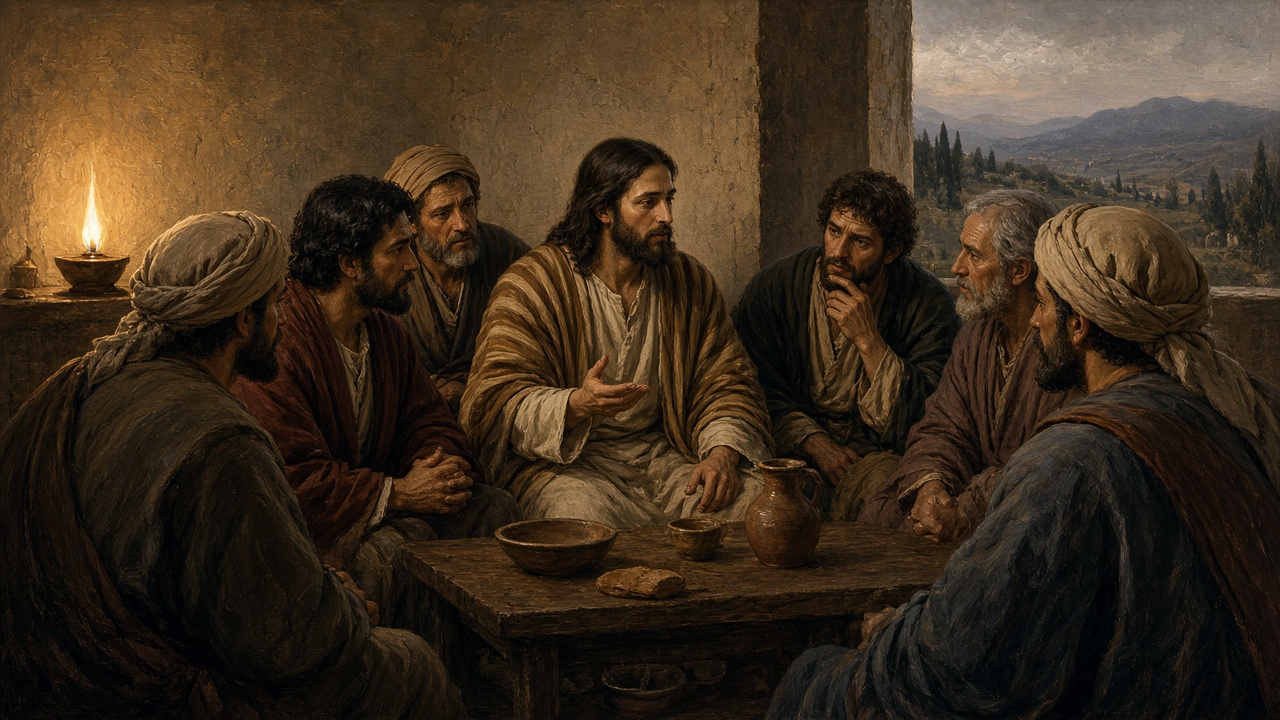
A partida, o Advogado e a alegria após a tristeza
- As anotações dos eventos situam este capítulo no Discurso do Cenáculo, um episódio de um dia dentro da Semana Santa, que essas anotações indicam como um período de oito dias.Fontes: Upper Room Discourse · Holy Week
- Jesus diz aos discípulos que eles serão expulsos das sinagogas. Acrescenta que virá um tempo em que quem os matar pensará que está oferecendo um serviço a Deus, porque não conheceram o Pai nem a ele.Fontes: o próprio texto bíblico
- Ele diz que é para o bem deles que está indo embora, pois, se não partir, o Advogado não virá. Quando o Espírito da verdade vier, os guiará a toda a verdade, não falando por si mesmo, mas dizendo o que ouve e anunciando o que está por vir.Fontes: o próprio texto bíblico
Notas escritas com auxílio de IA a partir de fontes abertas (Theographic Bible Metadata, CC BY-SA 4.0; Easton’s Bible Dictionary, domínio público) e revisadas antes de publicar.
Créditos e licença desta tradução
Nǫ̀htsı̨̨ Nı̨̨htł'è
Dogrib: Dogrib Genesis & New Testament New Testament & Portions of Old Testament
copyright © 2009 Canadian Bible Society
Language: Dogrib
Translation by: Canadian Bible Society
Tłı̨chǫ Genesis and New Testament
About Tłı̨chǫ
Tłı̨chǫ (Dogrib) is a Na-Dene (Athabaskan) language. It is spoken by the First Nations Tłı̨chǫ people in the Northwest Territories in Canada. It has the largest number of speakers of any of the Aboriginal language communities in the NWT, and is one of the official languages of the Northwest Territories.
About This Translation
This translation includes the book of Genesis and the New Testament in Tłı̨chǫ. The first edition of the Tłı̨chǫ New Testament was published in 2003. It was a historic event, as it was the first time in more than a hundred years that a complete New Testament was published for one of the Dene First Nations in the Territories. The first edition was well received and quickly sold out. In the meantime the book of Genesis had been completed. Consequently, the 2008 reprint of the Tłı̨chǫ New Testament included Genesis.
Though this translation of the New Testament and Genesis took a total of ten years, the people who worked on it built on years of labor invested by the Tłı̨chǫ people, elders, priests and missionaries, translators, educators, and linguists. The material contained in this book was checked and approved by consultants from Wycliffe Bible Translators and the Canadian Bible Society.
If you are interested in obtaining a printed copy of this Bible, please contact the Canadian Bible Society at http://www.biblescanada.com .
Copyright Information
Dogrib Genesis and New Testament © 2003, 2008 Canadian Bible Society
The text of the Bible in Tłı̨chǫ that appears in this electronic format or website is for personal use only.
Up to five hundred (500) verses of the Bible text in any form (written, visual, electronic or audio) may be quoted without permission. The quoted verses may not be more than 50% of a complete book of the Bible, or more than 25% of the total text of the work in which they are quoted. Prior written permission must be obtained for any other use of the text. Copyright acknowledgement must in all cases appear on the title or copyright page.
For more information on copyright conditions or to apply, visit http://www.biblesociety.ca/copyright .
This translation is made available to you under the terms of the
Creative Commons Attribution-Noncommercial-No Derivatives license 4.0.
You may share and redistribute this Bible translation or extracts from it in any format, provided that:
You include the above copyright and source information.
You do not sell this work for a profit.
You do not change any of the words or punctuation of the Scriptures.
Pictures included with Scriptures and other documents on this site are licensed just for use with those Scriptures and documents.
For other uses, please contact the respective copyright owners.
2014-04-22
Fonte: http://ebible.org/dgrDOGNT/ · eBible.org