João 12
Nǫ̀htsı̨̨ Nı̨̨htł'è · Toque num versículo para ver as referências cruzadas.
Ts'èko Zezì k'e yìk'eetł'òo ayį̀į̀là
1Dzędeè Passover wexèhoìwı kwe ek'ètaı dzęę̀ k'e Zezì kǫ̀ta Bethany nììtła. Ekǫ Lazarus nàdè, eyı dǫ Zezì naìdà ayį̀į̀là ı̨lè. 2Zezì goghǫ nììtła t'à wegha nàsı̨ą gèhtsı̨. Martha gotaàɂeedì eyıts'ǫ Lazarus dǫ xè Zezì gà shètı̨. 3Mary yìk'eetł'òo dètìı nıyı̨ı̨xè; Zezì wekè k'e nałayeèdo gà edekwìghà t'à yekè deɂeedı. Eyı kǫ̀ goyìı hazǫǫ̀ ts'ǫ̀ yìk'eetł'òo łekǫǫ łedì ajà.
4Hanìkò wecheekeè ı̨łè Zhıdàà-Iscarıyot wìyeh, k'aodèe gotł'aàyehtè ha sìı, yeghǫ sǫadı, hadı, 5“Dànìghǫ eyı yìk'eetł'òo weghǫ nàèdì-le? Wesǫǫ̀mbaà dǫ-teèt'ı̨ı̨ ghàgele ha ı̨lè, ı̨łè xo eghàlats'ı̨ı̨dà xètłǫ hǫt'e,” hadı. 6Eyı hadıı sìı dǫ-teèt'ı̨ı̨ ghǫneètǫ t'à adı nıìle, hanìkò eeɂį̀ı̨-dǫǫ̀ elı̨ t'à, hadı. Ededı̨ sǫǫ̀mbawò-k'èdìı elı̨, eyıts'ǫ ı̨hk'è edegha sǫǫ̀mba ìhchı ı̨lè.
7Zezì yets'ǫ̀ hadı, “Whatsǫǫ̀ awet'į̀! Dıı yìk'eetł'òo sìı sekw'ǫǫ̀ nìtį̀ı̨ dzęę̀ gha yek'èdì hǫt'e. Hanì hòɂǫ ha t'à at'ı̨. 8Dǫ-teèt'ı̨ı̨ sìı t'aats'ǫǫ̀ naxıxè geeda ha hǫt'e, hanìkò sı̨ sìı t'aats'ǫǫ̀ naxıta whıhda ha nıìle,” yèhdı.
9Ekìıyeè k'e Zezì eyı wheda ghǫ egıìkw'o t'à, Israel got'ı̨į̀ łǫ eyı nègı̨ı̨de. Zezì geɂį̀ zǫ gha aget'ı̨ nıìle, hanìkò Lazarus naìdà ayį̀į̀làa sı geɂį̀ gha aget'ı̨. 10Lazarus wets'ıhɂǫ̀ Israel got'ı̨į̀ łǫ Zezì ehkw'ı adı gı̨ı̨wǫǫ̀ agejà xè Zezì ts'ǫ̀ łatageède. Eyıt'à yahtıı-gha-k'aodèe sìı Lazarus sı ełaàgıìhwhı ha ełexè yatı gèhtsı̨.
Zezì tłı̨tsoa k'e Jerusalem nììtła
12Ek'èdaedzęę̀ k'e dǫ łǫ gıxè dzędeè hołè gha Jerusalem nègı̨ı̨de. Zezì ekǫ ts'ǫ̀ etłe ghǫ gıìkw'o. 13ɂorı k'egele xè gınìhdǫǫ̀ geède. Yagìzeh xè hagedı,
“Hosanna! Gots'ǫ̀ K'àowo wedahxà nììtłaa sìı wexè sìghà welè!”
“Israel got'ı̨į̀ gha K'àowocho wexè sìghà hǫt'e,” gedıì yagìzeh.
14Zezì tłı̨tsoaza nıìchì gà yek'e wheda, dıı hanì weghǫ dek'eèhtł'è k'ę̀ę̀,
15“Zıon got'ı̨į̀ dahjı̨-le. K'eaht'į̀, naxıts'ǫ k'àowocho naetłe, tłı̨tsoaza k'e dawheda,” dek'eèhtł'è. Tłı̨tsoaza|src="HK001G.tif" size="span" ref="12.15"
16Wecheekeè t'akwe t'à eyı hazǫǫ̀ gınıedì-le. Zezì ı̨dòo newıìtı̨ tł'axǫǫ̀ eyı yatı hanì weghǫ dek'eèhtł'èe sìı k'ǫǫ̀t'a gık'èhoèhzà, eyıts'ǫ dıì dànì dǫ gıts'ǫ̀ k'ehoɂaa sìı eyı sı gık'èhoèhzà.
17Zezì, Lazarus kwe-yìı wekw'ǫǫ̀ whetǫǫ gots'ǫ “xàı̨tłe,” yèhdı t'à naìdà ayį̀į̀là ekò dǫ łǫ Zezì xè aget'ı̨ ı̨lè, eyıt'à eyı godıì t'à dǫ xè gogedo. 18Zezì hanì enıìyah hòèhtsı̨ ghǫ egıìkw'o t'à dǫ łǫ Zezì nìhdǫǫ̀ geède. 19Eyıt'à Pharısee gı̨ı̨lı̨ı̨ sìı ełets'ǫ̀ hagedı, “Weghàahda, dǫ hazǫǫ̀ gıts'ǫ̀ łeèhza! Hagot'ı̨ nı̨dè goxè nezı̨į̀ agode ha agot'ı̨ nıìle,” gedı.
Zezì ełaàgıìhwhı ha ghǫ gode
20Ekìıyeè k'e Greece got'ı̨į̀ dzędeè k'e Nǫ̀htsı̨ ts'ǫ̀ yagehtı ha, dǫ hazǫǫ̀ xè Jerusalem nègı̨ı̨de ı̨lè. 21Eyı Greece got'ı̨į̀, Zezì wecheekeè Phılıp ts'ǫ̀ geède. (Phılıp, Galılee nèk'e kǫ̀ta Bethsaıda gots'ǫ hǫt'e.) “Zezì wets'eɂį̀ ha ts'ı̨ı̨wǫ,” gıìhdı. 22Phılıp, Andrew ts'ǫ̀ hadı tł'axǫǫ̀, į̀łah Zezì ts'ǫ̀ hagedı.
23Zezì hagòhdı, “Hòt'a Dǫ-wet'àaɂàa-deè wexè enıìyah nàhòwo ha nìkw'o. 24Ehkw'ı anaxèehsı̨, jìe dèè k'e nàekw'o xè ełaàwı lenǫsıı ı̨łaà jìe ı̨łè zǫ elı̨ hǫt'e. Hanìkò ełaàwı nı̨dè wets'ǫ jìe łǫ naeshe ha. 25Dǫ edınì k'ę̀ę̀ eda ha nıwǫǫ sìı wedıhołè ha, ekò dıı nèk'e dǫ edınì k'ę̀ę̀ eda ha nıwǫ-le sìı welǫ whìle ts'ǫ̀ eda ha. 26Amìı segha eghàlaeda ha nıwǫǫ sìı sek'è-eetła ha hǫt'e; edı̨į̀ whıhdaa sìı secheekeè ededı̨ sı ekǫ wheda ha. Dǫ segha eghàlaedaa sìı Setà yets'ǫ̀ nezı̨į̀ eghàlaeda ha hǫt'e.
27“Dıì sedzeè t'à segha dìì; dàehsı̨ lì? ‘Setà eyı sadzeè k'e dàı̨hɂà ha sìı ch'à edaxàsı̨ı̨htè,’ dehsı̨ ha nì? Į̀le, sexè dàgode ha sìı hotıì eyı gha jǫ ahjà hǫt'e. 28Setà, nıızì weghàsǫhoedı anele!”
Hadı tł'axǫǫ̀ yak'e gots'ǫ dıı hats'edıì hǫt'e, “Sıızì hòt'a weghàsǫhoedı ahłà, eyıts'ǫ k'achı̨ hanahłe ha,” wets'ǫ̀ hats'edıì hǫt'e. 29Dǫ łǫ eyı ełèwhedee sìı hagodı egıìkw'o. Mǫ̀hdaa hagedı, “Eezhı lagodı,” eyıts'ǫ mǫ̀hdaa, “Yak'eet'ı̨į̀ yets'ǫ̀ goı̨de,” gedı.
30Zezì hadı, “Dıı hagodıı sìı sı̨ segha agodı nıìle, naxıgha agodı hǫt'e. 31Hòt'a dǫ hazǫǫ̀ gısınìyaetı ha nìkw'o; hòt'a dıı nèk'e k'àowo elı̨ı̨ sìı xàwedeezhı ha. 32Ekò sı̨ sìı dıı nèk'e gots'ǫ ı̨dòo asììdlà nı̨dè dǫ hazǫǫ̀ sets'ǫ̀ agehłe ha,” Zezì gòhdı. 33Dànì ełaàwı ha sìı dǫ yek'èezǫ ha nıwǫ t'à, adı.
34Dǫ łǫ dageehke xè hagedı, “Nǫ̀htsı̨ Nı̨htł'è k'e dıı hanì dek'eèhtł'è ne, ‘Chrıst wèts'edıı sìı welǫ whìle ts'ǫ̀ goxè eda ha,’ dek'eèhtł'è. Eyıt'à dànìghǫ dıı haı̨dı, ‘Dǫ-wet'àaɂàa-deè ı̨dòo awedle ha’? Dıı ‘Dǫ-wet'àaɂàa-deè’ sìı amìı awį̀ı̨dı?” gıìhdı.
35Zezì edeghǫ gots'ǫ̀ hadı, “Įłaà whaà-lea gots'ǫ̀ dzęh naxıxè wheɂǫ ha. To agode kwe, ı̨łaà naxıxè dzęh et'ıì k'eahdè. Dǫ togoòtł'òo k'edaa sìı edı̨į̀ ts'ǫ̀ at'ı̨ı̨ sìı yek'èezǫ nıìle. 36Įłaà dzęh naxıxè wheɂǫ et'ıì wenı k'eahdè xè ehkw'ı-ahodı dahwhǫ, hanì-ı̨dè naxıxè dzęh agǫ̀ht'e ha,” Zezì hadı tł'axǫǫ̀ whatsǫǫ̀ gòɂǫǫ ts'ǫ̀ naèhtła.
Israel got'ı̨į̀ ı̨łaà gıgha ehkw'ı-ahodı-le
37Zezì hanì enıìyah łǫ godaà eghàlaı̨dà kò, ı̨łaà gıgha ehkw'ı-ahodı-le. 38Eyı sìı nakwenàoɂǫǫ Isaıah weyatıì k'ę̀ę̀ agode ha t'à agòjà, dıı hadı ı̨lè,
“Sets'ǫ̀ K'àowo, amìı goyatıì wegha ehkw'ı-ahodı, eyıts'ǫ enıìyah whenehtsı̨ı̨ sìı amìı yenıedì awììdlà?” Isaıah hadı ı̨lè.
39Gıgha ehkw'ı-ahodı ha dìì. Isaıah edenı̨htł'è k'e dıı hanì enı̨ı̨tł'è:
40“Gıdaà goìle agǫ̀ǫ̀là, eyıts'ǫ gınì whìle agǫ̀ǫ̀là. Eyıt'à ededaà t'à k'egeet'į̀-le eyıts'ǫ ededzeè t'à t'asìı nıgeedì-le. K'aàt'ıì agehłe ha sets'ǫ̀ agede ha gı̨ı̨wǫ-le,” Isaıah hadı dek'eèhtł'è.
41Isaıah, Zezì wexè enıìyah agode ha nadąą̀ yaɂı̨ t'à hanì yeghǫ goı̨de ı̨lè.
42Israel got'ı̨į̀ gha k'aodèe gıgha ehkw'ı-ahodı-le, hanìkò dǫ łǫ goxè aget'ı̨ı̨ sìı ehkw'ı adı gı̨ı̨hwhǫ. Hanìkò Pharısee gı̨ı̨lı̨ı̨ sìı gots'àgeejı̨. Ełègehdèe-kǫ̀ gots'ǫ xàgogehɂà ha sǫnı gı̨ı̨wǫ t'à Zezì gıgha ehkw'ı adıı sìı t'à dǫ xè gogedo-le. 43Nǫ̀htsı̨ goghǫ nezı̨į̀ adı nahk'e dǫ goghǫ nezı̨į̀ agedıı sìı gıgha nezı̨.
44Zezì dǫ nı ts'ǫ̀ hòtł'ò dıı hadı, “Dǫ wegha ehkw'ı aehsı̨ sìı sı̨ zǫ wegha ehkw'ı aehsı̨ nıìle, amìı sı̨ı̨hɂàa sìı, ededı̨ sı, yegha ehkw'ı adı hǫt'e. 45Sı̨ seghàeda nı̨dè, amìı sı̨ı̨hɂàa sìı weghàeda hǫt'e. 46Dzęh lanıı dıı nèk'e ts'ǫ̀ ahjà, amìı wegha ehkw'ı aehsı̨ı̨ sìı wexè togoòtł'òo ha nıìle.
47“Dǫ seyatıì ıìkw'o, hanìkò yek'ę̀ę̀ eda-le sìı sı̨ wesınìyahtı ha nıìle. Dǫ sınìyahtı ha dıı nèk'e ts'ǫ̀ ahjà nıìle, dǫ edaxàgehłe gha ahjà. 48Dǫ segı̨ı̨hwhǫ-le xè seyatıì gıgha ehkw'ı-ahodı-le sìı gıgha dǫ sınìyahtıı gǫ̀hłı̨ hǫt'e. Yatı nezı̨ı̨ t'à goıhdee sìı wedę agį̀į̀là t'à, nǫǫde dzęę̀ k'e nı̨dè hoìla agedle ha. 49Sı̨ ededahxà gohde nıìle, Setà sı̨ı̨hɂàa sìı ayìı dàehsı̨ ha sìı sets'ǫ̀ hadı, eyıts'ǫ dànì gohde ha sìı sets'ǫ̀ hadı. 50Edeyatıì goghàı̨ɂǫǫ sìı wet'à welǫ whìle ts'ǫ̀ ts'eedaà agole ha, wek'èehsǫ hǫt'e. Eyıt'à ayìı dàehsı̨ı̨ sìı hotıì Setà dànıwǫǫ sìı k'ę̀ę̀ gohde hǫt'e,” Zezì gòhdı.
Você sabia?
A unção em Betânia e a entrada em Jerusalém
- Betânia, onde Jesus chegou seis dias antes da Páscoa, ficava a cerca de duas milhas a leste de Jerusalém, na encosta sudeste do monte das Oliveiras, à beira da estrada para Jericó, e recebeu o nome das palmeiras que cresciam ali. Era o lar de Lázaro, a quem Jesus havia ressuscitado dos mortos depois de quatro dias no túmulo, e de suas irmãs Marta e Maria; os principais sacerdotes planejaram matar Lázaro também, porque por causa dele muita gente estava crendo em Jesus.Fontes: o próprio texto bíblico · Bethany · Lazarus
- Num jantar em que Marta servia e Lázaro se reclinava à mesa, Maria ungiu os pés de Jesus com cerca de uma pinta de perfume caro feito de nardo puro e os enxugou com os cabelos, de modo que a casa ficou cheia da fragrância. Judas Iscariotes, filho de Simão, cujo sobrenome significa um homem de Kerioth, perguntou por que o perfume não foi vendido por trezentos denários para os pobres; ele era ladrão e, como responsável pela bolsa, costumava tirar do que era colocado nela, e ia trair Jesus.Fontes: o próprio texto bíblico · Judas Iscariot · Simon
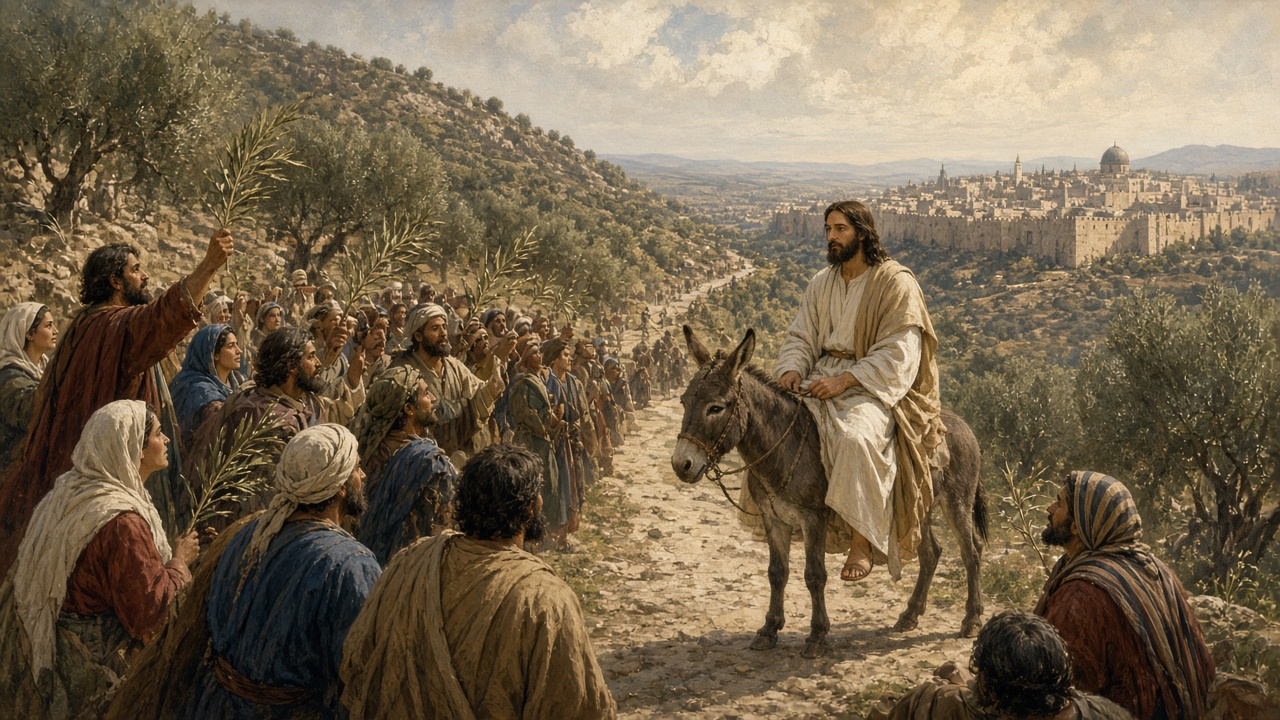
- No dia seguinte, a grande multidão que viera para a festa tomou ramos de palmeira e saiu ao encontro de Jesus, que vinha para Jerusalém sentado num jumentinho, gritando louvor ao Rei de Israel, como está escrito a respeito da Filha de Sião. Sião era o monte sudeste de Jerusalém, onde Davi construiu uma cidadela e um palácio depois de tomá-lo, de modo que se tornou a cidade de Davi. A princípio seus discípulos não entenderam essas coisas, mas, depois que Jesus foi glorificado, lembraram-se de que elas também tinham sido escritas a respeito dele.Fontes: o próprio texto bíblico · Zion
Notas escritas com auxílio de IA a partir de fontes abertas (Theographic Bible Metadata, CC BY-SA 4.0; Easton’s Bible Dictionary, domínio público) e revisadas antes de publicar.
Lugares deste capítulo
- Jerusalem · 31.777, 35.234 · versículos 11, 12, 20
- Zion · Hoje: Jerusalem · 31.777, 35.234 · versículo 15
- Galilee · 32.760, 35.527 · versículo 21
Só aparecem lugares com identificação de alta confiança (90% ou mais segundo as fontes acadêmicas reunidas pelo OpenBible). Mapa da época: DARE (Digital Atlas of the Roman Empire), CC BY 4.0; mapa atual: © colaboradores do OpenStreetMap; lugares: OpenBible.info (CC BY 4.0).
Créditos e licença desta tradução
Nǫ̀htsı̨̨ Nı̨̨htł'è
Dogrib: Dogrib Genesis & New Testament New Testament & Portions of Old Testament
copyright © 2009 Canadian Bible Society
Language: Dogrib
Translation by: Canadian Bible Society
Tłı̨chǫ Genesis and New Testament
About Tłı̨chǫ
Tłı̨chǫ (Dogrib) is a Na-Dene (Athabaskan) language. It is spoken by the First Nations Tłı̨chǫ people in the Northwest Territories in Canada. It has the largest number of speakers of any of the Aboriginal language communities in the NWT, and is one of the official languages of the Northwest Territories.
About This Translation
This translation includes the book of Genesis and the New Testament in Tłı̨chǫ. The first edition of the Tłı̨chǫ New Testament was published in 2003. It was a historic event, as it was the first time in more than a hundred years that a complete New Testament was published for one of the Dene First Nations in the Territories. The first edition was well received and quickly sold out. In the meantime the book of Genesis had been completed. Consequently, the 2008 reprint of the Tłı̨chǫ New Testament included Genesis.
Though this translation of the New Testament and Genesis took a total of ten years, the people who worked on it built on years of labor invested by the Tłı̨chǫ people, elders, priests and missionaries, translators, educators, and linguists. The material contained in this book was checked and approved by consultants from Wycliffe Bible Translators and the Canadian Bible Society.
If you are interested in obtaining a printed copy of this Bible, please contact the Canadian Bible Society at http://www.biblescanada.com .
Copyright Information
Dogrib Genesis and New Testament © 2003, 2008 Canadian Bible Society
The text of the Bible in Tłı̨chǫ that appears in this electronic format or website is for personal use only.
Up to five hundred (500) verses of the Bible text in any form (written, visual, electronic or audio) may be quoted without permission. The quoted verses may not be more than 50% of a complete book of the Bible, or more than 25% of the total text of the work in which they are quoted. Prior written permission must be obtained for any other use of the text. Copyright acknowledgement must in all cases appear on the title or copyright page.
For more information on copyright conditions or to apply, visit http://www.biblesociety.ca/copyright .
This translation is made available to you under the terms of the
Creative Commons Attribution-Noncommercial-No Derivatives license 4.0.
You may share and redistribute this Bible translation or extracts from it in any format, provided that:
You include the above copyright and source information.
You do not sell this work for a profit.
You do not change any of the words or punctuation of the Scriptures.
Pictures included with Scriptures and other documents on this site are licensed just for use with those Scriptures and documents.
For other uses, please contact the respective copyright owners.
2014-04-22
Fonte: http://ebible.org/dgrDOGNT/ · eBible.org