Gênesis 37
Nǫ̀htsı̨̨ Nı̨̨htł'è · Toque num versículo para ver as referências cruzadas.
Joseph nàwhetı̨
1Jacob Kanan nèk'e nàı̨dè, wetà sı ekǫ nàı̨dè ı̨lè.
2Jacob eyıts'ǫ wets'ıhɂǫ̀ǫ-dǫǫ̀ gıxè dàgòjàa sìı dıı gıgodıì hǫt'e:
Jacob weza Joseph cheko hoònǫ-daats'ǫ̀-łǫ̀hdı̨ weghoò ı̨lè. Edı̨ı̨de xè sahzǫ̀ą k'èdì ı̨lè. Wı̨ı̨de sìı wetà wets'ǫ ts'èko Bılah eyıts'ǫ Zılpah gots'ǫ weza agı̨ı̨t'e. Edekǫ̀ nǫgedè nı̨dè Joseph wı̨ı̨de t'asìı wejıı ghàlagı̨ı̨dàa sìı hazǫǫ̀ edetà ts'ǫ̀ hadı.
3Jacob ǫhdah whelı̨ tł'axǫǫ̀ Joseph wegǫ̀hłı̨ t'à edeza hazǫǫ̀ gonahk'e yeghǫneètǫ, eyıt'à ɂeh wek'aàtsı̨į̀ nezı̨ı̨ yegha whehtsı̨. 4Wı̨ı̨de gı̨ı̨lı̨ı̨ sìı gıtà gınahk'e Joseph ghǫneètǫǫ gık'èhogeèhzà t'à gınèlı̨į̀-le agejà xè nezı̨į̀ gıts'ǫ̀ xàyahtı ha gı̨ı̨wǫ-le.
5Įłàà Joseph nàwhetı̨. Yeghǫ edı̨ı̨de xè godo ts'ıhɂǫ̀ sıì denahk'e gınèlı̨į̀-le agejà. 6Joseph gots'ǫ̀ hadı, “Seàhkw'ǫ, dànì nàwhıhtı̨ı̨ sìı naxıts'ǫ̀ haehsı̨ ha. 7Tł'olà dehshee k'è tł'olà natsı̨ts'eèzà ghǫ ełexè eghàlats'eeda là hǫtsaa sets'ǫ tł'olà wexèwhıhzàa sìı ehkw'ıìɂah nàwoò lajà, eyıts'ǫ naxıts'ǫ tł'olà wexèwhahzàa sìı sets'ǫ tł'olà wemǫǫ̀ nègı̨ı̨de gà gıts'ǫ̀ nàgòı̨hgè lagejà,” gòhdı.
8Wı̨ı̨de hagıìhdı, “Gogha k'àowocho nelı̨ ha nì? Hotıì gots'ǫ̀ k'àı̨wo ha nì?” gıìhdı. Dànì nàwhetı̨ eyıts'ǫ yeghǫ goxè godo t'à sıì denahk'e gınèlı̨į̀-le agejà.
9Įdaà t'à k'achı̨ Joseph nàwhetı̨ ekò, yet'à edı̨ı̨de xè godo, hadı, “K'àchı̨ dıı hanì nàwhıhtı̨: sadeè, adzęzah eyıts'ǫ whǫ̀ hoònǫ-daats'ǫ̀-ı̨łè sets'ǫ̀ nàgògı̨ı̨hgè,” gòhdı.
10Dànì nàwhetı̨ı̨ sìı edetà eyıts'ǫ edı̨ı̨de ts'ǫ̀ hadı eyıt'à wetà wek'èch'a, yets'ǫ̀ hadı, “Dànì nàwheętı̨ı̨ sìı weghǫ goı̨de-le kò. Nemǫ, sı̨, eyıts'ǫ nı̨ı̨de hazǫǫ̀ nets'ǫ̀ nàgòts'ehgè ha nı̨ı̨dıì-nì aı̨dı?” wetà yèhdı. 11Wı̨ı̨de weghǫ ts'ohogeedıì agejà, hanìkò wetà yedaànıwo.
Joseph wı̨ı̨de gıghǫnàweèdì
12Eyı ts'ǫ whaà-le, Joseph wı̨ı̨de edetà wets'ǫ sahzǫ̀ą xè kǫ̀ta Shekem ts'ǫ̀ gǫǫwà-lea nègı̨ı̨de. Ekǫ sahzǫ̀ą tł'oh gedè agogehɂı̨ xè goxogııhdı. 13Eyıt'à Israel edeza Joseph ts'ǫ̀ hadı, “Nı̨ı̨de Shekem gà gǫǫwà-le sets'ǫ sahzǫ̀ą k'ègedìı wek'èı̨zǫ sǫnaà, ekǫ gıts'àątła,” yèhdı.
“Hęɂę, ekǫ gıts'àhtła ha,” Joseph edetà èhdı.
14“Ekǫ nı̨ı̨de sahzǫ̀ą xè dàgı̨ı̨t'e lì gha gık'aı̨hta, gıghǫ sets'ǫ̀ godı naı̨ɂà,” wetà yèhdı. Eyıt'à Jacob edeza Hebron nèk'e gots'ǫ Shekem nèk'e ts'ǫ̀ yeèhɂà.
15Joseph Shekem nèk'e, edı̨ı̨de gokak'eet'į̀ là dǫ ı̨łè yeghaetła, dayeehke, “Ayìı gha k'eı̨t'į̀ anet'ı̨?” yèhdı.
16Joseph yets'ǫ̀ hadı, “Sı̨ı̨de gıkak'eeht'į̀ aht'ı̨. Edı̨į̀ sahzǫ̀ą k'ègedìı sìı asį̀į̀ wek'èı̨zǫ?” yèhdı.
17Dǫ yets'ǫ̀ hadı, “Jǫ gots'ǫǫ̀ nageèhde ı̨lè, ‘Kǫ̀ta Dotan ts'ǫ̀ ats'ııde,’ gedı geèhkw'ǫ ı̨lè,” yèhdı.
Eyıt'à Joseph edı̨ı̨de gok'è et'ıì ajà. Kǫ̀ta Dotan gà nıwà-le gìgaat'ı̨ goaɂı̨. 18Įłaà nıwà naetła et'ıì wı̨ı̨de gıaɂı̨. Įłaà gots'ǫ̀ etłe et'ıì dànì ełaàgıìhwhı ha sìı ełexè sıìgogį̀į̀là.
19Ełets'ǫ̀ hagedı, “Nàtee dǫǫ̀ gots'ǫ̀ naetłe! 20Dıì-t'ıì ełaàts'ehwhı, dıı yeè dèè-goyìı-gǫǫɂàa łǫ gòlaa sìı ı̨łè weyìı wets'ııhxà, tıts'aàdìı yedzį̀į̀hɂà ts'ııdì nǫǫ̀. Hanì-ı̨dè dànì nàwhetı̨ı̨ sìı asį̀į̀ wek'ę̀ę̀ agòjà lì!” ełègeedı.
21Wı̨ı̨de ǫhdaà Ruben hagedı goìkw'o t'à goch'à edechı edaxàhtè ha hoèhdzà. “Ełaàwets'èhwhı-le,” gòhdı. 22“Wedoò xàtł'ì welè-le. Jǫ ekìı-ka nèk'e dèè-yìı-gǫǫɂàa łǫ gòla ne, ı̨łè yìı weahxà, hanìkò ełaàwèahwhı-le,” gòhdı. Ruben, edechı edaxàhtè gà edetà ts'ǫ̀ nayeechı ha nıwǫ t'à hadı ı̨lè.
23Eyıt'à Joseph edı̨ı̨de goghǫ nììtła ekò, ɂeh wèdaat'ı̨ı̨ yìı whedaa sìı wek'e nàgį̀ı̨hdlah, 24eyı gà dèè-yìı-gǫǫɂàa yìı gı̨ı̨hxà. Eyı dèè-yìı-gǫǫɂàa sìı weyìı tı whìle ı̨lè.
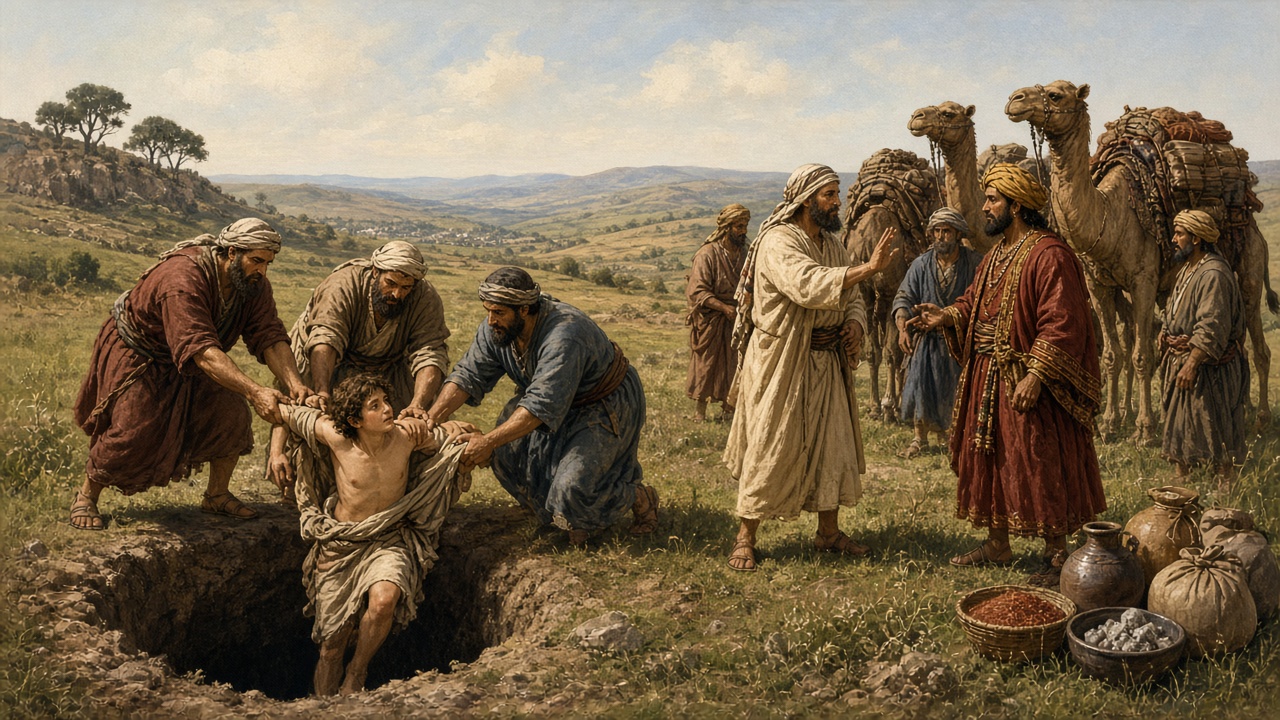
25Wı̨ı̨de shègezhe ha geèhkw'e là, yeè Ishmael got'ı̨į̀ nagıadè gìgoèht'į̀, kǫ̀ta Gılad gots'ǫ nagıadè. Tıts'aàdìıcho ka dageèhkw'e xè t'asìı łǫ gıghǫ nàedì ha edexè k'egele. Dı̨ı̨ts'ıa hanıı eyıts'ǫ yìk'eetł'òo hazǫǫ̀ xàɂaa gıghǫ nàedì ha Egypt nèk'e ts'ǫ̀ geède aget'ı̨ ı̨lè. Ishmael got'ı̨į̀ tıts'aàdìıcho ka dageèhkw'e xè t'asìı łǫ gıghǫ nàedì ha edexè k'egele.|src="HK008C.TIF" size="span" ref="37.25"
26Wı̨ı̨de ı̨łè Judah edechı gots'ǫ̀ hadı, “Gochı ełaàwets'į̀ı̨hwho xè weghǫ hots'ets'ì nı̨dè wet'à ayìı nezı̨ı̨ goxèìdı ha? 27Yeè Ishmael got'ı̨į̀ nagıadèe sìı goghǫ nàgeehdì awets'ııle. Xàè gochı ne xè gotà ts'ǫ dǫ elı̨ t'à t'asawets'ele ha dìì,” gòhdı. Wechı yek'ę̀ę̀ agı̨ı̨wǫǫ̀ agejà.
28Eyıt'à Mıdıyan nèk'e gots'ǫ t'asìı gıghǫ nàedìı dǫǫ̀ gok'e gı̨į̀de ekò, ełechıke Joseph dèè-goyìı gots'ǫ xàgeèlì gà satsǫ̀ą degoo naènǫ k'èxa Joseph gıghǫ nàèdì, eyıt'à Ishmael got'ı̨į̀ Joseph Egypt nèk'e ts'ǫ̀ edexè nageèhchì.
29Whaà-le-t'ıì wı̨ı̨de ǫhdaà Ruben dèè-goyìı-gǫǫɂàa ts'ǫ̀ nǫ̀ǫtła, hanìkò Joseph goyìı wheda-le nǫǫ̀, eyıt'à sıì wegha ekǫ-le nàhòwoò lagòjà t'à edeɂeè tànı̨hdla. 30Edechı gots'ǫ̀ naèhtła gà hagòhdı, “Cheko eyı wheda-le t'à dàhde ha wek'èehsǫ-le!” gòhdı.
31Eyıt'à Joseph weɂeè negı̨į̀ɂah, ejıetsoa ełaàgį̀ı̨hwho gà Joseph weɂeè k'e edoò agı̨į̀là. 32ʔeh wek'aàtsı̨į̀ nezı̨ı̨ edetà ts'ǫ̀ nageèhɂà, hagedı, “Dıı ɂeh hanì whehchìı ts'į̀į̀hchì. Asį̀į̀ neza weɂeè hǫt'e, hotıì nezı̨į̀ wek'aı̨hta,” edetà ts'ǫ̀ hagedı.
33Jacob edeza ɂeè nàwhezhį̀ t'à hadı, “Dıı seza weɂeè hǫt'e! Tıts'aàdìı yedzį̀į̀hɂà t'à seza tàı̨hdlà sǫnı,” hadı.
34Jacob wegha dìì t'à edeɂeè tàı̨hdlà, dǫhshǫ̀ǫ zhìwòo goht'ǫǫ̀ yìı whedaà adììdlà. Hanì t'aa łǫ dzęę̀ ts'ǫ̀ edeza k'eelı̨ xè etse. 35Weza hazǫǫ̀ eyıts'ǫ wetì gıghǫ nìı̨de xè gıghǫnàdageetì, hanìkò seghǫnàdats'eetì ha nıwǫ-le. Hadı, “Seghǫnàdaahtì-le, sekw'ǫǫ̀ nìtį̀ eyıts'ǫ seza wets'ǫ̀ ahde gots'ǫ̀ wek'eehłı̨ ha,” wetà hadı xè yeghǫ etse.
36Hanàhòwo t'à Mıdıyan got'ı̨į̀ Egypt nèk'e dǫ Potıfar wìyeh ts'ǫ̀ Joseph gıghǫ nàèdì. Eyı dǫ sìı k'àowocho Faraoh gha eghǫǫ-dǫǫ̀ gha k'àowo elı̨ ı̨lè.
Você sabia?
José vendido pelos irmãos
- Israel amava José mais do que os outros filhos, porque ele era o filho da sua velhice, e fez para ele uma túnica de muitas cores. O Easton's Bible Dictionary (1897) lê o hebraico de Gênesis 37:3 como uma veste longa e ampla, com mangas, do tipo usado pelos filhos dos nobres. Quando os irmãos viram esse favor, passaram a odiá-lo e não conseguiam dirigir-lhe uma palavra amável.Fontes: Joseph (son of Jacob) · o próprio texto bíblico
- Jacó enviou José, aos dezessete anos, do vale de Hebrom para ver como estavam os irmãos e os rebanhos; eles tinham apascentado perto de Siquém e depois seguido para Dotã. O Easton's Bible Dictionary (1897) chama Dotã de famoso campo de pastagem com dois poços, identificado com o moderno Tell-Dothan, cerca de doze milhas ao norte de Samaria, entre as colinas de Gilboa, e diz que é mencionado em monumentos de 1600 a.C. Ali os irmãos viram uma caravana de ismaelitas que vinha de Gileade, cujos camelos levavam especiarias, bálsamo e mirra a caminho do Egito.Fontes: Dothan · Gilead · o próprio texto bíblico
- Rúben, o filho mais velho de Jacó com Lia, tentou salvar José da morte e planejava devolvê-lo ao pai. Judá então persuadiu os irmãos a vender José aos ismaelitas, em vez de derramar o sangue dele. No Egito, os midianitas o venderam a Potifar, oficial do faraó e capitão da guarda; o Easton's Bible Dictionary (1897) explica esse nome como 'dedicado a Rá', o deus-sol, e entende o título, provavelmente, como chefe da polícia do Estado, com a leitura marginal 'chefe dos carrascos'.Fontes: Reuben · Judah (patriarch) · Potiphar · o próprio texto bíblico
Notas escritas com auxílio de IA a partir de fontes abertas (Theographic Bible Metadata, CC BY-SA 4.0; Easton’s Bible Dictionary, domínio público) e revisadas antes de publicar.
Lugares deste capítulo
- Canaan · 32.767, 35.333 · versículo 1
- Shechem · Hoje: Tell Balatah · 32.214, 35.282 · versículos 12, 13, 14
- Valley of Hebron · 31.525, 35.102 · versículo 14
- Egypt · 30.129, 31.308 · versículos 25, 28, 36
- Gilead · Hoje: Gilead 1 · 32.187, 35.692 · versículo 25
Só aparecem lugares com identificação de alta confiança (90% ou mais segundo as fontes acadêmicas reunidas pelo OpenBible). Mapa da época: DARE (Digital Atlas of the Roman Empire), CC BY 4.0; mapa atual: © colaboradores do OpenStreetMap; lugares: OpenBible.info (CC BY 4.0).
Créditos e licença desta tradução
Nǫ̀htsı̨̨ Nı̨̨htł'è
Dogrib: Dogrib Genesis & New Testament New Testament & Portions of Old Testament
copyright © 2009 Canadian Bible Society
Language: Dogrib
Translation by: Canadian Bible Society
Tłı̨chǫ Genesis and New Testament
About Tłı̨chǫ
Tłı̨chǫ (Dogrib) is a Na-Dene (Athabaskan) language. It is spoken by the First Nations Tłı̨chǫ people in the Northwest Territories in Canada. It has the largest number of speakers of any of the Aboriginal language communities in the NWT, and is one of the official languages of the Northwest Territories.
About This Translation
This translation includes the book of Genesis and the New Testament in Tłı̨chǫ. The first edition of the Tłı̨chǫ New Testament was published in 2003. It was a historic event, as it was the first time in more than a hundred years that a complete New Testament was published for one of the Dene First Nations in the Territories. The first edition was well received and quickly sold out. In the meantime the book of Genesis had been completed. Consequently, the 2008 reprint of the Tłı̨chǫ New Testament included Genesis.
Though this translation of the New Testament and Genesis took a total of ten years, the people who worked on it built on years of labor invested by the Tłı̨chǫ people, elders, priests and missionaries, translators, educators, and linguists. The material contained in this book was checked and approved by consultants from Wycliffe Bible Translators and the Canadian Bible Society.
If you are interested in obtaining a printed copy of this Bible, please contact the Canadian Bible Society at http://www.biblescanada.com .
Copyright Information
Dogrib Genesis and New Testament © 2003, 2008 Canadian Bible Society
The text of the Bible in Tłı̨chǫ that appears in this electronic format or website is for personal use only.
Up to five hundred (500) verses of the Bible text in any form (written, visual, electronic or audio) may be quoted without permission. The quoted verses may not be more than 50% of a complete book of the Bible, or more than 25% of the total text of the work in which they are quoted. Prior written permission must be obtained for any other use of the text. Copyright acknowledgement must in all cases appear on the title or copyright page.
For more information on copyright conditions or to apply, visit http://www.biblesociety.ca/copyright .
This translation is made available to you under the terms of the
Creative Commons Attribution-Noncommercial-No Derivatives license 4.0.
You may share and redistribute this Bible translation or extracts from it in any format, provided that:
You include the above copyright and source information.
You do not sell this work for a profit.
You do not change any of the words or punctuation of the Scriptures.
Pictures included with Scriptures and other documents on this site are licensed just for use with those Scriptures and documents.
For other uses, please contact the respective copyright owners.
2014-04-22
Fonte: http://ebible.org/dgrDOGNT/ · eBible.org