Gênesis 32
Nǫ̀htsı̨̨ Nı̨̨htł'è · Toque num versículo para ver as referências cruzadas.
Jacob edı̨ı̨de nìhdǫǫ̀ èhtła
1Jacob ededı̨ sı edenèk'e ts'ǫ̀ naèhtła. Naèhtła ekò Nǫ̀htsı̨ weyak'eet'ı̨į̀ gıghàı̨de. 2Jacob goaɂı̨ ekò hadı, “Jǫ Nǫ̀htsı̨ wets'ǫ eghǫǫ-dǫǫ̀ nàgedèe-k'è agǫ̀ht'e,” hadı. Eyıt'à eyı Mahanım gòyeh ayį̀į̀là.
3Jacob wets'ǫ godı-k'eɂaa-dǫǫ̀ edenakweè edı̨ı̨de Esau ts'ǫ̀ goòhɂà. Ekò k'e Esau, shìhta Seyır nèk'e, Edom got'ı̨į̀ gınèk'e nàde ı̨lè. 4Edecheekeè dıı hagòhdı, “K'àowo Esau ts'ǫ̀ dıı haahdı ha: ‘Necheekeè Jacob dıı nets'ǫ̀ hadı: Dıı haı̨wa gots'ǫ̀ seɂeh Laban wexè nàıhdè hǫt'e. 5Ejıe eyıts'ǫ tłı̨tsoa, sahzǫ̀ą eyıts'ǫ ejıetsoa sets'ǫ, eyıts'ǫ segha eghàlageedaa-dǫǫ̀ dǫzhìı sı, ts'èko sı sets'ǫ. Seghǫ nınà ha dehwhǫ t'à dıı godı nets'ǫ̀ nìıhɂǫ hǫt'e,’ Esau ts'ǫ̀ haahdı,” Jacob gòhdı.
6Godı-k'egeɂaa-dǫǫ̀ Jacob ts'ǫ̀ nǫǫ̀gı̨ı̨de ekò hagıìhdı, “Nı̨ı̨de Esau wets'aɂı̨, dıì-t'ıì nets'ǫ̀ etłe, eyıts'ǫ dǫ dı̨akw'eènǫ (400) gıxè at'ı̨,” gıìhdı.
7Jacob sıì dèhyeh lajà t'à wets'ǫ dǫ nàke ts'ǫ̀ łats'ıgǫǫwa. Eyıts'ǫ sahzǫ̀ą, ejıetsoa, ejıe eyıts'ǫ tıts'aàdìıcho sı nàke ts'ǫ̀ łats'ıgǫǫwa. 8Jacob dıı hanıwǫ, “Esau dǫ ı̨daà gıadèe sìı t'asagǫ̀ǫ̀là nı̨dè dǫ ı̨dè gıadèe sìı t'asį̀ı̨ kwı̨geehdè ha dìì-le,” hanıwǫ.
9Eyı tł'axǫǫ̀ Jacob Nǫ̀htsı̨ ts'ǫ̀ yahtı, “Sets'ǫ̀ K'àowo, secho Abraham Wenǫ̀htsı̨, eyıts'ǫ setà Isaac Wenǫ̀htsı̨ sets'ǫ̀ dıı haı̨dı ı̨lè, ‘Nenèk'e ts'ǫ̀ anaąde eyıts'ǫ nèot'ı̨ gıts'ǫ̀ anaąde, eyıts'ǫ dǫ ahxee nelı̨į̀ anehłe ha,’ sèı̨dı ı̨lè. 10Sets'ǫ̀ nedzeè eteèɂı̨ xè sets'ǫ̀ ehkw'ı eghàlaı̨da ha dǫ lahoeht'ı̨ nıìle. Segeè k'ehtı̨ zǫ t'à jǫ Jordan deh nıɂàa weteèhtła ı̨lè. Ekò dıì t'aa dǫ łǫ sexè aget'ı̨ t'à nàke ts'ǫ̀ łats'ıgıhwha hǫt'e. 11Sı̨ı̨de Esau wech'à edaxàsı̨ı̨htè. Ełaàsèhwhı ha gots'ǫ̀ naetłe at'ı̨ sǫnı, eyıts'ǫ chekoa, gımǫ sı ełaàgòhde ha sǫnı. 12Hanìkò dıı hasį̀ı̨dı ı̨lè, ‘Ehkw'ı t'à nexè sìghà hòɂǫǫ̀ agohłe ha, eyıts'ǫ nets'ıhɂǫ̀ǫ-dǫǫ̀ tıchobàa ewaà laàtłǫǫ̀ agehłe ha. Sıì gı̨ı̨tłǫ t'à gıts'ıhtà ha dìì agode ha,’ hasį̀ı̨dı ı̨lè,” Jacob hadıì Nǫ̀htsı̨ ts'ǫ̀ xàyaı̨htı.
13Eyı to hǫǫhwho tł'axǫǫ̀, wets'ǫ tıts'aàdìı mǫ̀hdaa edı̨ı̨de ghàyele ha gota xàyı̨ı̨wa. 14Ejıetsoa dets'è nàkeakw'eènǫ (200) eyıts'ǫ ejıetsoa werezhıì naènǫ, sahzǫ̀a dets'è nàkeakw'eènǫ (200) eyıts'ǫ sahzǫ̀a werezhıì naènǫ gota xàyı̨ı̨wa. 15Tıts'aàdìıcho taènǫ wechìa wexè, ejıe dets'è dı̨ènǫ eyıts'ǫ ejıe werezhıì hoònǫ, tłı̨tsoa dets'è naènǫ eyıts'ǫ tłı̨tsoa werezhıì hoònǫ ayį̀į̀là. 16Wecheekeè gotł'aàyį̀ı̨wa. Tıts'aàdìı ı̨łè xàɂaa whatsǫǫ̀ ełexè whelaà ayį̀į̀là gà edecheekeè gots'ǫ̀ hadı, “Senakweè naahdè, tıts'aàdìı ı̨łè xàɂaa gıge gòɂǫǫ̀ aahłe, hanì ełek'ègıadè agıahłe,” gòhdı.
17Wecheekeè yenakweè naetłe sìı ts'ǫ̀ hadı, “Sı̨ı̨de Esau nets'ǫ̀ nìı̨tła xè dıı hadıì daneehke, ‘Amìı negha k'àowo elı̨, eyıts'ǫ edı̨į̀ ts'ǫ̀ anet'ı̨, eyıts'ǫ dıı tıts'aàdìı nexè k'eɂaa sìı amìı wets'ǫ ne?’ nèhdı daneehke nı̨dè, 18wets'ǫ̀ dıı haı̨dı ha, ‘Necheekeè Jacob wets'ǫ hǫt'e. K'àowo Esau weghaelı̨ ha adlà hǫt'e, eyıts'ǫ Jacob ı̨dè gok'è naetłe,’ hawį̀ı̨dı nǫǫ̀,” yèhdı.
19Wecheekeè nàke t'à yenakweè naetłe, eyıts'ǫ taı t'à naetłe, eyıts'ǫ dǫ hazǫǫ̀ yenakweè gıadèe sìı hagòhdı: “Esau weghǫ nìahde nı̨dè naxı̨ sı haahdı ha. 20Eyıts'ǫ, ‘Necheekeè Jacob ı̨dè gok'è naetłe,’ hotıì hawèahdı nǫǫ̀,” gòhdı. Jacob dıı hanıwǫ t'à, “Dıı tıts'aàdìı haàtłǫǫ weghàehła t'à sets'ǫ̀ wınì nezı̨į̀ ahłe ha. Seghǫ nììtła nı̨dè edahxǫ sets'ǫ̀ wedzeè nezı̨ welì,” hanıwǫ. 21Eyıt'à Jacob tıts'aàdìı Esau ghàı̨laa sìı ı̨daà yenakweè geède, ededı̨ t'aa to hoehwhı gha ı̨dè nàgedèe-k'è aìda.
Jacob Nǫ̀htsı̨ sı ełek'aàgıagwo
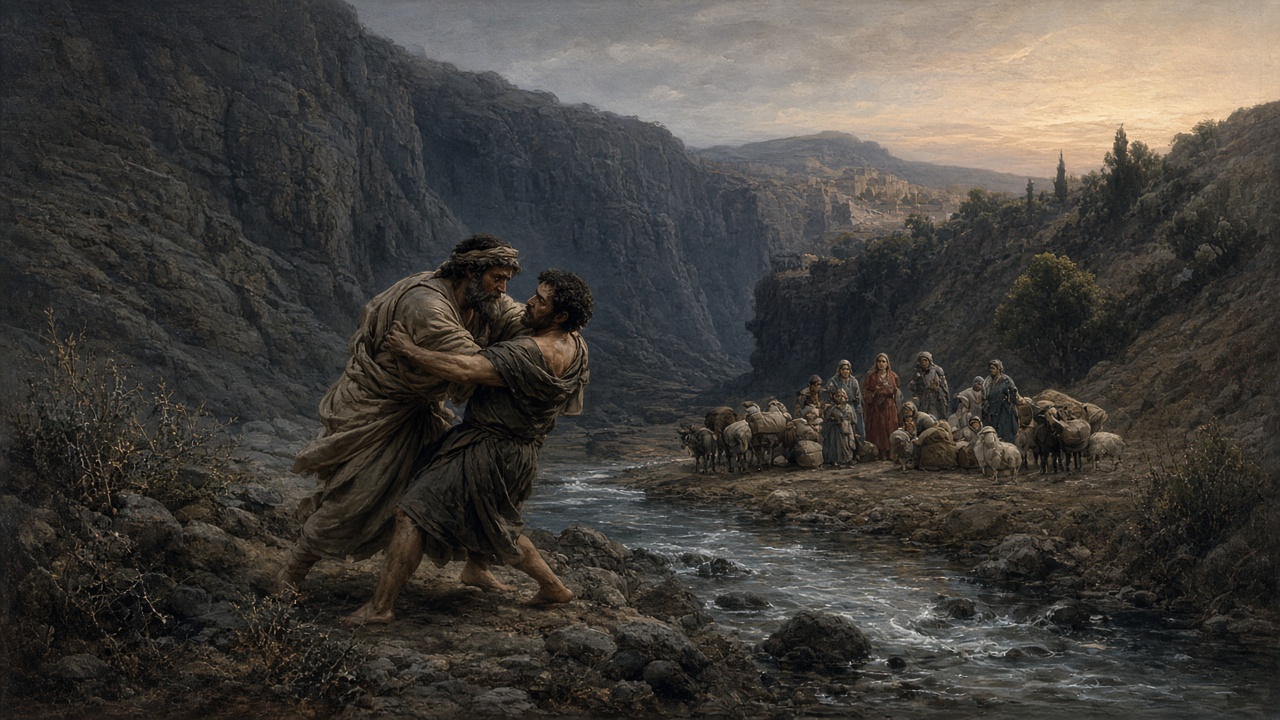
22Eyı toò k'e Jacob, edets'èkeè nàke, wets'ǫ ts'èko nàke gıgha eghàlaedaa, eyıts'ǫ weza hoònǫ-daats'ǫ̀-ı̨łè xè Jabok deh te geède. 23Deh te nageedè agǫ̀ǫ̀là tł'axǫǫ̀ t'asìı hazǫǫ̀ wets'ǫ sìı gots'ǫ̀ ayį̀į̀là. 24Jacob ededı̨ whatsǫǫ̀ aìda là dǫ yeghǫ nììtła. Èhkǫ gots'ǫ̀ ełek'aàgıagwo. 25Eyı dǫ Jacob nahk'e elı̨ ha-le yek'èezǫ t'à yeɂà k'èchı̨į̀ɂaa nàı̨ht'ı, eyıt'à Jacob dǫ k'aı̨wo t'à weɂà xàchı̨awò. 26Eyı dǫ hayèhdı, “Dzęh agodaade t'à sedı̨ı̨chı,” yèhdı.
Hanìkò Jacob yets'ǫ̀ hadı, “Nedeehchı ha-le. Yatı nezı̨ı̨ t'à sek'eèyanehtı nı̨dè nedeehchı ha,” yèhdı.
27Eyı dǫ dayeehke, “Dànìyeh?” yèhdı.
“Jacob sìyeh,” yèhdı.
28Eyı tł'axǫǫ̀ eyı dǫ hadı, “Jǫ gots'ǫ ı̨daà Jacob nìyeh ha-le, Israel nìyeh ha. Nǫ̀htsı̨ eyıts'ǫ dǫ k'anewo xè honeèhnǫ t'à hanìyeh ha,” yèhdı.
29Jacob hadı, “Nıızì sets'ǫ̀ haı̨dı,” yèhdı.
Hanìkò eyı dǫ yets'ǫ hadı, “Ayìıha sıızì ghǫ dası̨ı̨hke?” yèhdı tł'axǫǫ̀ yatı nezı̨ı̨ t'à yek'eèyaı̨htı.
30“Nǫ̀htsı̨ weehɂı̨ kò t'asahjà-le,” Jacob hadı. Eyıt'à eyı gòɂǫǫ sìı Penıyel gòyeh ayį̀į̀là.
31Sa danıwà daaɂa ekò eyı Penıyel gòɂǫǫ sìı yete nàèhtła. Weɂà tsį̀ı̨wo t'à k'echı̨eɂa xè naeda. 32Jacob weɂà gà wekw'è k'e wexèɂeèhdı ı̨lè t'à dıı dzęę̀ ts'ǫ̀ Israel got'ı̨į̀ tıts'aàdìı weɂà ts'ǫ̀ kw'è nawhet'ıı sìı gedè-le.
Você sabia?
No Jaboque, a caminho de Esaú
- Maanaim significa “dois acampamentos”. Jacó deu esse nome ao lugar junto ao Jaboque, além do Jordão, quando os anjos de Deus vieram ao seu encontro e ele disse: “Este é o acampamento de Deus”. Ali também dividiu seu povo, os rebanhos, as manadas e os camelos em dois acampamentos, na esperança de que um escapasse se Esaú atacasse o outro.Fontes: Mahanaim · o próprio texto bíblico
- O Jaboque, cujo nome se explica como “um derramamento, ou uma luta”, é um ribeiro a leste do Jordão. Deságua no Jordão mais ou menos a meio caminho entre o mar da Galileia e o mar Morto, depois de um percurso de cerca de 65 milhas por um desfiladeiro selvagem e profundo. No vau, Jacó fez passar as duas esposas, as duas servas, os onze filhos e tudo o que possuía, e ficou sozinho, lutando com um homem até o amanhecer.Fontes: Jabbok · o próprio texto bíblico
- Jacó enviou mensageiros a Esaú na terra de Seir, o país de Edom, chamando-o senhor e a si mesmo servo. Seir é uma região montanhosa ao longo do lado leste da Arabah, da extremidade sudeste do mar Morto até perto de Akabah, o braço oriental do mar Vermelho; os edomitas a ocupavam, e ela foi destinada aos descendentes de Esaú. Esaú, o gêmeo primogênito e caçador, vendera o direito de primogenitura por um guisado de lentilhas vermelhas e também se chamava Edom, “vermelho”, enquanto Jacó — cujo nome significa “aquele que segue nos calcanhares de outro”, ou “suplantador” — conspirara com a mãe para enganar Isaque.Fontes: o próprio texto bíblico · Seir · Esau (Edom) · Jacob (Israel)
Notas escritas com auxílio de IA a partir de fontes abertas (Theographic Bible Metadata, CC BY-SA 4.0; Easton’s Bible Dictionary, domínio público) e revisadas antes de publicar.
Lugares deste capítulo
- Edom · 30.746, 35.604 · versículo 3
- Jordan · Hoje: Jordan River · 31.761, 35.558 · versículo 10
- Jabbok · Hoje: Zarqa River · 32.115, 35.543 · versículo 22
Só aparecem lugares com identificação de alta confiança (90% ou mais segundo as fontes acadêmicas reunidas pelo OpenBible). Mapa da época: DARE (Digital Atlas of the Roman Empire), CC BY 4.0; mapa atual: © colaboradores do OpenStreetMap; lugares: OpenBible.info (CC BY 4.0).
Créditos e licença desta tradução
Nǫ̀htsı̨̨ Nı̨̨htł'è
Dogrib: Dogrib Genesis & New Testament New Testament & Portions of Old Testament
copyright © 2009 Canadian Bible Society
Language: Dogrib
Translation by: Canadian Bible Society
Tłı̨chǫ Genesis and New Testament
About Tłı̨chǫ
Tłı̨chǫ (Dogrib) is a Na-Dene (Athabaskan) language. It is spoken by the First Nations Tłı̨chǫ people in the Northwest Territories in Canada. It has the largest number of speakers of any of the Aboriginal language communities in the NWT, and is one of the official languages of the Northwest Territories.
About This Translation
This translation includes the book of Genesis and the New Testament in Tłı̨chǫ. The first edition of the Tłı̨chǫ New Testament was published in 2003. It was a historic event, as it was the first time in more than a hundred years that a complete New Testament was published for one of the Dene First Nations in the Territories. The first edition was well received and quickly sold out. In the meantime the book of Genesis had been completed. Consequently, the 2008 reprint of the Tłı̨chǫ New Testament included Genesis.
Though this translation of the New Testament and Genesis took a total of ten years, the people who worked on it built on years of labor invested by the Tłı̨chǫ people, elders, priests and missionaries, translators, educators, and linguists. The material contained in this book was checked and approved by consultants from Wycliffe Bible Translators and the Canadian Bible Society.
If you are interested in obtaining a printed copy of this Bible, please contact the Canadian Bible Society at http://www.biblescanada.com .
Copyright Information
Dogrib Genesis and New Testament © 2003, 2008 Canadian Bible Society
The text of the Bible in Tłı̨chǫ that appears in this electronic format or website is for personal use only.
Up to five hundred (500) verses of the Bible text in any form (written, visual, electronic or audio) may be quoted without permission. The quoted verses may not be more than 50% of a complete book of the Bible, or more than 25% of the total text of the work in which they are quoted. Prior written permission must be obtained for any other use of the text. Copyright acknowledgement must in all cases appear on the title or copyright page.
For more information on copyright conditions or to apply, visit http://www.biblesociety.ca/copyright .
This translation is made available to you under the terms of the
Creative Commons Attribution-Noncommercial-No Derivatives license 4.0.
You may share and redistribute this Bible translation or extracts from it in any format, provided that:
You include the above copyright and source information.
You do not sell this work for a profit.
You do not change any of the words or punctuation of the Scriptures.
Pictures included with Scriptures and other documents on this site are licensed just for use with those Scriptures and documents.
For other uses, please contact the respective copyright owners.
2014-04-22
Fonte: http://ebible.org/dgrDOGNT/ · eBible.org