Gênesis 27
Nǫ̀htsı̨̨ Nı̨̨htł'è · Toque num versículo para ver as referências cruzadas.
Isaac Jacob k'eèyaı̨htı
1Isaac eneèko whelı̨ ekò sıì wedaà nàtso-le t'à wegha xègaat'ı̨-le agòjà. Edeza ǫhdaà Esau kayaı̨htı, “Seza,” yèhdı.
“Età, neèhkw'ǫ,” weza yèhdı.
2Isaac yets'ǫ̀ hadı, “Hòt'a eneèko whıhłı̨ t'à dàht'e ełaehwhı ha wek'èehsǫ nıìle. 3Nets'ǫ k'į̀ eyıts'ǫ ı̨htį̀ nı̨į̀wa, yeè ekìı-ka ts'ǫ̀ tıts'aàdìı gha segha nàązè. 4Bò łekǫǫ whet'ee segha nezı̨ı̨ sìı k'ę̀ę̀ xàı̨ht'è gà weghǫ shèhtı̨ ha sets'ǫ̀ı̨hge. Hanì-ı̨dè ełaehwhı kwe yatı nǫǫde wet'à nexè sìghà hòɂǫ ha sìı t'à nek'eèyahtı ha,” yèhdı.
5Isaac hadıì edeza Esau ts'ǫ̀ gode ekò wets'èkeè Rebekah yenaàhtǫ yeèhkw'ǫ. Eyıt'à Esau ekìı-ka nàzè ha xàèhtła ekò, 6Rebekah edeza Jacob ts'ǫ̀ hadı, “Netà, nı̨ı̨de Esau ts'ǫ̀ dıı hadı weèhkw'o, 7‘Segha nàązè gà bò segha łekǫ whet'ee sìı weghǫ shèhtı̨ ha segà nìı̨hge. Hanì-ı̨dè ełaehwhı kwe gots'ǫ̀ K'àowo wenadąą̀ yatı nǫǫde wet'à nexè sìghà hòɂǫ ha sìı nek'eèyahtı ha,’ hadı weèhkw'o. 8Eyıt'à hotıì seę̀hkw'ǫ eyıts'ǫ dànèehsı̨ı̨ sìı hanele: 9Ejıetsoa k'èhodìı gots'ǫ ejıetsoa nàke łek'àa sìı sets'ǫ̀-ı̨wa, netà dànì bò whet'ee wegha łekǫǫ sìı wegha xàeht'è ha t'à. 10Eyı tł'axǫǫ̀-ı̨dè netà yeghǫ shètı̨ ha wets'ǫ̀ı̨hge nǫǫ̀, hanì-ı̨dè ełaàwı kwe yatı nǫǫde wet'à nexè sìghà hòɂǫ ha sìı t'à nek'eèyahtı ha,” Rebekah edeza Jacob ts'ǫ̀ hadı.
11Jacob edemǫ Rebekah ts'ǫ̀ hadı, “Ekò sı̨ı̨de Esau wekwǫ̀ k'e weghàà łǫ dìì ne, ekò sı̨ t'aa sekwǫ̀ ı̨tłoa hǫt'e. 12Setà daseachì-dè dànì ha? Weghǫyaehɂǫ segòhɂǫ nı̨dè yatı nezı̨ı̨ seghàɂà ha-le, yatıjıı èhłı̨ seghàɂà ha ne,” edemǫ èhdı.
13Wemǫ yets'ǫ̀ hadı, “Seza, eyı yatıjıı, sı̨ sek'e awede. Dànèehsı̨ı̨ sìı hotıì hanele. Ejıetsoa segha nı̨į̀wa,” yèhdı.
14Eyıt'à Jacob ejıetsoa nàke negoį̀wa gà edemǫ ghàyı̨ı̨wa. Wetà dànì bò wegha łekǫ k'ę̀ę̀ yegha yèht'e. 15Eyı tł'axǫǫ̀ Rebekah edeza ǫhdaà Esau wegoht'ǫǫ̀ nezı̨ı̨ goyìı whelaa sìı neyı̨į̀wa gà weza Jacob yeyìetłaà ayį̀į̀là. 16Welachı̨į̀ eyıts'ǫ wek'o k'e wekwǫ̀ ı̨tłoa sìı ejıetsoaghàà yek'e ayį̀į̀là. 17Eyı tł'axǫǫ̀ bò łekǫǫ whet'ee eyıts'ǫ łèt'è whet'ee sìı wemǫ yeghàı̨hgè.
18Hanì t'aa Jacob edetà ts'ǫ̀ èhtła gà yets'ǫ̀ hadı, “Età.”
“Hęɂę, seza neèhkw'ǫ. Amìı adı?” wetà yèhdı.
19Jacob edetà ts'ǫ̀ hadı, “Neza ǫhdaà Esau aht'e. Dàsį̀ı̨dıı sìı hahłà. Jǫ negha bò whıht'ee sìı ghǫ shèı̨tı̨, hanì-ı̨dè yatı nǫǫde wet'à sexè sìghà hòɂǫ ha sìı t'à sek'eèyaąhtı ha,” edetà èhdı.
20Isaac edeza daehke, hayèhdı, “Seza, dàexı-sı nàwheęzè?” yèhdı.
“Gots'ǫ̀ K'àowo Nenǫ̀htsı̨ sets'ǫ̀ hoedıì asį̀į̀là,” weza yèhdı.
21Eyı tł'axǫǫ̀ Isaac edeza Jacob ts'ǫ̀ hadı, “Seza, nexèlagoehdì ha t'à, segà nıwà-lea aąde, asį̀į̀ hotıì Esau anet'e lì,” yèhdı.
22Eyıt'à Jacob edetà Isaac ts'ǫ̀ nıwà-lea nììtła. Isaac edeza k'ek'eedı, hadı, “Jacob lanì goı̨de hanìkò Esau welachı̨į̀ xèlagoedì lanì,” hadı. 23Esau welachı̨į̀ lanì weghàà łǫ yexèlagoedì t'à Jacob at'ı̨ nàyèhzhį̀-le. Eyıt'à Isaac yatı nǫǫde nezı̨ı̨ t'à yek'eèyaı̨htı. 24K'achı̨ dayeehke, “Hotıì seza Esau anet'e nì?” yèhdı.
“Hęɂę, Esau aht'e,” Jacob edetà èhdı.
25Isaac hadı, “Seza bò segha wheęht'ee sìı weghǫ shèhtı̨ ha seghàı̨dı, hanì-ı̨dè yatı nǫǫde wet'à nexè sìghà hòɂǫ ha sìı t'à nek'eèyahtı ha,” wetà yèhdı.
Jacob edetà ghàbònı̨ı̨dì eyıts'ǫ jìetì sı ets'eè ayį̀į̀là. 26Eyı tł'axǫǫ̀ wetà Isaac yets'ǫ̀ hadı, “Seza, sek'èts'ı̨ı̨dlı̨,” yèhdı.
27Eyıt'à Jacob yegà nììtła gà yı̨ı̨ts'į̀. Wetà yegoht'ǫǫ̀-tsį̀ wegha łedì ghàà yek'èhoèhzà, eyıt'à dıı hadıì yatı nezı̨ı̨ t'à yek'eèyaı̨htı:
“Hęɂę, dıı seza wetsį̀ hǫt'e,
gots'ǫ̀ K'àowo dèè k'e sìghà hòɂǫǫ̀ ayį̀į̀làa sìı lanì łedì.
28Nǫ̀htsı̨ nenèk'e dahtì gǫ̀hłı̨į̀ ayııle,
eyıts'ǫ dèè k'e t'asìı łǫ negha dehsheè ayııle.
Tł'olà łǫ eyıts'ǫ jìecho łǫ nenèk'e dehsheè ayııle.
29Dǫ xàɂaa łǫ negha eghàlageeda welè,
nets'ǫ̀ nàgògııhgè welè.
Nechı gıts'ǫ̀ k'àı̨wo welè,
eyıts'ǫ nemǫ wets'ıhɂǫ̀ǫ-dǫǫ̀ hazǫǫ̀ nets'ǫ̀ nàgògııhgè welè.
Amìı nets'ǫ̀ hoìla ha gı̨ı̨wǫǫ sìı gıts'ǫ̀ hoìla agode ha,
eyıts'ǫ amìı nexè sìghà agı̨ı̨wǫǫ sìı gıts'ǫ̀ sìghà agode ha,” Isaac hadıì edeza Jacob k'eèyaı̨htı.
30Isaac nezı̨į̀ yek'eèyaı̨htı tł'axǫǫ̀ Jacob xàèhtła. Edetà ts'ǫǫ̀ xàèhtła ts'ǫ̀et'ıì wı̨ı̨de Esau nàzèe gots'ǫ goyaèhtła. 31Ededı̨ sı bò łekǫǫ wheht'ee sìı edetà gà nèyı̨ı̨hgè xè yets'ǫ̀ hadı, “Età, ets'òdoò wheęda. Jǫ bò negà nìıhgè, weghǫ shèı̨tı̨, eyı tł'axǫǫ̀ yatı nezı̨ı̨ t'à sek'eèyawı̨ı̨htì nǫǫ̀,” edetà èhdı.
32“Amìı anet'e?” wetà Isaac yèhdı.
“Neza ǫhdaà Esau aht'e,” weza yèhdı.
33Isaac sıì dèhyeh t'à wets'ehłı̨į̀ lajà, hadı, “Amìı nàwhezè t'à bò seghàı̨dì nǫǫ̀? Goyaneetła kwe weghǫ shèhtı̨ tł'axǫǫ̀ yatı nezı̨ı̨ t'à wek'eèyaehtı ı̨lè. Eyı ts'ıhɂǫ̀ hòt'a łǫ̀ǫ̀ wexè sìghà hòɂǫǫ̀ agode ha!” edeza èhdı.
34Esau wetà hadı yıìkw'o t'à hòtł'ò tsedeèdla xè ededzeè t'à ı̨tsè, hadı, “Età, sı̨ sı yatı nezı̨ı̨ seghàı̨ɂà!” hadıì etse.
35Hanìkò wetà hadı, “Nechı seghǫyaàɂǫ t'à yatı nezı̨ı̨ nek'eèyahtı ha ı̨lèe sìı neghǫ xàyeèchì,” wetà yèhdı.
36Esau hadı, “Dıì xè nàekeè seghǫ eèɂı̨ t'à wıızì wexıìzǫ hǫt'e. Età weza ǫhdaà k'ę̀ę̀ wets'ǫ t'asìı sets'ǫ̀ ade ha ı̨lèe sìı seghǫ xàyeèchì eyıts'ǫ dıì sı yatı nezı̨ı̨ seghǫ xàyeèchì!” hadı. K'achı̨ edetà ghǫnàdaetì, “Yatı nezı̨ı̨ ı̨łè segha wheęhɂǫ-le nì?” yèhdı nàdaetì.
37Isaac edeza Esau ts'ǫ̀ hadı, “Negha k'àowo elı̨į̀ awèhłà, eyıts'ǫ wèot'ı̨ hazǫǫ̀ wecheekeè gı̨ı̨lı̨ ha nìyaehtı. Dèè gots'ǫ tł'olà eyıts'ǫ jìecho t'à nezı̨į̀ eda ha wèehsı̨. Eyıt'à negha ayìı dàhłà lì?” wetà yèhdı.
38Esau edetà ts'ǫ̀ hanaedı, “Età, yatı nezı̨ı̨ ı̨łè-ahko segha wheęhɂǫ-le nì? Sı̨ sı yatı nezı̨ı̨ seghàı̨ɂà!” hadıì edetà ghǫnàdaetì xè hòtł'ò etse.
39Eyıt'à Isaac yets'ǫ̀ hadı,
“Dèè nezı̨ı̨ wek'e t'asìı łǫ dehshee ts'ǫ̀ nıwà nàądè ha.
Yak'e gots'ǫ chǫh nenèk'e ade ha-le.
40Behcho t'à eghǫǫ-dǫǫ̀ nelı̨ ha,
eyıts'ǫ nechı wetł'a wheęda ha.
Hanìkò nǫǫde-ı̨dè nets'ǫ̀ k'àowo ha-le newǫ nı̨dè
wetł'a xàątła ha,” wetà yèhdı.
Jacob, edeɂeh Laban ts'ǫ̀ kwı̨èhsa
41Eyıt'à Esau edechı Jacob dzaı̨hwhǫ, wetà yatı nezı̨ı̨ yechı ghàı̨ɂǫ t'à. Edets'ǫ̀ hadı, “Età ełaı̨wo weghǫ ts'etse k'ehǫǫwo nı̨dè sechı Jacob ełaàwèehwhı ha,” hadı.
42Wemǫ Rebekah weza ǫhdaà Esau hadı ghǫ ıìkw'o ekò edeza Jacob kayaı̨htı, yets'ǫ̀ hadı, “Nı̨ı̨de Esau dànì ełaànìhwhı ha ghǫ nànıwo xè weghǫ wınà. 43Seza, sı̨į̀hkw'ǫ. Dànèehsı̨ı̨ sìı hanele: Kǫ̀ta Haran ekǫ sı̨ı̨de Laban nàdèe sìı ı̨whąą̀ wets'ǫ̀ aąde. 44Nı̨ı̨de wenì ładı̨į̀ ade ts'ǫ̀ łatsaa wexè nàądè. 45Nı̨ı̨de nets'ǫ̀ wek'èch'a-le agòjàa, eyıts'ǫ dànì wets'ǫ̀ eghàlaneedàa sìı yenadì-le ajà nı̨dè jǫ ts'ǫ̀ anaąde ha nekagoıhde nǫǫ̀. Ełeweè aahtsı̨ t'à ı̨łè dzęę̀ k'e į̀łah seghǫ naxıwhìle ha dehwhǫ-le,” Rebekah edeza Jacob ts'ǫ̀ hadı.
46Eyıt'à Rebekah Isaac ts'ǫ̀ hadı, “Het got'ı̨į̀ gots'ǫ ts'èko gıghǫ segha dìì agòjà. Jacob jǫ nèk'e Het got'ı̨į̀ gots'ǫ ts'èko į̀hchì nı̨dè ehda-le kò dehwhǫ,” yèhdı.
Você sabia?
Uma bênção tomada pelo engano
- O nome Jacó é tradicionalmente explicado como “aquele que segue nos calcanhares de outro” ou “suplantador”. Ao saber que a bênção foi para o irmão, Esaú diz que Jacó o enganou duas vezes — primeiro tomou-lhe o direito de primogenitura, depois a bênção — e pergunta se ele não se chama Jacó com razão.Fontes: Jacob (Israel) · o próprio texto bíblico
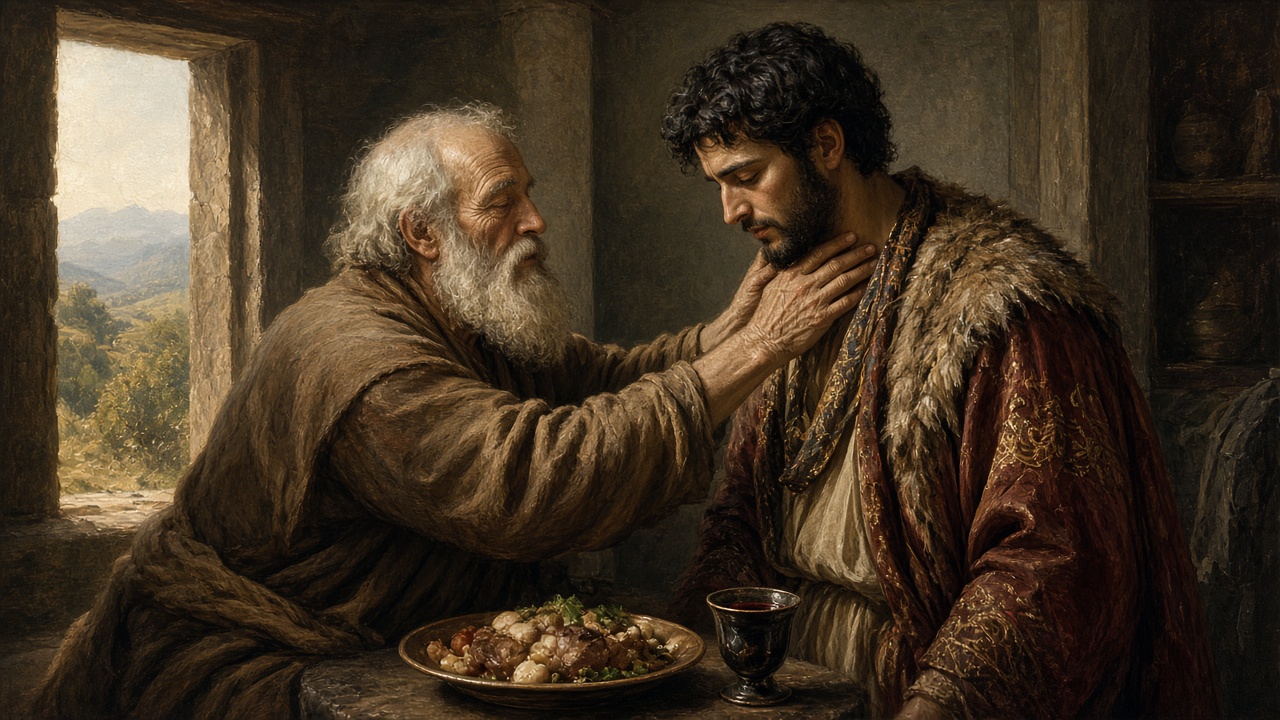
- Esaú, o gêmeo primogênito de Rebeca, era peludo e vivia como caçador, enquanto Jacó tinha a pele lisa e se tornou pastor. Rebeca veste Jacó com as melhores roupas de Esaú e cobre-lhe as mãos e a parte lisa do pescoço com peles de cabritos, para que Isaque, cujos olhos estavam fracos demais para enxergar, o tome por Esaú ao tocá-lo.Fontes: Esau (Edom) · Jacob (Israel) · o próprio texto bíblico
- Esaú então guarda rancor e planeja matar Jacó depois da morte de Isaque. Rebeca manda Jacó ao irmão dela, Labão, em Harã, cidade da Alta Mesopotâmia junto ao Belik, afluente do Eufrates — também chamada cidade de Naor —, onde Labão morava.Fontes: o próprio texto bíblico · Laban · Haran
Notas escritas com auxílio de IA a partir de fontes abertas (Theographic Bible Metadata, CC BY-SA 4.0; Easton’s Bible Dictionary, domínio público) e revisadas antes de publicar.
Lugares deste capítulo
- Haran · Hoje: Harran · 36.864, 39.033 · versículo 43
Só aparecem lugares com identificação de alta confiança (90% ou mais segundo as fontes acadêmicas reunidas pelo OpenBible). Mapa da época: DARE (Digital Atlas of the Roman Empire), CC BY 4.0; mapa atual: © colaboradores do OpenStreetMap; lugares: OpenBible.info (CC BY 4.0).
Créditos e licença desta tradução
Nǫ̀htsı̨̨ Nı̨̨htł'è
Dogrib: Dogrib Genesis & New Testament New Testament & Portions of Old Testament
copyright © 2009 Canadian Bible Society
Language: Dogrib
Translation by: Canadian Bible Society
Tłı̨chǫ Genesis and New Testament
About Tłı̨chǫ
Tłı̨chǫ (Dogrib) is a Na-Dene (Athabaskan) language. It is spoken by the First Nations Tłı̨chǫ people in the Northwest Territories in Canada. It has the largest number of speakers of any of the Aboriginal language communities in the NWT, and is one of the official languages of the Northwest Territories.
About This Translation
This translation includes the book of Genesis and the New Testament in Tłı̨chǫ. The first edition of the Tłı̨chǫ New Testament was published in 2003. It was a historic event, as it was the first time in more than a hundred years that a complete New Testament was published for one of the Dene First Nations in the Territories. The first edition was well received and quickly sold out. In the meantime the book of Genesis had been completed. Consequently, the 2008 reprint of the Tłı̨chǫ New Testament included Genesis.
Though this translation of the New Testament and Genesis took a total of ten years, the people who worked on it built on years of labor invested by the Tłı̨chǫ people, elders, priests and missionaries, translators, educators, and linguists. The material contained in this book was checked and approved by consultants from Wycliffe Bible Translators and the Canadian Bible Society.
If you are interested in obtaining a printed copy of this Bible, please contact the Canadian Bible Society at http://www.biblescanada.com .
Copyright Information
Dogrib Genesis and New Testament © 2003, 2008 Canadian Bible Society
The text of the Bible in Tłı̨chǫ that appears in this electronic format or website is for personal use only.
Up to five hundred (500) verses of the Bible text in any form (written, visual, electronic or audio) may be quoted without permission. The quoted verses may not be more than 50% of a complete book of the Bible, or more than 25% of the total text of the work in which they are quoted. Prior written permission must be obtained for any other use of the text. Copyright acknowledgement must in all cases appear on the title or copyright page.
For more information on copyright conditions or to apply, visit http://www.biblesociety.ca/copyright .
This translation is made available to you under the terms of the
Creative Commons Attribution-Noncommercial-No Derivatives license 4.0.
You may share and redistribute this Bible translation or extracts from it in any format, provided that:
You include the above copyright and source information.
You do not sell this work for a profit.
You do not change any of the words or punctuation of the Scriptures.
Pictures included with Scriptures and other documents on this site are licensed just for use with those Scriptures and documents.
For other uses, please contact the respective copyright owners.
2014-04-22
Fonte: http://ebible.org/dgrDOGNT/ · eBible.org