Gênesis 22
Nǫ̀htsı̨̨ Nı̨̨htł'è · Toque num versículo para ver as referências cruzadas.
Abraham Nǫ̀htsı̨ yeèhdzà
1Sìghaı̨waà hoòwo tł'axǫǫ̀ Abraham Nǫ̀htsı̨ yeèhdzà. “Abraham,” yèhdı yets'ǫ̀ gode.
“Hęɂę, neèhkw'ǫ,” Abraham yèhdı.
2Nǫ̀htsı̨ hayèhdı, “Neza ı̨łàet'ee Isaac weghǫneę̀tǫǫ sìı yeè Morayah nèk'e ts'ǫ̀ edexè awı̨ı̨le. Ekǫ shìh ı̨łè nets'ǫ̀ haehsı̨ ha sìı weka neza ełaı̨whı gà sets'ǫ̀ wek'eı̨hk'ǫ̀ ha,” yèhdı.
3Eyıt'à k'omǫǫ̀dǫǫ̀ et'ıì Abraham nıìtła gà edetłı̨tsoa k'e nèɂı̨ı̨wa. Wecheekeè nàke eyıts'ǫ weza Isaac edexè agǫ̀ǫ̀là. Nǫ̀htsı̨ ts'ǫ̀ t'asìı k'egeehk'ǫ̀ gha tso agı̨į̀là tł'axǫǫ̀, Nǫ̀htsı̨ edı̨į̀ ts'ǫ̀ aąde ha yèhdıı sìı ts'ǫ̀ agejà. 4Taı dzęę̀ k'e Abraham ı̨daà k'eet'į̀ là yahdaà nıwà shìh wègaat'ı̨. 5Abraham edecheekeè gots'ǫ̀ hadı, “Jǫ tłı̨tsoa xè godaahkw'e. Dǫzhìa weamı ı̨daà ehtła ha. Ekǫ Nǫ̀htsı̨ ts'ǫ̀ yadıhtı tł'axǫǫ̀ naxıts'ǫ̀ anawìde ha,” gòhdı.
6Abraham kǫ̀ dèk'ǫ̀ǫ gha tso nıį̀wa gà weza nayage gha yek'e nèyı̨ı̨wa. Ededı̨ t'aa kwetǫ yìı kǫ̀kwıì eyıts'ǫ beh k'ele. Nàke geet'eè ı̨daà nagıadè ekò, 7Isaac edetà ts'ǫ̀ hadı, “Età.”
“Seza, ayìı?” Abraham yèhdı.
“Kǫ̀kwıì eyıts'ǫ tso k'ets'ele hanìkò Nǫ̀htsı̨ ts'ǫ̀ sahzǫ̀ązaa k'ets'eehk'ǫ̀ ha sìı welaedì?” edetà èhdı.
8Abraham yets'ǫ̀ hadı, “Seza, Nǫ̀htsı̨ wets'ǫ̀ sahzǫ̀ązaa k'ets'eehk'ǫ̀ ha sìı ededı̨ goghàyehtè ha hǫt'e,” edeza èhdı. Hadı tł'axǫǫ̀ nàke geet'eè ı̨daà łegeèhtła.
9Nǫ̀htsı̨ edı̨į̀ ts'ǫ̀ aąde ha yèhdıı sìı ekǫ nègı̨ı̨de ekò Abraham kwe ełeka nèyı̨ı̨wa t'à kwe-ladà whehtsı̨, yeka tso nìı̨wa. Edeza xèwhezhà gà tso ka nèyı̨ı̨htı̨. Abraham edeza xèwhezhà gà tso ka nèyı̨ı̨htı̨.|src="LB00291B.TIF" size="span" ref="22.9" 10Eyı tł'axǫǫ̀ edeza ełaehwhı ha beh nıìchì. 11Hanìkò gots'ǫ̀ K'àowo weyak'eet'ı̨į̀ yak'e gots'ǫ yets'ǫ̀ whezeh, “Abraham! Abraham!” yèhdı hǫt'e.
“Hęɂę, neèhkw'ǫ,” Abraham yèhdı.
12“Dǫzhìa ełaı̨hwhı-le,” yèhdı. “T'asawı̨ı̨le-le. Neza ı̨łàet'ea nets'ǫ sìı sech'à wek'ènedì-le t'à sıì Nǫ̀htsı̨ k'èanet'e nǫǫ̀!” yak'eet'ı̨į̀ yèhdı.
13Abraham ı̨daà k'eet'į̀ là sahzǫ̀ą werezhıì wedè gogho ta eht'èèko yaɂı̨. Yets'ǫ̀ ehtła gà sahzǫ̀ą nıìchì. Ełaàyį̀ı̨hwho gà kǫ̀-dèk'ǫ̀ǫ k'e edeza tł'axǫǫ̀ Nǫ̀htsı̨ ts'ǫ̀ yek'enı̨hk'ǫ. 14Eyıt'à Abraham eyı shìhka sìı “Gots'ǫ̀ K'àowo Goghàyehtè Ha” wìyeh ayį̀į̀là. Dıı dzęę̀ ts'ǫ̀, “Gots'ǫ̀ K'àowo weshìhka goghàyehtè ha,” ts'edı.
15K'achı̨ gots'ǫ̀ K'àowo weyak'eet'ı̨į̀ yak'e gots'ǫ Abraham ts'ǫ̀ ezeè hǫt'e, 16“Gots'ǫ̀ K'àowo nets'ǫ̀ dıı hadı: Sıızì t'à yatı nàtsoo nexè whıhtsı̨ hǫt'e. Hanì eghàlaneedà k'èxa eyıts'ǫ neza ı̨łàet'ea sech'à wek'ènedì-le k'èxa, 17hotıì nexè sìghà hòɂǫǫ̀ agohłe ha. Nets'ıhɂǫ̀ǫ-dǫǫ̀ sıì łǫ t'à yat'a whǫ̀ lageètłǫ ha, eyıts'ǫ tabàa ewaà lageètłǫ ha. Dǫ naxıts'ǫ̀ xànıgı̨ı̨ɂaa gıts'ǫ kǫ̀godeè gòlaa sìı nets'ıhɂǫ̀ǫ-dǫǫ̀ goghǫ gìhchı ha. 18Sek'èanet'e k'èxa nets'ıhɂǫ̀ǫ-dǫǫ̀ gıts'ıhɂǫ̀ dıı nèk'e dǫ hazǫǫ̀ xàɂaa xè sìghà hòɂǫ ha,” yak'eet'ı̨į̀ yèhdı.
19Eyı tł'axǫǫ̀ Abraham wecheekeè nàke ı̨dè geèhkw'ee sìı gots'ǫ̀ naèhtła. Ełexè Bersheba nèk'e ts'ǫ̀ geède, ekǫ Abraham nàı̨dè.
Nahor weza
20Sìghaı̨waà hoòwo tł'axǫǫ̀ Abraham ts'ǫ̀ hagedı, “Mılkah ededı̨ sı gomǫ whelı̨. Nechı Nahor gha dǫzhìa nìı̨la. 21Gıza dıı hageètłǫ: Uz t'akwełǫ̀ǫ̀ wegǫ̀hłı̨, wek'è Buz, eyıts'ǫ wek'è Kemuyel (ededı̨ sìı Aram wetà hǫt'e), 22Kesed, Hazo, Pıldash, Jıdaf, eyıts'ǫ Betuyel,” gedı. 23Betuyel, Rebekah wetà hǫt'e. Mılkah, Abraham wechı Nahor wets'èkeè, hazǫǫ̀ t'à dǫzhìı ek'èdı̨ Nahor gha nìı̨la. 24Nahor wets'èkeè dek'aɂį̀ whedaa sìı Reyumah wìyeh. Ededı̨ sı weza gǫ̀hłı̨: Tabah, Gaham, Tahash, eyıts'ǫ Makah gìyeh.
Você sabia?
Deus prova Abraão
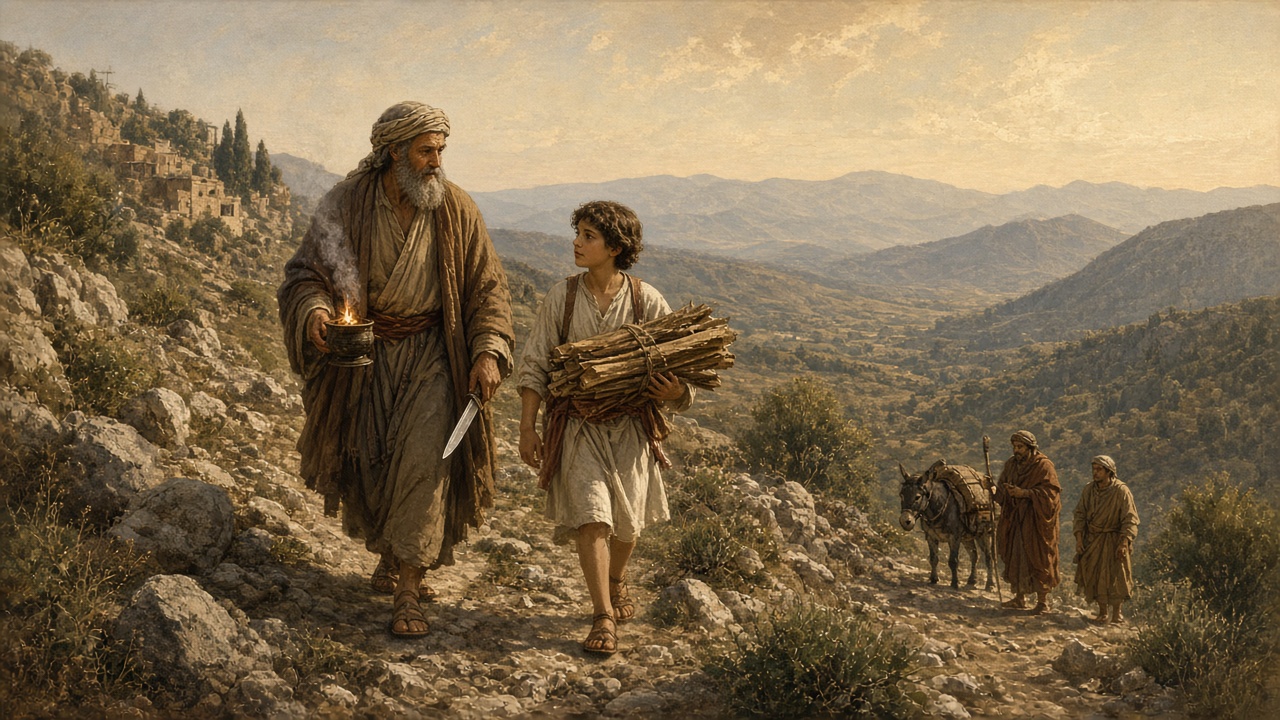
- Isaque era o único filho de Abraão com Sara. O acontecimento marcante seguinte registrado em sua vida, depois do desmame, é a ordem de Deus para que Abraão o oferecesse em holocausto num monte da terra de Moriá.Fontes: Isaac · o próprio texto bíblico
- O Dicionário Bíblico de Easton (1897) observa que alguns defendem que a terra de Moriá seja o monte Gerizim, mas a considera mais provavelmente uma das colinas de Jerusalém, a nordeste de Sião, onde o templo de Salomão foi construído na eira de Ornã, o jebuseu.Fontes: Moriah
- O capítulo termina com notícias dos parentes de Abraão: seu irmão Naor tinha permanecido em Harã, a leste do Eufrates, e Milca lhe dera oito filhos, entre eles Betuel, pai de Rebeca. Rebeca tornou-se esposa de Isaque, e o contato entre a família em Canaã e os parentes em Harã durou até Jacó deixar Harã.Fontes: Nahor (brother of Abraham) · Bethuel · o próprio texto bíblico
Notas escritas com auxílio de IA a partir de fontes abertas (Theographic Bible Metadata, CC BY-SA 4.0; Easton’s Bible Dictionary, domínio público) e revisadas antes de publicar.
Créditos e licença desta tradução
Nǫ̀htsı̨̨ Nı̨̨htł'è
Dogrib: Dogrib Genesis & New Testament New Testament & Portions of Old Testament
copyright © 2009 Canadian Bible Society
Language: Dogrib
Translation by: Canadian Bible Society
Tłı̨chǫ Genesis and New Testament
About Tłı̨chǫ
Tłı̨chǫ (Dogrib) is a Na-Dene (Athabaskan) language. It is spoken by the First Nations Tłı̨chǫ people in the Northwest Territories in Canada. It has the largest number of speakers of any of the Aboriginal language communities in the NWT, and is one of the official languages of the Northwest Territories.
About This Translation
This translation includes the book of Genesis and the New Testament in Tłı̨chǫ. The first edition of the Tłı̨chǫ New Testament was published in 2003. It was a historic event, as it was the first time in more than a hundred years that a complete New Testament was published for one of the Dene First Nations in the Territories. The first edition was well received and quickly sold out. In the meantime the book of Genesis had been completed. Consequently, the 2008 reprint of the Tłı̨chǫ New Testament included Genesis.
Though this translation of the New Testament and Genesis took a total of ten years, the people who worked on it built on years of labor invested by the Tłı̨chǫ people, elders, priests and missionaries, translators, educators, and linguists. The material contained in this book was checked and approved by consultants from Wycliffe Bible Translators and the Canadian Bible Society.
If you are interested in obtaining a printed copy of this Bible, please contact the Canadian Bible Society at http://www.biblescanada.com .
Copyright Information
Dogrib Genesis and New Testament © 2003, 2008 Canadian Bible Society
The text of the Bible in Tłı̨chǫ that appears in this electronic format or website is for personal use only.
Up to five hundred (500) verses of the Bible text in any form (written, visual, electronic or audio) may be quoted without permission. The quoted verses may not be more than 50% of a complete book of the Bible, or more than 25% of the total text of the work in which they are quoted. Prior written permission must be obtained for any other use of the text. Copyright acknowledgement must in all cases appear on the title or copyright page.
For more information on copyright conditions or to apply, visit http://www.biblesociety.ca/copyright .
This translation is made available to you under the terms of the
Creative Commons Attribution-Noncommercial-No Derivatives license 4.0.
You may share and redistribute this Bible translation or extracts from it in any format, provided that:
You include the above copyright and source information.
You do not sell this work for a profit.
You do not change any of the words or punctuation of the Scriptures.
Pictures included with Scriptures and other documents on this site are licensed just for use with those Scriptures and documents.
For other uses, please contact the respective copyright owners.
2014-04-22
Fonte: http://ebible.org/dgrDOGNT/ · eBible.org