2 Coríntios 8
Nǫ̀htsı̨̨ Nı̨̨htł'è · Toque num versículo para ver as referências cruzadas.
Corınth got'ı̨į̀ Nǫ̀htsı̨ wets'ǫ dǫ gha sǫǫ̀mba nàgehtsį̀
1Sèot'ı̨ı̨, Macedonıa nèk'e kǫ̀ta gòlaa sìı dànì Nǫ̀htsı̨ edecheekeè gots'ǫ̀ sǫnıwǫǫ sìı wek'èahsǫ ha naxıts'ı̨ı̨hwhǫ. 2Sıì gıxè hoìla łǫ kò sıì sǫgı̨ı̨wǫ, eyıts'ǫ sıì etegeèt'ı̨ kò ededzeè t'à t'aats'ǫǫ̀ t'asìı dǫ ghàgele. 3Ehkw'ı anaxèehsı̨, t'asìı t'à dǫ ts'àgedı ha dìì-le sìı t'à dǫ ts'àgı̨ı̨dì, eyı wete ts'ǫ̀ dǫ ts'àgı̨ı̨dì. Ededı̨ xàè hagı̨ı̨wǫ t'à, 4goxè Nǫ̀htsı̨ wets'ǫ dǫ ts'àgedı ha goghǫnàdageetì. 5Haı̨hcho ts'ǫ̀ dǫ ts'àgedı ha ts'ı̨ı̨wǫ-le ı̨lè. T'akwełǫ̀ǫ̀ gots'ǫ̀ K'àowo ghàdegį̀ı̨la, eyı tł'axǫǫ̀ Nǫ̀htsı̨ wınì k'ę̀ę̀ goxı̨ sı goghàdegį̀ı̨la. 6Tıtus ededı̨ naxıta dǫ gha sǫǫ̀mba nàhtsį̀ yexèhoį̀hwho ı̨lè t'à, naxıdzeè sǫnıwǫ t'à dǫ ts'àahdıı sìı deghàà nàyehtsį̀ ha wèts'edı hǫt'e. 7T'asìı hazǫǫ̀ t'à deɂǫ̀ǫ̀ nezı̨į̀ eghàlaahda hǫt'e. Nǫ̀htsı̨ ghǫ naxınì nàtsoo t'à, yatı t'à, t'asìı k'èahsǫ t'à, dǫ ts'àahdı ghǫ hòtł'ò aahwhǫ t'à, eyıts'ǫ sıì goghǫnıahtǫ sı t'à. Hotıì eyı xèht'eè naxıdzeè sǫnıwǫ t'à dǫ ts'àahdıı sìı eyı denahk'e nezı̨į̀ aahłe gha edeahdzà.
8Eyı haahłe ha dehsı̨į̀-aehsı̨-le, hanìkò naxeèhdzà aht'ı̨. Dànì dǫ eyıì-le Nǫ̀htsı̨ wets'ǫ dǫ ghǫnegeètǫǫ sìı asį̀į̀ gıxèht'eè hòtł'ò gıghǫnıahtǫ gha naxeèhdzà aht'ı̨. 9Gots'ǫ̀ K'àowo Zezì-Krı gots'ǫ̀ sǫnıwǫǫ sìı wek'èahsǫ hǫt'e. Ededı̨ sìı ahxe elı̨ ı̨lè hanìkò naxıgha eteèt'ı̨į̀ adììdlà hǫt'e. Eteèt'ı̨į̀ adììdlà t'à naxıxè ahxe hòɂǫ agode ha.
10Ayìı naxıgha denahk'e nezı̨ı̨ sìı gha yatı naxıghàehɂà ha. Įdìı xok'e naxı̨ t'akwełǫ̀ǫ̀ Nǫ̀htsı̨ wets'ǫ dǫ sǫǫ̀mba t'à gıts'àahdı ı̨lè, eyı zǫ nıìle, naxı̨ t'akwełǫ̀ǫ̀ hanì eghàlaahda ha ghǫ hòtł'ò dahwhǫ ı̨lè. 11Eyı la dıì weghǫ naaht'è ts'ǫ̀ weghàlaahda. Hanì-ı̨dè naxınì nezı̨ı̨ k'ę̀ę̀ dahwhǫ ı̨lèe sìı wexèht'eè deghàà weghàlaahdà. Eyıt'à ayìı dàtłǫ naxıts'ǫ sìı weghàà dǫ ts'àahdı. 12Godzeè t'à t'asìı dǫ ghàts'eɂà nı̨dè Nǫ̀htsı̨ wegha nezı̨ hǫt'e. Ayìı dàtłǫ gots'ǫ weghàà t'asìı dǫ ghàts'eɂà ha goı̨hwhǫ hǫt'e, t'asìı gots'ǫ-le weghàà ats'et'ı̨ ha goı̨hwhǫ nıìle.
13Naxıgha t'asìı whìle agode ha eyıts'ǫ dǫ eyıì-le gıxè t'asìı łǫ agode ha ts'ı̨ı̨wǫ nıìle, hanìkò hazǫǫ̀ ełèht'eè t'asìı naxıts'ǫ ha ts'ı̨ı̨wǫ. 14Dıì t'asìı łǫ naxıts'ǫ sìı wet'à dǫ t'asìı gıts'ǫ-le ts'àahdı ha dìì-le. Hanì-ı̨dè ededı̨ t'asìı deɂǫ̀ǫ̀ gıts'ǫ nı̨dè naxıts'àgedıì agede ha. Hanì-ı̨dè hazǫǫ̀ ełèht'eè t'asìı gots'ǫ ha. 15Dıı hanì dek'eèhtł'è k'ę̀ę̀: “Amìı t'asìı łǫ nàwhehtsı̨ı̨ sìı sıì deɂǫ̀ǫ̀ t'asìı łǫ wets'ǫ-le, eyıts'ǫ amìı t'asìı łǫ-lea nàwhehtsı̨ı̨ sìı sıì t'asìı wets'ǫ-le nıìle,” dek'eèhtł'è.
Tıtus, kǫ̀ta Corınth ts'ǫ̀ adlà
16Dànì naxıxè hòɂǫ ha dehwhǫǫ sìı Nǫ̀htsı̨ Tıtus hanì nànıwoò ayį̀į̀là hǫt'e, eyıt'à Nǫ̀htsı̨ masì weehwhǫ. 17Tıtus naxıts'ǫ̀ wets'eèhɂàa sìı hayele ha zǫǫ̀-le, ededı̨ hanıwǫ t'à naxıts'àtła ha sıì wınà hǫt'e. 18Nǫ̀htsı̨ cheekeè ı̨łè wexè ats'ele ha. Eyı dǫ godı nezı̨ı̨ gha nezı̨į̀ eghàlaı̨dà t'à Nǫ̀htsı̨ wecheekeè hazǫǫ̀ gıghǫ sìghà agedı hǫt'e. 19Eyı zǫǫ̀-le, sǫǫ̀mba dǫ degaı ts'ǫ̀ ts'ewa gha goxè ade ha Nǫ̀htsı̨ wecheekeè eyı dǫ gį̀į̀hchì hǫt'e. Eyı sǫǫ̀mba gıghàts'ewa ha sìı, wet'à Nǫ̀htsı̨ ghàsǫhoedı eyıts'ǫ sıì gıts'àts'edı ha ts'ı̨ı̨wǫǫ sìı gık'èezǫ gha ats'et'ı̨. 20Eyı sǫǫ̀mba haàtłǫǫ k'ets'elee sìı weghǫ yatı łǫ ha ts'ı̨ı̨wǫ-le. 21Eyıt'à ehkw'ı weghàlats'eeda ha ts'ı̨ı̨wǫ. Nǫ̀htsı̨ wenadąą̀ zǫǫ̀-le hanìkò dǫ hazǫǫ̀ gınadąą̀ ehkw'ı k'ehots'eɂa ha ts'ı̨ı̨wǫ hǫt'e.
22Eyıts'ǫ k'achı̨ dǫ ı̨łè eyı dǫ nàke gıxè ats'ele ha. Ededı̨ sìı goxè eghàlaı̨dà ı̨lè t'à wınì nàtsoo xè dànì la ghǫ hǫhtìı sìı wek'èts'eezǫ hǫt'e. Ehkw'ı eghàlaahda ha naxı̨ı̨hwhǫ t'à denahk'e goxè eghàlaeda ha nıwǫ hǫt'e. 23Tıtus ededı̨ sexè eghàlaeda hǫt'e, eyıts'ǫ setł'axǫǫ̀ naxıta eghàlaeda hǫt'e. Eyıts'ǫ wexè dǫ nàke sìı Nǫ̀htsı̨ cheekeè hazǫǫ̀ gha k'ehogeɂa t'à Zezì-Krı weghàsǫhoedıì adlà hǫt'e. 24Eyıt'à eyı dǫ taı gıghǫnıahtǫǫ sìı gık'èezǫǫ̀ agıahłe, eyıts'ǫ ayìı ghǫ naxıghǫ xàhots'edìı sìı wek'ę̀ę̀ ehkw'ı eghàlaahda. Hanì-ı̨dè Nǫ̀htsı̨ wecheekeè hazǫǫ̀ gık'èezǫ ha.
Você sabia?
Generosidade e a coleta para Jerusalém
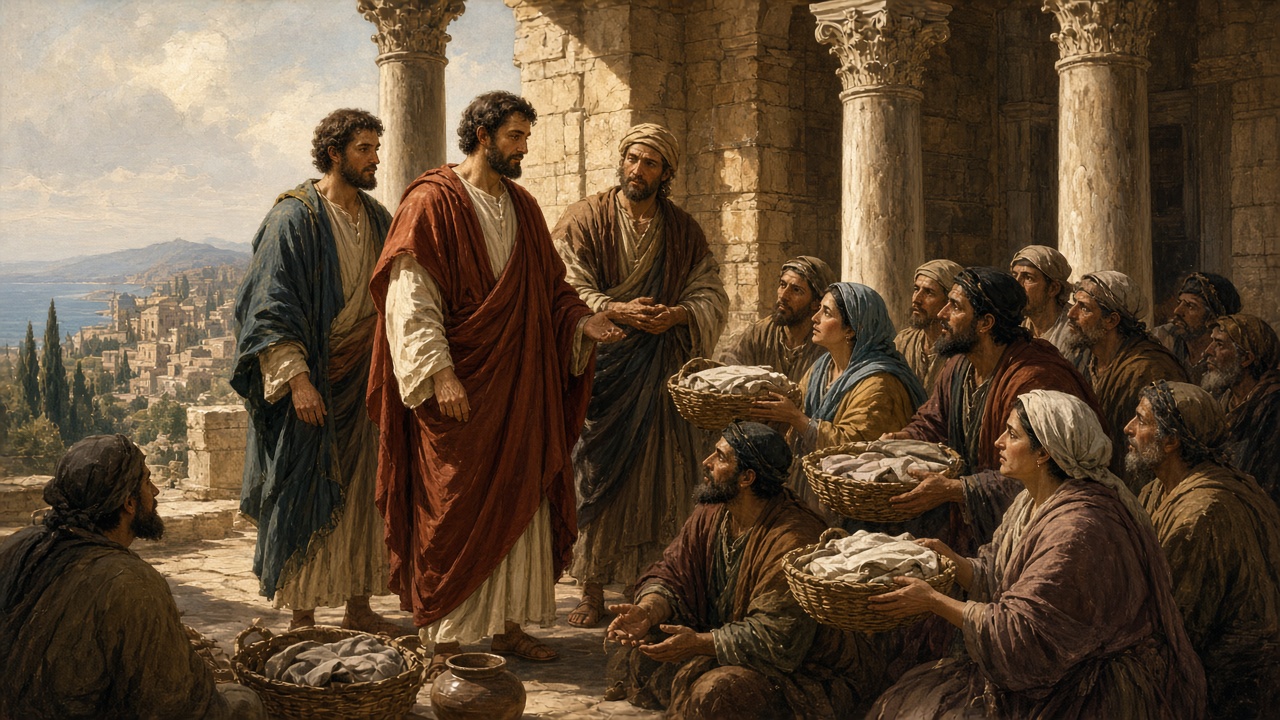
- Nos tempos do Novo Testamento, a Macedônia era uma província romana ao norte da Grécia. Paulo foi chamado pela visão de um homem da Macedônia para pregar o evangelho ali, e este capítulo conta aos coríntios como aquelas igrejas, numa terrível provação e em profunda pobreza, deram com alegria e até além do que podiam.Fontes: Macedonia · o próprio texto bíblico
- Tito, cujo nome não aparece em Atos, parece ter sido um gentio dedicado sobretudo a ministrar aos gentios. De Éfeso, Paulo o enviou a Corinto para encaminhar as contribuições da igreja em favor dos santos pobres de Jerusalém; neste capítulo, Paulo o exorta a concluir essa obra, e Tito vem com entusiasmo, por iniciativa própria.Fontes: Titus · o próprio texto bíblico
- Junto com Tito, Paulo envia um irmão elogiado por todas as igrejas por seu trabalho no evangelho e escolhido por elas para acompanhar a oferta, e outro irmão cujo empenho já foi provado muitas vezes e de muitos modos. Ele explica que esse cuidado visa evitar críticas à maneira de administrar o generoso donativo, para que façam o que é certo não só aos olhos do Senhor, mas também aos olhos das outras pessoas.Fontes: o próprio texto bíblico
Notas escritas com auxílio de IA a partir de fontes abertas (Theographic Bible Metadata, CC BY-SA 4.0; Easton’s Bible Dictionary, domínio público) e revisadas antes de publicar.
Lugares deste capítulo
Só aparecem lugares com identificação de alta confiança (90% ou mais segundo as fontes acadêmicas reunidas pelo OpenBible). Mapa da época: DARE (Digital Atlas of the Roman Empire), CC BY 4.0; mapa atual: © colaboradores do OpenStreetMap; lugares: OpenBible.info (CC BY 4.0).
Créditos e licença desta tradução
Nǫ̀htsı̨̨ Nı̨̨htł'è
Dogrib: Dogrib Genesis & New Testament New Testament & Portions of Old Testament
copyright © 2009 Canadian Bible Society
Language: Dogrib
Translation by: Canadian Bible Society
Tłı̨chǫ Genesis and New Testament
About Tłı̨chǫ
Tłı̨chǫ (Dogrib) is a Na-Dene (Athabaskan) language. It is spoken by the First Nations Tłı̨chǫ people in the Northwest Territories in Canada. It has the largest number of speakers of any of the Aboriginal language communities in the NWT, and is one of the official languages of the Northwest Territories.
About This Translation
This translation includes the book of Genesis and the New Testament in Tłı̨chǫ. The first edition of the Tłı̨chǫ New Testament was published in 2003. It was a historic event, as it was the first time in more than a hundred years that a complete New Testament was published for one of the Dene First Nations in the Territories. The first edition was well received and quickly sold out. In the meantime the book of Genesis had been completed. Consequently, the 2008 reprint of the Tłı̨chǫ New Testament included Genesis.
Though this translation of the New Testament and Genesis took a total of ten years, the people who worked on it built on years of labor invested by the Tłı̨chǫ people, elders, priests and missionaries, translators, educators, and linguists. The material contained in this book was checked and approved by consultants from Wycliffe Bible Translators and the Canadian Bible Society.
If you are interested in obtaining a printed copy of this Bible, please contact the Canadian Bible Society at http://www.biblescanada.com .
Copyright Information
Dogrib Genesis and New Testament © 2003, 2008 Canadian Bible Society
The text of the Bible in Tłı̨chǫ that appears in this electronic format or website is for personal use only.
Up to five hundred (500) verses of the Bible text in any form (written, visual, electronic or audio) may be quoted without permission. The quoted verses may not be more than 50% of a complete book of the Bible, or more than 25% of the total text of the work in which they are quoted. Prior written permission must be obtained for any other use of the text. Copyright acknowledgement must in all cases appear on the title or copyright page.
For more information on copyright conditions or to apply, visit http://www.biblesociety.ca/copyright .
This translation is made available to you under the terms of the
Creative Commons Attribution-Noncommercial-No Derivatives license 4.0.
You may share and redistribute this Bible translation or extracts from it in any format, provided that:
You include the above copyright and source information.
You do not sell this work for a profit.
You do not change any of the words or punctuation of the Scriptures.
Pictures included with Scriptures and other documents on this site are licensed just for use with those Scriptures and documents.
For other uses, please contact the respective copyright owners.
2014-04-22
Fonte: http://ebible.org/dgrDOGNT/ · eBible.org