2 Coríntios 3
Nǫ̀htsı̨̨ Nı̨̨htł'è · Toque num versículo para ver as referências cruzadas.
1Eyıt'à edeghǫ xàdahots'edì ats'edı dahwhǫ nì? Dǫ mǫ̀hdaa hoghànaxegeehtǫ ha gı̨ı̨wǫ nı̨dè, dǫ dàhòt'ı̨ı̨ agı̨ı̨t'e ghǫ enı̨htł'è edexè k'egehchı ha dahwhǫ. Goxı̨ sı hanıı nı̨htł'è naxıts'ǫ̀ k'ets'ehchı ha dahwhǫ nì? Hanì-le-ı̨dè hanıı enı̨htł'è goghàahɂà ha dahwhǫ nì? 2Naxı̨ gonı̨htł'è laaht'e, godzeè k'e dek'enaxèehtł'è, dǫ hazǫǫ̀ gık'èezǫ xè gık'eyahtı hǫt'e. 3Naxı̨ sìı Zezì-Krı wets'ǫ enı̨htł'è nezı̨ı̨ laaht'e, naxıta eghàlats'eeda t'à. Edotì t'à naxık'e aatł'è nıìle, Nǫ̀htsı̨ edaa sìı wets'ǫ Įnì Degaı t'à naxık'e aatł'è hǫt'e. Eyıts'ǫ kwe k'e weyatıì dek'eèhtł'è nıìle, naxıdzeè yìı dek'eèhtł'è hǫt'e.
4Eyı weghǫ sìı Zezì-Krı wets'ıhɂǫ̀ Nǫ̀htsı̨ wenadąą̀ hotıì ehkw'ı-ahodı ts'ı̨ı̨wǫ hǫt'e. 5Goxı̨ godahxà hats'edı nıìle. Goxı̨ whatsǫǫ̀ t'asìı ts'ı̨ı̨lı̨ nıìle, hanìkò Nǫ̀htsı̨ hanì eghàlats'eeda ha goghàhòı̨ɂǫ hǫt'e. 6Nakenahòdlı̨ı̨ wegòò k'ę̀ę̀ nezı̨į̀ eghàlats'eeda gha wecheekeè ts'ı̨ı̨lı̨į̀ agǫ̀ǫ̀là. Eyı nàowo gòò sìı nàowo zǫą xèht'eè nıìle, hanìkò Yedàyeh Nezı̨ı̨ wenàowoò hǫt'e. Nàowo zǫą dek'eèhtł'èe sìı ełaàts'edeè agohɂı̨, hanìkò Yedàyeh Nezı̨ı̨ wet'à ts'eeda hǫt'e.
Nakenahòdlı̨ı̨ wegòò sıì enıìyah hǫt'e
7Nàowo kwe k'e dek'eèhtł'èe sìı wet'à ełaàts'ede kò, enıìyah nechàa k'ę̀ę̀ gots'ǫ̀ nììt'ǫ hǫt'e. Moses wınì k'e saı̨dı̨ı̨ sìı whìle adaade kò Israel got'ı̨į̀ whaà ts'ǫ̀ gıghàeda ha dìì ı̨lè. Nàowo kwe k'e dek'eèhtł'èe sìı weghǫ enıìyah ı̨lè, hanìkò Yedàyeh Nezı̨ı̨ t'à ayìı goghǫ̀t'ǫǫ sìı eyı denahk'e weghǫ enıìyah nechàa hǫt'e. 9Nàowo wet'à dǫ ełaàgede gha gısınìyaetıı sìı enıìyah hǫt'e nı̨dè, nàowo nezı̨ı̨ wet'à ehkw'ı agòìdlàa sìı dàı̨hcho ts'ǫ̀ wenahk'e enıìyah dèè elı̨! 10Ayìı enıìyah elı̨ ı̨lèe sìı dıì gogha enıìyah-le ajà, dıì hòt'a ayìı denahk'e enıìyah sìı wek'èts'eezǫǫ̀ ats'ejà t'à. 11Ayìı whìle adaadee sìı enıìyah t'à nàhòwo nı̨dè, ayìı welǫ whìle ts'ǫ̀ wheɂǫ ha sìı wenahk'e enıìyah deè elı̨ hǫt'e!
12Hanì gogha ehkw'ı-ahodı t'à sıì weghǫ goınì nàtso hǫt'e. 13Moses xèts'ı̨ı̨ht'e nıìle. Wınì k'e saı̨dı̨ı̨ sìı whìle adaade kò, edınì k'e ɂehtł'ı̨ whehchì ayį̀į̀là, Israel got'ı̨į̀ wınì k'esaı̨dı̨ ghàgeeda ha-le t'à. 14Hanìkò gınıedì ha gıkwì dezhì adlà. Dıı dzęę̀ ts'ǫ̀ nakenahòdlı̨ı̨ wezǫǫ gık'eyahtı nı̨dè gınıedì ha dìì, eyı ɂehtł'ı̨ ı̨łaà gıgha enı̨htł'è k'e whehchì lanì. Eyı ɂehtł'ı̨ sìı gıgha ı̨ɂǫ̀ǫ̀ adlà nıìle, Zezì-Krı wedahxà nı̨dè zǫ eyı ɂehtł'ı̨ gıgha ı̨ɂǫ̀ǫ̀ adle ha hǫt'e. 15Dıı dzęę̀ ts'ǫ̀ Moses wenı̨htł'è k'eyagehtı nı̨dè gınıedì-le, ı̨łaà gıdzeè k'e ɂehtł'ı̨ whehchì lanì hǫt'e. 16Hanìkò dǫ gots'ǫ̀ K'àowo gıgha ehkw'ı-ahodıì agejà nı̨dè, eyı ɂehtł'ı̨ sìı gıgha ı̨ɂǫ̀ǫ̀ adle ha hǫt'e. 17Gots'ǫ̀ K'àowo Įnì Degaı hǫt'e, eyıts'ǫ edı̨į̀ gots'ǫ̀ K'àowo wets'ǫ Įnì Degaı wehòhɂǫǫ sìı dǫ k'ahogedè agììdlà hǫt'e. 18Goxı̨ sìı goınì k'e ɂehtł'ı̨ whehchìı nıìle, gots'ǫ̀ K'àowo dànì enıìyah elı̨ı̨ sìı gok'e saı̨dı̨ hǫt'e. Gots'ǫ̀ K'àowo, Įnì Degaı elı̨ı̨ sìı godzeè yìı eładı̨į̀ agohɂį̀, eyıt'à denahk'e wexèht'eè ats'et'į̀ agohɂı̨.
Você sabia?
Uma aliança mais gloriosa
- O capítulo pergunta se são necessárias cartas de recomendação para os crentes ou da parte deles, como algumas pessoas exigem. Responde que os próprios crentes são uma carta de Cristo, fruto desse ministério, inscrita nos corações dos ministros e conhecida e lida por todos.Fontes: o próprio texto bíblico
- O capítulo contrasta a tinta e as tábuas de pedra com o Espírito do Deus vivo a escrever em corações humanos. Chama de ministério de morte e de condenação o ministério gravado em letras sobre pedra, e descreve uma nova aliança do Espírito, pois a letra mata, mas o Espírito dá vida.Fontes: o próprio texto bíblico
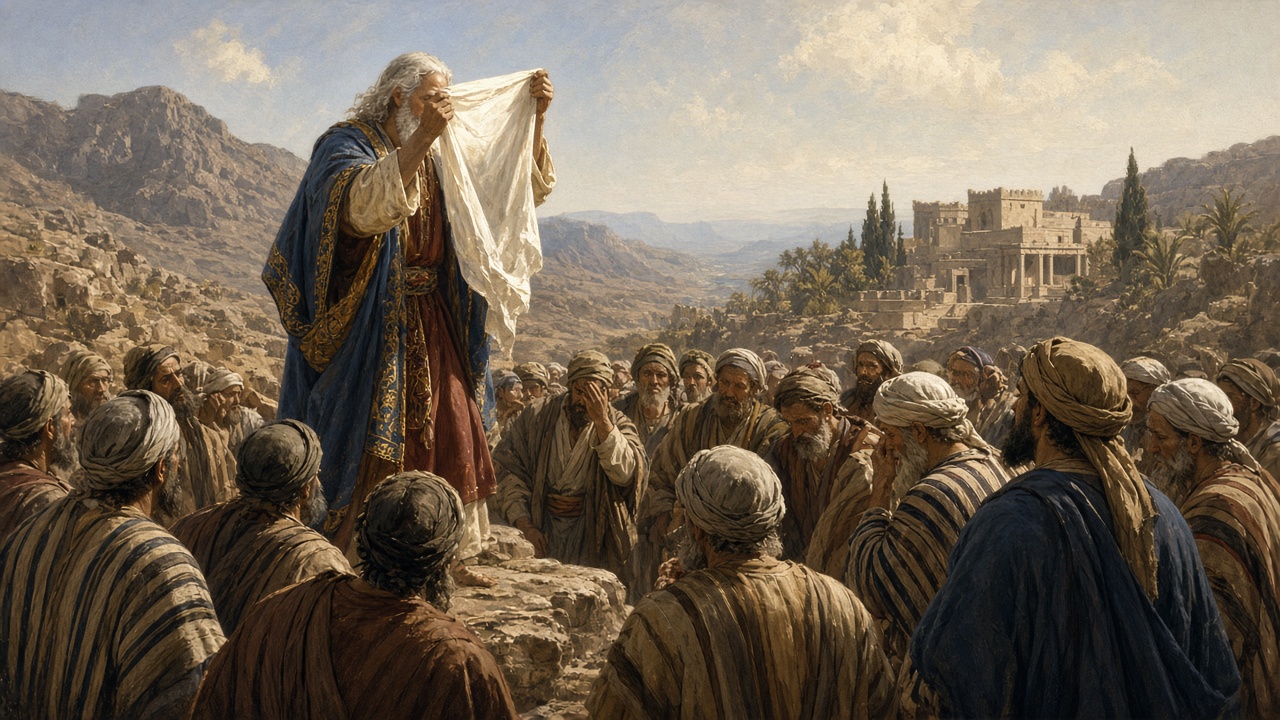
- Os israelitas não conseguiam fitar o rosto de Moisés por causa de uma glória que se desvanecia, e Moisés pôs um véu sobre o rosto para que não contemplassem o fim do que ia passando. O capítulo diz que um véu ainda cobre os corações deles quando se lê Moisés, e que ele é retirado sempre que alguém se volta para o Senhor.Fontes: o próprio texto bíblico
Notas escritas com auxílio de IA a partir de fontes abertas (Theographic Bible Metadata, CC BY-SA 4.0; Easton’s Bible Dictionary, domínio público) e revisadas antes de publicar.
Créditos e licença desta tradução
Nǫ̀htsı̨̨ Nı̨̨htł'è
Dogrib: Dogrib Genesis & New Testament New Testament & Portions of Old Testament
copyright © 2009 Canadian Bible Society
Language: Dogrib
Translation by: Canadian Bible Society
Tłı̨chǫ Genesis and New Testament
About Tłı̨chǫ
Tłı̨chǫ (Dogrib) is a Na-Dene (Athabaskan) language. It is spoken by the First Nations Tłı̨chǫ people in the Northwest Territories in Canada. It has the largest number of speakers of any of the Aboriginal language communities in the NWT, and is one of the official languages of the Northwest Territories.
About This Translation
This translation includes the book of Genesis and the New Testament in Tłı̨chǫ. The first edition of the Tłı̨chǫ New Testament was published in 2003. It was a historic event, as it was the first time in more than a hundred years that a complete New Testament was published for one of the Dene First Nations in the Territories. The first edition was well received and quickly sold out. In the meantime the book of Genesis had been completed. Consequently, the 2008 reprint of the Tłı̨chǫ New Testament included Genesis.
Though this translation of the New Testament and Genesis took a total of ten years, the people who worked on it built on years of labor invested by the Tłı̨chǫ people, elders, priests and missionaries, translators, educators, and linguists. The material contained in this book was checked and approved by consultants from Wycliffe Bible Translators and the Canadian Bible Society.
If you are interested in obtaining a printed copy of this Bible, please contact the Canadian Bible Society at http://www.biblescanada.com .
Copyright Information
Dogrib Genesis and New Testament © 2003, 2008 Canadian Bible Society
The text of the Bible in Tłı̨chǫ that appears in this electronic format or website is for personal use only.
Up to five hundred (500) verses of the Bible text in any form (written, visual, electronic or audio) may be quoted without permission. The quoted verses may not be more than 50% of a complete book of the Bible, or more than 25% of the total text of the work in which they are quoted. Prior written permission must be obtained for any other use of the text. Copyright acknowledgement must in all cases appear on the title or copyright page.
For more information on copyright conditions or to apply, visit http://www.biblesociety.ca/copyright .
This translation is made available to you under the terms of the
Creative Commons Attribution-Noncommercial-No Derivatives license 4.0.
You may share and redistribute this Bible translation or extracts from it in any format, provided that:
You include the above copyright and source information.
You do not sell this work for a profit.
You do not change any of the words or punctuation of the Scriptures.
Pictures included with Scriptures and other documents on this site are licensed just for use with those Scriptures and documents.
For other uses, please contact the respective copyright owners.
2014-04-22
Fonte: http://ebible.org/dgrDOGNT/ · eBible.org