1 Tessalonicenses 4
Nǫ̀htsı̨̨ Nı̨̨htł'è · Toque num versículo para ver as referências cruzadas.
Dànì Nǫ̀htsı̨ wınì k'ę̀ę̀ ts'eeda
1Sèot'ı̨ı̨, nǫǫde t'à ı̨łaà t'asìı ghǫ naxıts'ǫ̀ eehtł'è ha dehwhǫ. Dànì Nǫ̀htsı̨ wınì k'ę̀ę̀ ts'eedaa sìı weghǫ hoghànaxets'eèhtǫ ı̨lè t'à dıì hanì aahda hǫt'e. Gots'ǫ̀ K'àowo Zezì weyatıì dahxà k'èdaà hanì aahda naxìts'edı, naxıghǫnàdats'eetì. 2Gots'ǫ̀ K'àowo Zezì wedahxà yatı hoghànaxets'eèhtǫǫ sìı wek'èahsǫ hǫt'e.
3Nǫ̀htsı̨ sìı wegha degaı k'ę̀ę̀ aahda ha naxı̨ı̨hwhǫ hǫt'e: naxızhį̀į̀ t'à hołı̨ı̨ k'alaahdè ch'à edek'èahdì. 4Naxızhį̀į̀ sìı t'asìı nezı̨ı̨ xè degaı k'ę̀ę̀ wek'èahdì ha hoghàdeahtǫ. 5Dǫ Nǫ̀htsı̨ k'ègeezǫ-le lanì naxınìłı̨ı̨ t'anıwǫ k'ę̀ę̀ aahda-le. 6Eyıt'à dǫ wı̨ı̨zìı edèot'ı̨ ts'ǫ̀ ekǫ-le eghàlaeda ha nıìle eyıts'ǫ hołı̨ı̨ k'ę̀ę̀ edèot'ı̨ k'alawo ha nıìle. Hòt'a hanaxèts'edı ı̨lè, dǫ hanì nàowojıı ghàlaedaa sìı gots'ǫ̀ K'àowo nàyeehkwa ha hǫt'e. 7Nǫ̀htsı̨ sìı gonàowołı̨ı̨ k'ę̀ę̀ ts'eeda gha gokayaı̨htı nıìle, hanìkò nàowo degaı k'ę̀ę̀ ts'eeda gha gokayaı̨htı hǫt'e. 8Eyıt'à dıı yatı naxıghàts'ı̨ı̨ɂǫǫ sìı amìı wegha wedę sìı goxı̨ zǫ gok'èı̨t'e-le nıìle, hanìkò Nǫ̀htsı̨ k'èı̨t'e-le hǫt'e. Hanıı dǫ sìı Nǫ̀htsı̨ edets'ǫ Įnì Degaı goghàı̨ɂǫǫ sìı wegha wedę hǫt'e.
9Nǫ̀htsı̨ ededı̨ ełeghǫnıahtǫ ghǫ hoghànaxeèhtǫ ı̨lè, eyıt'à ełèot'ı̨ k'ę̀ę̀ ełeghǫnıahtǫ ghǫ naxıts'ǫ̀ ts'eetł'è-le kò. 10Macedonıa nèk'e hazǫǫ̀ ts'ǫ̀ gòet'ı̨ hazǫǫ̀ gıghǫnıahtǫ hǫt'e. Hanìkò sèot'ı̨ denahk'e ełeghǫnıahtǫ naxèts'edıì naxıghǫnàdats'eetì.
11Dànì hoghànaxets'eèhtǫ k'ę̀ę̀ aahda: Ts'èwhı̨į̀ aahda ghǫ hòtł'ò aahwhǫ; t'asìı naxıìdı-le sìı weghǫ nànıahdè-le; eyıts'ǫ naxılà t'à eghàlaahda. 12T'aats'ǫǫ̀ hanì aahda nı̨dè dǫ gıgha ehkw'ı-ahodı-le sìı nezı̨į̀ naxıts'ǫ̀ nageɂaà agede ha, eyıts'ǫ dǫ wı̨ı̨zìı gıt'à aahda ha nıìle.
Dànì gots'ǫ̀ K'àowo jǫ nǫ̀ǫtła ha
13Sèot'ı̨ı̨, dǫ ełaàgı̨ı̨dèe sìı gıxè dàgode ha sìı hotıì nezı̨į̀ wek'èahsǫ ha naxıts'ı̨ı̨hwhǫ hǫt'e. Dǫ eyıì-le gıgha ı̨ka whìle lanì, naxèot'ı̨ ełaàgı̨ı̨dèe sìı ghǫ naxıdzeè nànııtì ha naxets'ı̨ı̨hwhǫ-le. 14Zezì ełaı̨wo eyıts'ǫ naìdà eyı sìı gogha ehkw'ı-ahodı hǫt'e. Eyıt'à dǫ Zezì gıgha ehkw'ı adıı xè ełaàgı̨ı̨dèe sìı Zezì jǫ anajà nı̨dè, Nǫ̀htsı̨ Zezì xè negıìdè agole ha, eyı sìı gogha ehkw'ı-ahodı hǫt'e. 15Xàè gots'ǫ̀ K'àowo weyatıì ghàà dıı hanaxèts'edı: goxı̨ ı̨łaà dıı nèk'e ts'eeda et'ıì gots'ǫ̀ K'àowo nǫ̀ǫtła nı̨dè, Nǫ̀htsı̨ wets'ǫ dǫ ełaàgı̨ı̨dèe sìı gıkwe-t'ıì gots'ǫ̀ K'àowo ts'ǫ̀ nìts'edè ha nıìle. 16Gots'ǫ̀ K'àowo ededı̨ xàè yak'e gots'ǫ hodàetła ha hǫt'e. Nǫ̀htsı̨ wets'ǫ dechı̨shì hòtł'ò dedı ha, eyıts'ǫ yak'eet'ı̨deè hòtł'ò xàyahtı ha. Ekòet'ıì dǫ Zezì gıgha ehkw'ı-ahodıı xè ełaàgı̨ı̨dèe sìı ededı̨ t'akwełǫ̀ǫ̀ nagìdà ha. 17Eyı tł'axǫǫ̀ goxı̨ ı̨łaà dıı nèk'e ts'eedaa sìı ı̨dòo k'oh yìı ts'ǫ̀ nets'ıìdè ha, ekǫ gıxè eyıts'ǫ gots'ǫ̀ K'àowo wexè ı̨dòo yat'a gınìhdǫǫ̀ ts'eedè ha. Eyıts'ǫ welǫ whìle ts'ǫ̀ gots'ǫ̀ K'àowo wexè ats'ı̨ı̨t'e ha hǫt'e. 18Eyıt'à eyı yatıì t'à nezı̨į̀ ełets'ǫ̀ goahde xè ełınì nàtsoò aahłe.
Você sabia?
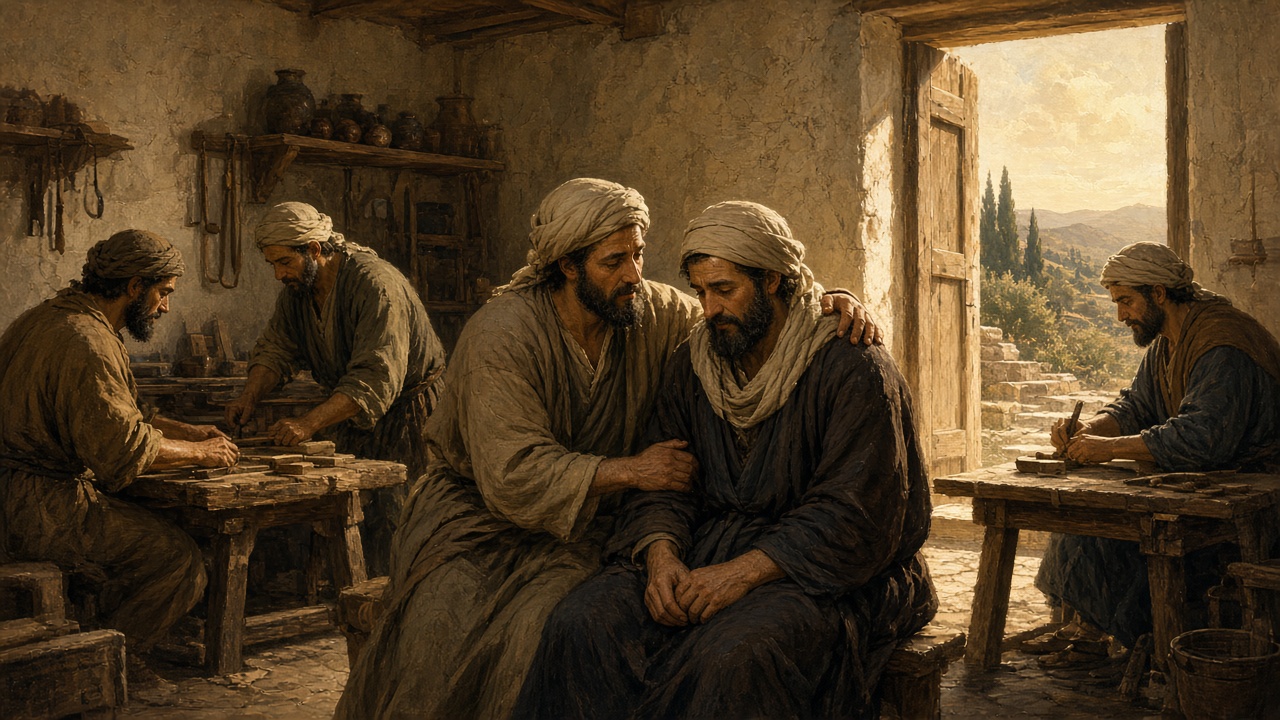
Santidade, amor e esperança pelos que morreram
- Este capítulo observa que seus leitores já demonstravam amor a todos os irmãos por toda a Macedônia. Nos tempos do Novo Testamento, a Macedônia era uma província romana situada ao norte da Grécia, governada por um propretor com o título de procônsul. Paulo foi chamado por uma visão do "homem da Macedônia" para pregar o evangelho ali.Fontes: o próprio texto bíblico · Macedonia
- O capítulo fala dos mortos como pessoas que dormem ou adormeceram, e pede aos leitores que não se entristeçam como os demais, que não têm esperança. Porque Jesus morreu e ressuscitou, diz o texto, Deus trará com Jesus os que nele adormeceram; os mortos em Cristo ressuscitarão primeiro, e então os que ainda estiverem vivos serão arrebatados com eles nas nuvens para encontrar o Senhor nos ares.Fontes: o próprio texto bíblico
- Os leitores são exortados a aspirar a uma vida tranquila, a cuidar dos próprios assuntos e a trabalhar com as próprias mãos, como já lhes havia sido instruído. O capítulo apresenta isso como o modo de se portar corretamente diante dos de fora e de não depender de ninguém.Fontes: o próprio texto bíblico
Notas escritas com auxílio de IA a partir de fontes abertas (Theographic Bible Metadata, CC BY-SA 4.0; Easton’s Bible Dictionary, domínio público) e revisadas antes de publicar.
Lugares deste capítulo
- Macedonia · 41.600, 22.540 · versículo 10
Só aparecem lugares com identificação de alta confiança (90% ou mais segundo as fontes acadêmicas reunidas pelo OpenBible). Mapa da época: DARE (Digital Atlas of the Roman Empire), CC BY 4.0; mapa atual: © colaboradores do OpenStreetMap; lugares: OpenBible.info (CC BY 4.0).
Créditos e licença desta tradução
Nǫ̀htsı̨̨ Nı̨̨htł'è
Dogrib: Dogrib Genesis & New Testament New Testament & Portions of Old Testament
copyright © 2009 Canadian Bible Society
Language: Dogrib
Translation by: Canadian Bible Society
Tłı̨chǫ Genesis and New Testament
About Tłı̨chǫ
Tłı̨chǫ (Dogrib) is a Na-Dene (Athabaskan) language. It is spoken by the First Nations Tłı̨chǫ people in the Northwest Territories in Canada. It has the largest number of speakers of any of the Aboriginal language communities in the NWT, and is one of the official languages of the Northwest Territories.
About This Translation
This translation includes the book of Genesis and the New Testament in Tłı̨chǫ. The first edition of the Tłı̨chǫ New Testament was published in 2003. It was a historic event, as it was the first time in more than a hundred years that a complete New Testament was published for one of the Dene First Nations in the Territories. The first edition was well received and quickly sold out. In the meantime the book of Genesis had been completed. Consequently, the 2008 reprint of the Tłı̨chǫ New Testament included Genesis.
Though this translation of the New Testament and Genesis took a total of ten years, the people who worked on it built on years of labor invested by the Tłı̨chǫ people, elders, priests and missionaries, translators, educators, and linguists. The material contained in this book was checked and approved by consultants from Wycliffe Bible Translators and the Canadian Bible Society.
If you are interested in obtaining a printed copy of this Bible, please contact the Canadian Bible Society at http://www.biblescanada.com .
Copyright Information
Dogrib Genesis and New Testament © 2003, 2008 Canadian Bible Society
The text of the Bible in Tłı̨chǫ that appears in this electronic format or website is for personal use only.
Up to five hundred (500) verses of the Bible text in any form (written, visual, electronic or audio) may be quoted without permission. The quoted verses may not be more than 50% of a complete book of the Bible, or more than 25% of the total text of the work in which they are quoted. Prior written permission must be obtained for any other use of the text. Copyright acknowledgement must in all cases appear on the title or copyright page.
For more information on copyright conditions or to apply, visit http://www.biblesociety.ca/copyright .
This translation is made available to you under the terms of the
Creative Commons Attribution-Noncommercial-No Derivatives license 4.0.
You may share and redistribute this Bible translation or extracts from it in any format, provided that:
You include the above copyright and source information.
You do not sell this work for a profit.
You do not change any of the words or punctuation of the Scriptures.
Pictures included with Scriptures and other documents on this site are licensed just for use with those Scriptures and documents.
For other uses, please contact the respective copyright owners.
2014-04-22
Fonte: http://ebible.org/dgrDOGNT/ · eBible.org