1 Coríntios 15
Nǫ̀htsı̨̨ Nı̨̨htł'è · Toque num versículo para ver as referências cruzadas.
Zezì-Krı naìdà
1Sèot'ı̨ı̨, godı nezı̨ı̨ t'à naxıts'ǫ̀ goıhdee sìı wenaahdì ha dehwhǫ. Eyı godı nezı̨ı̨ sìı naxıgha ehkw'ı-ahodı xè hotıì wek'ę̀ę̀ aahda ha dahwhǫ hǫt'e. 2Eyı godı nezı̨ı̨ t'à edaxànaxeètı̨ hǫt'e, eyıts'ǫ eyı yatı naxıghàıhɂǫǫ sìı hòtł'ò yàahtǫ̀. Hanì-le-ı̨dè k'ètł'ǫ̀ naxıgha ehkw'ı-ahodı hǫt'e.
3Yatı sets'ǫ̀ nìt'ǫǫ sìı yatı t'akwełǫ̀ǫ̀ wek'èahsǫ ha naxıghàehɂǫ hǫt'e. Eyı yatı sìı Zezì-Krı gohołı̨į̀ k'èxa ełaı̨wo hǫt'e, eyı sìı Nǫ̀htsı̨ Nı̨htł'è k'ę̀ę̀ agòjà. 4Zezì wekw'ǫǫ̀ nìtǫ ı̨lè, eyıts'ǫ taı dzęę̀ k'ehǫǫwo tł'axǫǫ̀ naìdà, eyı sìı Nǫ̀htsı̨ Nı̨htł'è k'ę̀ę̀ agòjà. 5Eyıts'ǫ Peter ts'ǫ̀ wègoèht'į̀, eyı tł'axǫǫ̀ wecheekeèdeè ts'ǫ̀ wègoèht'į̀ ı̨lè. 6Eyı tł'axǫǫ̀ Nǫ̀htsı̨ wecheekeè sı̨làekw'eènǫ daats'ǫ̀ ełègehdee sìı gots'ǫ̀ wègoèht'į̀. Dǫ gıaɂı̨ı̨ sìı deɂǫ̀atłǫ ı̨łaà geeda, hanìkò gıta gots'ǫ dǫ mǫ̀hdaa ełaàgı̨ı̨dè. 7Zezì-Krı dǫ haàtłǫǫ ts'ǫ̀ wègoèht'į̀ tł'axǫǫ̀ James ts'ǫ̀ wègoèht'į̀, eyıts'ǫ wecheekeèdeè hazǫǫ̀ ts'ǫ̀ wègoèht'į̀ ı̨lè. 8Nǫǫde t'à sı̨ sı sets'ǫ̀ wègoèht'į̀; sı̨ sììdì k'ę̀ę̀ wecheekeèdeè whıhłı̨ hǫt'e.
9Wecheekeèdeè gha sìı hazǫǫ̀ t'à sı̨ denahk'e dek'aɂį̀ aht'e. Nǫ̀htsı̨ wecheekeè dagı̨ı̨ɂaà agèhłà ı̨lè t'à, wecheekeèdeè ehłı̨ gha xèeht'e-le. 10Hanìkò Nǫ̀htsı̨ wesǫnıwǫ ts'ıhɂǫ̀ wecheekeèdeè whıhłı̨, wesǫnıwǫ t'à dǫ eładı̨ı̨ whıhłı̨į̀ asį̀į̀là. Wecheekeèdeè hazǫǫ̀ gınahk'e hòtł'ò eghàlaıhdà, hanìkò sı̨ adehɂı̨ nıìle, Nǫ̀htsı̨ wesǫnıwǫ seyìı eghàlaedaa sìı at'ı̨ hǫt'e. 11Eyıt'à sı̨ naxıts'ǫ̀ gohde, hanì-le-ı̨dè wecheekeèdeè naxıts'ǫ̀ gogede, ehk'ę̀ę̀, eyı godı nezı̨ı̨ t'à naxıts'ǫ̀ gots'ı̨ı̨de t'à naxıgha ehkw'ı-ahodıì ajà.
Dǫ ełaı̨dèe sìı nagìdà ha hǫt'e
12Zezì-Krı ełaı̨wo gots'ǫ naìdà naxèts'edı nı̨dè, dànìghǫ naxıta gots'ǫ dǫ mǫ̀hdaa, dǫ ełaı̨dèe sìı nagìdà ha nıìle, gedı? 13Dǫ ełaı̨dèe sìı nagìdà-le nı̨dè Zezì-Krı ededı̨ sı naìdà-le hǫt'e. 14Zezì-Krı naìdà-le nı̨dè k'ètł'ǫ̀ godı nezı̨ı̨ t'à naxıts'ǫ̀ gots'ede, eyıts'ǫ k'ètł'ǫ̀ naxıgha ehkw'ı-ahodı hǫt'e. 15Eyı zǫǫ̀-le, dǫ naìdà-le nı̨dè Nǫ̀htsı̨ Zezì-Krı naìdà ayį̀į̀làa weghǫ gots'ı̨ı̨de t'à, Nǫ̀htsı̨ weghǫ dǫ ts'ǫ̀ hots'ets'ì gha goıtà ha ı̨lè. Hanìkò, dǫ nagìdà-le ghǫ ehkw'ı-ahodı nı̨dè, Nǫ̀htsı̨ Zezì naìdà ayį̀į̀là nıìle. 16Dǫ ełaı̨dèe sìı nagìdà-le nı̨dè Zezì-Krı ededı̨ sı naìdà-le hǫt'e. 17Zezì-Krı naìdà-le nı̨dè k'ètł'ǫ̀ naxıgha ehkw'ı-ahodı, eyıts'ǫ ı̨łaà naxıhołı̨į̀ naxık'e whela hǫt'e. 18Hanì-ı̨dè dǫ Zezì gıgha ehkw'ı-ahodıı xè ełaàgı̨ı̨dèe sìı edaxàgı̨ı̨de-le hǫt'e. 19Dıı nèk'e ts'eedaa zǫ gha Zezì-Krı edaxàgohtè ha ts'ı̨ı̨wǫ nı̨dè dǫ hazǫǫ̀ nahk'e etets'eèt'ı̨ ats'ı̨ı̨t'e hǫt'e.
20Hanìkò Zezì-Krı ełaı̨wo gots'ǫ hotıì naìdà awììdlà hǫt'e, eyıt'à Nǫ̀htsı̨ wenadąą̀, dǫ hazǫǫ̀ ełaı̨dèe sìı gıta gots'ǫ ededı̨ t'akwełǫ̀ǫ̀ naìdà hǫt'e. 21Dǫ ı̨łè wets'ıhɂǫ̀, dǫ hazǫǫ̀ ełaàde hǫt'e, eyıts'ǫ dǫ ı̨łè wets'ıhɂǫ̀, dǫ nagìdà ha hǫt'e. 22Adǫ̀ wets'ıhɂǫ̀, dǫ hazǫǫ̀ ełaàde hǫt'e, eyıts'ǫ Zezì-Krı wets'ıhɂǫ̀, dǫ hazǫǫ̀ nagìdà ha hǫt'e. 23Hanìkò nàke ts'ǫ̀ ełek'èdaà hòɂǫ agode ha: Zezì-Krı t'akwełǫ̀ǫ̀ naìdà hǫt'e, eyıts'ǫ jǫ ts'ǫ̀ anajà nı̨dè wets'ǫ dǫ gı̨ı̨lı̨ı̨ sìı hazǫǫ̀ nagìdà ha. 24Eyı tł'axǫǫ̀-ı̨dè nǫǫde dzęę̀ k'e nèhòkw'ı ha. Eyı dzęę̀ k'e Zezì-Krı, ı̨dòo yat'a k'aodèe hazǫǫ̀ godıhòèhtsı̨ tł'axǫǫ̀ nı̨dè, Nǫ̀htsı̨ Wenàowoò k'ę̀ę̀ hòɂǫǫ sìı Nǫ̀htsı̨-Gotà wetł'aà wheɂǫǫ̀ ayele ha. 25Nǫ̀htsı̨ amìı yets'ǫ̀ xànegı̨ı̨ɂaa sìı hazǫǫ̀ goghǫehnè gots'ǫ̀, Zezì-Krı K'àowocho elı̨ ha hǫt'e. 26Nàowo wet'à ełaàts'edee sìı Nǫ̀htsı̨ ts'ǫ̀ xànıɂa hǫt'e, Zezì eyı nàowo sìı nǫǫde ts'ǫ̀ yedıhohtsı̨ ha hǫt'e. 27Dıı hanì dek'eèhtł'è hǫt'e, “T'asìı hazǫǫ̀ ts'ǫ̀ K'àowo ayį̀į̀là.” Nǫ̀htsı̨ ededı̨ t'asìı hazǫǫ̀ Zezì-Krı wetł'aà whelaà ayį̀į̀làa ne t'à, “T'asìı hazǫǫ̀ ts'ǫ̀ K'àowo ayį̀į̀là,” dek'eèhtł'èe sìı Nǫ̀htsı̨-Gotà ts'ǫ̀ K'àowo ha awèts'edı nıìle. 28Nǫ̀htsı̨ t'asìı hazǫǫ̀ Edeza wetł'aà whelaà ayį̀į̀là tł'axǫǫ̀ nı̨dè, Weza sìı, Nǫ̀htsı̨-Gotà ghàdìhtè ha. Nǫ̀htsı̨-Gotà t'asìı hazǫǫ̀ edeza ghàı̨la ekò, weza t'asìı hazǫǫ̀ yetł'aà nayeele ha. Hanì-ı̨dè Nǫ̀htsı̨ sìı ededı̨ zǫ t'asìı hazǫǫ̀ eyıts'ǫ dǫ hazǫǫ̀ ts'ǫ̀ K'àowo ha.
29Dǫ nagìdà-le nı̨dè dǫ geedaa sìı ayìıha dǫ ełaı̨dèe gha gık'ètaìdzǫ welì? Dǫ nagìdà-le nı̨dè k'ètł'ǫ̀ dǫ ełaı̨dèe gha gık'ètaìdzǫ hǫt'e. 30Eyıts'ǫ goxı̨ sìı ayìıha t'aats'ǫǫ̀ hoejı̨į̀ edeghàlats'eeda welì? 31Sèot'ı̨ı̨, dzę taàt'eè seweè hołè ha lanì. Ehkw'ı anaxèehsı̨, Zezì-Krı naxıgha ehkw'ı-ahodı t'à naxıghǫ sıì sınà hǫt'e. 32Kǫ̀ta Ephesus ekǫ tıts'aàdìı wets'àhoejı̨ı̨ lanıı gık'aıhwho hǫt'e. Ekìı dǫ nàowoò zǫ gha aht'ı̨ nı̨dè t'asìı wı̨ı̨zìı dehnǫ nıìle. Dǫ ełaı̨dèe naìdà-le nı̨dè, “Satsǫ ełaàts'ede ha t'à dıì shèts'ıızhe xè ts'ııdǫ̀,” dehsı̨ ha ı̨lè. 33Dǫ ts'ıɂǫ̀ anaxegııle sǫ̀ǫ̀. “Dǫ wejıı gıxè aaht'ı̨ nı̨dè, naxınì nezı̨ı̨ sìı wejıì at'į̀ hǫt'e.” 34Hòt'a ezhı̨ne k'ę̀ę̀ k'èhoahɂa-le, hołı̨ı̨ hoahtsı̨-le. Naxıta gots'ǫ dǫ mǫ̀hdaa Nǫ̀htsı̨ k'ègeezǫ-le hǫt'e, eyı ghǫ į̀į̀zhaahłı̨ welì.
Gozhį̀į̀ dàhòt'ı̨ı̨ t'à nats'ìdà ha
35Hanìkò dıı hasèahdı ha tahkò: “Dǫ ełaı̨dèe sìı nagìdà ha nı̨dè gızhį̀į̀ dàhòt'ı̨ı̨ t'à nagìdà ha?” sèahdı ha sǫnı. 36Goahsǫ-le dìì! T'asìı dèè goyìı adlàa sìı ełaı̨wo lenǫsıı dehshe xè eda ha nıìle. 37Tł'olà, hanì-le-ı̨dè t'asìı eyıì-le ts'eehshe ha nı̨dè wets'ǫ ı̨t'ǫ̀ dèè goyìı ts'eechı nıìle, wejìì zǫ dèè goyìı ts'eechı hǫt'e. 38Hanìkò Nǫ̀htsı̨ sìı weɂı̨t'ǫ̀ dàhòt'ı̨ ha nıwǫ k'ę̀ę̀ xàesheè ayehɂı̨ hǫt'e, wet'à t'asìı dehshee wejìì wetaàt'eè ı̨t'ǫ̀ą dàhòt'ı̨ı̨ xàeshe ha nıwǫǫ sìı hanì ayehɂı̨ hǫt'e. 39Hazǫǫ̀ gozhį̀į̀ ełèht'eè nıìle. Dǫ sìı whatsǫǫ̀ gızhį̀į̀ gǫ̀hłı̨ hǫt'e, tıts'aàdìı whatsǫǫ̀ gızhį̀į̀ gǫ̀hłı̨ hǫt'e, yat'a k'edèe sı whatsǫǫ̀ gızhį̀į̀ gǫ̀hłı̨ hǫt'e, eyıts'ǫ łıwe sı whatsǫǫ̀ gızhį̀į̀ gǫ̀hłı̨ hǫt'e. 40T'asìı yat'a gha hòèlı̨ı̨ sìı gǫ̀hłı̨, eyıts'ǫ t'asìı dıı nèk'e gha hòèlı̨ı̨ sìı gǫ̀hłı̨ hǫt'e. Yat'a t'asìı whelaa sìı gìdaat'ı̨ı̨ ı̨łè xàɂa hǫt'e, eyıts'ǫ dıı nèk'e t'asìı whelaa gìdaat'ı̨ı̨ ı̨łè xàɂa hǫt'e. 41Sa wèdaat'ı̨ı̨ ı̨łè xàɂa hǫt'e, adzęzah eładı̨į̀ k'ę̀ę̀ wèdaat'ı̨, eyıts'ǫ whǫ̀ sı eładı̨į̀ k'ę̀ę̀ gìdaat'ı̨; eyıts'ǫ whǫ̀ hazǫǫ̀ ełek'ę̀ę̀ gìdaat'ı̨ nıìle.
42Dǫ naìdàa dzęę̀ k'e nı̨dè eyı lagǫ̀ht'e ha. Gozhį̀į̀ sìı t'asìı dehshee wejìì dèè goyìı ı̨hjı lade ha, hanìkò nats'ìdà nı̨dè gozhį̀į̀ welǫ whìle ts'ǫ̀ eda ha. 43Gozhį̀į̀ ełaàwı nı̨dè weatıgòdlì hǫt'e, hanìkò nats'ìdà nı̨dè gozhį̀į̀ wèdaat'ı̨ ha hǫt'e. Gozhį̀į̀ nàtso-le xè ełaàwı, hanìkò nats'ìdà nı̨dè gozhį̀į̀ nàtso ha hǫt'e. 44Gozhį̀į̀ ełaàwıı sìı dıı nèè gots'ǫ hǫt'e, hanìkò nats'ìdà nı̨dè gozhį̀į̀ yak'e gots'ǫ hǫt'e ha.
Eyıt'à dıı nèk'e gots'ǫ gozhį̀į̀ gǫ̀hłı̨ nı̨dè, yak'e gots'ǫ sı gozhį̀į̀ gǫ̀hłı̨ hǫt'e. 45Dıı hanì dek'eèhtł'è: “Adǫ̀ t'akwełǫ̀ǫ̀ gots'ǫ ne sìı Nǫ̀htsı̨ edaà ayį̀į̀là,” dek'eèhtł'è. Adǫ̀ nǫǫde sìı ı̨nì hǫt'e, wets'ıhɂǫ̀, dǫ eda hǫt'e. 46Yak'e gots'ǫ ne sìı t'akwełǫ̀ǫ̀ ajà-le, hanìkò dıı nèk'e gots'ǫ ne sìı t'akwełǫ̀ǫ̀ ajà hǫt'e, eyı tł'axǫǫ̀-ı̨dè yak'e gots'ǫ ne sìı wexè hòɂǫǫ̀ ade ha. 47T'akwełǫ̀ǫ̀ dǫ wehòèlı̨ı̨ sìı dıı nèk'e gots'ǫ ehtł'è t'à hòèlı̨ hǫt'e, hanìkò dǫ nǫǫde ajàa sìı yak'e gots'ǫ hǫt'e. 48Dıı nèk'e dǫ hazǫǫ̀, dǫ t'akwełǫ̀ǫ̀ wehòèlı̨ı̨ sìı lagı̨ı̨t'e. Eyıts'ǫ dǫ hazǫǫ̀ yak'e gots'ǫ agı̨ı̨t'ee sìı yak'e gots'ǫ dǫ lagı̨ı̨t'e. 49Dıı nèk'e gots'ǫ dǫ t'akwełǫ̀ǫ̀ wehòèlı̨ı̨ sìı wexèht'eè gògaat'ı̨ hǫt'e, eyı lanì dǫ yak'e gots'ǫ ne sìı wexèht'eè gògaat'ı̨ ha.
50Sèot'ı̨ı̨, ehkw'ı anaxèehsı̨, dıı nèk'e gots'ǫ gozhį̀į̀ t'à Nǫ̀htsı̨ Wenàowoò k'ę̀ę̀ hòɂǫ ts'ǫ̀ ats'ede ha dìì hǫt'e. T'asìı ełaàwıı sìı welǫ whìle ts'ǫ̀ edaà awedle ha dìì hǫt'e. 51Seàhkw'ǫ, yatı dǫ gha deɂı̨į̀ wheɂǫǫ sìı naxıdaehsı̨ ha: Hazǫǫ̀ ełaàts'ıde ha nıìle, hanìkò hazǫǫ̀ eładı̨į̀ ats'ede ha hǫt'e. 52Dechı̨shì nǫǫde dedı nı̨dè kǫ̀-naìtł'ı̨ı̨ lanì eyıts'ǫ godaà nagoxò lanì hǫtsaa eładı̨į̀ ats'ede ha. Dechı̨shì hotıì dedı ha hǫt'e, dǫ ełaı̨dèe sìı welǫ whìle ts'ǫ̀ nagìdà ha eyıts'ǫ goxı̨ hazǫǫ̀ eładı̨į̀ ats'ede ha. 53Gozhį̀į̀ ehjı ha sìı wek'èxa gozhį̀į̀ ehjı-le goghǫet'a ha, eyıts'ǫ gozhį̀į̀ ełaàwı ha sìı wek'èxa gozhį̀į̀ ełaàwı-le goghǫet'a ha. 54Gozhį̀į̀ ehjı ha sìı wek'èxa gozhį̀į̀ ehjı-le goghǫet'a ha nı̨dè, eyıts'ǫ gozhį̀į̀ ełaàwı ha sìı wek'èxa gozhį̀į̀ ełaàwı-le goghǫet'a ha nı̨dè, dıı hanì dek'eèhtł'èe sìı wek'ę̀ę̀ agòjà hǫt'e,
“Nàowo wet'à ełaàts'edee sìı weghǫèhnǫ hǫt'e,” dek'eèhtł'è.
55“Nàowo wet'à ełaàts'edee sìı k'achı̨ hoehnè hǫı̨lı̨ ha nıìle! Nàowo wet'à ełaàts'edee sìı k'achı̨ wet'à dats'ı̨ı̨ɂa hǫı̨lı̨ ha nıìle!” dek'eèhtł'è.
56Gohołı̨į̀ k'èxa ełaàts'ede eyıt'à dats'ı̨ı̨ɂa hǫt'e, eyıts'ǫ Moses wenàowoò ts'ıhɂǫ̀ gohołı̨į̀ k'èxa gosınìyaetı hǫt'e. 57Hanìkò Nǫ̀htsı̨ masì wets'ı̨ı̨hwhǫ hǫt'e! Gots'ǫ̀ K'àowo Zezì-Krı wets'ıhɂǫ̀ hots'eèhnǫǫ̀ agǫ̀ǫ̀là.
58Eyıt'à sèot'ı̨ı̨, naxınì nàtsoò aahłe. T'asìı wı̨ı̨zìı t'à naxınì nàtso-le awede sǫ̀ǫ̀. Naxıdzeè t'à t'aats'ǫǫ̀ gots'ǫ̀ K'àowo wegha eghàlaahda, k'ètł'ǫ̀ gots'ǫ̀ K'àowo wegha eghàlaahda nıìle, wek'èahsǫ hǫt'e.
Você sabia?
A ressurreição dos mortos
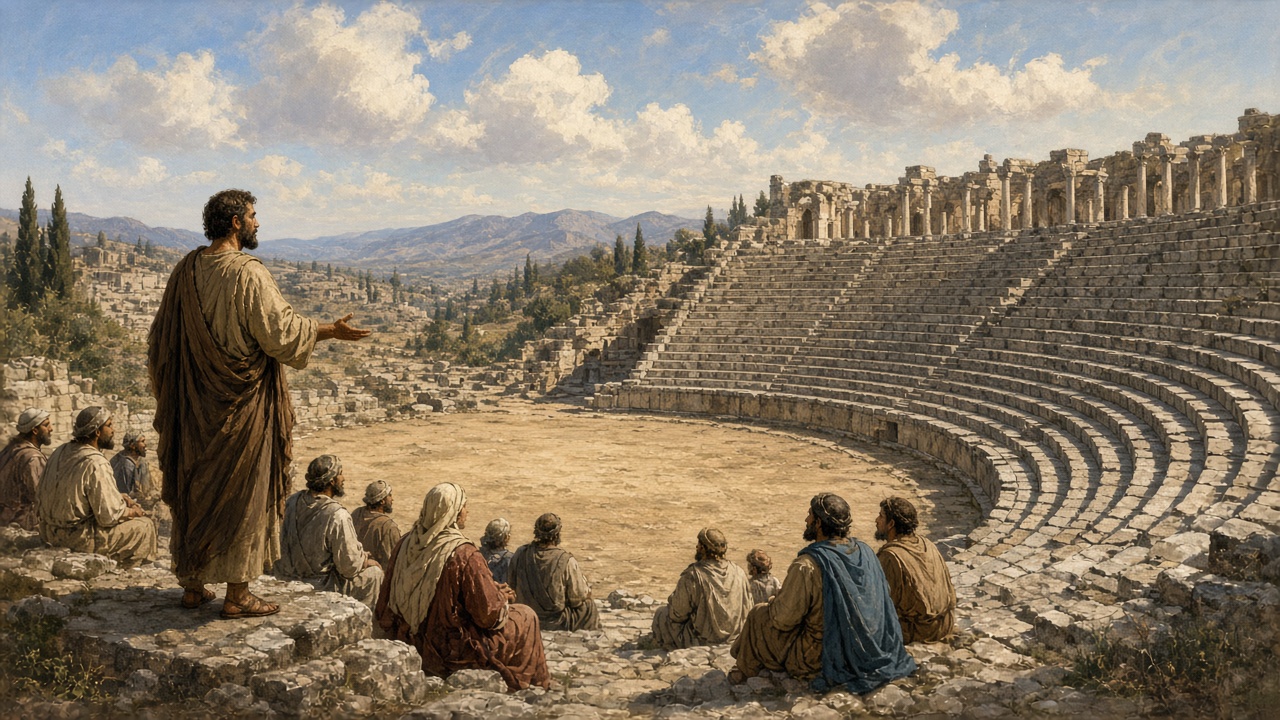
- Quando este capítulo pergunta o que se ganhou ao lutar com feras em Éfeso, nomeia uma cidade que o Easton's Bible Dictionary chama de capital da Ásia proconsular, conhecida por um teatro a céu aberto — o maior do mundo, capaz de abrigar 50 mil espectadores — onde se realizavam lutas de feras e de homens contra feras.Fontes: Ephesus · o próprio texto bíblico
- O Easton's Bible Dictionary explica que Adão, palavra babilônica que significa vermelho e o nome comum de homem em hebraico e em assírio, foi o primeiro homem, formado do pó da terra, e por isso recebeu esse nome. Este capítulo retoma essa imagem: a morte veio por meio de um homem, o primeiro homem era do pó, e o último Adão é espírito vivificante.Fontes: Adam · o próprio texto bíblico
- O Easton's Bible Dictionary (1897) identifica o Tiago a quem Cristo apareceu depois da ressurreição, como este capítulo registra, como irmão ou parente próximo de Jesus, também chamado Tiago, o Menor, e diz que ele depois liderou a igreja em Jerusalém.Fontes: James (Brother of Jesus) · o próprio texto bíblico
Notas escritas com auxílio de IA a partir de fontes abertas (Theographic Bible Metadata, CC BY-SA 4.0; Easton’s Bible Dictionary, domínio público) e revisadas antes de publicar.
Lugares deste capítulo
- Ephesus · 37.939, 27.341 · versículo 32
Só aparecem lugares com identificação de alta confiança (90% ou mais segundo as fontes acadêmicas reunidas pelo OpenBible). Mapa da época: DARE (Digital Atlas of the Roman Empire), CC BY 4.0; mapa atual: © colaboradores do OpenStreetMap; lugares: OpenBible.info (CC BY 4.0).
Créditos e licença desta tradução
Nǫ̀htsı̨̨ Nı̨̨htł'è
Dogrib: Dogrib Genesis & New Testament New Testament & Portions of Old Testament
copyright © 2009 Canadian Bible Society
Language: Dogrib
Translation by: Canadian Bible Society
Tłı̨chǫ Genesis and New Testament
About Tłı̨chǫ
Tłı̨chǫ (Dogrib) is a Na-Dene (Athabaskan) language. It is spoken by the First Nations Tłı̨chǫ people in the Northwest Territories in Canada. It has the largest number of speakers of any of the Aboriginal language communities in the NWT, and is one of the official languages of the Northwest Territories.
About This Translation
This translation includes the book of Genesis and the New Testament in Tłı̨chǫ. The first edition of the Tłı̨chǫ New Testament was published in 2003. It was a historic event, as it was the first time in more than a hundred years that a complete New Testament was published for one of the Dene First Nations in the Territories. The first edition was well received and quickly sold out. In the meantime the book of Genesis had been completed. Consequently, the 2008 reprint of the Tłı̨chǫ New Testament included Genesis.
Though this translation of the New Testament and Genesis took a total of ten years, the people who worked on it built on years of labor invested by the Tłı̨chǫ people, elders, priests and missionaries, translators, educators, and linguists. The material contained in this book was checked and approved by consultants from Wycliffe Bible Translators and the Canadian Bible Society.
If you are interested in obtaining a printed copy of this Bible, please contact the Canadian Bible Society at http://www.biblescanada.com .
Copyright Information
Dogrib Genesis and New Testament © 2003, 2008 Canadian Bible Society
The text of the Bible in Tłı̨chǫ that appears in this electronic format or website is for personal use only.
Up to five hundred (500) verses of the Bible text in any form (written, visual, electronic or audio) may be quoted without permission. The quoted verses may not be more than 50% of a complete book of the Bible, or more than 25% of the total text of the work in which they are quoted. Prior written permission must be obtained for any other use of the text. Copyright acknowledgement must in all cases appear on the title or copyright page.
For more information on copyright conditions or to apply, visit http://www.biblesociety.ca/copyright .
This translation is made available to you under the terms of the
Creative Commons Attribution-Noncommercial-No Derivatives license 4.0.
You may share and redistribute this Bible translation or extracts from it in any format, provided that:
You include the above copyright and source information.
You do not sell this work for a profit.
You do not change any of the words or punctuation of the Scriptures.
Pictures included with Scriptures and other documents on this site are licensed just for use with those Scriptures and documents.
For other uses, please contact the respective copyright owners.
2014-04-22
Fonte: http://ebible.org/dgrDOGNT/ · eBible.org