Gálatas 2
Bigu a tipan: I mahusay a baheta para ta panahun tam · Toque num versículo para ver as referências cruzadas.
Ti Pablo Sakay Du Iba a Apostol
1Nadid, kélipas na sapulu éy ta épat a taon, éy inumangeék a huway ta Jerusalem, a kaguman ko ti Bernabe sakay ti Tito. 2Inumangeék sa da inutusanék na Diyos. Nékipéguhonék pa ta lihim du matétanda sa a apostol. Nipaliwanag ko dide tu nitoldu ko du éwan Judeo. I nitoldu kua éy iligtas na Diyos i tolay a méniwala ni Cristo, maski éwan side maging Judeo. Gustu ko pumayag maka du apostol ta pégtoldu ko, monda éwan maibut tu tarabaho ko. 3Ey pinumayag side a talaga diyakén. Tu kaguman ko sa a ti Tito, éy éwan siya Judeo, pero éwan de siya pinilit a ipabugit, a ipasakup ta ugali na Judeo. 4Pero te sénganya sa a Judeo a nagwari-wari a méniwala side ni Jesus. Gustu de mékiagum dikame monda subukan de éng sundin me pabi i ugali na Judeo. Pero inagaw kitam ni Cristo Jesus ta éya. Gustu de a ipasakup kame maka ta utus ni Moises. 5Pero éwan kame pinumayag dide, da sala me a mabagu i katutuhanan tungkul ta Mahusay a Baheta. Monda éwan moy isipén a kailangan kam be a ipasakup ta rilihiyon na Judeo.
6Pero du mataas sa a apostol, éy éwan side tu pintas to nipagtoldu ko tungkul ni Cristo (Ewan mahalaga diyakén a mataas side, da éwan kumampi i Diyos ta isesa a tolay.) 7Engˈwan, neta de a sakén i pinilia na Diyos a méngipahayag du éwan Judeo, a kapareho be no nipangpili na ni Pedro a méngipahayag du Judeo. 8Da ginimiték na Diyos a magpaliwanag du éwan Judeo, a kona to ginimet na ni Pedro a nagpaliwanag be du Judeo. 9Nadid, du bilang mataas a apostol ta éya éy de Santiago, sakay ti Pedro sakay ti Juan. Diden ya, péketa de a inatdinanék na Diyos a talaga ta éya a tungkulin ko, éy pinayagen de kame ti Bernabe. Ey pinagkasunduan me a sigi kame a mégtoldu du éwan Judeo, sakay side éy sigi side a mégtoldu du Judeo. 10Basta i nipékiohon de sana dikame, éy diyan me pébayan du kaguman de a mahirap. Ey gustu ko be ya a gemtén.
Pinégkagian Ni Pablo Ti Pedro
11Nadid, kétapos na éya, éy pinégkagian ko ti Pedro ta Antiokia, da nagkamali siya. 12Dahilan to kédedemét na ta Antiokia, éy nékidipon siya du éwan Judeo a tolay sa. Ey tama ya. Pero to kédemét sa du inutusan ni Santiago, éy éwan dén nékiagum ti Pedro du éwan Judeo, da néganteng siya a pintasan siya du kapareho na a Judeo. Lalo du mégkagi a éwan tanggapén na Diyos i tolay éng éwan side ipabugit, a monda maging Judeo side.
13Nadid, du étanan a Judeo ta Antiokia a méniwala ni Jesus, éy tulos be side a inumaheg ni Pedro, a éwan be side nékidipon du éwan Judeo. Pati ti Bernabe. Nagwari-wari side a bawal kan ta Diyos i mékidipon ta éwan Judeo. 14Kanya sakén, péketa ko a éwan side matapat ayun ta Mahusay a Baheta, éy kinagi ko ni Pedro ta harapan de a étanan, a “Siko Pedro,” kagi ko, “éy Judeo ka, pero sapul to péniwala mo éy pinabayan mo dén i ugali na Judeo. Ey bakit nadid, éy pilitén mo maka du éwan Judeo a umaheg ta ugali na Judeo?”
I Makapagpabanal Ta Tolay Ey
Tu Péniwala De Ni Jesus
15Tahod ngani a Judeo kame. Ewan kame makasalanan a tolay a kona du éwan Judeo. 16Pero tukoy me a éwan tanggapén na Diyos i tolay éng sundin de i utus ni Moises. Engˈwan, i tanggapén na, a ibilang na a éwan tu kasalanan, éy tu umasa ni Jesu Cristo. Kanya sikame a Judeo éy naniwala kame dén ni Cristo, monda tanggapén kame be na Diyos. Da maski nikésiya éy éwan tanggapén na Diyos i tolay dahil ta késunud de ta utus ni Moises. 17Eng pilitén me a tanggapén kame na Diyos dahil ta péniwala me ni Cristo, éy neta du tolay a te kasalanan kame be. Kanya te mégkagi a ti Cristo i nangatéd kana dikame ta kasalanan me. Pero mali ya! 18Pero éng ipasakupék a huway ta utus ni Moises a inibutan ko dén, éy saya i katunayana a linabag ko dén i éya a utus. 19To péketa ko a éwanék maging banal ta pégsunud ko ta utus ni Moises, éy gininanan ko, monda ipasakupék ta Diyos. Kanya komanék be dén i minate a kaguman ni Cristo to kudos. 20Kanya nadid, éy bilang kaguman ko ti Cristo a nipako to kudos. I bigu a buhay ko nadid, éy éwan gébwat diyakén, éng éwan, gébwat ni Cristo a mégiyan diyakén. Sakay hanggan édseék ta munduae, éy méniwalaék ta anak na Diyos. Siya, éy mahalék na, a niatéd na i buhay na para diyakén. 21Kanya sakén éy éwan ko idelan i kaluub na Diyos ta tolay. Dahilan, éng ibilang na Diyos a éwan tu kasalanan i tolay dahil ta késunud de ta kautusan ni Moises, éy éwan tu pasa tu nikate ni Cristo.
Diyan Kam Umasa Ta Késunud
Moy Ta Utus Ni Moises
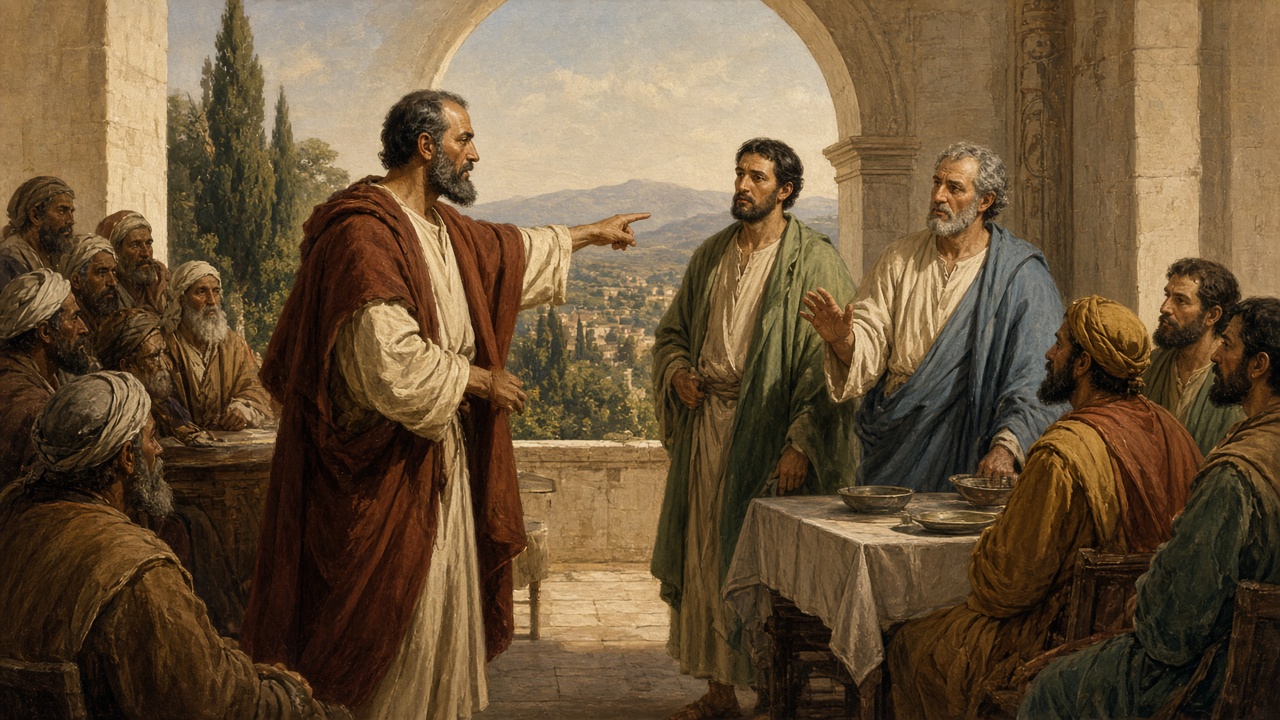
Você sabia?
Gentios, comunhão e um confronto em Antioquia
- Tito foi com Paulo e Barnabé a Jerusalém. O Easton's Bible Dictionary (1897) diz que ele parece ter sido gentio e que seu nome não aparece em Atos. Paulo escreve que Tito, embora fosse grego, não foi obrigado a circuncidar-se.Fontes: Titus · o próprio texto bíblico
- O confronto posterior ocorreu em Antioquia da Síria, às margens do Orontes, a umas trezentas milhas ao norte de Jerusalém. A cidade ocupava o terceiro lugar entre as cidades do Império Romano, depois de Roma e Alexandria, e foi ali que os crentes foram chamados cristãos pela primeira vez.Fontes: Antioch (Syria) · o próprio texto bíblico
- O Easton's Bible Dictionary (1897) descreve Tiago, citado com Cefas e João como um dos pilares, como cabeça da igreja em Jerusalém, onde presidiu o concílio sobre os gentios. Paulo diz que, antes de chegarem certos homens da parte de Tiago, Cefas costumava comer com os gentios, mas depois se afastou por medo do grupo da circuncisão.Fontes: James (Brother of Jesus) · o próprio texto bíblico
Notas escritas com auxílio de IA a partir de fontes abertas (Theographic Bible Metadata, CC BY-SA 4.0; Easton’s Bible Dictionary, domínio público) e revisadas antes de publicar.
Lugares deste capítulo
- Jerusalem · 31.777, 35.234 · versículo 1
- Antioch · Hoje: Antioch on the Orontes · 36.227, 36.172 · versículo 11
Só aparecem lugares com identificação de alta confiança (90% ou mais segundo as fontes acadêmicas reunidas pelo OpenBible). Mapa da época: DARE (Digital Atlas of the Roman Empire), CC BY 4.0; mapa atual: © colaboradores do OpenStreetMap; lugares: OpenBible.info (CC BY 4.0).
Créditos e licença desta tradução
Bigu a tipan: I mahusay a baheta para ta panahun tam
New Testament in Agta, Casiguran Dumagat
copyright © 1979 Wycliffe Bible Translators, Inc.
Language: Casiguran Dumagat Agta (Agta, Casiguran Dumagat)
Translation by: Wycliffe Bible Translators
Contributor: Wycliffe Bible Translators, Inc.
Copyright Information
© 1979, Wycliffe Bible Translators, Inc. All rights reserved.
This translation text is made available to you under the
terms of the Creative Commons License: Attribution-Noncommercial-No Derivative Works.
( http://creativecommons.org/licenses/by-nc-nd/3.0/ )
In addition, you have permission to port the text to different file formats, as long as you
do not change any of the text or punctuation of the Bible.
You may share, copy, distribute, transmit, and extract portions
or quotations from this work, provided that you include the above copyright
information:
You must give Attribution to the work.
You do not sell this work for a profit.
You do not make any derivative works that change any of the actual words or punctuation of the Scriptures.
Permissions beyond the scope of this license may be
available if you contact
us with your request.
The New Testament
in Agta, Casiguran Dumagat
© 1979, Wycliffe Bible Translators, Inc. All rights reserved.
This translation is made available to you under the terms of the
Creative Commons Attribution-Noncommercial-No Derivatives license 4.0.
You may share and redistribute this Bible translation or extracts from it in any format, provided that:
You include the above copyright and source information.
You do not sell this work for a profit.
You do not change any of the words or punctuation of the Scriptures.
Pictures included with Scriptures and other documents on this site are licensed just for use with those Scriptures and documents.
For other uses, please contact the respective copyright owners.
2015-03-17
Fonte: http://ebible.org/dgc/ · eBible.org