Atos 18
Hellig Bibel · Toque num versículo para ver as referências cruzadas.
1Derefter forlod Paulus Athen og kom til Korinth. 2Der traf han en Jøde ved Navn Akvila, født i Pontus, som nylig var kommen fra Italien med sin Hustru Priskilla, fordi Klaudius havde befalet, at alle Jøderne skulde forlade Rom. Til disse gik han. 3Og efterdi han øvede det samme Håndværk, blev han hos dem og arbejdede; thi de vare Teltmagere af Håndværk. 4Men han holdt Samtaler i Synagogen på hver Sabbat og overbeviste Jøder og Grækere. 5Men da Silas og Timotheus kom ned fra Makedonien, var Paulus helt optagen af at tale og vidnede for Jøderne, at Jesus er Kristus. 6Men da de stode imod og spottede, rystede han Støvet af sine Klæder og sagde til dem: “Eders Blod komme over eders Hoved! Jeg er ren; herefter vil jeg gå til Hedningerne.” 7Og han gik bort derfra og gik ind til en Mand ved Navn Justus, som frygtede Gud, og hvis Hus lå ved Siden af Synagogen. 8Men Synagogeforstanderen Krispus troede på Herren tillige med hele sit Hus, og mange af Korinthierne, som hørte til, troede og bleve døbte. 9Men Herren sagde til Paulus i et Syn om Natten: “Frygt ikke, men tal og ti ikke, 10eftersom jeg er med dig, og ingen skal lægge Hånd på dig for at gøre dig noget ondt; thi jeg har et talrigt Folk i denne By.” 11Og han slog sig ned der et År og seks Måneder og lærte Guds Ord iblandt dem. 12Men medens Gallio var Statholder i Akaja, stode Jøderne endrægtigt op imod Paulus og førte ham for Domstolen og sagde: 13“Denne overtaler Folk til en Gudsdyrkelse imod Loven.” 14Og da Paulus vilde oplade Munden, sagde Gallio til Jøderne: “Dersom det var nogen Uret eller Misgerning, I Jøder! vilde jeg, som billigt var, tålmodigt høre på eder. 15Men er det Stridsspørgsmål om Lære og Navne og om den Lov, som I have, da ser selv dertil; thi jeg vil ikke være Dommer over disse Ting.” 16Og han drev dem bort fra Domstolen. 17Men alle grebe Synagogeforstanderen Sosthenes og sloge ham lige for Domstolen; og Gallio brød sig ikke om noget af dette. 18Men Paulus blev der endnu i mange dage; derefter tog han Afsked med Brødrene og sejlede bort til Syrien og med ham Priskilla og Akvila, efter at han havde ladet sit Hår klippe af i Kenkreæ; thi han havde et Løfte på sig. 19Men de kom til Efesus; og der lod han hine blive tilbage; men han selv gik ind i Synagogen og samtalede med Jøderne. 20Men da de bade ham om at blive i længere Tid, samtykkede han ikke; 21men han tog Afsked og sagde: “[Jeg må endelig holde denne forestående Højtid i Jerusalem; men] jeg vil atter vende tilbage til eder, om Gud vil.” Og han sejlede ud fra Efesus { [*De indklamrede Ord mangle i de ældste Håndskrifter.] } 22og landede i Kæsarea, drog op* og hilste på Menigheden og drog så ned til Antiokia. { [*til Jerusalem.] } 23Og da han havde opholdt sig der nogen Tid, drog han bort og rejste fra Sted til Sted igennem det galatiske Land og Frygien og styrkede alle Disciplene. 24Men en Jøde ved Navn Apollos, født i Aleksandria, en veltalende Mand, som var stærk i Skrifterne, kom til Efesus. 25Denne var undervist om Herrens Vej, og brændende i Ånden talte og lærte han grundigt om Jesus, skønt han kun kendte Johannes's Dåb. 26Og han begyndte at tale frimodigt i Synagogen. Men da Priskilla og Akvila hørte ham, toge de ham til sig og udlagde ham Guds Vej nøjere. 27Men da han vilde rejse videre til Akaja, skrev Brødrene til Disciplene og opmuntrede dem til at tage imod ham. Da han var kommen derhen, var han ved Guds Nåde de troende til megen Nytte; 28thi han gendrev Jøderne offentligt med stor Kraft og beviste ved Skrifterne, at Jesus er Kristus.
Você sabia?
A estada de Paulo em Corinto
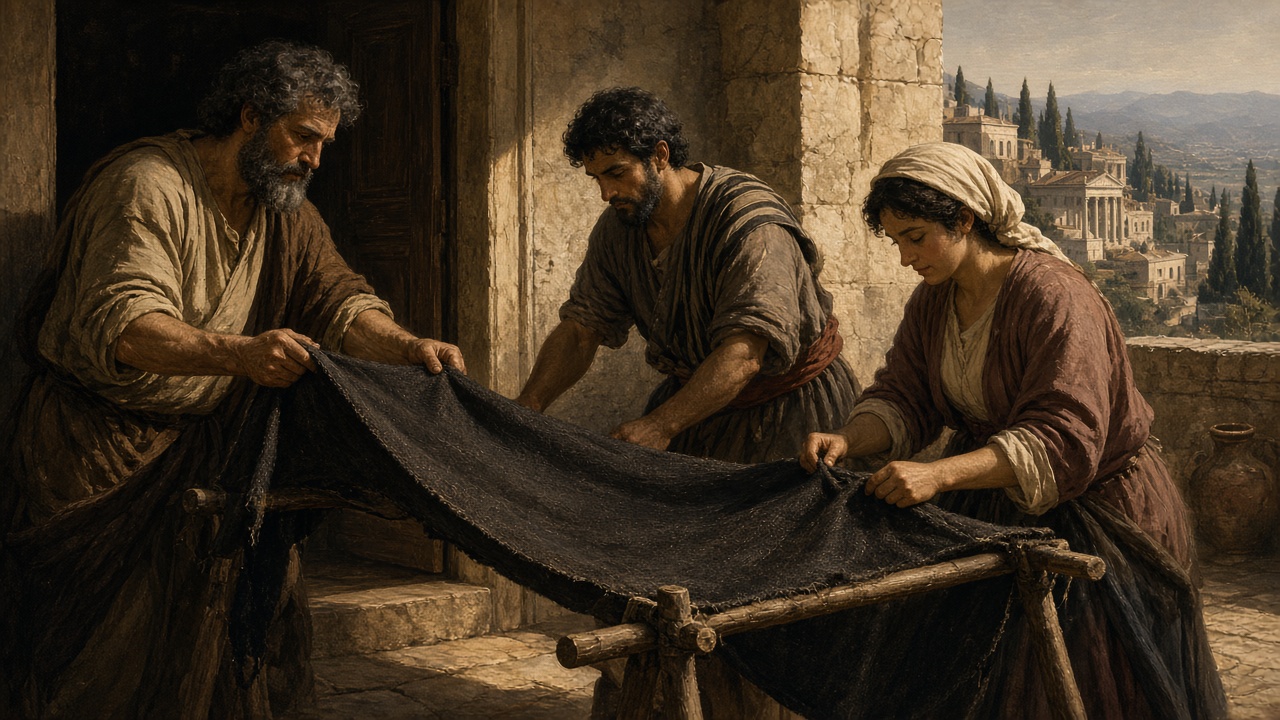
- Áquila, natural do Ponto, e sua esposa Priscila tinham deixado a Itália porque o imperador Cláudio ordenou que todos os judeus saíssem de Roma. O Easton's Bible Dictionary (1897) data esse decreto em 49 d.C. no verbete de Cláudio e em 50 d.C. no de Áquila. Paulo ficou com eles em Corinto e trabalhou no mesmo ofício, fazendo pano de pelo da Cilícia para tendas.Fontes: Aquila · Claudius (4th Roman Emperor) · o próprio texto bíblico
- A Corinto deste capítulo não era a antiga cidade grega, destruída pelos romanos em 146 a.C., mas uma cidade reconstruída cerca de um século depois e povoada por uma colônia de libertos vindos de Roma. Ficava no istmo, a cerca de 48 milhas a oeste de Atenas, e era a sede romana do governo da Acaia, no sul da Grécia. Era conhecida pela riqueza e pelos hábitos luxuosos, imorais e viciosos de seu povo.Fontes: Corinth · Achaia
- Gálio, irmão mais velho do filósofo Sêneca, era procônsul da Acaia sob Cláudio quando os judeus levaram Paulo diante do tribunal. A Acaia era uma província senatorial, e o governador de uma província assim era chamado procônsul, título usado neste capítulo. Gálio recusou julgar uma disputa sobre palavras, nomes e a lei judaica, e expulsou os acusadores do tribunal.Fontes: Gallio · o próprio texto bíblico
Notas escritas com auxílio de IA a partir de fontes abertas (Theographic Bible Metadata, CC BY-SA 4.0; Easton’s Bible Dictionary, domínio público) e revisadas antes de publicar.
Lugares deste capítulo
- Athens · 37.972, 23.727 · versículo 1
- Corinth · 37.906, 22.879 · versículos 1, 8, 11, 12, 18
- Italy · 41.892, 12.485 · versículo 2
- Pontus · 40.680, 37.830 · versículo 2
- Rome · 41.892, 12.485 · versículo 2
- Macedonia · 41.600, 22.540 · versículo 5
- Achaia · 38.720, 22.540 · versículos 12, 27
- Cenchreae · Hoje: Kechries · 37.884, 22.997 · versículo 18
- Syria · Hoje: Syria 2 · 33.511, 36.306 · versículo 18
- Ephesus · 37.939, 27.341 · versículos 19, 21, 24, 27
- Jerusalem · 31.777, 35.234 · versículos 21, 22
- Antioch · Hoje: Antioch on the Orontes · 36.227, 36.172 · versículos 22, 23
- Caesarea · Hoje: Caesarea Maritima · 32.500, 34.892 · versículo 22
- Galatia · 39.267, 32.983 · versículo 23
- Phrygia · 39.000, 31.000 · versículo 23
- Alexandria · 31.183, 29.896 · versículo 24
- Egypt · 30.129, 31.308 · versículo 24
Só aparecem lugares com identificação de alta confiança (90% ou mais segundo as fontes acadêmicas reunidas pelo OpenBible). Mapa da época: DARE (Digital Atlas of the Roman Empire), CC BY 4.0; mapa atual: © colaboradores do OpenStreetMap; lugares: OpenBible.info (CC BY 4.0).
Créditos e licença desta tradução
Hellig Bibel
The Holy Bible in Danish (OT 1931, NT 1907)
Copyright © 1907, 1931 Det Danske Bibelselskab
Language: Dansk (Danish)
Translation by: Danish Bible Society
The New Testament is in the Public Domain.
The Old Testament is © 1931
Det Danske Bibelselskab 1931.
[The Danish Bible Society]
This etext is distributed by Professor Michael S. Hart through
the Project Gutenberg Association at Carnegie-Mellon University
(the "Project") under the Project's "Project Gutenberg" trademark
and with the permission of the etext's copyright owner.
LICENSE
You can (and are encouraged!) to copy and distribute this
Project Gutenberg-tm etext. Since, unlike many other of the
Project's etexts, it is copyright protected, and since the
materials and methods you use will effect the Project's
reputation,
your right to copy and distribute it is limited by the copyright
laws and by the conditions of this "Small Print!" statement.
[A] ALL COPIES: The Project permits you to distribute
copies of this etext electronically or on any machine readable
medium now known or hereafter discovered so long as you:
(1) Honor the refund and replacement provisions of this
"Small Print!" statement; and
(2) Pay a royalty to the Project of 20% of the net
profits you derive calculated using the method you already use
to calculate your applicable taxes. If you don't derive
profits, no royalty is due. Royalties are payable to "Project
Gutenberg Association/Carnegie Mellon-University" within
the 60 days following each date you prepare (or were legally
required to prepare) your annual (or equivalent periodic) tax
return.
[B] EXACT AND MODIFIED COPIES: The copies you distribute
must either be exact copies of this etext, including this
Small Print statement, or can be in binary, compressed, mark-
up, or proprietary form (including any form resulting from
word processing or hypertext software), so long as *EITHER*:
(1) The etext, when displayed, is clearly readable, and
does *not* contain characters other than those intended by the
author of the work, although tilde (~), asterisk (*) and
underline (_) characters may be used to convey punctuation
intended by the author, and additional characters may be used
to indicate hypertext links; OR
(2) The etext is readily convertible by the reader at no
expense into plain ASCII, EBCDIC or equivalent form by the
program that displays the etext (as is the case, for instance,
with most word processors); OR
(3) You provide or agree to provide on request at no
additional cost, fee or expense, a copy of the etext in plain
ASCII.
LIMITED WARRANTY; DISCLAIMER OF DAMAGES
This etext may contain a "Defect" in the form of incomplete,
inaccurate or corrupt data, transcription errors, a copyright
or other infringement, a defective or damaged disk, computer
virus, or codes that damage or cannot be read by your
equipment. But for the "Right of Replacement or Refund"
described below, the Project (and any other party you may
receive this etext from as a PROJECT GUTENBERG-tm etext)
disclaims all liability to you for damages, costs and
expenses, including legal fees, and YOU HAVE NO REMEDIES FOR
NEGLIGENCE OR UNDER STRICT LIABILITY, OR FOR BREACH OF
WARRANTY OR CONTRACT, INCLUDING BUT NOT LIMITED TO INDIRECT,
CONSEQUENTIAL, PUNITIVE OR INCIDENTAL DAMAGES, EVEN IF YOU
GIVE NOTICE OF THE POSSIBILITY OF SUCH DAMAGES.
If you discover a Defect in this etext within 90 days of
receiving it, you can receive a refund of the money (if any)
you paid for it by sending an explanatory note within that
time to the person you received it from. If you received it
on a physical medium, you must return it with your note, and
such person may choose to alternatively give you a replacement
copy. If you received it electronically, such person may
choose to alternatively give you a second opportunity to
receive it electronically.
THIS ETEXT IS OTHERWISE PROVIDED TO YOU "AS-IS". NO OTHER
WARRANTIES OF ANY KIND, EXPRESS OR IMPLIED, ARE MADE TO YOU AS
TO THE ETEXT OR ANY MEDIUM IT MAY BE ON, INCLUDING BUT NOT
LIMITED TO WARRANTIES OF MERCHANTABILITY OR FITNESS FOR A
PARTICULAR PURPOSE. Some states do not allow disclaimers of
implied warranties or the exclusion or limitation of
consequential damages, so the above disclaimers and exclusions
may not apply to you, and you may have other legal rights.
INDEMNITY
You will indemnify and hold the Project, its directors,
officers, members and agents harmless from all liability, cost
and expense, including legal fees, that arise directly or
indirectly from any of the following that you do or cause:
[1] distribution of this etext, [2] alteration, modification,
or addition to the etext, or [3] any Defect.
WHAT IF YOU *WANT* TO SEND MONEY EVEN IF YOU DON'T HAVE TO?
Project Gutenberg is dedicated to increasing the number of
public domain and licensed works that can be freely distributed
in machine readable form. The Project gratefully accepts
contributions in money, time, scanning machines, OCR software,
public domain etexts, royalty free copyright licenses,
and whatever else you can think of. Money should be paid to
"Project Gutenberg Association/Carnegie-Mellon University".
2021-07-19
Fonte: http://ebible.org/dan1931/ · eBible.org