Jó 30
Thai Phum Holy Bible · Toque num versículo para ver as referências cruzadas.
1Hatei, atuteh kai hlak ka camo e naw ni
Kai na pathoe awh.
A napanaw hah kai ni ka panuet teh,
kaie tuhu ka ring e uinaw koe patenghai bawk van hoeh.
2A thaonae hah kai hanelah bangmaw cungkeinae kaawm.
A thayung tawn awh hoeh toe.
3Takangnae hoi voutthoup dawk a kamsoe awh teh,
kahrawngum kingdinae hmuen koe tang a yawng awh.
4Pho um e angmai hna a la awh teh,
samphokung e a tangpha hah rawca hanelah a tai awh.
5Ahnimouh teh, tami koehoi pâlei awh teh,
tamru patetlah a hramsin awh.
6Tangkom thung hoi lungngoum thung o hanelah doeh ao awh.
Talai hoi talung kâko dawk ao awh.
7Caprapum vah a hram awh teh,
pâkhingum vah a tabo awh.
8Ahnimouh teh tamipathu e canaw doeh.
Bang pato patang hoeh e canaw doeh.
Ram thung hoi hrek e naw doeh.
9Atu teh la lah na sak awh hanelah ka o toe.
Na pathoe e lah ka o toe.
10Na panuet awh teh kai hoi kâhlat lah na o awh.
Ka minhmai na tamthawi awh.
11Bangkongtetpawiteh, lirui hah a rasu awh teh, na ka pacekpahlek awh.
Ka hmalah kammoumrui a rasu awh.
12Kaie aranglah nawsainaw a kangdue teh, ka khok hah a phen awh.
A rawkphainae lamthung hah kai taranlahoi a sak awh.
13Ka lamthung hah a raphoe awh.
Kai ka tâlaw nahanelah a kâyawm awh.
Ahnimouh kâhruetcuet ka poe hane apihai awm hoeh.
14Ka kaw poung e kâko dawk hoi a tho awh teh,
ningkatim rahim vah na kalup awh.
15Takithopoung e ka lathueng vah a pha.
Bari lah ka onae hah kahlî patetlah a pâlei awh.
Ka tawn e naw hah tâmai patetlah a kahma.
16Ka kângairunae ni ka hringnae teh a rabawk toe.
Ka khangnae hninnaw ni khak na kuet.
17Karum lah ka hru hah koung a thut teh,
ka tharui patawnae ni roum thai hoeh.
18Ka patawpoung e ni hnicu hoi kayo e patetlah na kayo teh,
angki lahuen patetlah na katek.
19Tangdong dawk na tâkhawng teh,
hraba hoi vaiphu patetlah ka o toe.
20Nama koe ka hram, hateiteh, na pato hoeh.
Ka kangdue teh na khet.
21Hatei, kai hanelah ka pahngawpahrak e lah na o.
Na kut thasainae ni na taran.
22Kahlî dawk na tawm teh,
a lathueng vah na kâcui sak.
23Bangkongtetpawiteh, nama ni duenae dawk na ceikhai hane hah ka panue.
Hringnae katawnnaw pueng hanelah,
na pouk pouh tangcoung e im dawkvah.
24BAWIPA ni a kut a dâw torei teh,
a kâhei nakunghai, banglah tho hoeh toe. A raphoe torei teh,
a hram nakunghai hawinae awm hoeh toe.
25Runae ka kâhmonaw hanlah ouk ka ka nahoehmaw.
Karoedengnaw hanlah lungreithai hoi kaawm boihoeh maw.
26Hateiteh, hawinae ka tawng navah,
hno kahawihoehe hah ka lathueng vah a pha.
Angnae ka ring navah hmonae a pha.
27Ka lungthin a tâsue teh roum thai hoeh.
Ka khangnae hninnaw ni na tho sin.
28Panuinae koelah tho hoeh niteh, lungmathoe koelah ka cei.
Kamkhuengnaw rahak vah, ka kangdue teh, kabawpnae ka hei teh ka hram.
29Kahrawnguinaw e hmaunawngha lah ka o.
Kalauk tavanaw hoi huiko lah ka o.
30Ka vuen teh hoehoe a tamang teh kai koehoi a bo,
Ka hrunaw teh puenghoi a kâan
31Ka ratoung teh ka lungmathoenae lah a coung,
ka tamawi teh kâlawk lah a coung.
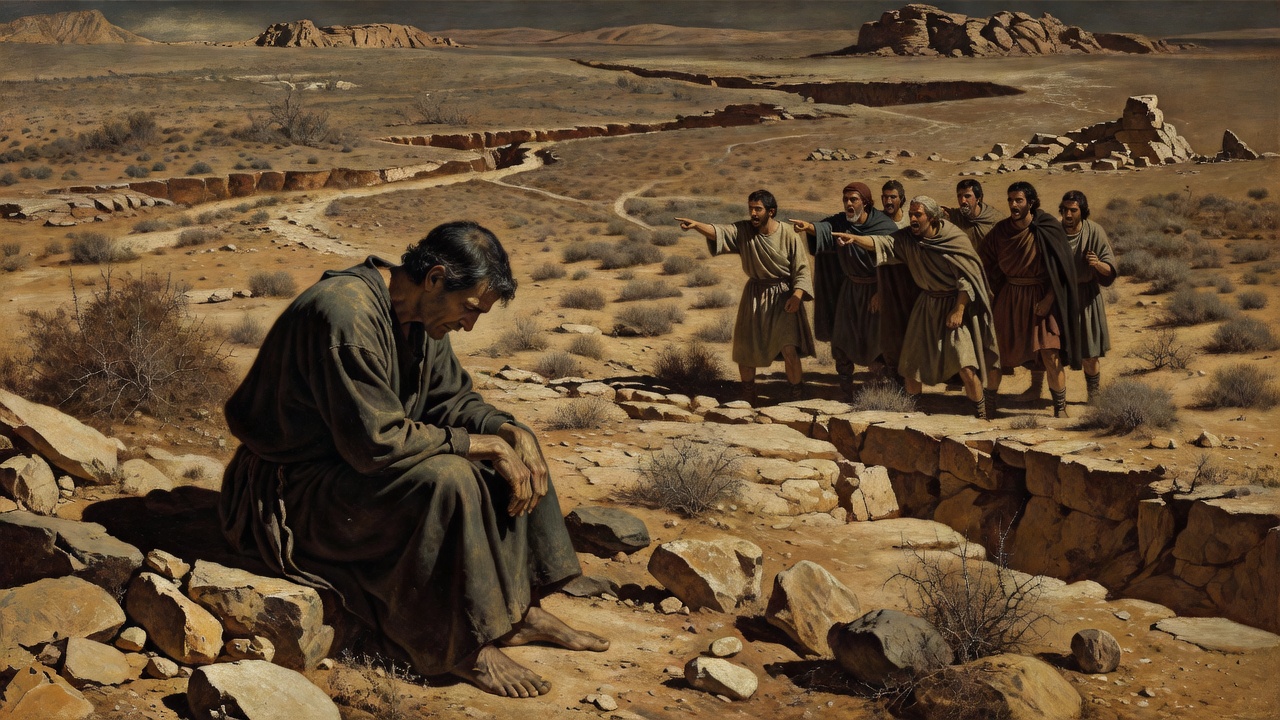
Você sabia?
Humilhação, sofrimento físico e os excluídos do deserto
- Neste capítulo, Jó contrasta sua antiga honra com sua humilhação presente nas mãos de marginalizados empobrecidos. Ele descreve esses homens sobrevivendo à margem da sociedade, colhendo malva e raízes de giesta em leitos secos de rios e fendas de rochas.Fontes: o próprio texto bíblico
- Jó emprega metáforas de cerco militar, retratando seus agressores como um exército invasor que constrói rampas e rompe muralhas contra ele, enquanto padece de dores intensas, febre nos ossos e pele escurecida que descasca.Fontes: o próprio texto bíblico
- Para expressar a solidão e a intensidade de sua dor, Jó se compara aos uivos de criaturas do deserto, chamando a si mesmo de irmão de chacais e companheiro de avestruzes, enquanto seus instrumentos musicais, como a harpa e a flauta, se voltam apenas para o pranto.Fontes: o próprio texto bíblico
Notas escritas com auxílio de IA a partir de fontes abertas (Theographic Bible Metadata, CC BY-SA 4.0; Easton’s Bible Dictionary, domínio público) e revisadas antes de publicar.
Créditos e licença desta tradução
Thai Phum Holy Bible
The Holy Bible in the Thaiphum Chin language of Myanmar
Copyright © 2020 Batupuei Christian Fellowship
Language: Thai Phum (Chin, Thaiphum)
Translation by: Batupuei Christian Fellowship
copyright only valid in Myanmar; Public Domain elsewhere
This translation is made available to you under the terms of the
Creative Commons Attribution Share-Alike license 4.0.
You have permission to share and redistribute this Bible translation in any format and to make reasonable revisions and adaptations of this translation, provided that:
You include the above copyright and source information.
If you make any changes to the text, you must indicate that you did so in a way that makes it clear that the original licensor is not necessarily endorsing your changes.
If you redistribute this text, you must distribute your contributions under the same license as the original.
Pictures included with Scriptures and other documents on this site are licensed just for use with those Scriptures and documents.
For other uses, please contact the respective copyright owners.
Note that in addition to the rules above, revising and adapting God's Word involves a great responsibility to be true to God's Word. See Revelation 22:18-19.
2024-05-01
Fonte: http://ebible.org/cth/ · eBible.org