João 10
Yak'usda Ooghuni · Toque num versículo para ver as referências cruzadas.
Sizi hubodulh'eh whe 'utni, “Si 'usbai ghunli-un 'ust'oh. Mbene la soo sulh 'út'enne, 'enne se' 'usbai hinli.”
1'Et Sizi 'ubúlhni, “Soo ts'ih'un un'a nohdusni, mbe la 'usbai ba na'nistl'óo-un 'aw dáti k'et dálhiyal 'ink'ez 'ants'i nanistl'oo tus tilhget de, 'en dune 'undunut'íh-un 'unt'oh.
2'Et mbe la dáti ts'e dayaih-un, 'en 'usbai ghunlí-un 'unt'oh. |src="lb00014b.tif" size="span" copy="©The British & Foreign Bible Society, 1994" ref="John 10.2"
3'En dáti ghunli-un yuba dahá'duti. 'Et la de 'usbai, buboozi' be buka huyih te, hidits'o huwa t'ehinínzun 'ink'ez 'az huyuntulh'us.
4Tenábulih hukw'elh'az, 'et butso tuyaih 'ink'ez 'usbai ts'iyawh huyunilh'us, highuni t'ehinínzun 'et huwa.
5'Et 'ants'i 'oh nuya-un, 'en 'aw huyuntoolh'as aít'oh. 'Ants'i 'oh núya-un 'unt'oh 'aw ooghuni t'ehinúszun 'et huwa hich'a nutselhdilh,” ubulhni.
6'Et Sizi ndi higha hódool'eh ha bubulh náwhulnuk 'et hoonts'i daja ni whe 'utni-un 'aw t'ehonúszun.
7'Inka doo cha za Sizi ubulhni, “Soo ts'ih'un un'a nohdúsni, Si 'usbai ba dáti usdli whe 'ust'oh.
8Mbene la stso whusaíndilne, 'enne 'undunut'ihne 'uhint'oh 'et huwa 'aw 'usbai lhuboozílhts'ai.
9Si datí-un 'ust'oh. Mbene la si sgha daníndilne, 'enne ts'iyawh hudutijih. Dahúnindil 'ink'ez whuz 'az whehándil de, tl'o k'ut nahuhootá'alh.
10'Undunut'ih-un, 'en 'uduntit'ih 'ink'ez dune tuzilhghelh 'ink'ez ninta' e'tilh'elh 'et wheni za dayaih. 'Et si whusásya whe 'ilhiz wheni huye khúna-i hutit'elh 'ink'ez ndi 'ilhiz huye khúna-i, 'i huyut'i de, 'aw hoonli huye ndunódzit aít'oh.
11Si 'usbai ghunli-un unzóo-un 'ust'oh. 'Usbai ghunli-un unzóo-un, 'en la ye khúna-i dude 'usbai ba yuladutitni.
12'Et ustle-un ul'á'-un, 'en 'aw 'usbai ghunlí-un iloh 'unt'oh. 'Ants'i 'usbai yughole' ha ul'a'. 'Usbai 'aw ooch'e' iloh 'uhint'oh, 'et huwa yus whuz de úlgwulh yunilh'en te, 'usbai bula dutnih 'ink'ez whetsélhyai. 'Et yus whulohne huboogooh 'et 'onghunne cha hich'e yaílwus.
13Ndun ustle-un ul'á'-un, 'en 'ants'i ul'á'-un 'unt'oh, 'et huwa 'usbai 'ants'i hiba unli 'ink'ez didut bughu whetsélhyaih.
14Si 'usbai ghunlí-un unzóo-un 'ust'oh, 'et huwa mbene la usch'e'ne t'ebunúszun 'ink'ez didut cha t'ésonínzun.
15'Et whuz un'a za sBá 'en t'ésunínzun 'ink'ez si cha t'enuszun. 'Ink'ez se' 'usbaine be khúsna-i buba oola dutisnih.
16'Uyoo cha 'usbai 'ust'í-i hoonli. 'Aw ndi toh iloh. 'Enne cha whusáboosdlelh huba 'uhoont'oh. Sghuni hidóts'o, 'ink'ez la 'ilhoh ulh'us-i za hutileh 'ink'ez 'ilhoghun za 'usbai ghunlí-un ahutáleh.
17Se' 'usbaine ba be khúsna-i oola dutisnih 'et huwa la be khúsna-i doo cha za naóozchoot. 'Et 'inka sBá tube sk'entsi'.
18'Aw be khúsna-i dune sghu yólhchootne hooloh. Sich'oh za huwa tís'alh. Ndi be khúsna-i huwa tís'alh 'ink'ez naitázchulh-un, 'et sghá whunt'ai whe 'ust'oh. SBá 'en 'uja ndi khuni stl'aídan'ai ndi 'ut'en 'oos'en ha,” ubúlhni.
19Ndi khuni 'i gha doo cha Lizwifne dich'oh dutoh lhch'a hudisdil.
20Tube lhane, 'enne 'uhutni, “Ntsi'-i nudúdeh-i ooyudínda! Whusni whe' 'utni, di ha oozúlhts'ai?”
21'Et 'onghohne cha 'uhutni, “'Aw ntsi'-i nudúdeh-i ooyudínda-un, 'en ooghuni iloh 'utni. Nts'en'a ntsi'-i nudúdeh-i, 'i dune hoos̱'en-un, 'en hoo'en yutilhtselh?”
Lizwifne Sizi 'aw hika lhe'nízun
22'Et 'awet khit suli'. Jerusalem keyoh 'et nowhújeh-un néhonin'ai. 'Et njan 'awhundidi nahuwhulhtsi huwhútni.
23'Et lugliz whucho bun tsilh t'ah 'et la Solomon oobun tsilh t'ah huwhútni, 'oh whéya Sizi uyalh
24whe la Lizwifne higha óozdil 'ink'ez huyoodulhkut, “Dawhuldzoh 'et nech'a hóotalh'e'. 'Alha whe Christ 'en 'int'oh de, 'andit 'et ts'ih'un un'a nedíni.”
25'Et Sizi ubúlhni, “'Uda' nohdásni' 'et hoonts'i 'aw nohba 'alha lhe'duzusni. Ndi sBá boozi' gha 'ut'en 'us'én-i, 'i gha si sghun cha t'éwhunóhzin huba 'uhoont'oh.
26'Et hoonts'i nohni nohdúsni hukw'un'a 'aw se' 'usbai iloh 'aht'oh. 'Et huwa ndi 'ut'en us'én-i 'aw nohba 'alha lhe'ít'oh.
27Se' 'usbaine t'ébunúszun. Sghuni hidits'o 'ink'ez sunónudilh.
28'Ilhiz huye khútinalh-i, 'i bugha nús'ai. 'Aw yalhahitásdla 'ink'ez 'aw dune sla k'éhaboolelhne hooloh.
29SBá, mbe la sghá buninla-un, ts'iyanneando 'unt'oh, 'ink'ez mbene la sch'e' suli'ne, 'enne 'ilhiz sulh ótit'elh. 'Aw dune soo 'últus-un hooloh sBá yula k'éhanabutilelh wheni.
30Si 'ink'ez sBá bulh 'ilho za ídli,” ubúlhni.
31'Et doo cha za Lizwifne tse hiye hituzilhghelh-i hidílhchoot.
32'Et Sizi ubulhni, “SBá be 'ut'en k'oh hoonzóo-un lhat-un si sgha whunulh'en. 'Ink'ez k'us ndet hukwa' sutilhlelh tse be suzoolhghelh hukwa' nahzun?”
33'Et Lizwifne 'uhuyúlhni, “'Aw 'ut'en unzóo-i, 'i ha iloh tse be nts'utuzilhghelh! Nyun 'ants'i 'oh dune inli 'ink'ez Yak'usda ch'az yaílhduk. Nyunch'oh Yak'usda na'dudil'i, 'et hukwa tse be nts'ituzilhghelh.”
34'Et Sizi ubúlhni, “'Aw lakw eh Yak'usda ooghuni oonalhuzulhni whe njan Yak'usda nja dunohúlhni inle', ‘Nohni yak'usdane ahli?’
35T'éts'onínzun 'aw Yak'usda dughuni k'uyoyis aít'oh, 'ink'ez mbene la Yak'usda ooghuni ooghi dílts'utne, 'enne yak'usdane ubúlhni.
36'Et Yak'usda ooYe' usdli nohdúsni-un, 'et whu la gha ts'e Yak'usda ch'az yásduk dahni whe sk'ehooh'aih. SBá 'en 'udun nésunilhti whe ndi yun k'ut ts'e sutilh'a'.
37SBá be 'ut'en lhe'zus'en de, whute, nohba 'alha lhe'úst'oh.
38'Et hoonts'i sBá be 'ut'en us'en de, 'aw si nohba 'alha lhe'ust'oh hoonts'i, ndi 'ut'en us'en-i, 'i gha nohba 'alha 'uhot'e'. 'I gha la noheni be t'éwhunóhzin 'ink'ez nohba 'alha 'uhót'e' sBá 'en syudínda 'ink'ez si cha ooyudúsda,” ubúlhni.
39'Et doo cha za huyólhchoot hukwa 'uhuja whe Sizi butáhanája 'ink'ez buch'a níntaninya.
40Jordan koh nyaz ts'e ndet da' John 'udechoo dune too be 'ulh'en inle'-un, whuz whenaja 'ink'ez 'et inda'.
41Lhane dune highu nindil 'ink'ez 'ulhodútni, “John 'aw huwa 'ít'en te nulhé'it'el, 'et hoonts'i ndun dune 'en ghun daja dani' la, ts'ih'un 'udani'.”
42'Ink'ez nyo 'et tube lhane ooba 'álha yint'oh suli'.
Você sabia?
O Bom Pastor
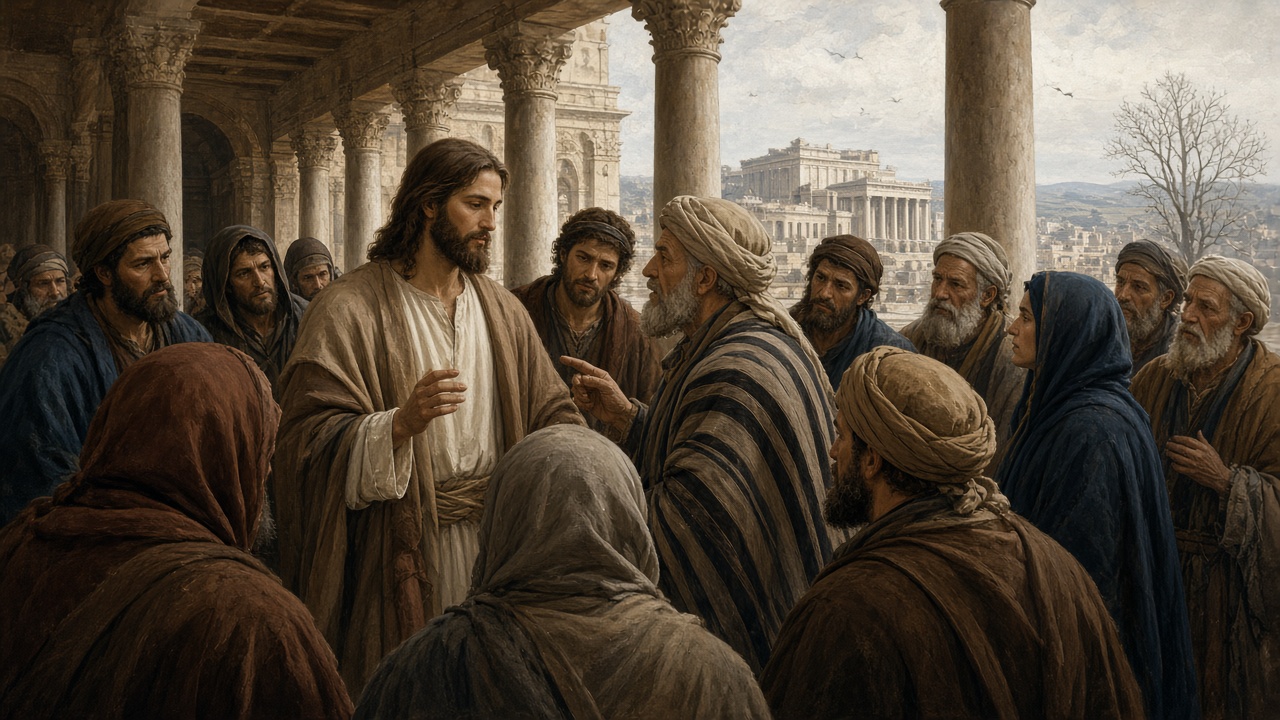
- Na Festa da Dedicação, em Jerusalém, era inverno, e Jesus caminhava pelos pátios do templo, no Pórtico de Salomão. O nome Jerusalém, na forma dual do original, significa "posse da paz" ou "fundação da paz"; essa forma provavelmente se refere aos montes Sião e Moriá ou, como alguns supõem, à cidade alta e à cidade baixa. O nome hebraico de Salomão, Shelomoh, significa "pacífico".Fontes: o próprio texto bíblico · Jerusalem · Solomon
- Uma cronologia dos episódios evangélicos situa o ensino do Bom Pastor em 29 d.C. e um tempo de ensino e cura, de Pereia a Jerusalém, em 30 d.C.Fontes: The Good Shepherd Teaching · Teaching and Healing in Perea to Jerusalem
- Jesus voltou então para o outro lado do Jordão, ao lugar onde João tinha começado a batizar, e muitas pessoas ali creram nele. João era de linhagem sacerdotal: seu pai, Zacarias, era sacerdote da turma de Abias, e sua mãe, Isabel, era das filhas de Arão. O nascimento dele, seis meses antes do de Jesus, foi anunciado por um anjo; os que vinham diziam que João nunca fez sinal algum, mas que tudo o que dissera a respeito de Jesus era verdade.Fontes: o próprio texto bíblico · John the Baptist
Notas escritas com auxílio de IA a partir de fontes abertas (Theographic Bible Metadata, CC BY-SA 4.0; Easton’s Bible Dictionary, domínio público) e revisadas antes de publicar.
Lugares deste capítulo
- Jerusalem · 31.777, 35.234 · versículo 22
- Solomon’s Portico · Hoje: in Jerusalem · 31.777, 35.234 · versículo 23
- Jordan · Hoje: Jordan River · 31.761, 35.558 · versículo 40
Só aparecem lugares com identificação de alta confiança (90% ou mais segundo as fontes acadêmicas reunidas pelo OpenBible). Mapa da época: DARE (Digital Atlas of the Roman Empire), CC BY 4.0; mapa atual: © colaboradores do OpenStreetMap; lugares: OpenBible.info (CC BY 4.0).
Créditos e licença desta tradução
Yak'usda Ooghuni
New Testament in Carrier (CA:crx:Carrier)
copyright © 2011 Wycliffe Bible Translators, Inc.
Language: Carrier
Translation by: Wycliffe Bible Translators, Inc.
Carrier
crx
Canada
Copyright Information
© 2011, Wycliffe Bible Translators, Inc. All rights reserved.
This translation text is made available to you under the
terms of the Creative Commons License: Attribution-Noncommercial-No Derivative Works.
( http://creativecommons.org/licenses/by-nc-nd/3.0/ )
In addition, you have permission to port the text to different file formats, as long as you
do not change any of the text or punctuation of the Bible.
You may share, copy, distribute, transmit, and extract portions
or quotations from this work, provided that you include the above copyright
information:
You must give Attribution to the work.
You do not sell this work for a profit.
You do not make any derivative works that change any of the actual words or punctuation of the Scriptures.
Permissions beyond the scope of this license may be
available if you contact
us with your request.
The New Testament
in Carrier
© 2011, Wycliffe Bible Translators, Inc. All rights reserved.
This translation is made available to you under the terms of the
Creative Commons Attribution-Noncommercial-No Derivatives license 4.0.
You may share and redistribute this Bible translation or extracts from it in any format, provided that:
You include the above copyright and source information.
You do not sell this work for a profit.
You do not change any of the words or punctuation of the Scriptures.
Pictures included with Scriptures and other documents on this site are licensed just for use with those Scriptures and documents.
For other uses, please contact the respective copyright owners.
2014-04-22
Fonte: http://ebible.org/crxNTpo/ · eBible.org