João 4
Sahidica - طبعة جديدة من العهد الجديد باللغة القبطية الصعيدية · Toque num versículo para ver as referências cruzadas.
1ⲚⲦⲈⲢⲈ ⲠϪⲞⲈⲒⲤ ϬⲈ ⲈⲒⲘⲈ ϪⲈ ⲀⲚⲈⲪⲀⲢⲒⲤⲤⲀⲒⲞⲤ ⲤⲰⲦⲘ ϪⲈ ⲒⲎⲤⲞⲨⲤ ⲢϨⲀϨ ⲘⲘⲀⲐⲎⲦⲎⲤ ⲀⲨⲰ ϤⲂⲀⲠⲦⲒⲌⲈ ⲈϨⲞⲨⲈⲒⲰϨⲀⲚⲚⲎⲤ 2ⲔⲀⲒⲦⲞⲒ ⲒⲎⲤⲞⲨⲤ ⲀⲚ ⲠⲈ ⲚⲈϤⲂⲀⲠⲦⲒⲌⲈ ⲀⲖⲖⲀ ⲚⲈϤⲘⲀⲐⲎⲦⲎⲤ ⲚⲈ. 3ⲀϤⲔⲰ ⲚⲤⲰϤ ⲚϮⲞⲨⲆⲀⲒⲀ ⲀϤⲂⲰⲔ ⲞⲚ ⲈⲦⲄⲀⲖⲒⲖⲀⲒⲀ. 4ⲚⲈ ϨⲀⲠⲤ ⲆⲈ ⲠⲈ ⲈⲦⲢⲈϤⲈⲒ ⲈⲂⲞⲖ ϨⲒⲦⲚ ⲦⲤⲀⲘⲀⲢⲒⲀ. 5ⲀϤⲈⲒ ϬⲈ ⲈⲨⲠⲞⲖⲒⲤ ⲚⲦⲈ ⲦⲤⲀⲘⲀⲢⲒⲀ ⲈⲠⲈⲤⲢⲀⲚ ⲠⲈ ⲤⲨⲬⲀⲢ ϨⲀⲦⲘ ⲠϬⲰⲘ ⲈⲚⲦⲀ ⲒⲀⲔⲰⲂ ⲦⲀⲀϤ ⲚⲒⲰⲤⲎⲪ ⲠⲈϤϢⲎⲢⲈ. 6ⲚⲈⲨⲚ ⲞⲨⲠⲎⲄⲎ ⲆⲈ ⲘⲘⲀⲨ ⲚⲦⲈ ⲒⲀⲔⲰⲂ. ⲒⲎⲤⲞⲨⲤ ϬⲈ ⲚⲦⲈⲢⲈϤϨⲒⲤⲈ ⲈϤⲘⲞⲞϢⲈ ϨⲒ ⲦⲈϨⲒⲎ ⲀϤϨⲘⲞⲞⲤ ⲚⲦⲈⲒϨⲈ ⲈϨⲢⲀⲒ ⲈϪⲚ ⲦⲠⲎⲄⲎ. ⲚⲈ ⲠⲚⲀⲨ ⲚϪⲠⲤⲞ ⲠⲈ. 7ⲀⲨⲤϨⲒⲘⲈ ⲈⲒ ⲈⲂⲞⲖ ϨⲚ ⲦⲤⲀⲘⲀⲢⲒⲀ ⲈⲘⲈϨⲘ ⲞⲞⲨ. ⲠⲈϪⲈ ⲒⲎⲤⲞⲨⲤ ⲚⲀⲤ. ϪⲈ ⲀⲨⲈⲒⲤ ⲦⲀⲤⲰ. 8ⲚⲈϤⲘⲀⲐⲎⲦⲎⲤ ⲄⲀⲢ ⲚⲈ ⲀⲨⲂⲰⲔ ⲈϨⲢⲀⲒ ⲈⲦⲠⲞⲖⲒⲤ ⲈϢⲰⲠ ⲚⲀⲨ ⲘⲠⲈⲦⲞⲨⲚⲀⲞⲨⲞⲘϤ. 9ⲠⲈϪⲀⲤ ϬⲈ ⲚⲀϤ ⲚϬⲒ ⲦⲈⲤϨⲒⲘⲈ ⲚⲤⲀⲘⲀⲢⲒⲦⲎⲤ ϪⲈ ⲚⲦⲞⲔ ⲚⲦⲔ ⲞⲨⲒⲞⲨⲆⲀⲒ ⲚⲀϢ ⲚϨⲈ ⲔⲞⲨⲈϢⲤⲰ ⲈⲂⲞⲖ ϨⲒⲦⲞⲞⲦ ⲈⲀⲚⲄ ⲞⲨⲤϨⲒⲘⲈ ⲚⲤⲀⲘⲀⲢⲒⲦⲎⲤ ⲘⲈⲢⲈⲚⲒⲞⲨⲆⲀⲒ ⲄⲀⲢ ⲦⲰϨ ⲚⲘⲚⲤⲀⲘⲀⲢⲒⲦⲎⲤ. 10ⲀⲒⲎⲤⲞⲨⲤ ⲞⲨⲰϢⲂ ⲠⲈϪⲀϤ ⲚⲀⲤ. ϪⲈ ⲚⲈⲢⲈⲤⲞⲞⲨⲚ ⲚⲦⲆⲰⲢⲈⲀ ⲘⲠⲚⲞⲨⲦⲈ ⲀⲨⲰ ϪⲈ ⲚⲒⲘ ⲠⲈⲦϪⲰ ⲘⲘⲞⲤ ⲚⲈ ϪⲈ ⲀⲨⲈⲒⲤ ⲦⲀⲤⲰ. ⲚⲦⲞ ⲚⲈⲢⲈⲚⲀⲀⲒⲦⲒ ⲘⲘⲞϤ ⲠⲈ ⲚϤϮ ⲚⲈ ⲚⲞⲨⲘⲞⲞⲨ ⲈϤⲞⲚϨ. 11ⲠⲈϪⲀⲤ ⲚⲀϤ ⲚϬⲒ ⲦⲈⲤϨⲒⲘⲈ ϪⲈ ⲠϪⲞⲈⲒⲤ ⲘⲚ ⲔⲀⲆⲞⲤ ⲚⲦⲞⲞⲦⲔ ⲀⲨⲰ ⲦϢⲰⲦⲈ ϢⲞⲔϨ. ⲈⲨⲚⲦⲀⲔ ϬⲈ ⲘⲘⲀⲨ ⲈⲂⲞⲖ ⲦⲰⲚ ⲘⲠⲘⲞⲞⲨ ⲈⲦⲞⲚϨ. 12ⲘⲎ ⲚⲦⲞⲔ ⲈⲚⲀⲀⲔ ⲈⲠⲈⲚⲈⲒⲰⲦ ⲒⲀⲔⲰⲂ ⲠⲀⲒ ⲈⲚⲦⲀϤϮ ⲚⲀⲚ ⲚⲦϢⲰⲦⲈ. ⲀⲨⲰ ⲚⲦⲞϤ ⲀϤⲤⲰ ⲈⲂⲞⲖ ⲚϨⲎⲦⲤ ⲘⲚ ⲚⲈϤϢⲎⲢⲈ ⲘⲚ ⲚⲈϤⲦⲂⲚⲞⲞⲨⲈ. 13ⲀⲒⲎⲤⲞⲨⲤ ⲞⲨⲰϢⲂ ⲠⲈϪⲀϤ ⲚⲀⲤ. ϪⲈ ⲞⲨⲞⲚ ⲚⲒⲘ ⲈⲦⲤⲰ ⲈⲂⲞⲖ ϨⲘ ⲠⲈⲒⲘⲞⲞⲨ ϤⲚⲀⲈⲒⲂⲈ ⲞⲚ. 14ⲠⲈⲦⲤⲰ ⲆⲈ ⲚⲦⲞϤ ⲈⲂⲞⲖ ϨⲘ ⲠⲘⲞⲞⲨ ⲠⲀⲒ ⲀⲚⲞⲔ ⲈϮⲚⲀⲦⲀⲀϤ ⲚⲀϤ. ⲚⲚⲈϤⲈⲒⲂⲈ ϢⲀ ⲈⲚⲈϨ. ⲀⲖⲖⲀ ⲠⲘⲞⲞⲨ ⲈϮⲚⲀⲦⲀⲀϤ ⲚⲀϤ ϤⲚⲀϢⲰⲠⲈ ϨⲢⲀⲒ ⲚϨⲎⲦϤ ⲚⲞⲨⲠⲎⲄⲎ ⲘⲘⲞⲞⲨ ⲈϤϤⲰϬⲈ ⲈⲨⲰⲚϨ ϢⲀ ⲈⲚⲈϨ. 15ⲠⲈϪⲈ ⲦⲈⲤϨⲒⲘⲈ ⲚⲀϤ. ϪⲈ ⲠϪⲞⲈⲒⲤ. ⲘⲀ ⲚⲀⲒ ⲘⲠⲈⲒⲘⲞⲞⲨ ϪⲈⲔⲀⲀⲤ ⲈⲚⲚⲀⲈⲒ ⲂⲈ ⲀⲨⲰ ⲈⲚⲚⲀⲈⲒ ⲈⲂⲞⲖ ⲈⲠⲈⲈⲒⲘⲀ ⲈⲘⲈϨ ⲘⲞⲞⲨ. 16ⲠⲈϪⲀϤ ⲚⲀⲤ. ϪⲈ ⲂⲰⲔ ⲘⲞⲨⲦⲈ ⲈⲠⲞⲨϨⲀⲈⲒ ⲚⲦⲈⲈⲒ ⲈⲠⲈⲈⲒⲘⲀ. 17ⲀⲦⲈⲤϨⲒⲘⲈ ⲞⲨⲰϢⲂ ⲈⲤϪⲰ ⲘⲘⲞⲤ ϪⲈ ⲘⲘⲚϮ ϨⲀⲈⲒ ⲘⲘⲀⲨ ⲠⲈϪⲈ ⲒⲎⲤⲞⲨⲤ ⲚⲀⲤ ϪⲈ ⲔⲀⲖⲰⲤ ⲀϪⲞⲞⲤ ϪⲈ ⲘⲚϮ ϨⲀⲈⲒ. 18ⲀϪⲒ ϮⲞⲨ ⲄⲀⲢ ⲚϨⲀⲈⲒ ⲀⲨⲰ ⲞⲚ ⲦⲈⲚⲞⲨ ⲠⲈⲦⲈⲨⲚⲦⲈⲈϤ ⲘⲠⲞⲨϨⲀⲒ ⲀⲚ ⲠⲈ. ⲠⲀⲒ ⲞⲨⲘⲈ ⲠⲈ ⲚⲦⲀϪⲞⲞϤ. 19ⲠⲈϪⲈ ⲦⲈⲤϨⲒⲘⲈ ⲚⲀϤ. ϪⲈ ⲠϪⲞⲈⲒⲤ ϮⲚⲀⲨ ϪⲈ ⲚⲦⲞⲔ ⲚⲦⲔ ⲞⲨⲠⲢⲞⲪⲎⲦⲎⲤ. 20ⲚⲦⲀ ⲚⲈⲚⲈⲒⲞⲦⲈ ⲞⲨⲰϢⲦ ϨⲒϪⲚ ⲠⲈⲒⲦⲞⲞⲨ. ⲀⲨⲰ ⲚⲦⲰⲦⲚ ⲦⲈⲦⲚϪⲰ ⲘⲘⲞⲤ ϪⲈ ⲈⲢⲈ ⲠⲘⲀ ⲈⲦϢⲈ ⲈⲞⲨⲰϢⲦ ⲚϨⲎⲦϤ ϨⲚ ⲐⲒⲈⲢⲞⲤⲞⲖⲨⲘⲀ. 21ⲠⲈϪⲈ ⲒⲎⲤⲞⲨⲤ ⲚⲀⲤ. ϪⲈ ⲠⲒⲤⲦⲈⲨⲈ ⲈⲚⲀⲒ ⲦⲈⲤϨⲒⲘⲈ ϪⲈ ⲞⲨⲚ ⲞⲨⲞⲨⲚⲞⲨ ⲚⲎⲨ ⲈⲚⲦⲈⲚⲀⲞⲨⲰϢⲦ ⲀⲚ ⲘⲠⲒⲰⲦ ⲞⲨⲦⲈ ϨⲘ ⲠⲈⲈⲒⲦⲞⲞⲨ ⲞⲨⲦⲈ ϨⲚ ⲐⲒⲈⲢⲞⲤⲞⲖⲨⲘⲀ. 22ⲚⲦⲰⲦⲚ ⲈⲦⲈⲦⲚⲞⲨⲰϢⲦ ⲘⲠⲈⲦⲈⲦⲚⲤⲞⲞⲨⲚ ⲘⲘⲞϤ ⲀⲚ. ⲀⲚⲞⲚ ⲆⲈ ⲈⲚⲞⲨⲰϢⲦ ⲘⲠⲈⲦⲚⲤⲞⲞⲨⲚ ⲘⲘⲞϤ ϪⲈ ⲠⲞⲨϪⲀⲒ ⲈϤϢⲞⲞⲠ ⲈⲂⲞⲖ ϨⲚ ⲚⲒⲞⲨⲆⲀⲒ. 23ⲀⲖⲖⲀ ⲤⲚⲎⲨ ⲚϬⲒ ⲞⲨⲞⲨⲚⲞⲨ ⲈⲦⲈ ⲦⲀⲒ ⲦⲈ ⲈⲢⲈ ⲚⲢⲈϤⲞⲨⲰϢⲦ ⲘⲈⲚ ⲚⲀⲞⲨⲰϢⲦ ⲘⲠⲒⲰⲦ ϨⲚ ⲞⲨⲠⲚⲈⲨⲘⲀ ⲚⲘ ⲞⲨⲘⲈ. ⲈⲢⲈ ⲠⲈⲒⲰⲦ ⲄⲀⲢ ϢⲒⲚⲈ ⲚⲤⲀ ϨⲞⲒⲚⲈ ⲚⲦⲈⲒⲘⲒⲚⲈ ⲈⲨⲚⲀⲞⲨⲰϢⲦ ⲚⲀϤ. 24ⲞⲨⲠⲚⲈⲨⲘⲀ ⲠⲈ ⲠⲚⲞⲨⲦⲈ. ⲀⲨⲰ ⲚⲈⲦⲚⲀⲞⲨⲰϢⲦ ⲚⲀϤ ϢϢⲈ ⲈⲢⲞⲞⲨ ⲈⲞⲨⲰϢⲦ ⲚⲀϤ ϨⲚ ⲞⲨⲠⲚⲈⲨⲘⲀ ⲚⲘⲞⲨⲘⲈ. 25ⲠⲈϪⲈ ⲦⲈⲤϨⲒⲘⲈ ⲚⲀϤ ϪⲈ ⲦⲚⲤⲞⲞⲨⲚ ϪⲈ ⲘⲈⲤⲤⲒⲀⲤ ⲚⲎⲨ ⲠⲈⲦⲞⲨⲘⲞⲨⲦⲈ ⲈⲢⲞϤ ϪⲈ ⲠⲈⲬⲢⲒⲤⲦⲞⲤ ⲈⲢϢⲀⲚⲠ ⲈⲦⲘⲘⲀⲨ ⲈⲒ ϤⲚⲀⲦⲀⲘⲞⲚ ⲈϨⲰⲂ ⲚⲒⲘ. 26ⲠⲈϪⲈ ⲒⲎⲤⲞⲨⲤ ⲚⲀⲤ. ϪⲈ ⲀⲚⲞⲔ ⲠⲈ ⲠⲈⲦϢⲀϪⲈ ⲚⲘⲘⲈ. 27ⲀⲨⲰ ⲚⲦⲈⲨⲚⲞⲨ ⲀⲨⲈⲒ ⲚϬⲒ ⲚⲈϤⲘⲀⲐⲎⲦⲎⲤ ⲀⲨⲰ ⲚⲈⲨⲢϢⲠⲎⲢⲈ ϪⲈ ⲚⲈϤϢⲀϪⲈ ⲚⲘⲞⲨⲤϨⲒⲘⲈ. ⲘⲠⲈ ⲖⲀⲀⲨ ⲘⲈⲚⲦⲞⲒ ϪⲞⲞⲤ ϪⲈ ⲈⲔϢⲒⲚⲈ ⲚⲤⲀ ⲞⲨⲎⲀϨⲢⲞⲔ ⲔϢⲀϪⲈ ⲚⲘⲘⲀⲤ. 28ⲀⲦⲈⲤϨⲒⲘⲈ ⲔⲰ ⲚⲦⲈⲤϨⲨⲆⲢⲒⲀ ⲀⲨⲰ ⲀⲤⲂⲰⲔ ⲈϨⲞⲨⲚ ⲈⲦⲠⲞⲖⲒⲤ ⲠⲈϪⲀⲤ ⲚⲢⲢⲰⲘⲈ. 29ϪⲈ ⲀⲘⲎⲈⲒⲦⲚ ⲚⲦⲈⲦⲚ ⲚⲀⲨ ⲈⲨⲢⲰⲘⲈ ⲈⲀϤϪⲰ ⲈⲢⲞⲒ ⲚϨⲰⲂ ⲚⲒⲘ ⲈⲚⲦⲀⲒⲀⲀⲨ. ⲘⲎⲦⲒ ⲠⲀⲒ ⲠⲈ ⲠⲈⲬⲢⲒⲤⲦⲞⲤ. 30ⲚⲈⲨⲚⲎⲨ ϬⲈ ⲈⲂⲞⲖ ⲚⲦⲠⲞⲖⲒⲤ ⲈⲨⲚⲎⲨ ϢⲀⲢⲞϤ. 31ϨⲚ ⲦⲈⲨⲚⲞⲨ ⲆⲈ ⲈⲦⲘⲘⲀⲨ ⲀⲚⲈϤⲘⲀⲐⲎⲦⲎⲤ ⲤⲈⲠⲤⲰⲠϤ ⲈⲨϪⲰ ⲘⲘⲞⲤ ϪⲈ ϨⲢⲀⲂⲂⲈⲒ ⲞⲨⲰⲘ. 32ⲚⲦⲞϤ ⲆⲈ ⲠⲈϪⲀϤ ⲚⲀⲨ. ϪⲈ ⲀⲚⲞⲔ ⲞⲨⲚⲦⲀⲒ ⲘⲘⲀⲨ ⲚⲞⲨϨⲢⲈ ⲈⲨⲞⲘⲤ ⲦⲀⲒ ⲚⲦⲰⲦⲚ ⲈⲚⲦⲈⲦⲚⲤⲞⲞⲨⲚ ⲘⲘⲞⲤ ⲀⲚ. 33ⲚⲈϤⲘⲀⲐⲎⲦⲎⲤ ϬⲈ ⲚⲈⲨϪⲰ ⲘⲘⲞⲤ ⲚⲚⲈⲨⲈⲢⲎⲨ. ϪⲈ ⲘⲎ ⲚⲦⲀ ⲞⲨⲀ ⲈⲒⲚⲈ ⲚⲀϤ ⲈⲞⲨⲰⲘ. 34ⲠⲈϪⲈ ⲒⲎⲤⲞⲨⲤ ⲚⲀⲨ. ϪⲈ ⲦⲀϨⲢⲈ ⲀⲚⲞⲔ ⲦⲈ ϪⲈⲔⲀⲀⲤ ⲈⲈⲒⲈⲈⲒⲢⲈ ⲘⲠⲞⲨⲰϢ ⲘⲠⲈⲚⲦⲀϤⲦⲀⲞⲨⲞⲈⲒ ⲀⲨⲰ ⲦⲀϪⲰⲔ ⲈⲂⲞⲖ ⲘⲠⲈϤϨⲰⲂ. 35ⲘⲎ ⲚⲦⲰⲦⲚ ⲀⲚ ⲈⲦϪⲰ ⲘⲘⲞⲤ ϪⲈ ⲔⲈϤⲦⲞⲞⲨ ⲚⲈⲂⲞⲦ ⲚⲈ ⲚⲦⲈⲠⲰϨⲤ ⲈⲒ. ⲈⲒⲤ ϨⲎⲎⲦⲈ ϮϪⲰ ⲘⲘⲞⲤ ⲚⲎⲦⲚ ϪⲈ ϤⲒ ⲚⲈⲦⲚⲂⲀⲖ ⲈϨⲢⲀⲒ ⲚⲦⲈⲦⲚ ⲚⲀⲨ ⲈⲚⲈⲬⲰⲢⲀ ϪⲈ ⲎⲆⲎ ⲀⲨⲞⲨⲂⲀϢ ⲈⲞϨⲤⲞⲨ. 36ⲠⲈⲦⲰϨⲤ ⲚⲀϪⲒ ⲞⲨⲂⲈⲔⲈ ⲀⲨⲰ ⲚϤⲤⲰⲞⲨϨ ⲈϨⲞⲨⲚ ⲚⲞⲨⲔⲀⲢⲠⲞⲤ ⲈⲨⲰⲚϨ ϢⲀ ⲈⲚⲈϨ ϪⲈⲔⲀⲀⲤ ⲠⲈⲦϪⲞ ⲘⲚ ⲠⲈⲦⲰϨⲤ ⲈⲨⲈⲢⲀϢⲈ ϨⲒⲞⲨⲤⲞⲠ. 37ⲠϢⲀϪⲈ ⲄⲀⲢ ⲞⲨⲘⲈ ⲠⲈ ϨⲘ ⲠⲀⲒ ϪⲈ ⲞⲨⲈⲦ ⲠⲈⲦϪⲞ ⲞⲨⲈⲦ ⲠⲈⲦⲰϨⲤ. 38ⲀⲚⲞⲔ ⲀⲒϪⲈⲨⲦⲎⲨⲦⲚ ⲈⲰϨⲤ ⲘⲠⲈⲦⲈ ⲘⲠⲈⲦⲚϢⲠ ϨⲒⲤⲈ ⲈⲢⲞϤ. ϨⲈⲚⲔⲞⲞⲨ ⲚⲈ ⲚⲦⲀⲨϢⲠ ϨⲒⲤⲈ ⲀⲨⲰ ⲚⲦⲰⲦⲚ ⲀⲦⲈⲦⲚⲂⲰⲔ ⲈϨⲞⲨⲚ ⲈⲠⲈⲨϨⲒⲤⲈ. 39ⲈⲂⲞⲖ ⲆⲈ ϨⲚ ⲦⲠⲞⲖⲒⲤ ⲈⲦⲘⲘⲀⲨ ⲀⲨⲘⲎⲎϢⲈ ⲚⲤⲀⲘⲀⲢⲒⲦⲎⲤ ⲠⲒⲤⲦⲈⲨⲈ ⲈⲢⲞϤ ⲈⲦⲂⲈ ⲠϢⲀϪⲈ ⲚⲦⲈⲤϨⲒⲘⲈ ⲈⲤⲢⲘⲚⲦⲢⲈ ϪⲈ ⲀϤϪⲰ ⲚⲀⲒ ⲚϨⲰⲂ ⲚⲒⲘ ⲈⲚⲦⲀⲒⲀⲀⲨ. 40ⲚⲦⲈⲢⲞⲨⲈⲒ ϬⲈ ϢⲀⲢⲞϤ ⲚϬⲒ ⲚⲤⲀⲘⲀⲢⲒⲦⲎⲤ ⲀⲨⲤⲈⲠⲤⲰⲠϤ ⲈϬⲰ ϨⲀ ϨⲦⲎⲨ. ⲀⲨⲰ ⲀϤϬⲰ ⲘⲘⲀⲨ ⲚϨⲞⲞⲨ ⲤⲚⲀⲨ. 41ⲀⲨⲰ ⲀⲨⲘⲎⲎϢⲈ ⲈⲚⲀϢⲰϤ ⲠⲒⲤⲦⲈⲨⲈ ⲈⲠⲈϤϢⲀϪⲈ. 42ⲚⲈⲨϪⲰ ⲆⲈ ⲘⲘⲞⲤ ⲚⲦⲈⲤϨⲒⲘⲈ. ϪⲈ ⲈⲚⲠⲒⲤⲦⲈⲨⲈ ϬⲈ ⲀⲚ ⲈⲦⲂⲈ ⲠⲞⲨϢⲀϪⲈ ⲀⲚⲞⲚ ⲄⲀⲢ ⲀⲚⲤⲰⲦⲘ ⲈⲢⲞϤ ⲀⲨⲰ ⲦⲚⲤⲞⲞⲨⲚ ϪⲈ ⲠⲀⲒ ⲚⲀⲘⲈ ⲠⲈ ⲠⲤⲰⲦⲎⲢ ⲘⲠⲔⲞⲤⲘⲞⲤ. 43ⲘⲚⲚⲤⲀ ⲠϨⲞⲞⲨ ⲆⲈ ⲤⲚⲀⲨ ⲀϤⲈⲒ ⲈⲂⲞⲖ ϨⲘ ⲠⲘⲀ ⲈⲦⲘⲘⲀⲨ ⲈⲦⲄⲀⲖⲒⲖⲀⲒⲀ. 44ⲚⲦⲞϤ ⲄⲀⲢ ⲒⲎⲤⲞⲨⲤ ⲀϤⲢⲘⲚⲦⲢⲈ ϪⲈ ⲘⲚⲦⲈ ⲠⲢⲞⲪⲎⲦⲎⲤ ⲦⲀⲒⲞ ϨⲘ ⲠⲈϤϮⲘⲈ ⲘⲘⲒⲚ ⲘⲘⲞϤ. 45ⲚⲦⲈⲢⲈϤⲈⲒ ⲆⲈ ⲈⲦⲄⲀⲖⲒⲖⲀⲒⲀ ⲀⲨϢⲞⲠϤ ⲈⲢⲞⲞⲨ ⲚϬⲒ ⲚⲄⲀⲖⲒⲖⲀⲒⲞⲤ ⲈⲀⲨⲚⲀⲨ ⲈϨⲰⲂ ⲚⲒⲘ ⲈⲚⲦⲀϤⲀⲀⲨ ϨⲚ ⲐⲒⲈⲢⲞⲤⲞⲖⲨⲘⲀ ϨⲘ ⲠϢⲀ. ⲚⲦⲞⲞⲨ ⲄⲀⲢ ϨⲰⲞⲨ ⲞⲚ ⲚⲈⲀⲨⲈⲒ ⲈⲠϢⲀ ⲠⲈ. 46ⲀϤⲈⲒ ⲆⲈ ⲞⲚ ⲈⲔⲀⲚⲀ ⲚⲦⲄⲀⲖⲒⲖⲀⲒⲀ ⲠⲘⲀ ⲈⲚⲦⲀϤⲦⲢⲈ ⲠⲘⲞⲞⲨ ⲢⲎⲢⲠ. ⲀⲨⲰ ⲚⲈⲨⲚ ⲞⲨⲂⲀⲤⲒⲖⲒⲔⲞⲤ ⲈⲢⲈ ⲠⲈϤϢⲎⲢⲈ ϢⲰⲚⲈ ϨⲚ ⲔⲀⲪⲀⲢⲚⲀⲞⲨⲘ. 47ⲠⲀⲒ ⲚⲦⲈⲢⲈϤⲤⲰⲦⲘ ϪⲈ ⲀⲒⲎⲤⲞⲨⲤ ⲈⲒ ⲈⲂⲞⲖ ϨⲚ ϮⲞⲨⲆⲀⲒⲀ ⲈⲦⲄⲀⲖⲒⲖⲀⲒⲀ. ⲀϤⲂⲰⲔ ϢⲀⲢⲞϤ ⲀⲨⲰ ⲀϤⲤⲈⲠⲤⲰⲠϤ ϪⲈⲔⲀⲀⲤ ⲈϤⲈⲈⲒ ⲈⲠⲈⲤⲎⲦ ⲚϤⲦⲀⲖϬⲈ ⲠⲈϤϢⲎⲢⲈ. ⲚⲈϤⲚⲀⲘⲞⲨ ⲄⲀⲢ ⲠⲈ. 48ⲠⲈϪⲈ ⲒⲎⲤⲞⲨⲤ ϬⲈ ⲚⲀϤ. ϪⲈ ⲈⲦⲈⲦⲚⲦⲘⲚⲀⲨ ⲈϨⲈⲚⲘⲀⲒⲚ ⲚⲘ ϨⲈⲚϢⲠⲎⲢⲈ. ⲚⲚⲈⲦⲘⲠⲒⲤⲦⲈⲨⲈ. 49ⲠⲈϪⲀϤ ⲚⲀϤ ⲚϬⲒ ⲠⲂⲀⲤⲒⲖⲒⲔⲞⲤ. ϪⲈ ⲠϪⲞⲈⲒⲤ ⲀⲘⲞⲨ ⲈⲠⲈⲤⲎⲦ ⲈⲘⲠⲀⲦⲈ ⲠⲀϢⲎⲢⲈ ⲘⲞⲨ. 50ⲠⲈϪⲈ ⲒⲎⲤⲞⲨⲤ ⲚⲀϤ. ϪⲈ ⲂⲰⲔ ⲠⲈⲔϢⲎⲢⲈ ⲞⲚϨ. ⲀϤⲠⲒⲤⲦⲈⲨⲈ ⲚϬⲒ ⲠⲢⲰⲘⲈ ⲈⲠϢⲀϪⲈ ⲈⲚⲦⲀ ⲒⲎⲤⲞⲨⲤ ϪⲞⲞϤ ⲚⲀϤ ⲀⲨⲰ ⲀϤⲂⲰⲔ. 51ⲈϤⲚⲎⲨ ⲆⲈ ⲈⲠⲈⲤⲎⲦ ⲀⲚⲈϤϨⲘϨⲀⲖ ⲦⲰⲘⲚⲦ ⲈⲢⲞϤ ⲀⲨⲰ ⲀⲨⲦⲀⲘⲞϤ ⲈⲨϪⲰ ⲘⲘⲞⲤ ϪⲈ ⲠⲈⲔϢⲎⲢⲈ ⲞⲚϨ. 52ⲀϤϪⲚⲞⲨⲞⲨ ϬⲈ ⲈⲠⲚⲀⲨ ⲈⲚⲦⲀϤⲘⲦⲞⲚ ⲚϨⲎⲦϤ. ⲠⲈϪⲀⲨ ϪⲈ ⲀⲠⲈϨⲘⲞⲘ ⲔⲀⲀϤ ⲘⲠⲚⲀⲨ ⲚϪⲠ ⲤⲀϢϤⲈ ⲚⲤⲀϤ. 53ⲀϤⲈⲒⲘⲈ ⲚϬⲒ ⲠⲈϤⲈⲒⲰⲦ ϪⲈ ⲠⲚⲀⲨ ⲈⲦⲘⲘⲀⲨ ⲠⲈ ⲚⲦⲀ ⲒⲎⲤⲞⲨⲤ ϪⲞⲞⲤ ⲚⲀϤ ϪⲈ ⲠⲈⲔϢⲎⲢⲈ ⲞⲚϨ ⲀⲨⲰ ⲀϤⲠⲒⲤⲦⲈⲨⲈ ⲚⲦⲞϤ ⲘⲚ ⲠⲈϤⲎⲈⲒ ⲦⲎⲢϤ. 54ⲠⲀⲒ ⲞⲚ ⲠⲈ ⲠⲘⲈϨ ⲤⲚⲀⲨ ⲘⲘⲀⲒⲚ ⲈⲚⲦⲀ ⲒⲎⲤⲞⲨⲤ ⲀⲀϤ ⲚⲦⲈⲢⲈϤⲈⲒ ⲈⲂⲞⲖ ϨⲚ ϮⲞⲨⲆⲀⲒⲀ ⲈⲦⲄⲀⲖⲒⲖⲀⲒⲀ.
Você sabia?
Água viva na Samaria
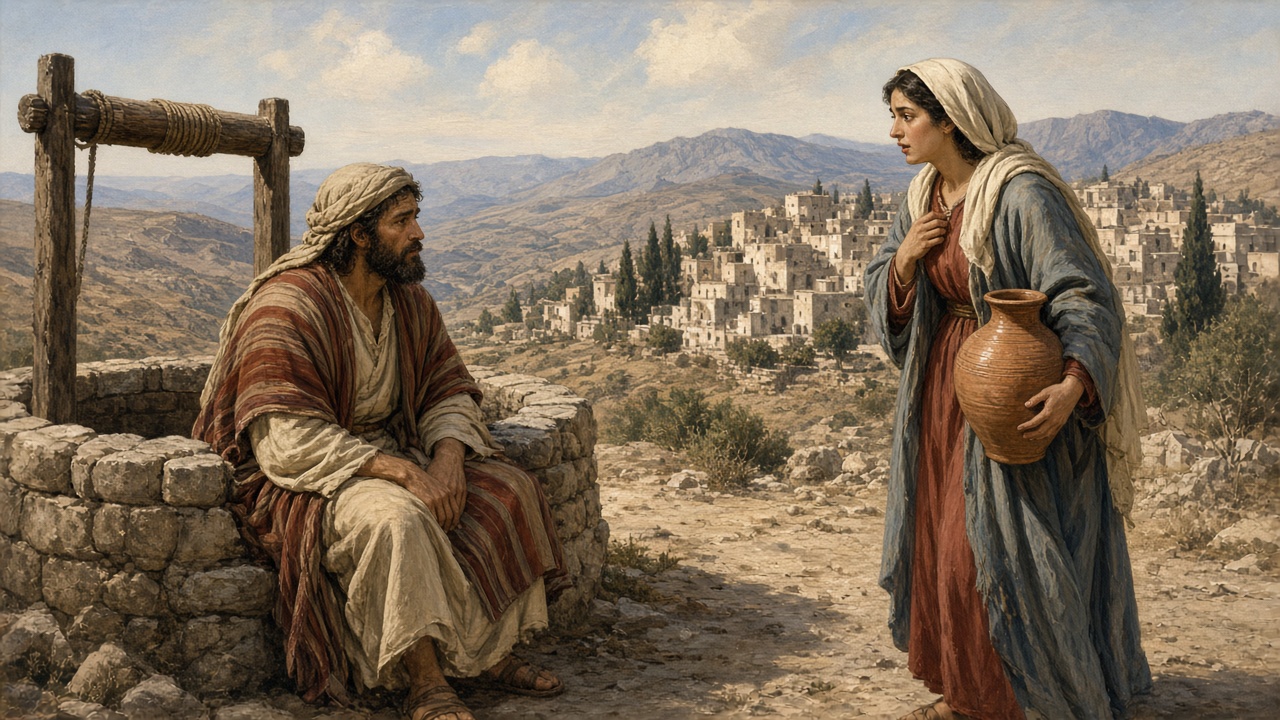
- Jesus deixou a Judeia para voltar à Galileia, e o Evangelho diz que ele precisava passar pela Samaria. Sob os romanos, no tempo de Jesus, a Judeia era a mais ao sul das três divisões da Palestina, distinta da Samaria e da Galileia, e a narrativa observa que os judeus não se relacionavam com os samaritanos.Fontes: o próprio texto bíblico · Judea
- Ele chegou a Sicar, perto do terreno que Jacó tinha dado a seu filho José e, cansado da viagem, sentou-se junto ao poço de Jacó. O dicionário bíblico de Easton (1897) registra que, desde o tempo das Cruzadas, Sicar costumava ser identificada com Siquém, mas que explorações a identificaram com 'Askar, um pequeno povoado samaritano na base sul de Ebal, cerca de uma milha ao norte do poço.Fontes: o próprio texto bíblico · Sychar
- A mulher contrastou a adoração neste monte com a afirmação dos judeus de que era preciso adorar em Jerusalém, e falou de um Messias que havia de vir, chamado Cristo. Quando os discípulos voltaram de comprar comida na cidade, ficaram surpresos de que Jesus estivesse falando com uma mulher.Fontes: o próprio texto bíblico
Notas escritas com auxílio de IA a partir de fontes abertas (Theographic Bible Metadata, CC BY-SA 4.0; Easton’s Bible Dictionary, domínio público) e revisadas antes de publicar.
Lugares deste capítulo
- Galilee · 32.760, 35.527 · versículos 3, 43, 45, 46, 47, 54
- Judea · Hoje: Judea 1 · 31.777, 35.234 · versículos 3, 47, 54
- Samaria · Hoje: Samaria 2 · 32.276, 35.195 · versículos 4, 5, 7, 9
- Jerusalem · 31.777, 35.234 · versículos 20, 21, 45
- Mount Gerizim · 32.199, 35.273 · versículo 20
Só aparecem lugares com identificação de alta confiança (90% ou mais segundo as fontes acadêmicas reunidas pelo OpenBible). Mapa da época: DARE (Digital Atlas of the Roman Empire), CC BY 4.0; mapa atual: © colaboradores do OpenStreetMap; lugares: OpenBible.info (CC BY 4.0).
Créditos e licença desta tradução
Sahidica - طبعة جديدة من العهد الجديد باللغة القبطية الصعيدية
Sahidica - A New Edition of the New Testament in Sahidic Coptic
copyright © 2000-2006 J Warren Wells
Language: ⲘⲉⲧⲢⲉⲙ̀ⲛⲭⲏⲙⲓ (Coptic)
Dialect: Sahidic
Translation by: J Warren Wells
Coptic: Sahidic NT "Sahidica - A New Edition of the New Testament in Sahidic Coptic"
Copyright (c)2000-2006 by J Warren Wells. All rights reserved.
For more information visit www.sahidica.org .
This edition is available free of charge for use in free electronic
editions of the New Testament as long as the full title and copyright
information are included and credited. For written permission to use
all or any part of this document in print editions, contact the editor
at www.sahidica.org .
This edition is primarily meant for use by teachers and students of
Sahidic Coptic, and to a lesser degree by Coptologists involved in
scholarly research, textual criticism, or New Testament translation.
PURPOSE
Please note: This text is a work in progress. As such, there
is an ongoing effort to standardize the spelling of words in
the text. Be aware that version updates periodically appear.
The primary purpose is to produce a standardized edition of
the Sahidic NT similar to standard Greek editions.
An additional purpose of this text is to allow side-by-side
comparison with the Greek New Testament. To facilitate this
effort, a new version of the Greek text has been developed,
which is meant to better represent the Greek text upon which
the Sahidic was based. This text is entitled "The New Testament
According to the Egyptian Greek Text" [NTAEG]
This text does not include representation of either accents or
supralinear strokes, since these are used inconsistently in the
original texts. There is also a higher degree of standardization
in spelling and punctuation; like today's standard Greek master
texts, but unlike both the original Sahidic texts, and the PHI
and Coptic Society texts. Moreover, as in standard Greek texts,
instances of the Nomina Sacra have been expanded to their full
forms. This is again a departure from earlier versions of the
Sahidic, including the PHI and Coptic Society texts, which are
Both inconsistent in their usage.
Special thanks to David Brakke of Indiana University Bloomington,
Brigitte Comparini of the Packard Humanities Institute, and
Michael Heiser, Academic Editor, at Logos Research Systems; for
their assistance in making this edition possible.
BASIS
Sahidica was initially based (by permission) on the Coptic New Testament,
which is an electronic publication, which was edited by David Brakke.
(PHI-CD 5.3 dated 7/2/91. Los Altos. Packard Humanities Institute. 1991).
During later development, Sahidica was electronically collated against
the Coptic CD I by the St. Shenouda The Archmandrite Coptic Society.
Los Angeles, CA dated April, 1998.
These two editions were reduced to a raw electronic form, which allowed both
to be compared electronically letter by letter with Sahidica in order to
accurately detect and report every single variation and input error in any
of the texts. Though errors are inevitable, the collators of three seperate
editions are highly unlikely to make the same errors. Therefore, this method
helps to insure the integrity of the Sahidica edition.
Throughout the project, Sahidica was also collated against printed editions
of the following coptic manuscripts, which manuscripts date from the third
century and later.
Matt: Pierpont Morgan Library M-569 collated against Bodmer XIX papyrus
Mark:* PPalau Rib. Inv.Nr.182 collated against Pierpont Morgan Library M-569
Luke: PPalau Rib. Inv.Nr.181 collated against Pierpont Morgan Library M-569
John: PPalau Rib. Inv.Nr.183 collated against Pierpont Morgan Library M-569
Acts: Chester Beatty B (Copt.Ms.814) collated against Berlin P.15926 and British Museum MS Or.7594
Paul: Chester Beatty A (Copt.Ms.813) collated against Pierpont Morgan Library M-570 and M-571
James-Jude:** Pierpont Morgan Library M-572 collated against the Pierpont Morgan Library M-573 and M-601***
Revelation: Berlin MS Or.408 ( British Museum Ms Or.3518) collated against British Museum MS Or.6803
* Note: The longer and shorter endings of Mark are based on Horner; cf Kahle (JTS.1951.p49-57)
** Note: 1st Peter was also collated against the Crosby-Schøyen Ms.193.
*** Note: Portions of James and Jude were reconstructed from M-573, M-601, and four other mss.
Note on Interpolations
The short and long endings of Mark are ommited from the PPalau ms 182, but they do appear in most mss.
To better represent the overall Sahidic tradition, both endings are included, but in double brackets.
The pericope of the adultress (John 7:53-8:11) does not appear in any Sahidic ms. Herein it is omitted.
2014-09-16
Fonte: http://ebible.org/copshc/ · eBible.org