Ezequiel 47
Paipel · Toque num versículo para ver as referências cruzadas.
Ewe koluk a puwu seni ewe Imwenfel, aramas ra pöchökül ren
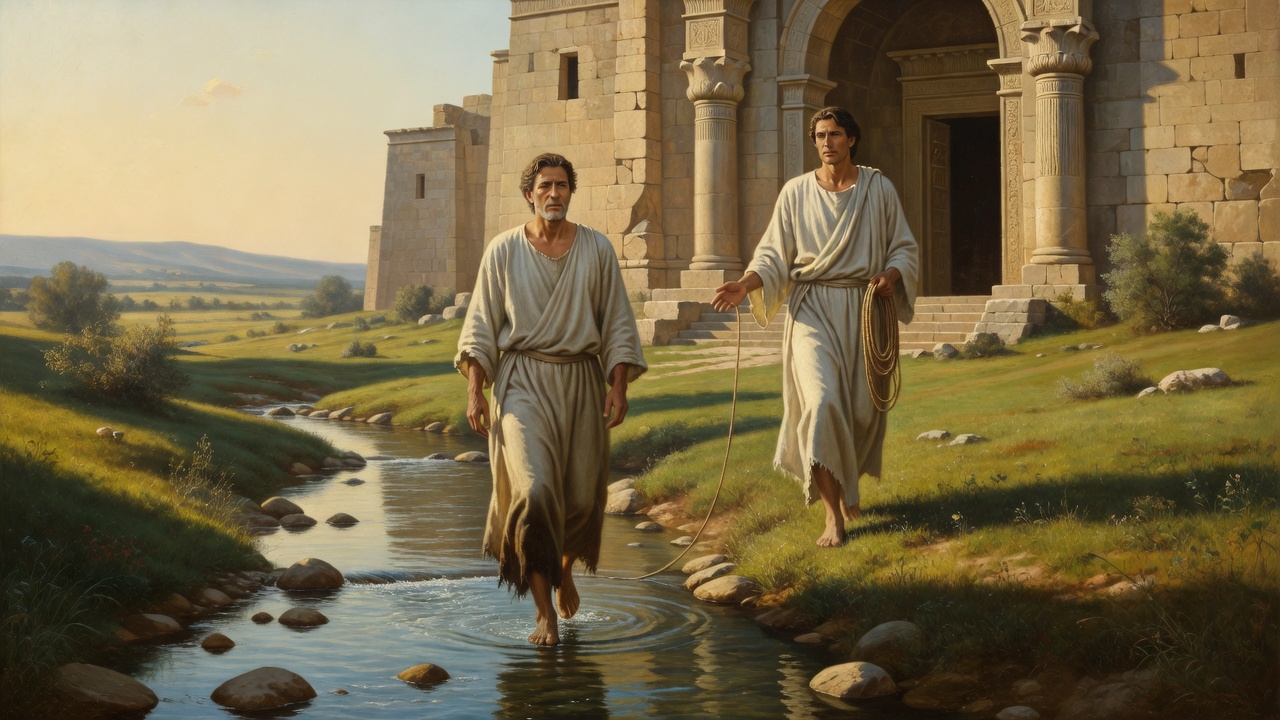
1Mürin, ewe mwän a aliwinisefälieila ren asamalapen ewe Imwenfel. Ikenan üa küna eu koluk a puwu seni fän asamalapen ewe Imwenfel o pula ngeni ötiu, pun ewe Imwenfel a sape ngeni ötiu. Iwe, ewe koluk a putiu me peliörün ewe Imwenfel, pwal me peliörün ewe rongen asor. 2Mürin, ewe mwän a emwenieiwu me lon ewe asamalap mi sape ngeni efeng o emwenieila lükün ren asamalapen ewe leni lükün Imwenfel mi sape ngeni ötiu. Iwe, ewe koluk a puwu me peliörün ewe asamalap.
3Lupwen ewe mwän a feila ötiu, a amwöchü efoch selin aükük o aükü ükükün limepükü wone iach. Mürin a emwenieilong lon ewe koluk, nge ewe koluk a tori kirupun pechei. 4Iwe, a aüküsefäli ükükün limepükü wone iach o emwenieila lon ewe koluk, nge a tori pwäsuki. Mürin a pwal aüküsefäli ükükün limepükü wone iach o emwenieila lon ewe koluk, nge a tori won wilai. 5Iwe, a pwal aüküsefäli ükükün limepükü wone iach, nge iei ewe koluk a wiliti eu chanpupu üsap chüen tongeni fetal lon. Pun ewe chanpupu a fefeitä, a pwal alolol pwe üa chök tongeni ää, nge üsap tongeni fetalla epek. 6Iwe, ewe mwän a aisiniei, “Nöün aramas, ifa usun, ka küna ei?” Mürin a aliwinieila lepekin ewe chanpupu. 7Nge lupwen üa tori, üa küna chomong irä lepekin me rüepek. 8Iwe, a üreniei, “Ei koluk a pula ngeni ewe fanü mi nom ötiu, a putiu lemolun Jortan o pulong lon ewe Setin Mäla. Nge lupwen a pulong lon, ewe sät epwe wiliti koluk mi mürina. 9Iwe, ia ewe chanpupu a pula ie, epwe wor sokopaten man me chomong ik. Pun ia ewe chanpupu a tori ie, ekewe sät repwe wiliti koluk mi mürina. Iei usun epwe wor manau ia ewe chanpupu a pula ie. 10Iwe, chon attau repwe ütä ünükün, nge seni Enketi tori Eneklaim epwe eu lenien ar apwas epilo. Iwe, ikenen lon repwe sokopat usun chök ikenen ewe matau watte. 11Nge ekewe warawar me pwakak esap fis manau lon, pwe salt epwe chök nom lon. 12Iwe, lepekin ewe chanpupu me rüepek epwe märitä chomong sokun irän mongö. Chör resap pwasala, uar resap itela, pwe epwe wor uar mi nup iteiten maram, pun ewe koluk ra manau ren a puwu seni ewe leni mi pin. Iwe, aramas repwe mongö uar, repwe pwal pöchökül seni ar samau ren chör.”
Ainetin fanü me kiännin
13Iei alon Kot ewe Samol mi Lapalap, “Iei usun ekewe kiä oupwe aea le aineti ewe fanü ngeni ekewe engol me ruu ainangen Israel. Chon ewe ainangen Josef repwe fanüeni ruu kinikin. 14Iwe, oupwe kinikinöchfengen won ei fanü. Pun üa pwon fän akapel ngeni ämi kewe lewo pwe üpwe ngeniir ei fanü, iei mine ämi oupwe faffanü seni.
15Iei usun kiännin ewe fanü: Lepelian me efeng epwe popuetä seni ewe matau watte wenewenen Hetlon tori Hamat, pwal tori Setat, 16Perota, Sipraim mi nom lekiännin lefilen Tamaskus me Hamat, epwe pwal tori Haserhatikon mi nom lekiännin Hauran. 17Ina usun kiännin ewe fanü epwe fetal seni ewe matau watte tori Hasarenon, pwe fanüen Tamaskus me fanüen Hamat repwe nom efeng. Iei usun kiännin ewe fanü me efeng.
18Iwe, ewe chanpupu Jortan epwe kiännin ewe fanü me ötiu seni Hasarenon lefilen Hauran me Tamaskus, pwal lefilen ewe fanü Kiliat me ewe fanü Israel tori ewe Setin Mäla, pwal tori Tamar. Iei usun kiännin ewe fanü me ötiu.
19Iwe, lepelien ewe fanü me ör kiännin epwe fetal seni Tamar tori ewe kolukun Meripa-Kates, tori ewe öüwön Isip, pwal tori ewe matau watte. Iei usun kiännin ewe fanü me ör.
20Nge kiännin ewe fanü me lotou ewe matau watte tori awenewenen Hamat. Iei usun kiännin ewe fanü me lotou.
21Oupwe aineti ewe fanü lefilemi won eu me eu ainangen Israel. 22Oupwe aineti ewe fanü ren üttüt, pwe oupwe fanüeni, ämi me ekewe chon ekis mi nom leimi, pwal nöür kewe mi uputiu ngeniir. Iwe, ir repwe usun chök chon Israel me remi, pwe repwe etikemi le faffanü ewe fanü me lein chon ekewe ainangen Israel. 23Oupwe awisa ngeni iteiten chon ekis wisan me lon ewe ainang ia a nonom ie. Ngang Kot ewe Samol mi Lapalap üa kapas.”
Você sabia?
O Rio Restaurador e as Fronteiras da Terra
- A visão de Ezequiel descreve um riacho que brota debaixo do limiar do templo e rapidamente se torna um rio caudaloso que corre para o leste até o Arabá, saneando as águas salgadas e sustentando árvores frutíferas e pescarias de En-Gedi a En-Eglaim.Fontes: o próprio texto bíblico · Engedi
- Em um marco social e jurídico na divisão da terra, os estrangeiros residentes que constituem família entre as tribos recebem herança de terras em total igualdade com os israelitas naturais.Fontes: o próprio texto bíblico
- As fronteiras norte e leste do território restaurado abrangem marcos antigos da Síria e do Levante, incluindo Hamate, Damasco e a fértil região de Haurã, enquanto a linhagem de José recebe uma porção dupla entre as doze tribos.Fontes: o próprio texto bíblico · Hauran · Hamath · Joseph (son of Jacob)
Notas escritas com auxílio de IA a partir de fontes abertas (Theographic Bible Metadata, CC BY-SA 4.0; Easton’s Bible Dictionary, domínio público) e revisadas antes de publicar.
Lugares deste capítulo
- Arabah · 30.417, 35.151 · versículo 8
- Salt Sea · Hoje: Dead Sea · 31.500, 35.500 · versículos 8, 9, 10, 18
- Engedi · Hoje: Ein Gedi · 31.450, 35.383 · versículo 10
- Great Sea · Hoje: Mediterranean Sea · 31.805, 34.170 · versículos 10, 15, 17, 19, 20
- Damascus · 33.511, 36.306 · versículos 16, 17, 18
- Hamath · Hoje: Hama · 35.136, 36.750 · versículos 16, 17
- Hauran · 32.730, 36.368 · versículos 16, 18
- Sibraim · Hoje: in the region between Damascus and Hamath · 34.401, 36.636 · versículo 16
- Gilead · Hoje: Gilead 1 · 32.187, 35.692 · versículo 18
- Jordan · Hoje: Jordan River · 31.761, 35.558 · versículo 18
- Meribah · Hoje: Ain el Qudeirat · 30.648, 34.422 · versículo 19
- Negeb · 31.245, 34.841 · versículo 19
Só aparecem lugares com identificação de alta confiança (90% ou mais segundo as fontes acadêmicas reunidas pelo OpenBible). Mapa da época: DARE (Digital Atlas of the Roman Empire), CC BY 4.0; mapa atual: © colaboradores do OpenStreetMap; lugares: OpenBible.info (CC BY 4.0).
Créditos e licença desta tradução
Paipel
The Holy Bible in the Chuukese language of the Federated States of Micronesia
copyright © 1984, 1989, 1991, 2001 Liebenzel Mission
Language: Chuukese
Translation by: Liebenzell Mission
Old Testament © 1989, 2001 Liebenzel Mission
New Testament © 1984, 1991 Liebenzel Mission
This translation is made available to you under the terms of the
Creative Commons Attribution-No Derivatives license 4.0.
You may share and redistribute this Bible translation or extracts from it in any format, provided that:
You include the above copyright and source information.
You do not make any derivative works that change any of the actual words or punctuation of the Scriptures.
Pictures included with Scriptures and other documents on this site are licensed just for use with those Scriptures and documents.
For other uses, please contact the respective copyright owners.
2024-01-24
Fonte: http://ebible.org/chk/ · eBible.org