Marcos 2
Thukam Thar Lente Ṭon · Toque num versículo para ver as referências cruzadas.
Jesuh nih Taksaze Pa A Fimdamter
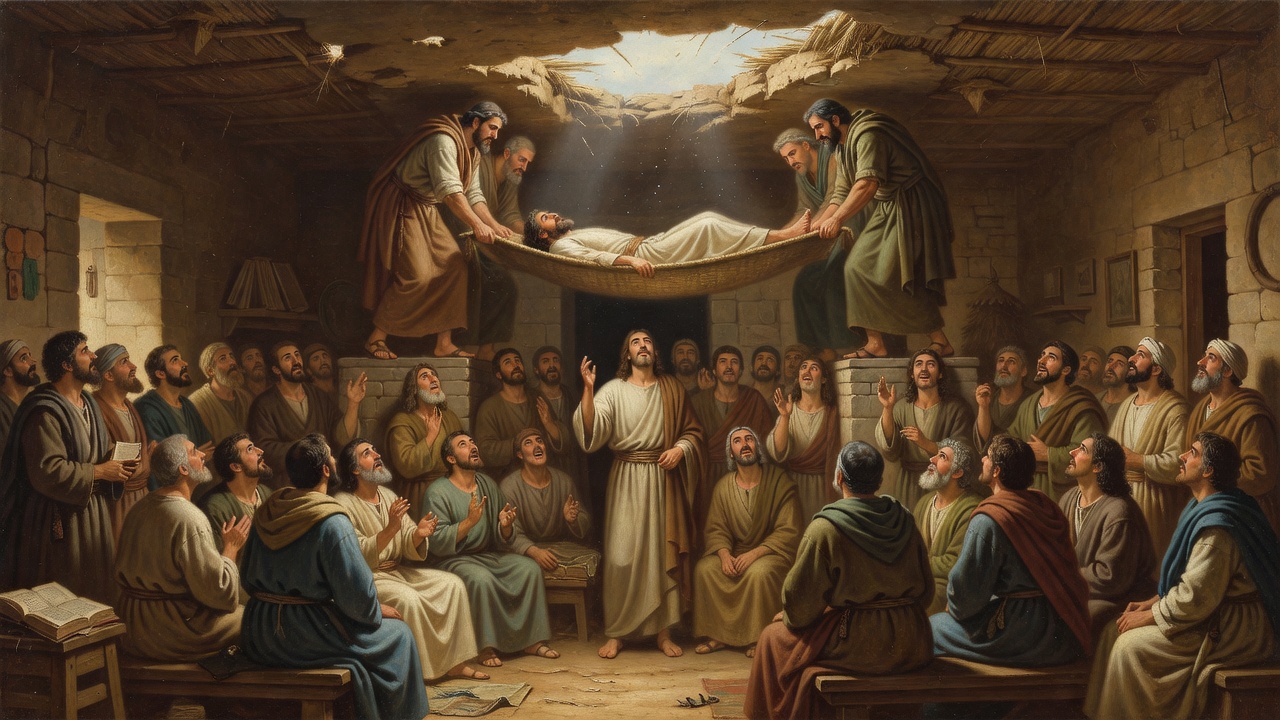
1Ni tawkfang a rei hnukah Jesuh cu Kapernaum khua ah a ban sal ih, inn ah a um tih thu cu mi nih an fiah. 2Mi tamngai cu hmunkhat ah an hmuakkhawm fak ruangah khan lawng a um lo ih suahka hram tiangin mi an khat colh. Cun Jesuh nih an sinah thu a sim. 3Minung pali nih taksaze pa cu an zawn fa ih Jesuh sinah an tian pit. 4Mi an tam tuk ih Jesuh ih hram an tian pit thei lo ruangah Jesuh umnak zawn inn tlun khuh cu an bal; an bauh colh ih taksaze pa cu a tangthah thawn an ron ṭhum. 5Jesuh nih an zupnak a hmuh tikah, taksaze pa sinah, “Ka fapa, na sual pawl cu ngaihthiam na i cem,” tiah a ti.
6Cun cuvai hmun ih a to ve mi daanthiam hrekkhat pawl nih an thinlung te in, 7“Zangruangah hivai pa cu aitin a ṭon? Pathian thangsiat a i. Pathian hrel lo hutu nih sual pawl a ngaihthiam thei?” tiah an ti.
8Jesuh nih an thinlung te in himang thu an ruah cu hmakhatte ah a thlarau nih a fiah ih an sinah, “Zangruangah nan thinlung te in himang thu cu nan ruat? 9‘Na sual pawl cu ngaihthiam na i cem,’ tih maw, ‘Hang tho la na tangthah la pit in feh,’ tih, khoitu sawn hi hivai taksaze pa sinah sip bai sawn? 10Asinain Minung Fapa nih leitlun ah sual pawl ngaihthiam theinak thuneihnak a nei tih nan fiahnak dingah hihi tuah a i,” tiah a sim. Taksaze pa sinah, 11“Na sinah ta sim, hang tho, na tangthah la piʼn na inn ah ṭin,” tiah a ti.
12Cun taksaze pa cu a hang tho ih hmakhatte ah a tangthah la pit in an zate hmuhhngan ah a feh. Curuangah an zatein an mangbang tuk ih, “Aimang thil cu kan hmu kel lo,” tiah an ti ih Pathian an thangṭhat.
Jesuh nih Levi A Ko
13Jesuh cu Galilee tili kam ah a va feh sal; mi tamngai a sinah an tiang ih thu a zirh hnei. 14A feh pah ah Alfias ih fapa Levi cu a siahkhong zung sungih a to cu a hei hmu. Cun Jesuh nih, “Ka thlun,” tiah a ti. Levi cu a hang ding ih Jesuh cu a thlun.
15Cun Jesuh cu Levi ih inn ah caw a ei. Siahkhongtu pawl le misual pawl khaw Jesuh le a dungthluntu pawl thawn caw an ei khat. Minung an tamngai ih Jesuh cu an thlun. 16Farasi mi daanthiam pawl nih Jesuh cu siahkhongtu pawl le misual pawl thawn caw an ei khat lai an hmuh tikah, a dungthluntu pawl sinah, “Zangruangah Jesuh cu siahkhongtu pawl le misual pawl thawn caw an ei khat?” tiah an ti.
17Cun Jesuh nih a thei hnei ih an sinah, “Mi fimdam pawl nih sibawi an ṭul lo, mifak pawl kau nih an ṭul. Mi dingfel pawl ko dingah ka tiang lo, misual pawl ko dingah ka tiang,” tiah a let hnei.
Cawulhnak Thu
18Johan ih dungthluntu pawl le Farasi pawl cu caw an ul. Minung pawl cu Jesuh sin an feh ih, “Johan ih dungthluntu pawl le Farasi dungthluntu pawl cu caw an ul, zangruangah na dungthluntu pawl cu caw an ul ve lo?” tiah an sut.
19Cun Jesuh nih an sinah, “Mo neitu an sinih a um laiah, mo lawmtu pawl caw an ul thok maw? Mopuai ah mo neitu an sinih a um sung cu caw an ul thei thok lo. 20Asinain an sin in mo neitu laksak ni a tiang leh thok, cuvai ni ah caw an ul leh thok.
21“Hutu khaw nih hnipuan hlun cu puanthan thar thawn a dap kel lo. A dap asihle a thar nih a hlun cu a duk thok ih hnem hlehhlo in a pat thok. 22Cun hutukhaw nih sabit ti thar cu thawl hlun sungah an se kel lo. An siah asihle sabit ti thar nih thawl hlun cu a pak ter thok ih sabit ti le a thawl cu an siat colh thok. Sabit ti thar cu thawl thar ah siah sawn thok a i,” tiah a let hnei.
Sabbath Ni Thusuhnak
23Sabbath ni ah Jesuh cu sangvut lo lakin a feh; cule a dungthluntu pawl cu an feh pah ah sangvut vui pawl cu an zut. 24Cun Farasi pawl nih Jesuh sinah, “Zohhnik, Sabbath ni ah tuah lo dingah daan ih a khammi cu zangruangah na dungthluntu pawl nih an tuah?” tiah an ti.
25Cun Jesuh nih an sinah, “David nih a rualpi pawl thawn ei ding nei lo in le cawṭam ih an um lai ah zang a tuah tihmi nan siar kel lo maw? 26Puithiam lubik Abiathar sanah Pathian ih inn songah lut in, puithiam pawl kau ih ei ding tiah daan ih a sianmi sang cu David nih a ei ih a rualpi pawl khaw a pe hnei,” tiah a let hnei.
27Cun Jesuh nih an sinah, “Sabbath cu minung hrangah tuahmi a i; minung hi Sabbath hrangah tuahmi a i lo. 28Curuangah Minung Fapa cu Sabbath tlun khawah bawi a i,” tiah a ti hnei.
Você sabia?
Perdão, um cobrador de impostos e o sábado
- Cafarnaum, a “cidade de Naum”, era uma cidade da Galileia que não é mencionada no Antigo Testamento. O dicionário bíblico de Easton (1897) diz que, depois de Jesus ser expulso de Nazaré, ela se tornou a “sua própria cidade”, o que combina com o relato de Marcos de que o povo soube que ele estava em casa e encheu a casa até não haver lugar nem fora da porta. Quatro homens então destelharam o telhado, abriram uma passagem e desceram um paralítico em sua maca.Fontes: Capernaum · o próprio texto bíblico
- O homem na coletoria era Levi, filho de Alfeu, cobrador de impostos em Cafarnaum. O dicionário bíblico de Easton (1897) diz que ele era conhecido como Levi e adotou o nome Mateus — um nome judeu comum depois do Exílio, que significa “dom de Deus” — possivelmente em grata lembrança do seu chamado. No mesmo dia, segundo o dicionário, ele ofereceu um grande banquete de despedida para Jesus e seus discípulos, e provavelmente para muitos antigos companheiros, o encontro que Marcos descreve com cobradores de impostos e pecadores.Fontes: Matthew · Alphaeus · o próprio texto bíblico
- Questionado porque seus discípulos colhiam espigas no sábado, Jesus falou de Davi entrando na casa de Deus e comendo os pães consagrados, lícitos apenas para os sacerdotes, “durante o sumo sacerdócio de Abiatar”, e compartilhando-os com seus companheiros famintos. O dicionário bíblico de Easton (1897) identifica Abiatar como filho do sumo sacerdote Aimeleque, que escapou quando seu pai e os sacerdotes de Nobe foram mortos, levou o éfode e se juntou a Davi na caverna de Adulão.Fontes: Abiathar · o próprio texto bíblico
Notas escritas com auxílio de IA a partir de fontes abertas (Theographic Bible Metadata, CC BY-SA 4.0; Easton’s Bible Dictionary, domínio público) e revisadas antes de publicar.
Créditos e licença desta tradução
Thukam Thar Lente Ṭon
The Holy Bible in the Falam Chin language of Myanmar: Thukam Thar Lente Ṭon
copyright © 2025 The Word for the World International
Language: Falam
Contributor: The Word for the World International
Lente Thukam Thar
The New Testament in Lente Language
The Word for the word
This translation is made available to you under the terms of the
Creative Commons Attribution Share-Alike license 4.0.
You have permission to share and redistribute this Bible translation in any format and to make reasonable revisions and adaptations of this translation, provided that:
You include the above copyright and source information.
If you make any changes to the text, you must indicate that you did so in a way that makes it clear that the original licensor is not necessarily endorsing your changes.
If you redistribute this text, you must distribute your contributions under the same license as the original.
Pictures included with Scriptures and other documents on this site are licensed just for use with those Scriptures and documents.
For other uses, please contact the respective copyright owners.
Note that in addition to the rules above, revising and adapting God's Word involves a great responsibility to be true to God's Word. See Revelation 22:18-19.
2025-07-02
Fonte: http://ebible.org/cfm/ · eBible.org