Atos 24
Dios ã jáap naáwát tólih · Toque num versículo para ver as referências cruzadas.
Pablo Maáh Félixdih “Wã yéej chãjcan beé”, ã niiját
1Biícjĩh bóo téihya yeó jáap tʉ́ttimah, sacerdotewã ĩ maáh Ananías, bita judíowã maáta biícdih Cesarea tʉ́tchina ĩt ñʉʉn déi jʉibínap wʉt jĩ. Roma baácdih moón ĩ maáta ĩ wʉtatdih jéihni Tértulo wʉ̃t jʉmnibʉt ĩjeéh ãt jʉibínap wʉt jĩ. Tértulo judíowã ĩ naóh yacatdih naóh yapani pínah wʉt jĩ. Pánihna, Pablodih ĩ peéh chãjat pínah niijná, Maáh Félix pebhna ĩt waad jʉibínap wʉt jĩ. 2Páant ĩ waád jʉibíát tʉ́ttimah, soldadowã Pablodih caanná ĩ ʉb waád jʉibínachah, Tértuloboó judíowã ĩ naóh yacatdih nin pah ãt niíj naóh yapanap wʉt jĩ:
—Meém tʉ́ini maáh caá. Jwĩ maáh ma jʉmʉchah, dedé tac bʉʉgát wihcan, jwĩ tʉ́i jʉmna caá. Tʉ́i jéihni jʉmna, nihat jwĩ́ih baácdih moondíh ma tʉ́i teo wáacna caá. 3Pánihna, nihat jwĩ́ih tʉ́tchidih moón meemdíh bʉ́dí jwĩ wẽina caá. 4Meém jĩ́gah enni ma jʉmatdih jéihna, meemdíh maatápdih tac bʉʉgáát tʉ́ʉt páant jwĩ niijcán caá. Ma jéihyat pínah niijná, bainíjeh meemdíh jwĩ wéheíhna caá. 5Nin cã́acwãdih tʉbit ã tac bʉʉgána caá. Nihat baácboó ded pah bohénit, judíowãdih ĩ míic eníhcat chãjna caá ã chãjap. Jesús Nazaret tʉ́tchidih bóodih péenitdih waóhni caá. 6Dioíh mʉʉná judíowã nihcannitdih nʉmah waadnít, caán mʉʉdíh ã yéejanap be. Páant ã chãjachah ennit, caandíh teona, jwĩ nʉowã ĩ wʉtatdih ã yap yohatji jíib jwĩ peéh chãjíhip yʉh be. 7Obohjeéhtih, maáh Lisias ã́ih soldadowãdih nʉmah jʉ̃óhnit, caandíh jwiítdih ĩ dʉ́ʉc wáyap be. 8Pánih dʉ́ʉc wáiniji ma pebhna jwiítdih ã naóh yacat tʉ́ʉtʉp be. Pablodih ʉʉ́bh joí enna, nihat jwĩ naóh yacat yoobópdih ã jʉmatdih meém ma jéihbipna caá, Tértulo Félixdih ãt niijíp wʉt yʉh jĩ.
9Ãjeéh jʉibínit judíowãbʉt Pablodih biíc yoobó Félixdih ĩt yee naóh yacap wʉt jĩ. 10Páant ĩ naóh yacat tʉ́ttimah, Félixboó Pablo ã naáwát pínah niijná, caandíh ãt jʉ́ʉt jã́hanap wʉt jĩ. Páant ã jʉ́ʉt jã́hanachah ennit, Pablo nin pah ãt niíj naáwáp wʉt jĩ:
—Dawá jópchina jwĩ́ih baácdih moón jwĩ naóh yacatdih mapĩ́ tʉ́i joiná caá. Páant ma jʉmatdih jéihna, ma tʉ́i jéihyat pínah niijná, wẽinit, meemdíh yoobópdih wã naóhbipna caá. 11Doce yeó jáap jã́tihjeh Jerusalén tʉ́tchina Diosdih weñedih wã jʉibínap be. Bitadih ʉʉ́bh joiná, ma jéihbipna caá. 12Biíhdih wãpĩ́ jʉ̃ihcap be. Dioíh mʉʉdíh míic wáacnitdih wã míic jʉ̃ihñat tʉ́ʉtcap be. Judíowã ĩ míic wáacat mʉʉ́ diítna, tʉ́tchiboobʉ́t wã míic jʉ̃ihñat tʉ́ʉtcap be. 13Páant ĩ naóh yacachah yʉhna, bitadih ʉʉ́bh joí enna, ĩ yee naóh yacatdih meém ma jéihbipna caá. 14Obohjeéhtih, bʉʉ meemdíh yoobópdih wã naóhna caá. Dios jwĩ nʉowãji ĩ wẽinidih weembʉ́t wãpĩ́ wẽina caá. Pánihna, Jesúsdih jepahna, weém Diosdih wã weñechah, ‘Mácah ã bohéna caá’, queét ĩpĩ́ niijná caá. Obohjeéhtih, wã bohéát mácah nihcan caá. Nihat Moisés ã wʉtatjidih jepahnit, nihat Dios naáwátdih naóh yapanit ĩ daacátjidihbʉt wãpĩ́ jepahna caá. 15Dios nihat wʉnnitdih ã jwʉ́ʉb booaat pínah yeó jáapdih wãpĩ́ pã́ina caá. Tʉ́initdih, yeejépwãdihbʉt biíc yoobó ã jwʉ́ʉb booabipna caá. Páant ã booaat pínahdih nihat judíowãbʉt biíc yoobó ĩpĩ́ pã́ina caá. 16Pánih pã́ina, tʉ́inijeh wãpĩ́ chãjna caá, ‘Caán tʉ́ini caá’, Dios weemdíh ã niiját pínah, cã́acwãbʉt biíc yoobó ĩ niiját pínah niijná.
17“Dawá jópchina biíh baácna jibniji wã déewã jĩ́gah náah jʉmnitdih dinerodih wʉ̃hat tʉ́ʉt niijná, Diosdihbʉt wẽi wʉ̃hat tʉ́ʉt niijná, Jerusalén tʉ́tchina wã jwʉ́ʉb jʉibínap be, páant mʉntih. 18Pánihna, Diosdih wã wʉ̃hat pínah jã́tih, ‘Caán tʉ́ini caá’, Dios ã niíj enat pínah niijná, ded pah Moisés ã wʉtatjidih wã chãjap be. Páant wã chãjat tʉ́ttimah, Dioíh mʉʉ́ diítna jʉmna, caandíh wã wʉ̃hʉchah, bita judíowã Asia baácdih moón weemdíh ĩt enep tabe. Páant ĩ enechah, wãjeéh míic wáacnit wihcan, míic jʉ̃ihñatbʉt ã wihcap be. 19Pánihna, weém yeejép wã chãjatdih enna nihna, queét Asia baácdih moónboó ma pebhna naóh yacadih ĩ jʉ̃ʉ́wʉ́ naáh. 20Jwĩ maáta wáac jʉinít, weemdíh ĩ ʉʉ́bh joí enechah, ded pah wã yéej chãjatjidih enna nihna, queétjeh naáwádih ĩ jʉ̃ʉ́wʉ́ naáh. 21Nin pahjeh ĩ niijmí nacaá: ‘Pablo jwĩ míic wáacapboó jʉmnit, nin pah ã niíj ñaacáp jĩ: “Wʉnnitjidih Diosboó ã jwʉ́ʉb booaatdih jwĩpĩ́ páñatdih wã bohéátji jíib nemat mʉʉ́boó weemdíh ĩ nemat tʉ́ʉtʉp jĩ”, ã niíj ñaacáp jĩ’, queét ĩ niijmí nacaá”, Pablo Félixdih ãt niijíp wʉt jĩ.
22Páant ã niijíchah joinít, Félix, Jesúíh doonádih jéihnit, ĩ naáwátdih ãt cádahat tʉ́ʉtʉp wʉt jĩ. Pánih cádahat tʉ́ʉtnit, Pabloboodíh nin pah ãt niijíp wʉt jĩ:
—Maáh Lisias ã jʉyʉ́chah, dedé peéh chãjat pínah ã jʉmʉchah, meemdíh wã naóhbipna caá, ãt niijíp wʉt jĩ.
23Páant niíj péanit, Pablodih ʉb jʉ̃óhni soldadowã ĩ maáhdih nin pah ãt niijíp wʉt jĩ: “Maátaíh mʉʉná jwʉ́ʉb ʉb bejna, míih soldadowã caandíh ĩ tʉ́i wapa naáh. Obohjeéhtih, ã náahat pah ã chãja naáh. Det ã chéenwãbʉt caandíh teo wáacadih ĩ jʉyʉ́ naáh”, ãt niijíp wʉt jĩ.
24Daocánni yeó jáap tʉ́ttimah, Félix ãjeéh bóli Drusilajĩh ĩ míic wáacat tólihna ãt jʉibínap wʉt jĩ. Drusila judío wili wʉt jĩ. Pánih jʉibínit, Jesúíh doonádih joííhna, Pablodih ãt bid bojop wʉt jĩ. 25Páant ã bid bojochah, Pablo queétdih nin pah ãt niíj naóh bohénap wʉt jĩ: “Bitadih tʉ́i chãjat caá náahap. Yéej chãjat jenah joyátdih yap yohat caá náahap. Cã́acwã yeejép ĩ chãjatjidih Dios bʉ́dí ã peéh chãjbipna caá”, queétdih ãt niijíp wʉt jĩ.
Páant ã niíj naáwáchah, joí wʉ́hi bejnit,
—Páant bóojeh tigaá. Ma bejeé. Biíh yeó jáap meemdíh wã jwʉ́ʉb bidbipna caá, páant mʉntih, Félix caandíh ãt niijíp wʉt jĩ.
26Pablo ã míic jíib chãj bacat pínah dinerodihbʉt Félix ãt bidip wʉt jĩ. Pánih bidnit, dawá láa Pablodih míic wéheat tʉ́ʉt niijná, Félix ã pebhna ãt jʉ̃ʉ́wát tʉ́ʉtʉp wʉt jĩ. 27Obohjeéhtih, chéne jópchi tʉ́ttimah, Félix maáh jʉmni ãt bacap wʉt jĩ. Pánihna, judíowãdih weñaíhna, Félix Pablodih nemat mʉʉ́boojéh ãt cádahap wʉt jĩ. Porcio Festo wʉ̃t jʉmni ãt jwʉ́ʉb tʉ́ʉt nʉʉ́m maáh waadáp wʉt jĩ.
Você sabia?
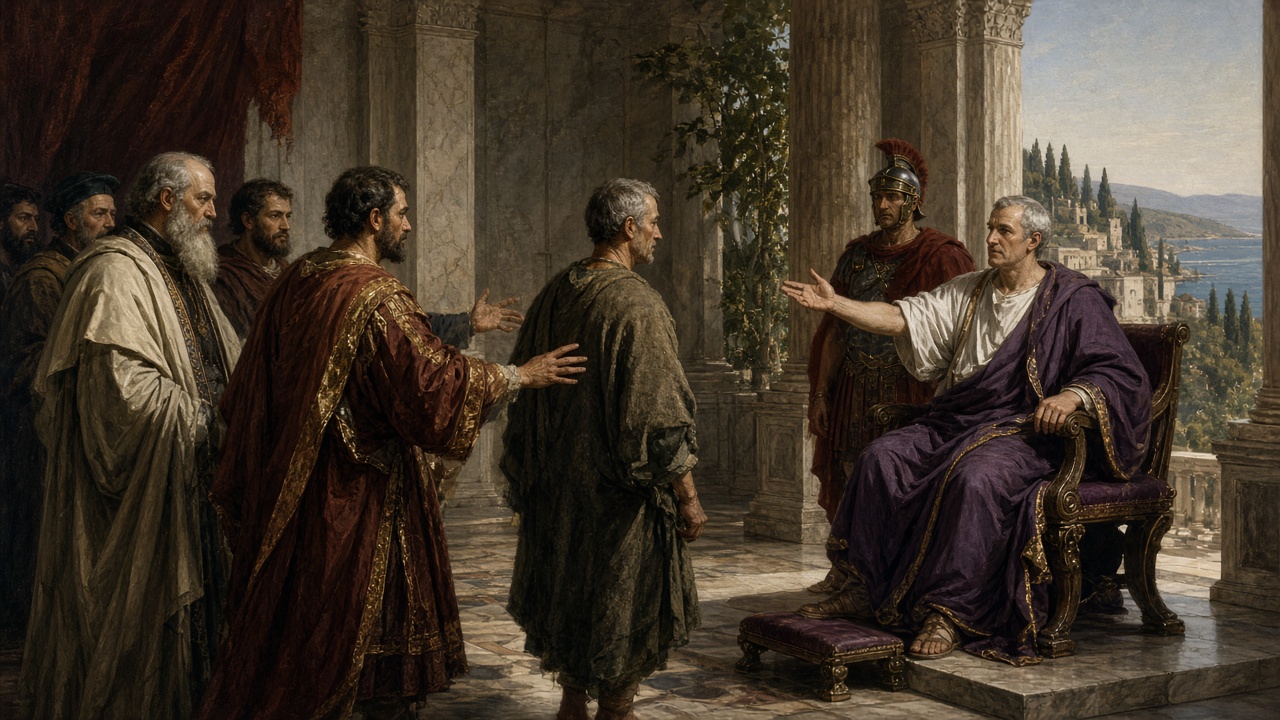
Paulo perante Félix
- O sumo sacerdote Ananias desceu com alguns anciãos e um advogado chamado Tértulo, que o Dicionário Bíblico de Easton descreve como um advogado romano empregado pelos judeus para apresentar a causa contra Paulo diante de Félix. Tértulo elogiou o governador e depois chamou Paulo de peste, que provocava dissensão entre os judeus por todo o mundo, de chefe da seita dos nazarenos e de homem que tinha tentado profanar o templo. O dicionário liga esse elogio inicial à limpeza que Félix fez do país, expulsando bandidos e impostores.Fontes: o próprio texto bíblico · Tertullus · Felix
- Félix, que estava bem informado a respeito do Caminho, adiou a audiência e manteve Paulo sob guarda, permitindo-lhe alguma liberdade e deixando que amigos atendessem às suas necessidades. O relato diz que ele esperava que Paulo lhe oferecesse um suborno e por isso o mandava chamar com frequência; o Dicionário Bíblico de Easton também afirma que ele parece ter esperado um suborno e, por isso, teve várias conversas com ele. Depois de dois anos, Pórcio Festo o sucedeu — o Dicionário Bíblico de Easton (1897) data essa nomeação em 60 d.C. — e, querendo fazer um favor aos judeus, Félix deixou Paulo na prisão.Fontes: o próprio texto bíblico · Felix · Portius Festus
- Alguns dias depois, Félix voltou com sua mulher Drusila, que era judia, e ouviu Paulo falar da fé em Cristo Jesus e da justiça, do domínio próprio e do juízo vindouro; Félix ficou amedrontado e o mandou embora. O Dicionário Bíblico de Easton (1897) identifica Drusila como a terceira e mais nova filha de Herodes Agripa I e diz que Félix a induziu a deixar o marido, Azizus, rei de Emesa. O mesmo verbete diz que ela e o filho morreram na erupção do monte Vesúvio em 79 d.C.Fontes: o próprio texto bíblico · Drusilla
Notas escritas com auxílio de IA a partir de fontes abertas (Theographic Bible Metadata, CC BY-SA 4.0; Easton’s Bible Dictionary, domínio público) e revisadas antes de publicar.
Lugares deste capítulo
- Caesarea · Hoje: Caesarea Maritima · 32.500, 34.892 · versículo 1
- Jerusalem · 31.777, 35.234 · versículos 11, 17
- Asia · 38.400, 28.300 · versículo 18
Só aparecem lugares com identificação de alta confiança (90% ou mais segundo as fontes acadêmicas reunidas pelo OpenBible). Mapa da época: DARE (Digital Atlas of the Roman Empire), CC BY 4.0; mapa atual: © colaboradores do OpenStreetMap; lugares: OpenBible.info (CC BY 4.0).
Créditos e licença desta tradução
Dios ã jáap naáwát tólih
New Testament in Cacua
copyright © 2008 Wycliffe Bible Translators, Inc.
Language: Cacua
Translation by: Wycliffe Bible Translators, Inc.
Copyright Information
© 2008, Wycliffe Bible Translators, Inc. All rights reserved.
This translation text is made available to you under the
terms of the Creative Commons License: Attribution-Noncommercial-No Derivative Works.
( http://creativecommons.org/licenses/by-nc-nd/3.0/ )
In addition, you have permission to port the text to different file formats, as long as you
do not change any of the text or punctuation of the Bible.
You may share, copy, distribute, transmit, and extract portions
or quotations from this work, provided that you include the above copyright
information:
You must give Attribution to the work.
You do not sell this work for a profit.
You do not make any derivative works that change any of the actual words or punctuation of the Scriptures.
Permissions beyond the scope of this license may be
available if you contact
us with your request.
The New Testament
in Cacua
© 2008, Wycliffe Bible Translators, Inc. All rights reserved.
This translation is made available to you under the terms of the
Creative Commons Attribution-Noncommercial-No Derivatives license 4.0.
You may share and redistribute this Bible translation or extracts from it in any format, provided that:
You include the above copyright and source information.
You do not sell this work for a profit.
You do not change any of the words or punctuation of the Scriptures.
Pictures included with Scriptures and other documents on this site are licensed just for use with those Scriptures and documents.
For other uses, please contact the respective copyright owners.
2014-08-06
Fonte: http://ebible.org/cbv/ · eBible.org