1 João 3
Yakʼusda bughunek: k’andit khunek neba lhaidinla · Toque num versículo para ver as referências cruzadas.
1Dalcho, 'i be ne'aBá nek'entsi' negha óoni'ai, Yak'usda dich'oh nendúlhni buzkeh 'uts'int'ah soo cho whunulh'en. 'Et huwa ndi yun k'ut whut'en net'echahunízun, didut 'aw t'ehinízun 'et huwa. 2Nuhwhuk'esi' k'an 'et Yak'usda buzkeh ts'inli. Daztét'ilh 'awhuz nenalhts'et hachawhulhts'it. 'Et whunts'ih nt'ets'oninzun ts'a'en t'eh, soo bunduztel'ilh, soo nts'e na'a dantah, whuz na'a uztet'ilh 'et huwa. 3'Ink'ez ndunnah whuz na'a hits'un hukwa tsi hooli, dutsun hoolah na'huduteltsilh, dant'ah butsun hoolah, whuz na'a.
Lubeshi 'uts'ulh'en ts'iyawh whulazdootnih huba 'uhoont'ah
4Ndan lubeshi 'ulh'en, 'aw khunek yuk'únucha'ust'en ho' 'int'ah. 'Et khunek k'uts'uyus t'eh, lubeshi 'uhoont'ah. 5'Ink'ez t'eoonáhzun nelubeshi neba 'ún yutoolhdelh ka ndi yun k'ut nuséya. 'Ink'ez didut 'aw lubeshi bughah hoolah ho' 'int'ah. 6Ndan ye yudinda, 'aw lubeshi oolh'en ghait'ah ho' 'int'ah. Ndan lubeshi 'ulh'en, 'aw chayí'il 'ink'ez 'aw t'echainízun. 7'Uskeh 'uyoon nanwhunoo'ah gunih. Ndan ts'ah'un ne'ut'en, 'en ts'ah'un 'int'ah. Dant'ah Sizi Gri ts'ah'un 'int'ah, whuz na'a ndunt'ah ho' 'int'ah. 8'Udechoo whuts'un netsudule lubeshi 'ulh'en. Ndan lubeshi 'ulh'en, 'en netsudule yunéyalh 'int'ah. Njan 'et huwa Yak'usda buYe' ndi yun k'ut nuséya, 'et huwa netsudule be 'ut'en ts'iya yóolhtsilh 'et whuba. 9K'us ndan Yak'usda yé ulhtus, 'i bé whuzdli, 'en lubeshi cha'ulh'en. Ndi Yak'usda ts'un hainzut, 'i be 'ilhuz wheni ts'ukhuténa, 'ink'ez 'ilhuz wheni yulh 'int'ah. 'Et ndunnah 'i be whuzdli, 'en 'aw lubeshi 'uhoolh'en ghait'ah.
Nuwheni Sizi Gri uznedulh ts'iyawh lhk'ets'oodútsi'
10'Et ndez na'a Yak'usda buzkeh 'ink'ez netsudule buzkeh chah t'ehunudzun: ndan ts'ah'un nucha'ust'en, k'us dudulhutsin k'echaítsi', 'en Yak'usda yuneyalh ilah ho' 'int'ah. 11Soo 'udechoo whe' whudit'en whuts'un ndi khunek dahts'o njan ndutni, lhk'ets'oodutsi', ni. 12Ndun dune Cain 'en k'una'a ilah. 'En ntsi' niyalh 'int'ah 'ink'ez dudulhutsin yuzilhghi. 'Et di ka 'uyinla? Be 'ut'en untsi' 'ink'ez bulhutsin 'en ts'ah'un ne'ut'en, 'et hukwa' yinla. 13Sulhutsinkah ndi yun k'ut whut'en nuhts'u hudutnik t'eh, khun teh nuhwhuba hócha gunih. 14Nelhutsinkah hubuk'ets'intsi', 'et huwa t'ets'oninzun dats'uzsai 'ink'ez nats'ukhítna li'ts'int'ah. Ndun dulhutsin k'echahitsi', 'awhuz yahadla li'hint'ah. 15Ndan dulhutsin ts'udutnik, 'en néghan 'int'ah. 'Ink'ez t'eoonáhzun ndan néghan, 'en 'ilhuz be ts'ukhuna, 'i bughi yoolah ho' 'int'ah.
Sizi Gri neba daja 'et huwa be lhk'ets'udutsi', 'i t'ezninzun
16Sizi Gri 'en ye khuna, 'i neba yuladetnik, 'et huwa be lhk'ets'udutsi' t'ezninzun. 'Ink'ez nuwheni chah nelhutsinkah be ts'úkhuna, 'i huba hubulazdootnih huba' hoont'ah. 17'Et whunts'ih ndan ndi yun k'ut hoonli ut'i hoh bulhutsin ye dunidzut, 'ink'ez dudzi be 'aw yugha techa'nizil t'eh, nts'e na'a Yak'usda ye nék'entsi', 'i yulh 'útet'ilh? 'Et ndut'en t'eh, nts'e na'a Yak'usda k'etetsi'? 18'Uskehyaz 'aw khunek be zeh ilah lhk'ets'udutsi' uzdooni. Soo ts'ah'un na'a ne'e'ut'en be chah lhk'ets'oodutsi'. 19Njan 'et huwa nt'ets'oninzun khunek 'alha 'int'ah, 'i bulh 'uts'int'ah. 'Et t'eh bubut nedzi ts'ah'un 'oot'e. 20Nedzi bugha neba nahezya t'eh, Yak'usda 'o nus negha te'ninzun ho' 'int'ah, ts'iyaintsuk t'eoonínzun 'et huwa. 21Nuhwhuk'esi' nedzi neba chahesye t'eh, whéchats'uniljut hoh Yak'usda bubut nuzdútelya. 22Dant'i buts'un ka' ts'utni, 'i negha íyunle, bugha 'i ts'oontun 'ink'ez hoonzoo hoh bunalh ne'ts'ut'en 'et huwa. 23Ndi bughunek netl'aída'ai, buYe' Sizi Gri, 'en ndan unli, 'et neba 'alha 'oot'e 'ink'ez lhk'ets'oodutsi'. 'Et whuz na'a bughunek netl'aída'ai.
Soo cho huwohle, lhanah nus whunilh'en na'hududil'i, 'en 'uda netah 'uhut'en ho' hoont'ah
24Ndan yughunek oontun, 'en Yak'usda yudínda 'ink'ez Yak'usda chah yulh 'int'ah. Ndoni neyída'ai 'en be t'ets'onínzun neyuh ts'ih nelh 'int'ah.
Você sabia?
Filhos de Deus e amor fraterno
- A advertência para não ser como Caim lembra o primogênito de Adão e Eva, lavrador da terra, cujo irmão Abel seguia a vida pastoral. Eles apresentaram ofertas: a de Abel, dos primogênitos e da gordura do rebanho, foi aceita como mais excelente, e Caim, cuja oferta era do fruto da terra, ficou muito irado. A carta diz que Caim era do maligno e assassinou Abel porque as suas próprias obras eram más e as de seu irmão eram justas.Fontes: Cain · o próprio texto bíblico
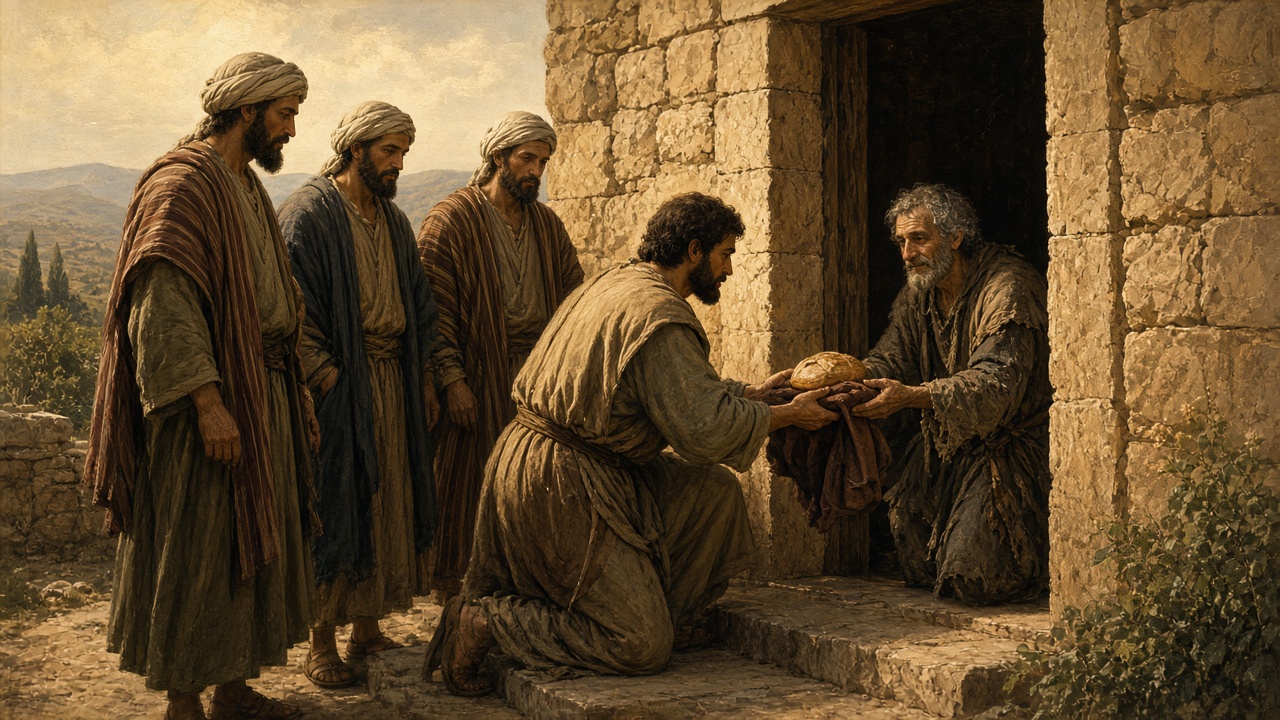
- Neste capítulo, odiar o irmão é tratado como homicídio: todo aquele que odeia seu irmão é homicida, e a vida eterna não reside num homicida. O amor se conhece porque Jesus entregou a sua vida por nós, e se diz aos leitores que devem entregar a vida pelos irmãos.Fontes: o próprio texto bíblico
- Os filhos de Deus se distinguem dos filhos do diabo por praticar a justiça e por amar o irmão. A mensagem ouvida desde o princípio é que devemos amar uns aos outros, e o mandamento de Deus é crer no nome de seu Filho, Jesus Cristo, e amar uns aos outros como ele ordenou.Fontes: o próprio texto bíblico
Notas escritas com auxílio de IA a partir de fontes abertas (Theographic Bible Metadata, CC BY-SA 4.0; Easton’s Bible Dictionary, domínio público) e revisadas antes de publicar.
Créditos e licença desta tradução
Yakʼusda bughunek: k’andit khunek neba lhaidinla
New Testament in Carrier, Southern (CA:caf:Carrier, Southern)
copyright © 2002 Wycliffe Bible Translators, Inc.
Language: Carrier, Southern
Translation by: Wycliffe Bible Translators, Inc.
Carrier, Southern [caf], Canada
Copyright Information
© 2002, Wycliffe Bible Translators, Inc. All rights reserved.
This translation text is made available to you under the
terms of the Creative Commons License: Attribution-Noncommercial-No Derivative Works.
( http://creativecommons.org/licenses/by-nc-nd/3.0/ )
In addition, you have permission to port the text to different file formats, as long as you
do not change any of the text or punctuation of the Bible.
You may share, copy, distribute, transmit, and extract portions
or quotations from this work, provided that you include the above copyright
information:
You must give Attribution to the work.
You do not sell this work for a profit.
You do not make any derivative works that change any of the actual words or punctuation of the Scriptures.
Permissions beyond the scope of this license may be
available if you contact
us with your request.
The New Testament
in Carrier, Southern
© 2002, Wycliffe Bible Translators, Inc. All rights reserved.
This translation is made available to you under the terms of the
Creative Commons Attribution-Noncommercial-No Derivatives license 4.0.
You may share and redistribute this Bible translation or extracts from it in any format, provided that:
You include the above copyright and source information.
You do not sell this work for a profit.
You do not change any of the words or punctuation of the Scriptures.
Pictures included with Scriptures and other documents on this site are licensed just for use with those Scriptures and documents.
For other uses, please contact the respective copyright owners.
2014-04-22
Fonte: http://ebible.org/cafNT/ · eBible.org