Marcos 12
Di Nyoo Testiment eena Bileez Kriol · Toque num versículo para ver as referências cruzadas.
Di parabl a di wikid // faama dehn
1Jeezas staat tu taak tu di peepl dehn eena parablz. Ih seh, “Wahn taim wahn man plaant owt wahn pees a lan wid grayp. Ih fens it op ahn ih dig owt wahn hoal eena wahn big rak wehpaa dehn skweez owt di joos owta di grayp dehn. Afta dat ih bil wahn lukowt towa ahn den ih rent di lan owt tu sohn faama. Den hihn gaahn weh da wahn neks konchri.
2“Wen di taim kohn fi pik di grayp dehn, di oana a di lan sen ih servant fi kalek fi hihn shayr a di krap fahn di faama dehn. 3Bot di faama dehn grab di servant ahn beet ahn op bad, ahn sen ahn bak wid ih too lang han di heng dong da ih said.
4“Den di oana sen wahn neks servant, ahn dehn gi hihn wahn bad bos-hed; ih mi shaymful how dehn mi chreet ahn. 5Den ih sen wahn tara man, bot dehn ton rong ahn kil hihn tu. Ahn aala dehn wan weh ih sen afta dat geh kil er beet op bad.
6“Pahn di en, di oana mi oanli ga wan moa persn weh ih kuda mi sen, ahn dat da-mi ih son weh ih mi lov bad. Ih seh tu ihself, ‘Dehn mos wahn rispek mi son.’
7“Bot cho! Di faama dehn seh monks dehnself, ‘Dis da di wan weh wahn inherit evriting. Mek wi kil hihn, den evriting wahn bee fi wee!’ 8Soh dehn grab di oana son ahn kil ahn, ahn pich ih badi aafa di lan.
9“Now da weh di oana wahn du wen ih yehr weh hapm? Ih wahn kohn kohn kil aala dehn, ahn rent owt di lan tu sohn ada faama. 10Yu neva reed weh di Skripcha seh? Ih seh,
‘Di stoan weh di bilda dehn neva tink mi wot notn
ton owt fi bee di kaanastoan,
weh da di moas impoatant wan owta aala dehn.
11Dis da weh di Laad du.
Da wahn wandaful ting fi si, noh chroo’?”
12Di Jooish leeda dehn mi-di chrai fain wahn way fi ares Jeezas kaa dehn mi wel noa seh dat wen Jeezas mi-di tel dehn da lee stoari bowt di wikid faama dehn, ih mi-di taak bowt dehn. Bot sayka weh dehn mi frayd fi di krowd, dehn lef ahn loan ahn gaan.
Hoo fi pay taks tu
13Afta dat dehn sen sohn Farisee ahn sohn peepl weh fala Herod fi taak wid ahn soh dat dehn ku chrai mek ih seh sohnting weh dehn kuda ares ahn fa. 14“Now Teecha, wee noa seh dat yoo da wahn aanis ahn rispektabl man, ahn yoo teech di chroot bowt how Gaad waahn peepl fi liv. Yu chreet evribadi sayhn way noh kay da hoo dehn. Soh tel wi weh yoo tink. Ih rait fi pay taks tu Seeza er nat? 15Tel wi, yes er no?”
Jeezas mi don si chroo dehn toofaystidnis lang taim, soh ih aks dehn seh, “Da wai unu di chrai chrik mi? Bring wahn silva moni, mek Ah see't.”
16Wen dehn han ahn di moni, ih aks dehn seh, “Hoofa hed stamp pahn dis moni, ahn hoofa naym rait pan it?”
Dehn ansa seh, “Seeza.”
17Den Jeezas tel dehn seh, “Wel den, gi Seeza weh bilangz tu Seeza, ahn gi Gaad weh bilangz tu Gaad!” Dehn mi shak wid Jeezas ansa.
Di kweschan bowt rayz // op bak fahn di ded
18Den sohn Sadyusee kohn tu Jeezas wid wahn kweschan. Dehn da wahn groop weh bileev seh peepl noh wahn rayz op bak fahn di ded. Dehn aks ahn seh, 19“Teecha, Moaziz mi rait wahn laa fi wi weh seh dat if wahn man breda ded lef ih waif, bot ih neva ga no pikni wid ahn, da man fi marid tu ih ded breda wido ahn ga pikni wid ahn soh dat ih ku kehr aan ih breda naym. 20Wel, yu mi ga sebm breda. Di fos wan marid ahn ded widowt ga no pikni. 21Di sekant breda marid tu ih breda wido, ahn hihn ded widowt lef no pikni. Ahn di neks breda tu, sayhn ting. 22Wan afta di neks aala di res a breda dehn marid tu di sayhn wido ahn aala dehn ded widowt ga no pikni. Wel, pahn di en di laydi shee ded tu. 23Soh, wen di day kohn fi ded peepl kohn bak tu laif, hoofa waif shee wahn bee, laik how di hoal sebm a dehn mi marid tu ahn?”
24Jeezas ansa dehn seh, “Unu rang kaa unu noh noa di Skripcha ner how powaful Gaad powaful. 25Yu si, wen peepl rayz op bak fahn di ded pahn rezorekshan day, nobadi wahn geh marid tu nobadi. Dehn wahn bee sayhn laik di aynjel dehn weh deh da hevn. 26Bot az tu weda peepl wahn rayz op bak fahn di ded, unu neva reed wehpaa Moaziz rait bowt di taim wen Gaad mi taak tu ahn owta wahn bush weh mi-di bon? Gaad seh tu ahn, ‘Ai da di Gaad a Aybraham ahn Aizak, ahn Jaykop.’ 27Hihn da noh di Gaad a ded peepl, bot ih da di Gaad a peepl weh livin. Unu sadli mistaykn.”
Di moas impoatant Laa
28Wan a dehn wan weh teech di Jooish Laa mi dehdeh ahn hihn mi yehr di hoal aagyument wid di Sadyusee dehn. Ih mi laik how Jeezas ansa dehn, soh ih aks ahn seh, “Owta aala di komanment dehn, wich wan da di moas impoatant wan?”
29Jeezas ansa seh, “Di wan weh seh, ‘Lisn gud, peepl a Izrel! Di Laad wi Gaad, hihn da di Wan ahn oanli Gaad weh deh. 30Yu fi lov di Laad yu Gaad wid aala yu haat, ahn wid aala yu soal, ahn wid aala yu main, ahn wid aala yu schrent.’ 31Di neks wan tu dat da: ‘Yu fi lov yu nayba sayhn laik how yu lov yuself.’ No ada komanment moa impoatant dan dehnya too.”
32Di teecha a di Laa seh, “Sa, yu soh rait wen yu seh dat oanli wan Gaad deh ahn oanli hihn wan da Gaad. 33An Ai noa seh fi chroo dat ih moa impoatant fi lov Gaad wid aala yu haat, ahn wid aala yu main, ahn wid aala yu schrent, ahn yu fi lov yu nayba sayhn laik how yu lov yuself. Dehnya komanment moa impoatant dahn aala di animal sakrifais er eni ada kaina sakrifais weh wi ku eva aafa op tu Gaad.”
34Wen Jeezas si how ih ansa mi mek sens, ih seh tu di man, “Yu noh deh faar fahn Gaad kingdom.” Ahn fahn deh goh bak nat anada soal mi dayr aks Jeezas wahn nada kweschan.
Hoofa son da di Krais?
35Wail ih mi-di teech da di templ, Jeezas aks, “How kom dehn wan weh teech di Laa seh dat di Krais wahn kohn fahn King Dayvid famili lain? 36Di Hoali Spirit mi-di taak chroo Dayvid wen Dayvid seh,
‘Di Laad tel mai Laad seh,
“Sidong rait ya pahn mi rait han said
til Ah put yu enimi dehn anda yu fut.” ’
37Laik how Dayvid mi kaal di Krais ‘Laad,’ den da how di Krais ku kohn dong chroo Dayvid famili lain?”
Ahn di krowd mi injai lisn tu Jeezas.
Wach owt fi dehn wan // weh teech di Laa
38Ahn ih teech dehn lat moa ting tu. Ih tel dehn seh, “Wach owt fi dehn wan weh teech di Laa! Dehn laik waak rong eena lang roab, ahn dehn laik wen evribadi hayl dehn op owta schreet. 39Dehn aalwayz waahn di kak op da front seet da di sinagag dehn er da bankwit ahn soh. 40Bot dehn noh shaym fi teef hows ahn lat fahn dehn poa lee oal laydi, ahn dehn ron goh pray evri haaf ton fi chrai fool di poblik seh dehn soh gud ahn hoali. Dehn wahn geh ponish wosa fi sayka dat.”
Wahn wido gi aala // weh ih mi gat
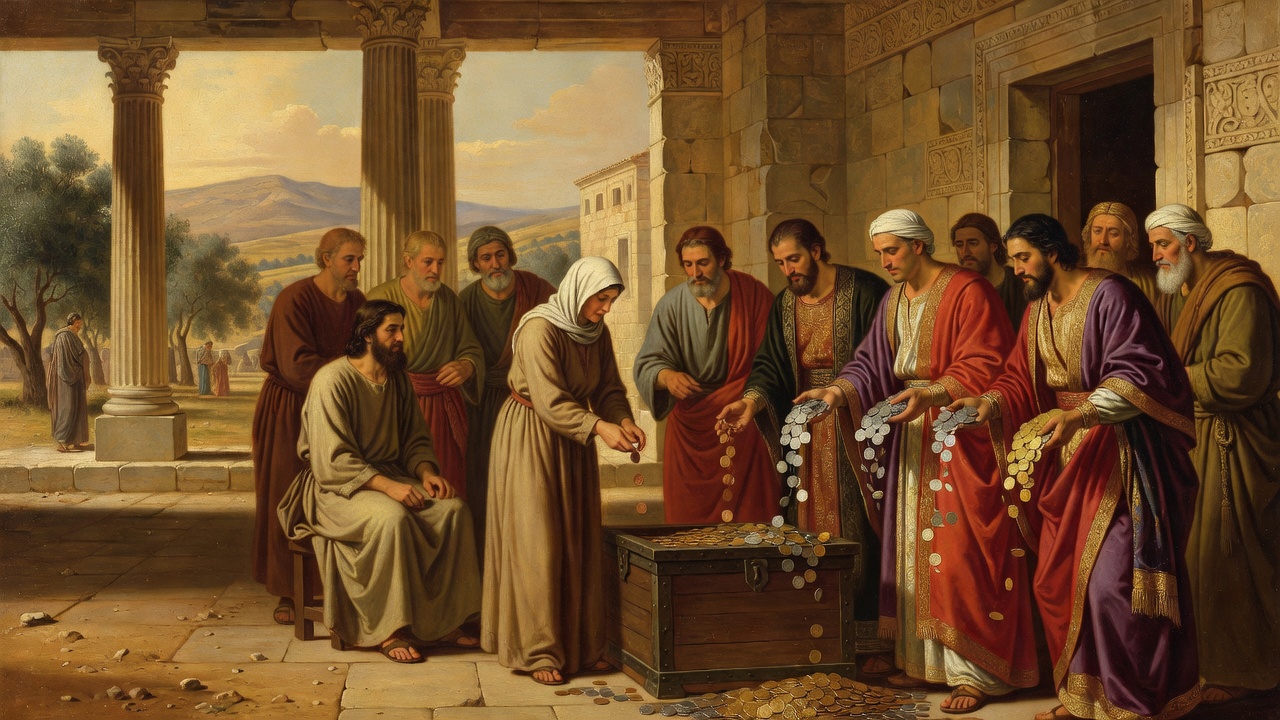
41Den Jeezas sidong rait kraas fahn di kalekshan baks da di templ. Ih mi-di wach how di peepl dehn mi-di jrap een dehn moni. Lata di rich man dehn put een big moni. 42Den wahn poa lee wido kohn ahn jrap een too wan sehn. 43Jeezas kaal ih disaipl dehn tu ahn, ahn tel dehn seh, “Ah di tel unu di chroot, dis poa wido put een moa dahn aala di ada peepl dehn. 44Aala dehn peepl gi owta di lat weh dehn ga. Bot eevn eena aala ih poanis, shee gi aal weh ih mi ga fi liv pan.”
Você sabia?
Debates no templo
- Os saduceus, que dizem não haver ressurreição, interrogam Jesus sobre sete irmãos e uma viúva, apelando ao que Moisés escreveu. Ele os remete à sarça ardente no Livro de Moisés, onde Deus diz: “Eu sou o Deus de Abraão, o Deus de Isaque e o Deus de Jacó”. Abraão, “pai de uma multidão”, era filho de Terá; Isaque era o único filho de Abraão com Sara; e Jacó era o segundo dos filhos gêmeos de Isaque e Rebeca.Fontes: o próprio texto bíblico · Abraham · Isaac · Jacob (Israel)
- Quando lhe perguntam qual é o mandamento mais importante, Jesus começa: “Ouve, ó Israel, o Senhor, nosso Deus, o Senhor é um”, e acrescenta: “Ama o teu próximo como a ti mesmo”. Israel é outro nome de Jacó, o segundo dos gêmeos de Isaque e Rebeca; o nome Jacó é explicado como aquele que segue nos calcanhares de outro, ou suplantador.Fontes: o próprio texto bíblico · Jacob (Israel)
- Ensinando nos pátios do templo, Jesus pergunta como os escribas podem dizer que o Cristo é o Filho de Davi, se o próprio Davi o chama de “Senhor”. Davi, cujo nome significa “Amado”, era o oitavo e mais novo filho de Jessé, cidadão de Belém, e sua primeira ocupação foi cuidar das ovelhas do pai nas terras altas de Judá.Fontes: o próprio texto bíblico · David
Notas escritas com auxílio de IA a partir de fontes abertas (Theographic Bible Metadata, CC BY-SA 4.0; Easton’s Bible Dictionary, domínio público) e revisadas antes de publicar.
Créditos e licença desta tradução
Di Nyoo Testiment eena Bileez Kriol
New Testament in Belize Kriol English (BH:bzj:Belize Kriol English)
copyright © 2012 Wycliffe Bible Translators, Inc.
Language: Bileez Kriol (Belize Kriol English)
Translation by: Wycliffe Bible Translators, Inc.
Copyright Information
© 2012, Wycliffe Bible Translators, Inc. All rights reserved.
This translation text is made available to you under the
terms of the Creative Commons License: Attribution-Noncommercial-No Derivative Works.
( http://creativecommons.org/licenses/by-nc-nd/3.0/ )
In addition, you have permission to port the text to different file formats, as long as you
do not change any of the text or punctuation of the Bible.
You may share, copy, distribute, transmit, and extract portions
or quotations from this work, provided that you include the above copyright
information:
You must give Attribution to the work.
You do not sell this work for a profit.
You do not make any derivative works that change any of the actual words or punctuation of the Scriptures.
Permissions beyond the scope of this license may be
available if you contact
us with your request.
The New Testament
in Belize Kriol English
© 2012, Wycliffe Bible Translators, Inc. All rights reserved.
This translation is made available to you under the terms of the
Creative Commons Attribution-Noncommercial-No Derivatives license 4.0.
You may share and redistribute this Bible translation or extracts from it in any format, provided that:
You include the above copyright and source information.
You do not sell this work for a profit.
You do not change any of the words or punctuation of the Scriptures.
Pictures included with Scriptures and other documents on this site are licensed just for use with those Scriptures and documents.
For other uses, please contact the respective copyright owners.
2022-12-21
Fonte: http://ebible.org/bzj/ · eBible.org