Apocalipse 6
Tte Pa̱'a̱li̱ Me' Skëköl tö Se' a̱ · Toque num versículo para ver as referências cruzadas.
Yëkkuö wörratule e' kkö̀ batsulewa̱ döka̱ kul e' batsée Obeja Pupula tö etk etk
1E' ukuöki̱ ta̱ ye' tö isué̱ tö Obeja Pupula tö yëkkuö wörratule e' kkö̀ batsulewa̱ döka̱ kul e' tsá̱ batsée. Eta̱ ì ttsë'ka döka̱ tkël, e' eköl ttö̀ ttséyö, e' ttö̀ darërëë we̱s alá blar es. Wé̱pa tso' ipatkërke e' panuk e' eköl a̱ ie' tö iché: “¡Be' yú!” 2Ye' wökéka̱ ta̱ kabaio saruru sué̱yö etö. Yi tkërka̱ iki̱, e' ulà a̱ shkame' àr, ñies ì tkekeka̱ wökir ki̱ iwà kkachoie tö ie' dör e̱' alökwak ese mène ie' a̱ et. Ie' mía̱ kí̱ e̱' alökka̱ ibolökpa ki̱.
3Mik Obeja Pupula tö yëkkuö kkö̀ batsulewa̱, e' skà batsée et, eta̱ ye' tö ittsé tö ì ttsë'ka döka̱ tkël, e' skà tö iché wé̱pa tso' ipatkërke e' panuk e' skà a̱: “¡Be' yú!” 4Eta̱ kabaio batsë dettsa̱. Yi tkërka̱ iki̱, e' a̱ ka̱wö mène se̱ne bë̀rë ñita̱ e' yö̀ttsa̱ ká̱ i' a̱ a̱s pë' ñì ttö̀wa̱. Ie' a̱ tabè bërie mène.
5Mik Obeja Pupula tö yëkkuö kkö̀ batsulewa̱, e' skà batsée et, i' ta̱ ide mañat, eta̱ ye' tö ittsé tö ì ttsë'ka döka̱ tkël, e' skà tö iché wé̱pa tso' ipatkërke e' panuk e' skà a̱: “¡Be' yú!” Ye' wökéka̱ eta̱ ye' tö kabaio dalolo sué̱ etö. Yi tkërka̱ iki̱, e' wa̱ íyi e̱s ma'wo̱ie dami iulà a̱. 6Ì ttsë'ka döka̱ tkël, e' shu̱a̱ ye' tö ttö̀ ttsé tö iché: “Harinachka kilo elka ë̀ e' to̱rdaë s'kaneblö̀ ká̱ et e' ské ekkë. Ñies cebada kilo mañalka to̱rdaë s'kaneblö̀ ká̱ et e' ské ekkë; erë olivo kié ena vino e' kë̀ sulu'wa̱rwa̱ be' tö.”
7Mik Obeja Pupula tö yëkkuö kkö̀ batsulewa̱, e' skà batsée et, i' ta̱ ide tkël, eta̱ ye' tö ittsé tö ì ttsë'ka döka̱ tkël, e' bata tö iché wé̱pa tso' ipatkërke e' panuk e' skà a̱: “¡Be' yú!” 8Ye' wökéka̱ eta̱ kabaio tskrittskris sué̱yö etö wër suluë. Yi tkërka̱ iki̱, e' kiè dör S'duö̀wa̱. E' itöki̱ eköl skà datse̱ e' kiè dör S'wimblu Ké̱. Ie'pa a̱ ka̱wö mène ká̱ ulitane wakpa e' mú blatèsö tkël tsi̱ní ta̱ e' et tsi̱ní e̱u̱kwa tabè wa, bli wa, duè wa ena iyiwak dör se'name ese wa.
9Mik Obeja Pupula tö yëkkuö kkö̀ batsulewa̱, e' skà batsée et, i' ta̱ ide ske̱l, eta̱ s'kötulewa̱ Skëköl ttè paka' ie'pa tö taninië e' kue̱ki̱, e'pa wimblupa sué̱yö ka̱' tso' íyi moka̱ Skëköl a̱ e' diki̱a̱. 10Ie'pa tso' ichök Skëköl a̱ a̱neule: “A Sa' Këköl, be' dör íyi ulitane tsa̱ta̱, be' dör batse'r, be' ttö̀ moki̱ë. ¿Dö̀ mik be' tö wé̱pa se̱rke dià íyök ki̱ tö sa' kötulur esepa dalë'ttsekerö? ¿Mik be' tö ie'pa wömekettsa̱ weinuk ì wamblë'rakitö sa' ki̱, e' nuí̱ skéie?” 11Eta̱ ie'pa wakpa bil ekkë e'pa a̱ datsi' saruru mène iè. Skëköl tö iché ie'pa a̱: “A' e̱núia̱ bërbër ë̀ dö̀ mik pë' tö a' male̱pa dör ye' kanè mésopa kianeia̱ ttèlur, e'pa ko̱s ttekeluria̱ we̱s a' kötulurakitö es eta̱. E'pa panúia̱ tsir.”
12Mik Obeja Pupula tö yëkkuö kkö̀ batsulewa̱, e' skà batsée et, i' ta̱ ide teröl, eta̱ í̱ tka darërëë. Diwö ttsenewa̱ mía̱ ttsettseë we̱s datsi' daloloë es. Si'wö mía̱ batsë we̱s pë́ es. 13Bëkwö darolone íyök ki̱ we̱s kalwö tkèttsa̱ siwa̱' tö mik ibitsi̱rke tai̱ë eta̱ es. 14Eta̱ ká̱ jaì, e' wörraté̱wa̱ we̱s yëkkuö wötrèwa̱sö es, kë̀ iwërta̱ia̱. Ka̱bata ulitane, dayë nane ulitane, e' ko̱s e̱' skélur bánet. 15Eta̱ ká̱ blúpa ko̱s, pë' tai̱ë ko̱s, ñippökwakpa wökirpa ko̱s, inuköl blúpa ko̱s, s'dalöiër ta̱' tai̱ë esepa ko̱s, ñies s'klöulewa̱ kanè mésoie, ñies kanè mésopa male̱pa, esepa ko̱s e̱' blélur ákuk a̱ ena ák blublu tso' ka̱bata a̱ ese diki̱a̱ e̱' tsa̱tkoie. 16Eta̱ ie'pa tö iché a̱neule ka̱bata a̱ ena ák blublu a̱: “¡Sa' blö́ a' diki̱a̱, sa' kkö'nú Skëköl tkër ikula' ki̱ ká̱ jaì a̱ e' yöki̱! Ñies Obeja Pupula kësik yöki̱ sa' kkö'nú. 17Ie'pa tö sulitane we'ikeraë sia̱rë e' ké̱wö detke, kë̀ yi tkö̀pashkar e' ulà a̱.”
Você sabia?
A Abertura dos Seis Selos
- Os primeiros quatro selos revelam quatro cavaleiros em cavalos branco, vermelho brilhante, preto e amarelo, convocados um a um pelos quatro seres viventes. Cada cavaleiro traz uma aflição distinta sobre a terra, desde a conquista e a retirada da paz até a fome generalizada, a peste e a morte.Fontes: o próprio texto bíblico
- O terceiro cavaleiro segura uma balança, acompanhado por uma proclamação que fixa o preço de uma medida de trigo ou três de cevada em um denário, refletindo uma grave escassez e racionamento de alimentos enquanto o azeite e o vinho são poupados.Fontes: o próprio texto bíblico
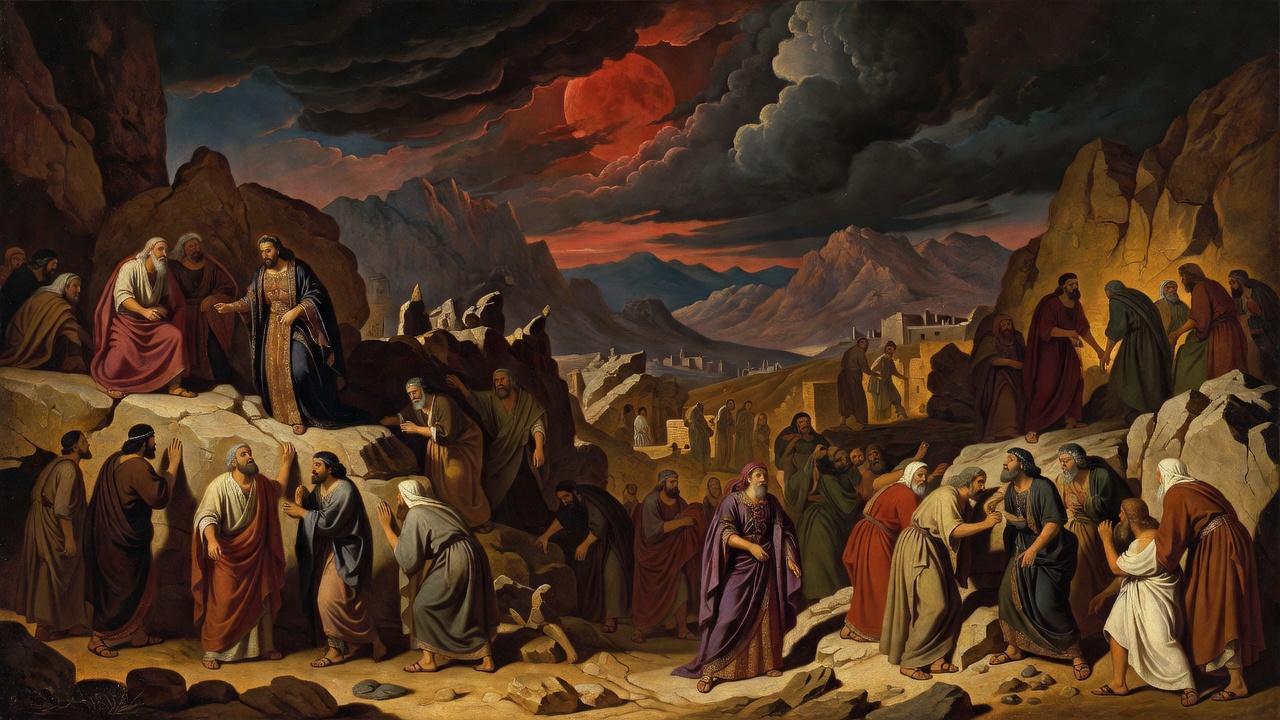
- Com a abertura do quinto e do sexto selos, o foco se volta para as almas dos mártires debaixo do altar e, em seguida, para imensas convulsões cósmicas e terrestres que levam pessoas de todas as classes sociais a se esconderem em cavernas nas montanhas.Fontes: o próprio texto bíblico
Notas escritas com auxílio de IA a partir de fontes abertas (Theographic Bible Metadata, CC BY-SA 4.0; Easton’s Bible Dictionary, domínio público) e revisadas antes de publicar.
Créditos e licença desta tradução
Tte Pa̱'a̱li̱ Me' Skëköl tö Se' a̱
New Testament and Shorter Old Testament in Bribri (CS:bzd:Bribri)
copyright © 2010 Wycliffe Bible Translators, Inc.
Language: Bribri
Translation by: Wycliffe Bible Translators, Inc.
Bribri
bzd
Costa Rica
Copyright Information
© 2010, Wycliffe Bible Translators, Inc. All rights reserved.
This translation text is made available to you under the
terms of the Creative Commons License: Attribution-Noncommercial-No Derivative Works.
( http://creativecommons.org/licenses/by-nc-nd/3.0/ )
In addition, you have permission to port the text to different file formats, as long as you
do not change any of the text or punctuation of the Bible.
You may share, copy, distribute, transmit, and extract portions
or quotations from this work, provided that you include the above copyright
information:
You must give Attribution to the work.
You do not sell this work for a profit.
You do not make any derivative works that change any of the actual words or punctuation of the Scriptures.
Permissions beyond the scope of this license may be
available if you contact
us with your request.
The New Testament and Shorter Old Testament
in Bribri
© 2010, Wycliffe Bible Translators, Inc. All rights reserved.
This translation is made available to you under the terms of the
Creative Commons Attribution-Noncommercial-No Derivatives license 4.0.
You may share and redistribute this Bible translation or extracts from it in any format, provided that:
You include the above copyright and source information.
You do not sell this work for a profit.
You do not change any of the words or punctuation of the Scriptures.
Pictures included with Scriptures and other documents on this site are licensed just for use with those Scriptures and documents.
For other uses, please contact the respective copyright owners.
2014-04-22
Fonte: http://ebible.org/bzdNTpo/ · eBible.org