Lucas 16
Handr Taara · Toque num versículo para ver as referências cruzadas.
Amaneraw jintso
1Ando aani Iyesus b́ danirwotssh hank'o bíeti, «Gaalets ash iko b́ mootse b́ detsts giz jamo bísh k'eezitu jints iko detsfe b́tesh. Ashuwots ‹N meyitsi jintsan n gizo bad'iye b́ badiyri› ett gaaltsmansh bo numi. 2Galetsmanwere jints man s'egiit ‹N jangosh t shishiruwan eebi b́naroni? Haniye okoon t mootse jints wotosh n falrawotse jinosh n dek'ts t gizonat k'ac'on taash aab t'ntsuwe› bíet. 3Jintsmanwere bí nibots hank'o ett b́ gawi, ‹aak'o t k'ale k'una k'aniti taasha? Goshosho ango deshatse, falratse, k'onoshowere taane b́ jiitsiti, 4Bete! taa t k'alituwo danfee, t jinf finanatse taan gishewor, bo moots taan bezit jaguwotsi kishde'na.›
5«Mann b́doonzatse giz gushts jamwotsi ik ikon s'egdekt, shintsosh ‹T doonzsh n dashetuwo gusho ambtse ni atse fa'oni?› ett bíaati. 6Bíwere ‹Bal kor zeyito gusho tiatse fa'e› bí et, jintsmanwere, ‹N faramtso wuliyo hambe kaari waa bede' balk'ats kora err guud'e› bíet. 7Gitlono s'eegdek't, ‹ni'atse fa'o gusho ambtse?› bí et. Bí were ‹Bal arw sndeye tiatse fa'oni› ett bíaaniy. Jints manuwere ‹Hambe nfaramats wuliyoni! habi gita err guud'e› bí et. 8B́ doonzwere amaneraw jintsman s'eko bek't bín b́údi. Manuwere Ik'i ashuwotsiyere datsatsi ashuwots bo datsatsi beyosh s'ek bowotoniye b́kitsiri.
Gizo niwuron koto b́geyiytuwok'o
9«Manshe datsanatsi gondon ko'iyets gizone jago kishde'ere etiruwe itsha, man it k'aliyale it gizo b́ s'uure kish basho it oror it jag manots dúre dúrosh bo beyiru mootse iten dek'etúne. 10Muk' keewwatse amanets asho een keewatsnowere amaneke b́wotiti, múk' keewatse amanerawonwere een keewatse amaneratse. 11Eshe datsnatsi gaalo k'eezosh amaneratste wotiyal arik wotts gaalatsnmo kone amanar itsh imeti? 12Ando k'osh ash gizatse amaneratste wotiyalmó itsh wotituwo detso kone itsh imeti?
13«Ash iko iknon git doonzwotssh keeweyo falratse, man b́wotiyalmo, iko shid'r ikoni b́shuneti, iko mangiyir iko gac'ituwe, mank'o Ik'onat gizonsh keeweyo falratste.»
14Ferisawiya eteefuwots giz shunk bowottsotse, Iyesus keewutsman shisht bí keewo bogac'i. 15Bímó hank'wa boosh bíet, «It it tooko ash shinatse kááw it wottsok'owa it ariyri, Ik'onmó it nibitstso danfee, ash shinatse mang detsts araat be'eyiruwo, Ik'i shinatse shit'eke.»
Nemonat mááts dek'i jangon
16Iyesus b́ keewmaanats dabt hank'o bíet, Nemonat nebiyiwots mas'afwots Gupfo Yohansok b́borfetsosh keewefera botesh, maniye hakono keeweyiruwo Ik'i mengsti misiraci jange, ash jamonwere mengst manits kindosh kup'at b́ finiri. 17Wotowa eree, Muse nemotse dab k'op' iku b t'afoniyere daronat datson bo besho ketefe. 18«B́ máátsu fakshr k'osh maatsu dek'etuw jamo gobetsiye. mank'o b́ kenihatse faksheets maatsu dek'etuwo gobetsi bwotiti.»
Gaalets ashonat tugretso Alazarn
19Manats dabt Iyesus hank'o etre, «Gizi shaawon keewets tahi biro tah dek'ts gaalets iko fa'e b́tesh, bíwere aaw aawon beyi sheengo b́befoni. 20Bíats jamó gaawu wottso Alazari eteetso t'oowo ando gaaletsman máá fengeshatse b́k'eefoni, 21T'owmanwere, gaaletsman mishi maratse fed'iru mishi fed'man moosh b́joolfo, kanwotswere waar b́ gawo bolep'efoni.
22«Maniyehako t'owman k'irb́wutsi, melakiwotswere Abraham ganok dek't boami, ando gaaletsman b́ k'irre dukeyi. 23Siolitsnowere b́ kic'efere, b́ tooko dambaan kááwdek't́ b́s'ilfere Abrahamnat b́ ganoke fa'o Alazari wokoon b́k'b́k'ri. 24B́ k'áárono eenshdek't hank'owa bíet, ‹Niho Abrahamo! oona neesha! taash maac'o keewowe! taw lalwanitsne aydek'at tkic'iruwotsene b́ kishi jaabo aatsots gufde'er ti albero bíak'itwok'o Alazari tmaants woshdyiwe!›
25«Abrahammó hank'owa bísh bíet, ‹T naayo, nee datsatse n kashon n beets dúron ay sheeng beyo daatsat n gene'útsok'o gawude'e, Alazarmo gond bek'owotse b́teshi, manshe hanoke bí and b́ genee'úwor nemon n kic'iri. 26Jamanatsnmó itnat noon dagotse gohi eeno fa'ee, mansh nomande it maants, it maantse nomand kímo falituwo konuwor aaliye.› 27Galetsonwere hank'o bíet, Nihono, bere oona Alazari tnihi mook n woshituwok'o neen k'oniruwe, 28Oke uts eshuwo detsfe, ando manots kic'anok kindosh bowarawok'o amr boosh keewwe. 29Abrahammo ‹Musenat nebiyiwots mas'afwots boosh fa'ane, boon k'ewune› bí eti. 30Ash gaaletsmanuwere ‹Woteratse! niho Abrahamo, ik asho k'irotse tuur amr b́keewink'e goyinar nandrone etank'ne› bí et. 31Abrahamuwere ‹Musenat nebiywots mas'fwots bo etiruwo k'ewatsno wotiyalmá ik asho k'irotse tuur b́keewiyalor amaneratsne› bí eti.»
Você sabia?
Riqueza, dois senhores e Lázaro
- Nas palavras de Jesus sobre o rico e Lázaro, o rico clama: 'Pai Abraão', e Abraão responde: 'Filho'. O Dicionário Bíblico de Easton (1897) explica o nome Abraão como 'Pai de uma multidão' e o descreve como herdeiro das promessas.Fontes: o próprio texto bíblico · Abraham
- Falando aos fariseus, que zombavam dele, Jesus diz que a Lei e os Profetas foram proclamados até João, e que, desde então, o evangelho do reino de Deus está sendo pregado. O Dicionário Bíblico de Easton (1897) chama João Batista de 'precursor de nosso Senhor', afirma que sua missão foi objeto de profecia, inclusive Isaías 40:3 e Malaquias 3:1, e declara que seu nascimento ocorreu seis meses antes do de Jesus.Fontes: o próprio texto bíblico · John the Baptist
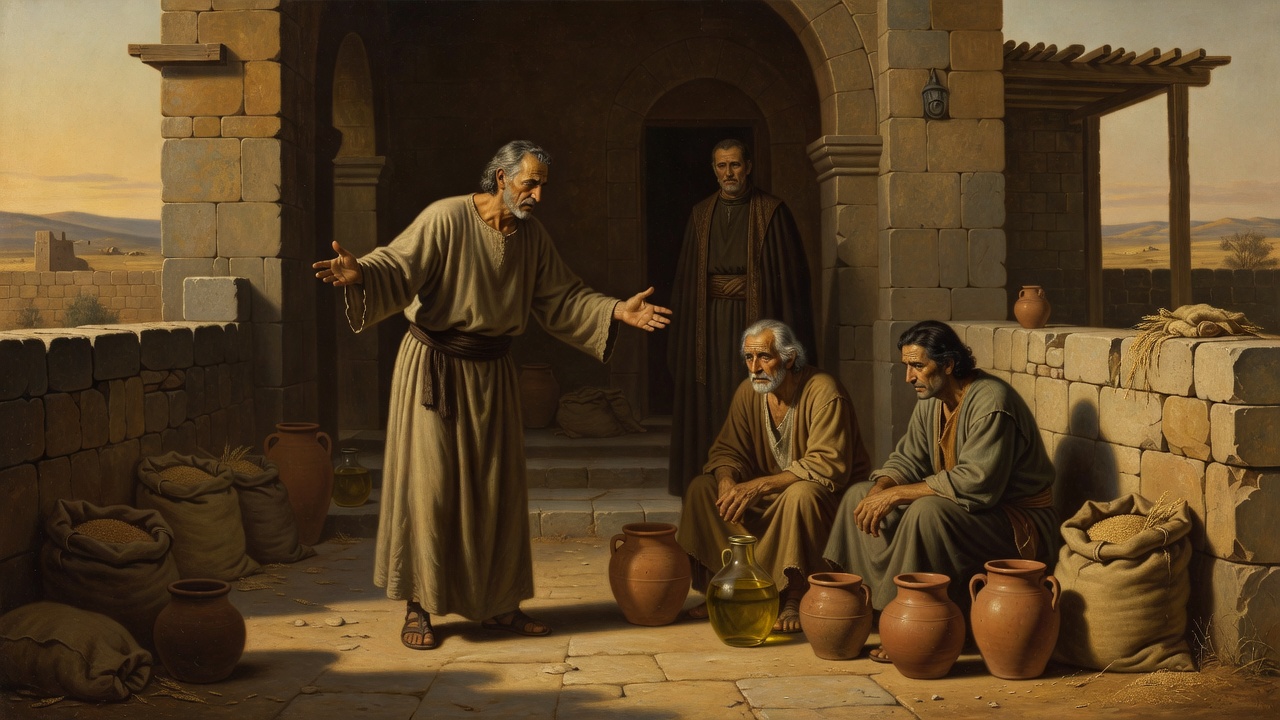
- Um administrador acusado de desperdiçar os bens de seu senhor recebe ordem de prestar contas e deixar o cargo. Ele faz os devedores reescreverem suas contas, reduzindo cem medidas de azeite a cinquenta e cem medidas de trigo a oitenta, e o senhor elogia o administrador desonesto porque havia agido com astúcia. Jesus diz então que nenhum servo pode servir a dois senhores, e que ninguém pode servir ao mesmo tempo a Deus e ao dinheiro.Fontes: o próprio texto bíblico
Notas escritas com auxílio de IA a partir de fontes abertas (Theographic Bible Metadata, CC BY-SA 4.0; Easton’s Bible Dictionary, domínio público) e revisadas antes de publicar.
Créditos e licença desta tradução
Handr Taara
The New Testament in the Borna Language of Ethiopia (Handr Taara)
copyright © 2018 The Word for the World International
Language: Borni (Borna)
Contributor: The Word for the World Southern Africa
Handr Taara
The New Testament in Borna in Latin version
The Word for the World
This translation is made available to you under the terms of the
Creative Commons Attribution license 4.0.
You may share and redistribute this Bible translation or extracts from it in any format, provided that:
You include the above copyright and source information.
If you make any changes to the text, you must indicate that you did so in a way that makes it clear that the original licensor is not necessarily endorsing your changes.
Pictures included with Scriptures and other documents on this site are licensed just for use with those Scriptures and documents.
For other uses, please contact the respective copyright owners.
Note that in addition to the rules above, revising and adapting God's Word involves a great responsibility to be true to God's Word. See Revelation 22:18-19.
2023-04-08
Fonte: http://ebible.org/bwo/ · eBible.org