Atos 19
Handr Taara · Toque num versículo para ver as referências cruzadas.
P'awlos Efesonitse
1Ap'los K'orontositse b́teshor P'awlos danbani datson beshat Efeson maants b́bodi, manokno muk' Krstaniyotsi daatsdek't 2«It amanor S'ayn shayiro dek'rteya b́teshi?» ett bíaati. Bowere «De'atsone, S'ayn shayiro b́beyonoru dab shish danaak noone» ett bo aani.
3P'awlosu «Eshe aawu naari gúpe it gúpetsoni?» bí eti. Bowere «Yohanis gúponiye» boeti.
4P'awloswere «Yohans guponiyere naandrone etosh k'aleke, ash ashosh b́keewutsonuwere ‹Taayere il wetuwonee amanore› etfetstni b́tesh, bíwere Iyesusiye» etreboosha.
5Man boshishtsok'on Doonzo Iyesus shútson bogupeyi. 6P'awlosu b́ kisho boats b́gedor S'ayin shayiro boats b́ od'eehandr noon keewon bokeeweyi, bek'ono keewo dek'tbotuwi. 7Ash jamwotswere tatse gitne boteshi. 8P'awlos ayhudiyots Ik' k'oni mook amt keez shashok'owosh Ik' mengst jangosh mooshfetst ash ashuwotssh kish keewut ááwu shuk'ona b́ danifoni. 9Ik ikuwotsmó maac' kup'o wotat doonzo weerindo ashuwots shinatse c'ashfetst amaneratsone boettsosh boatse k'azb́woki, amantsuwots boaali T'iranosi eteef maa eenok dek'amt aawu aawon boon b́danifoni. 10P'awlos hank'o b́k'al git natok'osha, manoor Isiy datsatse beyiru ayhudiyotsnat Ik' ashwoterawwotsn doonzo aap'o shisho bofali.
Ik'o P'awlos kishon b́fiinst adits keewo
11Ik'o ayidek't adits keewu wotts milikituwotsi P'awlos kishon b́finefoni. 12Manatse tuutson P'awlos atsats bodts tahonat marabon dek'amt shodetsuwotsats bobetsor boshodotse bokashefoni, kim shayirwotswere boyitse bokeshfoni. 13Fo'erawono ashaatse kishfetst ikoke tuut ikok guuriru Ayhudi ik ikuwots «P'awlos b́ nabiruwo doonzo Iyesus shútson it kesheetuwok'o iti azazerone» eton fo'erawo ashaatse kishosh bo etfoni. 14Ayhudiwots kahinwotsatsi naasho wottso Ask'ewu nana'a shawatuwotswere mank'owa bok'alfo.
15Ernmó kim shayiro «Iyesusi danfee! P'awlosnor danfee! Eshe it konots itne?» bí eti.
16Kim shayiro bíatse s'eents ash ikonwere t'oolat gúúk' dek'on boats b́kup'i, bonowere da'ab́dek'i, gaawutnuwere araatswtsaat meyitse giifat bokeshi. 17Keewumanuwere Efesonitse beyiru ayhudiwotsnat Ik' ash woterawotsoke b́ shishetsotse jametso shatb́wtsi, Doonzo Iyesus shútsonowere ayi eenb́wutsi. 18Amantsuwotsitse ayuwotsuwere bogond fino kish keewut naandrone err bowaafoni. 19Atetswotswere bodaniyi mas'aafwotsi kakudek't ash ashi shinatse mitsbok'ri, mas'afmanoots k'awuntsonuwere taanere balk'ats kum ambari katso wotatni b́daatsiyi. 20Mank'oon doonzo keewo ayidek't gawunfetst da'afera bí amfo b́teshi.
Efesonitse dimbiro b́tuutsok'o
21Jaman b́wotiyakon P'awlos Mek'edonitsnat Akayiyiweeron beshat Iyerusalem maants amoosh b́gitsoon gawuk'rat «Manok t bodiyakon Rom maants amo taash geyife» bíetí. 22Mann Ik'i fino finiru ashuwotsitse gitetsuwotsi, T'imotiwosnat Erast'osn Mek'edoni maants woshat bí b́tookon Isiyi datsatse muk' aawosh b́teshi.
23Manoor doonzo weeri jangosh Efesonitse dimbiro tuub́wtsi. 24Dimet'rosi eteef ambaar wos'if iko Art'emisn ik' maa aro ambaron doozt ambaar wos'iyiruwotssh ay oot'o b́daatsifoni. 25Mansh ashaan ambaar wos'iyiruwotsnat bo fini naari fin detsts k'osh ashuwtsi kakudek't boosh hank'o bí eti «It ashuwotso! Noo gaalo nodaatsir finan finat b́wottsok'o danfte, 26P'awlosan ‹Ash kishon dozets aranots Izar Izewerotsiyaliye› ett Efeson s'uzitse b́woterawo muk' datsuniyere okoon Isiyi dats jamatse awuk'o ayts ashonton keweek'rat bí amanitsok'o it it tookon bek'aat it shishtsoniye. 27Eshe hank'on nofino b́ gac'ewoniye, manmec'ro b́woterawon Isiyotsnat dats jamatse ash jamo bin b́ ik'yiru een izar izewer Art'emis Ik'i moo dats baashon b́ ooroniye, bi een wotonwere b́wonewoniyee.»
28Ashuwotswere man boshishtsk'on fayat, «Efesontsu Art'emisiye eeniye!» etfetst bokuhi. 29Kitunuwere jamon shek'e bwutsi, ashuwotswere Mek'odoni datsatse shuwets P'awlosnton tohaat sha'iru b́ tooh gituwots Gayyosnat Arst'rokosn detsdek't geetsfere ash ashuwots bokoeyiruwok bowos'i. 30P'awloswere ashuwotsok amoosh geyatni b́tesh, b́ danifuwotsmó bíamawok'o bobazi. 31Isiy datsatsi naashuwotsitswere b́shuntsuwotsitsi ik ikuwotsi P'awlosok asho woshat «Ashuwots ko'eyiruwok amr n be'erawok'owa» ett bok'oni. 32Ashuwots dagotse wac'ro b́teshtsotse aywots eegosh bokoetsok'o dab danatsno b́teshi, man jangosh iko ik keewo keewt b́kuheere k'oshonuwere k'osh keewo keewut b́kuhiri. 33Ik ik Ayhudi jirwots Iskndiri eteets asho ash dagotsere gifnidek't shinats bot'ntsi, ashuwotsitse ik ikuwots sheengshde'ere b́moshetuwok'o boizi, Iskendiruwere ashuwots s'k boetetuwok'o b́kishon kitst bín kishit keewosh k'anb́dek'i. 34Ernmó Iskendr Ayhudi b́wotok'o ash jamwots bodantsok'on «Efesontsu Art'emis eeniye!» et fetst git sa'atok'osh ik k'aaron bokuhi.
35B́s'uwatse kitutsi guut'f naash eeno, ash asho s'k boaayituwok'o wosht hank'o bíeti, «It Efeson ashuwotso! Efeson kitutse beyiruwots, eenu Art'emis ik' moonat darotse oot'ts bí'aro bokotetuwok'owo jametsuwotsoke daneke. 36Han haalitwo konuwor bíaaltsotse s'k it eteetuwok'o, kááronowere gond keewo k'aloniyere it atso kor itdek'tuwok'o geyife. 37Ik'i moo c'ayawotsnat noko Izar Izeweri c'ayawu gond keewono keewuraw ashuwotsi hanok dek'at waartee. 38Dimet'rosnat bínton fa'a k'is' k'is'fuwotsi s'aamiru asho b́beyalowere angsh imet aawwots fa'ane, naashuwotsuwere fa'ane, manoke mooynee. 39K'osho it geyiru keewo b́beyaalmó nemon k'oorosh beyiruwotsn s'iiletuwe. 40Maniyere okoonmó hambets k'aleets keewo ‹Dimbiro tuuzre› err no s'aamirawok'owa shatituwe, ‹Baad'eyan eegatsneya b́tuwi› err noon aatewor no aaniyituwo deshatsone» 41Manowere ett kakuwets ashuwots bobad'ituwok'o b́woshi.
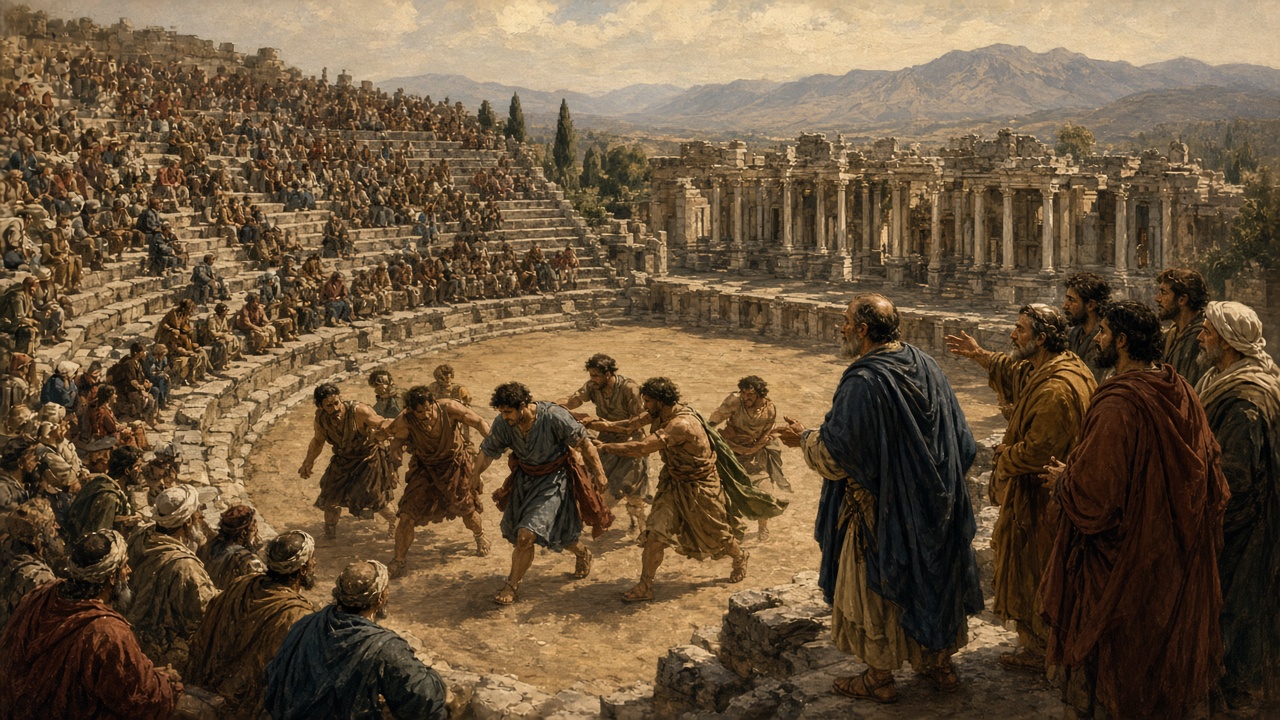
Você sabia?
Paulo, o Caminho e Ártemis em Éfeso
- Éfeso era a capital da Ásia proconsular, a província romana que abrangia a parte ocidental da Ásia Menor, e nos tempos romanos ostentava o título de primeira e maior metrópole da Ásia. A cidade distinguia-se pelo templo de Ártemis, a quem os romanos chamavam Diana, construído fora das muralhas e contado entre as sete maravilhas do mundo antigo. No centro ficava uma imagem antiga da deusa, da qual se dizia que tinha caído do céu.Fontes: Ephesus · Diana · Asia
- Demétrio, um ourives de Éfeso, fazia santuários de prata de Ártemis, modelos do templo ou da estátua da deusa, que se vendiam com facilidade aos visitantes vindos de toda a Ásia Menor. Atos diz que esse comércio era a fonte de prosperidade dos artesãos e que Demétrio os alertou sobre o perigo para o negócio e para a honra do templo de Ártemis, a deusa que, segundo ele, era adorada em toda a província da Ásia e no mundo inteiro.Fontes: Demetrius · o próprio texto bíblico
- A multidão correu para o teatro de Éfeso, que o Dicionário Bíblico de Easton (1897) descreve como o maior do mundo, a céu aberto e capaz de abrigar 50.000 espectadores. Amigos de Paulo entre os chefes da Ásia, cidadãos ricos eleitos a cada ano para presidir os jogos e as festas religiosas de suas cidades, pediram que ele não entrasse. O escrivão da cidade lembrou então à assembleia que Éfeso era guardiã do templo da grande Ártemis e da imagem que, segundo se dizia, caíra do céu.Fontes: Ephesus · Asia · o próprio texto bíblico
Notas escritas com auxílio de IA a partir de fontes abertas (Theographic Bible Metadata, CC BY-SA 4.0; Easton’s Bible Dictionary, domínio público) e revisadas antes de publicar.
Lugares deste capítulo
- Corinth · 37.906, 22.879 · versículo 1
- Ephesus · 37.939, 27.341 · versículos 1, 17, 23, 26, 35
- Asia · 38.400, 28.300 · versículos 10, 22, 26, 27, 31
- Achaia · 38.720, 22.540 · versículo 21
- Jerusalem · 31.777, 35.234 · versículo 21
- Macedonia · 41.600, 22.540 · versículos 21, 22, 29
- Rome · 41.892, 12.485 · versículos 21, 40
Só aparecem lugares com identificação de alta confiança (90% ou mais segundo as fontes acadêmicas reunidas pelo OpenBible). Mapa da época: DARE (Digital Atlas of the Roman Empire), CC BY 4.0; mapa atual: © colaboradores do OpenStreetMap; lugares: OpenBible.info (CC BY 4.0).
Créditos e licença desta tradução
Handr Taara
The New Testament in the Borna Language of Ethiopia (Handr Taara)
copyright © 2018 The Word for the World International
Language: Borni (Borna)
Contributor: The Word for the World Southern Africa
Handr Taara
The New Testament in Borna in Latin version
The Word for the World
This translation is made available to you under the terms of the
Creative Commons Attribution license 4.0.
You may share and redistribute this Bible translation or extracts from it in any format, provided that:
You include the above copyright and source information.
If you make any changes to the text, you must indicate that you did so in a way that makes it clear that the original licensor is not necessarily endorsing your changes.
Pictures included with Scriptures and other documents on this site are licensed just for use with those Scriptures and documents.
For other uses, please contact the respective copyright owners.
Note that in addition to the rules above, revising and adapting God's Word involves a great responsibility to be true to God's Word. See Revelation 22:18-19.
2023-04-08
Fonte: http://ebible.org/bwo/ · eBible.org