Atos 15
Boga New Testament Portion · Toque num versículo para ver as referências cruzadas.
Yarandǝ'ichǝhi a Urshelima
1Ɓak funǝ nofcha a Yahudiya tǝ Antakiya, naknda sakanda fa tǝrmbandǝ har, ndatwa: "Manga tǝ heshangfichǝkuni nda i mbutǝ ɗǝssǝta Musa wa, nguni mbǝs hǝrǝktǝwa." 2Nga hwan halǝ'indǝ yimka thlerǝ nda Bulus tǝ Barnabas tǝ nofchiyuwa, harkǝ fichǝ nda Bulus tǝ Barnabas tǝ funǝ fa tǝrmbanda kǝ ɗǝnda Urshelima kǝ ɓǝɗa fathlǝncha tǝ pǝktecha, kǝthlǝm kǝ tausangndǝ shuninihiyu. 3Nofchǝ thlǝntǝfichǝyu, pǝɗangndǝ tǝ hurhuri Finikiya tǝ Samariya, naknda mbu tǝɓǝrta punofchihi kǝ mbǝɗa Fara, fǝrang ndǝ ɓǝnfata fa tǝrmbandǝ kaǝn. 4Kǝ sa'atǝnda Urshelima, fa tǝrmbanda tǝ fathlǝncha, tǝ pǝktecha sangndǝ marapa kanda, kandang paɗ mbukǝndǝ uf i sǝt Farǝ tǝ mbǝɗengnanda.
5Funǝ fafǝrkitsi naka hur mbanda Farisiyawecha, thla'akǝnda ndankndǝwa: "Sokkǝn waat kǝ heshangfichǝ punofcha, paɗ kǝ ɗǝffichǝ kanda kǝ kǝsndǝ kussa Musa har."
6Fathlǝncha tǝ pǝktecha fa tǝrmbanda ngomkǝndǝhi, kǝthlem kǝ tausangndǝ shuninihiyu. 7Ɗiffitǝ shuni shiwuntǝnda ɗarkǝn kaǝn, thlaakǝ Bitrus kit ndangna kandǝwa: "Hwanmancha shinuniwa thlata tǝrkakǝn, teɗ Farǝ nja hurnuni ndatwa, tǝmbǝɗengnǝ nat punofcha ɓǝs kusheng shunda kǝ fǝrndǝkitsi. 8Fara le sǝnkǝ hanndǝkiketa cheɗkǝwa a thliiɗtǝ kanda tǝ mba fǝrra Chiɗchiɗ tǝ Shemeɗa kanda, nda i fǝrra ndǝnakani. 9Paɗ cheɗutǝ sǝmsǝmchita thlerǝnanda tǝ kaniwa, kǝ sapaɗǝn hanɗǝkikechengnandaɗi tǝɓǝɗa fǝrkit. 10Kǝthlem ndǝkǝn, mǝsǝk natuni kikeɗandǝ Fara, tǝmbǝɗa ɗǝffa rǝfta kimshechi'ena ɓur, le nguchit shinchinǝm tǝkǝmna mbǝlla tǝrta? 11Paɗ firǝm kitwa, nakma mbǝs hǝrǝktǝ tǝ mbǝɗa kafata Lǝmwandǝ Yǝso, nda i mbǝstǝnda." 12Uf nofchi ngomkǝhi ngaskǝndǝ ɓa, naknda kathlǝmmata nda Barnabas tǝ Bulus, nak nda mbu alchiɗi fǝrandǝ Fara kanda, kǝ sǝndǝ ǝnat pǝɗandǝ nofchǝ fa, tǝ ǝnat sheka'inda a hur punofcha. 13Ɗiffitǝ mweshandǝ shundǝngnanda, ngǝrkǝ Yakubu si tǝ ndakǝnwa: "Hwanmancha sǝkam nji. 14Mbwa'a Siman Bitrussa kǝm laɗi lat Fara ɓata mbǝɗa punofcha, paɗ hertǝ funǝharra hurnanda kǝthlǝm thlǝmkǝn. 15Leya ɓakna soktǝ keeke tǝ shunda tapǝnecha, nda i yarandǝ fichihi tǝndatwa,
16'Ɗiffitǝ ndǝkǝn ni ngǝr ɓata
tǝpaɗ ni ngǝr tinandǝ hura'a Dauda le hǝmkǝhi.
Kǝ ngǝri tinandǝ thlarǝ'enna kwarkǝn kǝnan kit.
17Tahhǝt nofchi nat katnji, njang Lǝmwanda,
nat tǝ punofchǝ la atfichǝ tǝ thlimna,
ndat Lǝmwanda le sǝk i'chiya.
18Sǝntǝ fichǝ kǝ soh.
19"Kǝthlǝm ɗǝkǝn a kǝlandengna, kamusǝ kǝ thla'am hur'inda punofchi naka tǝɓǝrtǝhi kǝ ɓǝɗa Farǝwa. 20Makǝ yarangma kandǝsi ndatwa, kǝ malangndǝ ɗǝsǝmta ɗǝhacha. Mǝsǝmindǝ chaɗnguwa, mǝsindǝ fǝllawichitwa, paɗ mǝ sǝmindǝ i ɓekrandǝfichǝ mɓurat'enwa. 21Kǝthlǝm hur soh, a thlet hǝmchǝ somsomǝn fa ɓassǝsi tǝ ɗelwercha Musa, paɗ la changngandǝ fichǝ kanda chika yen farǝ yipta Yahudawecha, a kǝtǝn hwacha ɓeshfichǝ kussa Musa, a hur chikayen hǝmta i hurechǝ terchin, tǝpaɗ la changangficha isǝka farǝ yipta Yahudawecha, a kǝtǝn humchengnanda.
Thlǝn fa Yarandǝ Ichǝhi Yarata kǝ Ɓǝɗa Punofchi Fǝrkǝkit
22Fathlenchǝkǝn tǝ pǝktecha, nat tǝ fa tǝrmbanda kǝllangndǝwa ndiichinsi, kǝ taɗɗǝ nofchihar a hurnanda, kǝ thlǝnndǝ kanda Antakiya tǝ Bulus tǝ Barnabas, fichile taɗtǝnda nda Sila tǝ Yahuda lela atfichǝndǝwa Barsaba. Kandangti naka fambanicha fafǝrkit. 23Fǝrangndǝ yarat ɗelwera kanda, kǝ ɗangnda kanda le naka ndatwa: "Kanang hwammanchǝnuni,
Fathlǝncha tǝ fambanicha, kǝmbǝɗa hwammancha fichile naka punofcha, hur Antakiya tǝ Suriya tǝ Kilikiya,
Ndat'ǝn kaǝn. 24A shikani wa nofchisi thlaaka hurnani, mbǝɗya thla'andǝ hur inchengnuni tǝ shuwuncha. Chika sokkǝn thlǝnwani kandǝwa, 25Hwimanihi yaraɗanihi ndiɗchinsi kǝ taɗani nofchihara hurnani, kǝ thlǝnani kanda mbǝɗengnuni, tǝ kaa shikechǝnǝm Barnabas tǝ Bulus. 26Nofchiya tepa fǝrndǝ shisshingchengnanda, kǝthlem thlǝm Lǝmwandengnǝm Yǝso Kǝrǝsti. 27Kǝthlem ndǝkǝn thlinnani Yahuda tǝ Silas, kandang tǝ inchengnanda nanda mbwa'a nda kuni tǝ miya, witǝ ǝn'ǝrta tǝ i natani yarata. 28Keekesi mbǝɗa Shemeɗ Chiɗchiɗ, tǝ kanang neɗɗaniwa ndiɗchinsi, mǝ ɗǝfaɗani kapat lǝkta kuni'inwa kǝ sherangka ichi sokkǝ waatwa: 29Kǝ lenganguni ichihi thlithlandǝficha ɗǝhacha, tǝ i'sǝka thluwa ɗǝhǝrǝmtǝ mǝrkǝ nga fwarsafǝwa, tǝ i'sǝka thluwa ɗǝhǝrǝmi ɓekrandǝfichǝ ɓurat'en. Tǝpaɗ mǝ siɗuni fǝllawichitwa. Ma hirmuni ichini haryu, nuni sǝt ichǝ ndiichin. Kǝ sokuni ngwalngwal."
30Kǝ thlǝntǝfichǝkanda, pǝɗak ndǝ hai kǝ Antakiya, ngommangndǝ fa tǝrmbanda, fǝrangndǝ yarat ɗelwer tǝkǝna kanda. 31Kǝ changngandǝnda sǝkndǝ mbǝnfata, kǝthlǝm alchiɗi chekandǝnda kanda. 32Yahuda tǝ Silas kandangti naka tapǝnechǝ paɗ, shunangndǝ kandǝ ka'ǝn, paɗ chekangndǝ alchita hwammancha, tǝ shiwunchǝ oi. 33Ɗiffitǝ hangmuncha mbǝnniyu, malkǝndǝ kandǝhi ngwalngwal, ngǝrandǝ'ina mbǝɗa fǝchile thlǝnkǝ kanda. 34Kǝllang Silaswa keekesi, mǝllan kǝ sokka mbǝnniyu. 35Bulus tǝ Barnabas tǝngkǝnda hur Antakiya, naknda sakandaɗi tǝ ɓassǝ shunda Lǝmwanda, tǝ nofchǝterchin paɗ.
Bulus tǝ Barnabas Shekndǝhi
36Ɗiffitǝ hanmuncha, Bulus ndangna Barnabas wa: "ngǝramǝn'in ɗǝmma kǝlandǝ hwanmancha hur chikayen hǝmta mbichi ɓastǝm shunda Lǝmwanda, tǝpaɗ kǝnǝm ndu nakndǝ kǝni." 37Barnabas yahkǝnsi kǝ pǝdandǝ ɓweet tǝ Yohanna, lǝ atfichǝwa Markus. 38Bulus yaraǝnhi kamusuwa kǝ pǝɗandǝ tǝle saktǝndǝhi a hur Famfiliya, tǝpaɗ chertǝn ɗǝta mbet tortǝkandǝyuwa. 39Mbenniyu thla'akǝ ɓǝɓi somsommǝnchitta hanɗǝkiketa thlerǝnanda, kǝthlǝm ndǝkǝn sakkǝndǝhi tǝ ndani, Barnabas tǝrkǝn Markus, yimkǝnda kombawal pǝɗaknda Sayifurus. 40Bulus taɗkǝn Silas, ɗiffitǝ fǝri fǝrtǝ hwanmanchǝ kanda, ƙǝ kafata Lǝmwanda pǝɗanda. 41Pǝɗak Bulus tǝhur hachahai Suriya tǝ Kilikiya, nakna cheka alchita kanda kǝtǝn hwachikǝn.
Você sabia?
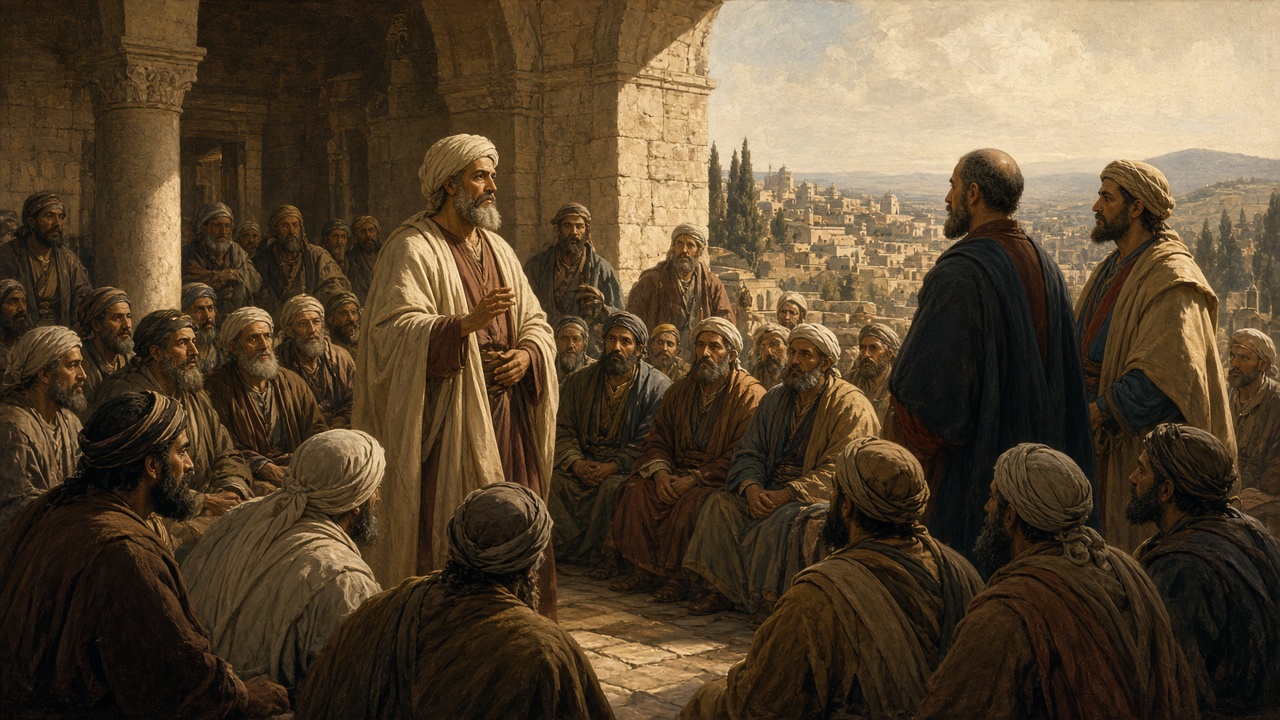
O concílio sobre os crentes gentios
- A controvérsia começou em Antioquia, às margens do Orontes, cerca de trezentas milhas ao norte de Jerusalém, cidade que então ocupava o terceiro lugar entre as cidades do Império Romano, depois de Roma e Alexandria. A caminho do concílio, Paulo e Barnabé passaram pela Fenícia, uma faixa litorânea de cerca de cento e vinte milhas, e pela Samaria. Uma nota cronológica data o Concílio de Jerusalém em 46 d.C.Fontes: Antioch (Syria) · Phenicia · o próprio texto bíblico · Jerusalem Council
- O Easton's Bible Dictionary (1897) afirma que Tiago, a quem chama de irmão ou parente próximo de Jesus, dirigia a igreja em Jerusalém e presidiu o concílio sobre os gentios. A carta que se seguiu foi endereçada aos crentes gentios em Antioquia, na Síria e na Cilícia. A Cilícia, província de origem de Paulo e província marítima romana no sudeste da Ásia Menor desde 67 a.C., incluía sua cidade natal, Tarso.Fontes: James (Brother of Jesus) · o próprio texto bíblico · Cilicia · Paul
- Judas, chamado Barsabás, e Silas, também conhecido como Silvano, eram profetas e homens de destaque da igreja de Jerusalém, enviados para confirmar pessoalmente a decisão do concílio. Um desentendimento posterior e acirrado por causa de João Marcos, primo de Barnabé, separou os dois missionários: Barnabé levou Marcos e embarcou para Chipre, enquanto Paulo escolheu Silas. Uma nota cronológica data essa separação em 47 d.C.Fontes: o próprio texto bíblico · Silas · John Mark · Paul and Barnabas part ways
Notas escritas com auxílio de IA a partir de fontes abertas (Theographic Bible Metadata, CC BY-SA 4.0; Easton’s Bible Dictionary, domínio público) e revisadas antes de publicar.
Lugares deste capítulo
- Antioch · Hoje: Antioch on the Orontes · 36.227, 36.172 · versículos 1, 22, 23, 30, 35
- Judea · Hoje: Judea 1 · 31.777, 35.234 · versículo 1
- Jerusalem · 31.777, 35.234 · versículos 2, 3, 4, 22, 23, 33
- Phoenicia · 33.271, 35.196 · versículo 3
- Samaria · Hoje: Samaria 2 · 32.276, 35.195 · versículo 3
- Cilicia · 36.913, 34.892 · versículos 23, 41
- Syria · Hoje: Syria 2 · 33.511, 36.306 · versículos 23, 41
- Pamphylia · 37.000, 31.000 · versículo 38
- Cyprus · 35.000, 33.000 · versículo 39
Só aparecem lugares com identificação de alta confiança (90% ou mais segundo as fontes acadêmicas reunidas pelo OpenBible). Mapa da época: DARE (Digital Atlas of the Roman Empire), CC BY 4.0; mapa atual: © colaboradores do OpenStreetMap; lugares: OpenBible.info (CC BY 4.0).
Créditos e licença desta tradução
Boga New Testament Portion
Portions of the New Testament in the Boga language of Nigeria
copyright © 2023 The Seed Company in collaboration with Language Developecs and Bible Translators Association
Language: (Boga)
Contributor: Language Developers and Bible Translators
This translation is made available to you under the terms of the
Creative Commons Attribution Share-Alike license 4.0.
You have permission to share and redistribute this Bible translation in any format and to make reasonable revisions and adaptations of this translation, provided that:
You include the above copyright and source information.
If you make any changes to the text, you must indicate that you did so in a way that makes it clear that the original licensor is not necessarily endorsing your changes.
If you redistribute this text, you must distribute your contributions under the same license as the original.
Pictures included with Scriptures and other documents on this site are licensed just for use with those Scriptures and documents.
For other uses, please contact the respective copyright owners.
Note that in addition to the rules above, revising and adapting God's Word involves a great responsibility to be true to God's Word. See Revelation 22:18-19.
2025-07-02
Fonte: http://ebible.org/bvw/ · eBible.org