Salmos 144
Luda yã takada kↄ̃n Bokobaru yão · Toque num versículo para ver as referências cruzadas.
Aduakɛna mìsina yã musu
Dauda lɛ̀.
1Aubarikadeen Dii ma gbɛ̀si ũ,
è zĩ̀kana dadamɛ,
è ma ↄↄ tòto kɛ zĩ̀kana yãnzi.
2Àmbe ma utɛkii ũ, è gbɛ̃kɛɛ kɛmɛ,
à dɛ ma zɛki gbãaa ũ, è ma mì sí.
À dɛ ma sɛngbango ũ kɛ̀ mɛɛ̀ nazi,
è tó boriinↄ mì siɛmɛ.
3Dii, bↄ́n gbɛ̃ntee ũ
kɛ̀ à yã ègↄ̃ dↄnguu?
Bↄ́n à ũ kɛ̀ nɛɛ̀ làakari dↄa?
4Gbɛ̃ntee dɛ lán kàsa kpíi bàmɛ,
à wɛ̃̀ndi è gɛ̃tɛ lán ↄra bà.
5Dii, ǹ musu naɛ ǹ pita,
ǹ ↄ kɛ kpiiinↄa lɛ aↄ̃ tɛ́sukpɛ bↄ.
6Ǹ tó lou pí ǹ gbɛ̃nↄ fãakↄ̃a,
ǹ kà fã ń tɛ́ aↄ̃ lɛkↄ̃a.
7Ǹ ↄ bↄ zaa musu ǹ ma kũ,
ǹ ma bↄ í bíta guu,
ǹ ma sí bori zĩ̀tↄnↄa.
8Ɛgɛtona ń lɛ́ pà,
aↄ̃è ↄ pãɛ kↄ̃n lùsɛna pãao.
9Luda, mɛ́ lɛ̀ dufu sínnɛ,
mɛ́ n táaki lɛ́ kↄ̃n mↄrↄ bà mɛ̀n kurideeo,
10mmↄn kɛ̀ nɛɛ̀ tó kínanↄ zĩ̀ ble,
nɛɛ̀ n zↄ̀bleri Dauda bↄ fɛ̃ɛda pãsĩ lɛ́zĩ.
11Ǹ ma sí ǹ ma bↄ bori zĩ̀tↄnↄ ↄzĩ,
ɛgɛtona ń lɛ́ pà,
aↄ̃è ↄ pãɛ kↄ̃n lùsɛna pãao.
12Wa nɛ́gↄ̃gbɛ̃nↄ é fɛɛ ń gↄ̃kparɛkɛgurↄ
lán lí kɛ̀ nnaa mà bà,
wa nɛ́nↄgbɛ̃nↄ gↄ̃ dɛ
lán kíbɛ wesagba kɛ̀ wà zãa blèa bà.
13Wa dↄ̃̀nↄ é pa kↄ̃n pↄ́ bori sãnda píngio.
Wa sãanↄ é kↄ̃ lɛo wàa do,
aↄ̃é ká bↄrↄ ũgbangba wa kpàsan.
14Wa zùnↄ égↄ̃ dɛ nɛ́dandeenↄ ũ,
nↄ̀bↄɛna égↄ̃ kuuro,
lagona égↄ̃ kuuro,
wɛ̃nda'ↄ́ↄdↄna égↄ̃ kú gãalɛro.
15Aubarikadeenↄn gbɛ̃ kɛ̀ aↄ̃ kuuna dɛ lɛɛnↄ ũ,
aubarikadeenↄn gbɛ̃ kɛ̀ Dii dɛ ń Luda ũunↄ ũ.
Você sabia?
A oração de um rei por libertação e prosperidade
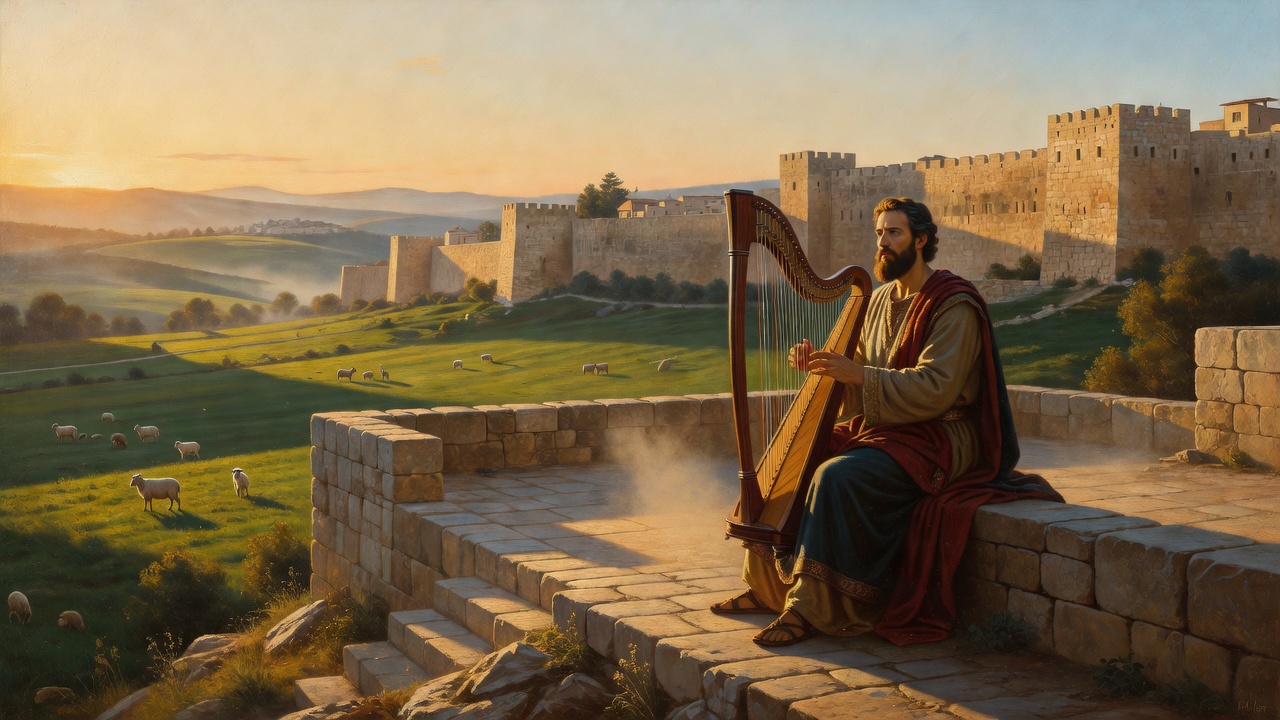
- O salmo é atribuído a Davi, que combina súplicas por libertação militar com louvor musical, prometendo cantar um cântico novo a Deus ao som de uma harpa de dez cordas.Fontes: David · o próprio texto bíblico
- O texto reflete sobre a fragilidade humana, descrevendo o homem como um sopro e a vida humana como uma sombra passageira em contraste com a majestade e o poder divinos.Fontes: o próprio texto bíblico
- A seção final vislumbra a segurança da comunidade e a fartura agrícola, pedindo filhos vigorosos, celeiros cheios, rebanhos que se multiplicam e cidades com muros intactos, livres de invasões ou cativeiro.Fontes: o próprio texto bíblico
Notas escritas com auxílio de IA a partir de fontes abertas (Theographic Bible Metadata, CC BY-SA 4.0; Easton’s Bible Dictionary, domínio público) e revisadas antes de publicar.
Créditos e licença desta tradução
Luda yã takada kↄ̃n Bokobaru yão
The New Testament and portions of the Old Testament in the Bokobaru language of Nigeria
copyright © 2005 SIM International
Language: Bokobaru
Translation by: SIM
This translation text is made available to you under the
terms of the Creative Commons License: Attribution-Noncommercial-No Derivative Works.
( http://creativecommons.org/licenses/by-nc-nd/3.0/ )
In addition, you have permission to port the text to different file formats, as long as you
do not change any of the text or punctuation of the Bible.
You may share, copy, distribute, transmit, and extract portions
or quotations from this work, provided that you include the above copyright
information:
You must give Attribution to the work.
You do not sell this work for a profit.
You do not make any derivative works that change any of the actual words or punctuation of the Scriptures.
Permissions beyond the scope of this license may be
available if you contact
us with your request.
This translation is made available to you under the terms of the
Creative Commons Attribution-Noncommercial-No Derivatives license 4.0.
You may share and redistribute this Bible translation or extracts from it in any format, provided that:
You include the above copyright and source information.
You do not sell this work for a profit.
You do not change any of the words or punctuation of the Scriptures.
Pictures included with Scriptures and other documents on this site are licensed just for use with those Scriptures and documents.
For other uses, please contact the respective copyright owners.
2014-09-22
Fonte: http://ebible.org/bus/ · eBible.org