Gênesis 25
Luda yã takada kↄ̃n Bokobaru yão · Toque num versículo para ver as referências cruzadas.
Ibraĩ gaa
1Ibraĩ nↄ pãnde sɛ̀ dↄ à tↄ́n Kɛtura. 2Nɛ́ kɛ̀ à ìonↄ tↄ́n yɛ̀: Zimara, Yↄkↄsã, Mɛdã, Midiã, Isibaki, Sua. 3Yↄkↄsã bé à Seba kↄ̃n Dedão ì. Dedã boriinↄn Asunↄ kↄ̃n Lɛtusinↄ kↄ̃n Lɛuminↄ ũ. 4Midiã nɛ́gↄ̃gbɛ̃nↄ tↄ́n yɛ̀: Efa, Ɛfa, Anↄku, Abida, Ɛlɛda. Aↄ̃ píngi Kɛtura boriinↄmɛ.
5Ibraĩ a auziki kpà Isaakua píngi, 6ben à gba dà a nↄ yìgisai nɛ́nↄnɛ à ń gbáɛ ↄfãntɛ̃bↄɛ kpa lɛ à kpɛ́ à ga, lɛ aↄ̃tongↄ̃ kú kↄ̃n Isaakuoro yãnzi.
7Ibraĩ kɛ̀ wɛ̃̀ bakɛ̃ndo sↄↄrosai, 8ben à gà. À zi kũ̀ kótokoto, gbasa à kà a gbɛ̃nↄla gɛ̀wãa. 9À nɛ́nↄ Isaaku kↄ̃n Sumailao à vĩ̀i Makpɛla gbɛ̀wɛɛ guu, Mamare ↄfãntɛ̃bↄɛ kpa, buraa kɛ̀ dɛ Iti bori Zoa nɛ́ Ɛflↄnu pↄ́ ũ yã 10kɛ̀ Ibraĩ pì lù Itinↄa. Gwen wà à vĩ̀in kↄ̃n a naↄ̃ Sarao. 11Ibraĩ gana gbɛra Luda aubarika dà à nɛ́ Isaakun. À vɛ̃ɛna Ludabɛ̃ɛkɛema'ee lↄ̀gↄ saɛ.
Sumaila boriinↄ
12Ibraĩ nɛ́ Sumaila boriinↄ yãn yɛ̀. Sara zĩkɛri Agyara, Igipiti nↄgbɛ̃ bé à nɛ́ pì ìo. 13Sumaila nɛ́gↄ̃gbɛ̃nↄ tↄ́n yɛ̀ lán wà ń í nà. À daudu tↄ́n Nɛbayo. À dãaronↄ tↄ́n yɛ̀: Keda, Adabɛli, Mibisamu, 14Misima, Duma, Masa, 15Adada, Tema, Yetu, Nafisi kↄ̃n Kedemao. 16Sumaila nɛ́gↄ̃gbɛ̃nↄ tↄ́n gwe. Aↄ̃ baade a tↄ́ kpà a lakutu ke a bùranɛ. Aↄ̃mbe à bori kuri awɛɛplaaanↄ kínanↄ ũ.
17Sumaila kɛ̀ wɛ̃̀ baswɛɛdo akuri awɛɛswɛɛplaa, ben à gà à kà a gbɛ̃nↄla gɛ̀wãa. 18À boriinↄ vɛ̃̀ɛ zaa Avila ai à gàa pɛ́ Surua, Igipiti ↄfãntɛ̃bↄɛ kpa gana Asiria bùsu kpa. Aↄ̃è kↄ̃ tɛ́ kpákpa kↄ̃n Ibraĩ bori kpaaanↄro.
Isau kↄ̃n Yakubuo ina
19Ibraĩ nɛ́ Isaaku boriinↄ yãn yɛ̀. Ibraĩ Isaaku ì. 20Kɛ̀ Isaaku kà wɛ̃̀ baplaa, ben à Labã dãre Rɛbɛka sɛ̀. Àmbe Siria bùsu gbɛ̃ Bɛtuɛli kɛ̀ bↄ̀ Mɛsↄpↄtamia bùsun nɛ́ ũ. 21Isaaku wɛ́ɛ kɛ̀ Diia a naↄ̃nɛ, zaakɛ pãaamɛ, ben Dii à adua sì, à naↄ̃ pì nↄ̀ sì. 22Sìkanↄↄ e ↄsi kaa à gbɛɛɛn, ben à bè: Bↄ́yãnzi yã beee taka ma lezi? Ben à gàa à Dii là. 23Dii bènɛ:
Bori mɛ̀n plaaa kú n nɛ́'isↄn,
gↄ̃ↄn plaaa kɛ̀ aↄ̃ↄ kú n gbɛɛɛn pìnↄ é kɛ̃kↄ̃a.
Bori mɛ̀n doo gbãaa égↄ̃ dɛ a doola,
à kɛ̀ bↄ̀ káaku égↄ̃ zↄ̀ nɛ́ ũ zãanɛ.
24Kɛ̀ à nɛ́'igurↄↄ kà, ben à sìkanↄ ì gↄ̃gbɛ̃nↄ ũ. 25Kɛ̀ gbɛ̃ káaku e bↄↄ, à bↄ̀ tɛ̃ɛ zónzon. À mɛ̀kã vĩ lán uta kãdee bà, ben wà tↄ́ kpànɛ Isau. 26Beee gbɛra kɛ̀ nɛ́ plaadee e bↄↄ, à dↄ̀ Isau gbátogea, ben wà tↄ́ kpànɛ Yakubu. Isaaku wɛ̃̀ baaagↄ̃dee guun à nɛ́ pìnↄ ì.
27Nɛ́ pìnↄ bíta kũ̀. Isau kɛ̀ tofekari gbãaa kɛ̀ è kɛ̃ sɛ̃̀tɛaroo ũ. Yakubu sↄ̃ bɛgwarimɛ. 28Isaaku ye Isauzi kɛ̀ à nↄ̀bↄ lóu vĩ yãnzi. Rɛbɛka sↄ̃ↄ ye Yakubuzi.
29Zĩkea Yakubu e dò kukuu, ben Isau sù kↄ̃n sɛ̃̀tɛo nↄaa e à dɛɛ. 30Ben à bè Yakubunɛ: N yã nna! Ǹ tó mà dò tɛ̃a beee ble, zaakɛ nↄaa e ma dɛɛmɛ. Beee yãnzi wà tↄ́ kpà Isaunɛ Ɛdↄmu. 31Yakubu bè: Ǹ n daudukɛzɛ kpáma gĩa. 32Ben Isau bè: Má kú gaa lɛ́zĩ, bↄ́n ma daudukɛzɛ é kɛmɛɛ? 33Ben Yakubu bènɛ: Ǹ lù sɛ́mɛ gĩa. Ben à lù sɛ̀nɛ à a daudukɛzɛ kpàa. 34Ben Yakubu burɛdi kpàa kↄ̃n bládo pìo. À blè à í mì, ben à fɛ̀ɛ à bↄ̀. Lɛmɛ Isau kɛ̀ lɛ, à a daudukɛzɛ dìɛ pã.
Você sabia?
Os herdeiros de Abraão e os irmãos gêmeos
- Quetura, cujo nome o Easton's Bible Dictionary (1897) explica como “incenso”, é apresentada aqui como outra esposa de Abraão. Esse dicionário diz que ele provavelmente se casou com ela depois da morte de Sara, embora sua nacionalidade seja desconhecida, e observa que 1 Crônicas a chama de concubina. Ela lhe deu seis filhos, entre eles Jocsã e Midiã, pai dos midianitas; ainda em vida, Abraão deu presentes aos filhos de suas concubinas e os afastou de Isaque, enviando-os à terra do Oriente.Fontes: Keturah · Midian · o próprio texto bíblico
- Isaque e Ismael juntos sepultaram Abraão na caverna de Macpela, perto de Manre, no campo que Abraão havia comprado de Efrom, o hitita, onde Sara já havia sido enterrada. O Easton's Bible Dictionary (1897) explica Macpela como “porção” ou “caverna dupla”, situada na encosta de um monte a leste de Hebrom e de frente para Manre, lugar chamado de carvalhos — ou, numa margem, terebintos — de Manre.Fontes: Machpelah · Mamre · o próprio texto bíblico
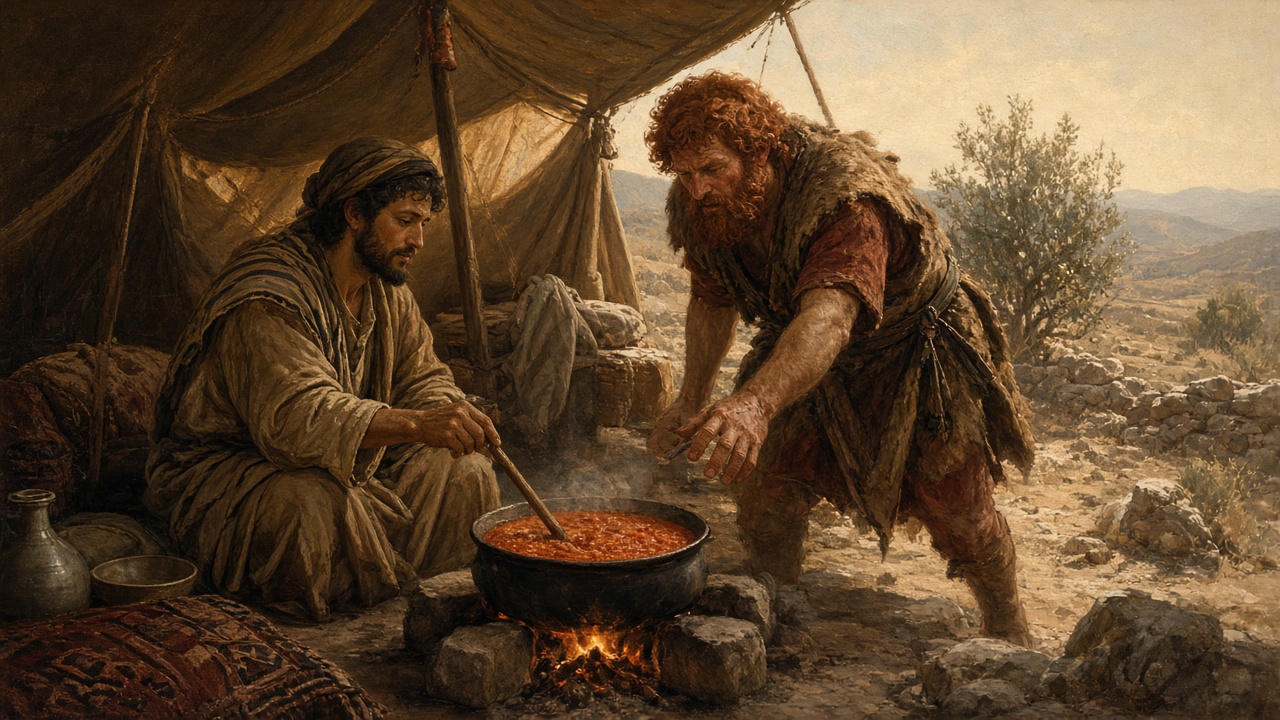
- Esaú, o gêmeo primogênito de Rebeca, nasceu avermelhado e coberto de pelos como um casaco de pele. O Easton's Bible Dictionary (1897) liga o outro nome, Edom, “vermelho”, ao ensopado vermelho de lentilhas pelo qual ele vendeu o direito de primogenitura, e explica Jacó como “aquele que segue os calcanhares de outro” ou “suplantador”, de acordo com o relato de que Jacó nasceu agarrado ao calcanhar de Esaú. Esaú cresceu como caçador habilidoso e homem do campo, enquanto Jacó era um homem tranquilo que ficava em casa.Fontes: Esau (Edom) · Jacob (Israel) · o próprio texto bíblico
Notas escritas com auxílio de IA a partir de fontes abertas (Theographic Bible Metadata, CC BY-SA 4.0; Easton’s Bible Dictionary, domínio público) e revisadas antes de publicar.
Lugares deste capítulo
- East · Hoje: region around Amman · 31.955, 35.934 · versículo 6
- Machpelah · Hoje: Cave of the Patriarchs · 31.525, 35.111 · versículo 9
- Negeb · 31.245, 34.841 · versículo 11
- Assyria · 36.359, 43.153 · versículo 18
- Egypt · 30.129, 31.308 · versículo 18
Só aparecem lugares com identificação de alta confiança (90% ou mais segundo as fontes acadêmicas reunidas pelo OpenBible). Mapa da época: DARE (Digital Atlas of the Roman Empire), CC BY 4.0; mapa atual: © colaboradores do OpenStreetMap; lugares: OpenBible.info (CC BY 4.0).
Créditos e licença desta tradução
Luda yã takada kↄ̃n Bokobaru yão
The New Testament and portions of the Old Testament in the Bokobaru language of Nigeria
copyright © 2005 SIM International
Language: Bokobaru
Translation by: SIM
This translation text is made available to you under the
terms of the Creative Commons License: Attribution-Noncommercial-No Derivative Works.
( http://creativecommons.org/licenses/by-nc-nd/3.0/ )
In addition, you have permission to port the text to different file formats, as long as you
do not change any of the text or punctuation of the Bible.
You may share, copy, distribute, transmit, and extract portions
or quotations from this work, provided that you include the above copyright
information:
You must give Attribution to the work.
You do not sell this work for a profit.
You do not make any derivative works that change any of the actual words or punctuation of the Scriptures.
Permissions beyond the scope of this license may be
available if you contact
us with your request.
This translation is made available to you under the terms of the
Creative Commons Attribution-Noncommercial-No Derivatives license 4.0.
You may share and redistribute this Bible translation or extracts from it in any format, provided that:
You include the above copyright and source information.
You do not sell this work for a profit.
You do not change any of the words or punctuation of the Scriptures.
Pictures included with Scriptures and other documents on this site are licensed just for use with those Scriptures and documents.
For other uses, please contact the respective copyright owners.
2014-09-22
Fonte: http://ebible.org/bus/ · eBible.org