Gênesis 2
Luda yã takada kↄ̃n Bokobaru yão · Toque num versículo para ver as referências cruzadas.
1Lɛn Luda musu kↄ̃n tↄↄtɛo kɛ̀ lɛ kↄ̃n ń pↄ́nↄ píngi. 2Ai à gurↄ swɛɛplaadee zĩ gↄ̃ ká, à zĩi kɛ̀ èe kɛɛ pì yã̀a. À gurↄ swɛɛplaadee pìn à kámma bò kↄ̃n zĩi kɛ̀ à kɛ̀nↄ píngi. 3Ben à aubarika dà gurↄ swɛɛplaadee pìn à dìɛ a pↄ́ ũ, kɛ̀ zĩ beeen à kámma bò kↄ̃n zĩi kɛ̀ à kɛ̀nↄ píngi yãnzi.
Ɛdɛni swadako
4Musu kↄ̃n tↄↄtɛo naana yãn yɛ̀. Gurↄↄ kɛ̀ Dii Luda tↄↄtɛ kↄ̃n musuo kɛ̀, 5bura pↄ́kee e bↄɛ tↄↄtɛa kↄ̀ro, baa sɛ̃̀, zaakɛ Dii Ludaa e tó lou màro, bensↄ̃ gbɛ̃kee kuu à tↄↄtɛ zĩi kɛro. 6Sukaa bé è kpá andunala, ben è mↄdↄ pisi tↄↄtɛa píngi.
7Dii Luda gↄ̃gbɛ̃ í kàsa kↄ̃n bùsutio, ben à ĩa wɛ̃̀ndidee vù à yĩn, ben gↄ̃gbɛ̃ pì gↄ̃̀ gbɛ̃ bɛ̃ɛ ũ. 8Dii Luda swadako dìɛ ↄfãntɛ̃bↄɛ kpa kɛ̀ wè be Ɛdɛni, ben à gↄ̃gbɛ̃ kɛ̀ à kɛ̀ pì dà gwe. 9Dii Luda tò lí bori píngi bↄ̀ɛ tↄↄtɛa. Lí pìnↄↄ maa, bensↄ̃ ń bɛ blena nna. Lí wɛ̃̀ndide kú dàko pì gura. Lí kɛ̀ è dↄ̃na maa kↄ̃n à zaaao ińnɛ kú gwe dↄ.
10Swaa kú Ɛdɛni ègↄ̃ mↄdↄ pisi dàko pìa. Bↄna gwe à ↄnɛ kɛ̀ siigↄ̃. 11À káaku tↄ́n Pisↄ̃, àmbe à liga Avila bùsuzi píngi. Vura kú bùsu pì guu, 12vura pì maa. Gbɛ̀ bɛ̀ɛdeenↄↄ kú gwe dↄ. 13Swaa pì ↄnɛ plaade tↄ́n Giↄ̃, à liga Kusu bùsuzi píngi. 14À ↄnɛ aagↄ̃de tↄ́n Tigiri, à dↄ̀rↄ tà Asiria bùsu ↄfãntɛ̃bↄɛ kpa. Swaa pì ↄnɛ siigↄ̃de tↄ́n Yuflati.
15Dii Luda gↄ̃gbɛ̃ pì dìɛ Ɛdɛni dàko pì guu lɛ àgↄ̃ à zĩi kɛ àgↄ̃ gwaa. 16Ben à yã dìɛnɛ à bè: Nɛ́ fↄ̃ ǹ dàko pì lí píngi bɛɛ ble, 17mↄde ǹton lí kɛ̀ è dↄ̃na maa kↄ̃n à zaaao ińnɛ bɛɛ blero. Tó ń blè, n gamɛ.
18Dii Luda bè: Gↄ̃gbɛ̃ kuuna adoo maaro. Mɛ́ dↄnlɛri kɛnɛ à gbɛ̃ndoo ũ. 19Ben Dii Luda bùsu kↄ̀ à nↄ̀bↄnↄ kɛ̀o píngi kↄ̃n bãanↄ píngi, ben à mↄ̀ńyo gↄ̃gbɛ̃ pì kiia lɛ à e dian eé tↄ́ kpáńnɛ nà. Tↄ́ kɛ̀ gↄ̃gbɛ̃ pì kpà pↄ́ wɛ̃̀ndidee pìnↄnɛ píngi gↄ̃̀ ń tↄ́ ũ. 20Gↄ̃gbɛ̃ pì tↄ́ kpà pↄ́kãdeenↄnɛ píngi kↄ̃n bãanↄ kↄ̃n nↄ̀bↄsɛ̃tɛnↄ píngi, mↄde èe dↄnlɛri e ń tɛ́ a gbɛ̃ndoo ũro. 21Ben Dii Luda i ìsi dà gↄ̃gbɛ̃ pìla. Kɛ̀ èe ii oo, ben à à gbã̀ntɛ̃wa mɛ̀n doo bↄ̀, ben à à mɛ̀baasi tàta a gbɛ̀n. 22Ben à gↄ̃gbɛ̃ gbã̀ntɛ̃wa kɛ̀ à bↄ̀ pì lìɛ nↄgbɛ̃ ũ, ben à gàao à kiia. 23Ben gↄ̃gbɛ̃ pì bè:
Kɛ̀ki wá bↄ̀ ma wá guumɛ,
à mɛ̀ sↄ̃ bↄ̀ ma mɛ̀ guumɛ.
Weé à sísi nↄgbɛ̃,
kɛ̀ Luda à bↄ̀ gↄ̃gbɛ̃ guu yãnzi.
24Beee yãnzin gↄ̃gbɛ̃ è a de kↄ̃n a dao tó, aↄ̃è nakↄ̃a kↄ̃n a naↄ̃o wà gↄ̃ mɛ̀ doo ũ. 25Gↄ̃gbɛ̃ kↄ̃n a naↄ̃o kú bũu ń plaa ń píngi, wí sↄ̃ è ń kũro.
Você sabia?
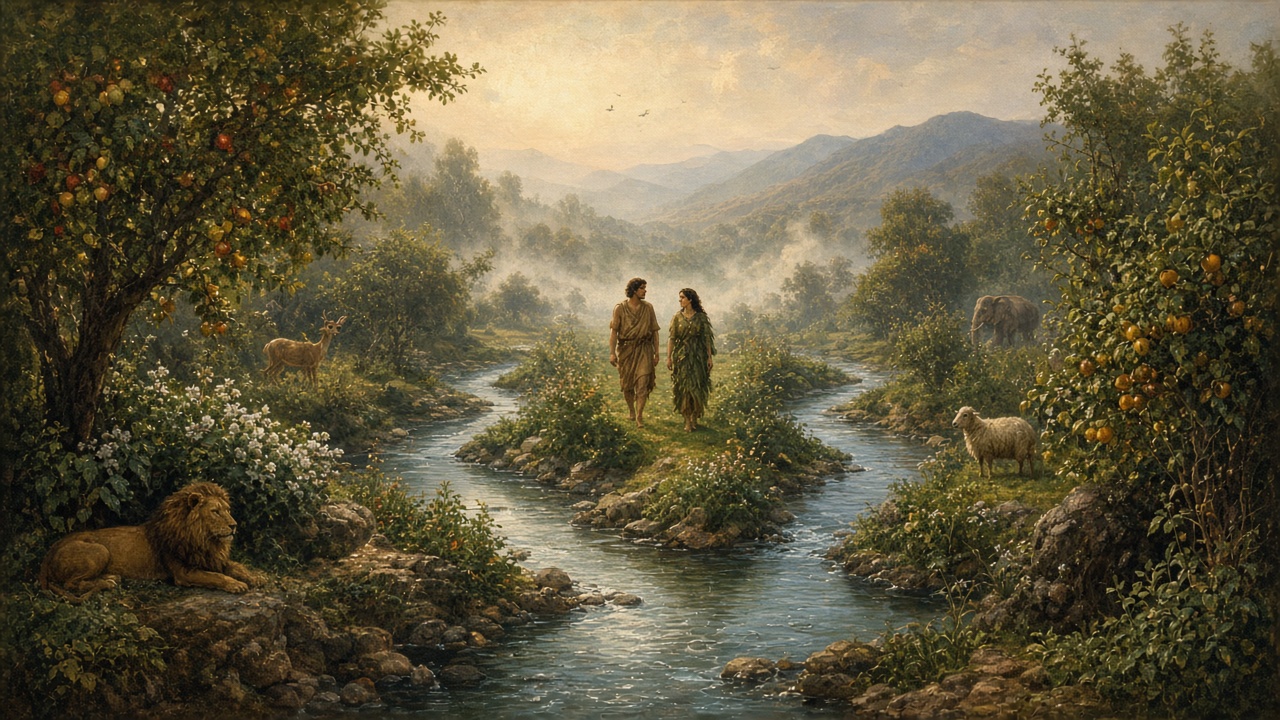
Adão, o Éden e os quatro rios
- Adão, que significa “vermelho”, é uma palavra babilônica e o nome comum do ser humano, com o mesmo sentido em hebraico e em assírio. Foi dado ao primeiro homem. Ele foi formado do pó da terra — daí o nome — e Deus soprou em suas narinas o fôlego da vida.Fontes: Adam · o próprio texto bíblico
- Um rio saía do Éden e se dividia em quatro braços: o Pisom, o Giom, o Hidequel e o Eufrates. Alguns identificam o Pisom com o Fásis ou o Hális; outros, com o Indo, o Ganges ou ainda outros rios. O Giom já foi identificado com o Nilo, e outros o consideram o Oxo, o Araxes ou o Ganges. O Hidequel é o Tigre, chamado pelos acádios de rio de Idikla; Gesenius entendeu o nome como “o Tigre rápido”.Fontes: o próprio texto bíblico · Pison · Gihon · Hiddekel
- O lugar do Éden, o jardim em que viveram os primeiros pais, foi discutido mais do que quase qualquer outra questão geográfica. Já foi situado na Armênia, na região a oeste do mar Cáspio, na Média, perto de Damasco, na Palestina, no sul da Arábia e na Babilônia. O Easton's Bible Dictionary (1897) o procura ao longo do Tigre e do Eufrates da Ásia ocidental, na terra de Sinar, ou Babilônia.Fontes: Eden
Notas escritas com auxílio de IA a partir de fontes abertas (Theographic Bible Metadata, CC BY-SA 4.0; Easton’s Bible Dictionary, domínio público) e revisadas antes de publicar.
Lugares deste capítulo
- Assyria · 36.359, 43.153 · versículo 14
- Euphrates · Hoje: Euphrates River · 31.004, 47.442 · versículo 14
- Tigris · Hoje: Tigris River · 31.004, 47.442 · versículo 14
Só aparecem lugares com identificação de alta confiança (90% ou mais segundo as fontes acadêmicas reunidas pelo OpenBible). Mapa da época: DARE (Digital Atlas of the Roman Empire), CC BY 4.0; mapa atual: © colaboradores do OpenStreetMap; lugares: OpenBible.info (CC BY 4.0).
Créditos e licença desta tradução
Luda yã takada kↄ̃n Bokobaru yão
The New Testament and portions of the Old Testament in the Bokobaru language of Nigeria
copyright © 2005 SIM International
Language: Bokobaru
Translation by: SIM
This translation text is made available to you under the
terms of the Creative Commons License: Attribution-Noncommercial-No Derivative Works.
( http://creativecommons.org/licenses/by-nc-nd/3.0/ )
In addition, you have permission to port the text to different file formats, as long as you
do not change any of the text or punctuation of the Bible.
You may share, copy, distribute, transmit, and extract portions
or quotations from this work, provided that you include the above copyright
information:
You must give Attribution to the work.
You do not sell this work for a profit.
You do not make any derivative works that change any of the actual words or punctuation of the Scriptures.
Permissions beyond the scope of this license may be
available if you contact
us with your request.
This translation is made available to you under the terms of the
Creative Commons Attribution-Noncommercial-No Derivatives license 4.0.
You may share and redistribute this Bible translation or extracts from it in any format, provided that:
You include the above copyright and source information.
You do not sell this work for a profit.
You do not change any of the words or punctuation of the Scriptures.
Pictures included with Scriptures and other documents on this site are licensed just for use with those Scriptures and documents.
For other uses, please contact the respective copyright owners.
2014-09-22
Fonte: http://ebible.org/bus/ · eBible.org