Mateus 9
Basa-Gurmana · Toque num versículo para ver as referências cruzadas.
A Yesu Hogake Woto Ma'inna
1Na a Yesu wo pece ohato, wa̱ ka̱ci tu hura̱n ceso nonwan. 2A̱bire a owangya Iyesu yan'on woto wu ruma̱ngi ma'inna wu wa̱ta̱ki n uturu. na Yesu hendi tomasana anmen twawa, wa hyen wo, <<ba'a wu mi ga'a to na'an netama en dan anmen cende, a wo ciringa̱gi ciri'i towo.
3Ta'a yan'on shima̱la̱n she tubisa̱ga̱ to Mosa, sha hyen n shenmen shawa, woto wonna, wu ma̱ngashi,
4Ayesu ka naande wo yan'son etama nanwan, wa hyen ga yegu naande ayen netama na kenoko n shenmen shihin? 5Nce ena huri orara goma: ato hyan,<Awo ciringa̱gi ciri'i towo,> ko ta'a awo hyan <Kurka̱ ku regi tohano towo> 6Ama nen saro ke yan'son nhyen Ba'a wo woto wo omange a̱ta̱ra̱n nata ciringa̱gi ciri'i to kanniyan, ta'a wa hyen woto wure wu ruma̱ngi,<< Ikurka̱, ku wa̱rigi etaro nanwon ku huri giye. 7Owa ka wa kurki wa̱ huri giye. 8Na ukutu u hendi a̱nde, ryansan rya kentane ga, a hewake Onhon, awo pa̱ni ato a̱ta̱ra̱n.
Ohece na Matiyu
9Na Ayesu ga̱'i pa̱re, wa̱ hendi yan'on woto awo rira̱'i rewa Amatiyu wo koreke, owa a Matiyu ka woto wo tora'aga ka̱gondo go. A Yesu wa hyen wo, <<N dopya, wa̱ kurki ta'a wa rope wo. 10She Ayesu won korya iri korya n egewa na Matiyu ato na tora'aga ka̱gondo nato naande ciri'i a rage a korkake pa̱ka̱ nonwan nato na moma'anga nonwan. 11Na a Farisiyawa a̱ hendi a̱nde, a̱ rushigi ato na moma'anga na Yesu a hyen, <<Yegu naande woto ototo wuhin wan korya iri korya n woto wo tora'aga ka̱gondo pa̱ka̱ ta'a nato naande ciri'i
12Na Yesu hoge a̱nno wa hyen ga, e rawo na ta̱ganu ato na ruma̱ngi ciwu n woto wu unibu, sede ato na ruma̱ngi. 13Ryaga ba ki ma̱ma̱'a̱ngi ena ma ange, ga̱mi ka ane'en na yanman go nen saro pihin, ba iwuki ba. Naande n dage cewo ohece na ato na omange kaye, ama pa ato naande ciri'i go n dage.
A̱ Rushigi Yesu Monran ma Re'ore
14A̱bire ato na moma'anga na Yohana wo baptisma a rage pi Yesu a̱ rushigi wu a hyen, <<Yegu naande ga̱tu na Farisiyawa aton re'ore, ama ato na moma'anga nanwon a ca na'an rewa?>>
15Ayesu wa̱ ra̱'a̱ni ga wa hyen,<<Atoginto na u'a̱ngo a rawon ton da anmen shiri she u'a̱ngo u ta̱n pa̱ka̱ nanwan? Ai beka̱ni be ne'en na an tu umena̱ ga u'a̱ngo a̱bire be an ton da re'ore.
16<<Woto wo rawo awon tu ta̱ga̱nu ewa na goshe n yade na̱son a̱ ta̱gi, enande a na̱son an ta handa ana goshe, hare tu a̱ni to hando tu ka̱hin. 17Woto wo rawo ta'a awon tu kuga̱ ma̱ni ma ina̱bi ma̱son n shemo she goshe, she a̱ kuga̱ni, shemo shen to komatongo, ma̱ni ma ina̱bi ta'a ma turi, sede a̱ kuga̱ni n shemo she son. She an de a̱nno ma̱ni ina̱bi ma rawon tu tura̱ ko ta'a shemo she komantango.>>
Ba'a wu U n Wu'a̱ wu Ruma̱ngi
18She Ayesu wo tan monran ma̱re nanwan go a̱nde yan'on woto ototo wa rage pi Yesu wa̱ cibi arungurungu wa hyen wo, benanba nanba ba'a wumi wa̱'a̱ wu u. Ama rage tun huri ku a̱ta̱n bo n ka'ara kawo won ta ronkya. 19Ayesu ta'a wa̱ kurki wa rope wo pa̱ka̱ n ato na moma'anga nonwan.
20A̱bire ta'a yan'on wu'a̱ awo den nyan opa na rewu n tu hure ma̱hen'en wa peringe na bo'o na Yesu wa̱ a̱ta̱ni ewa nonwan. 21Nande wu'a̱ wure wa hyen nanmen nonwan, ko she ewa nonwan e bawa go n a̱ta̱ni, nen mohoga.>>
22A̱bire Ayesu wa mangiyane wa hendi wu'a̱ wure wa hyen wo, <<ba'a wumi ga'a mata etama, tomasana anmen towo to hogake>> A̱bire ta'a be wa mohoge.
23Na Ayesu wuci egewa na woto ototo wure wa̱ hendi ato na rinhunrin pa̱ka̱ n kutu pa̱re a hwadane kwara. 24Wa hyen ga<< N pa̱gi ba pa̱ri ai ba'a wota wu u ciwu ndawon go me wa̱ wa̱ci>> a henge Yesu. 25Na a sortoma ukutu niji, a Yesu wa̱ gegi wa kentane ka'ara ka ba'a wure a̱bire ba'a ka ronkya. 26Monran ma̱re ka ma̱ ci kobe be'awo be cenge ture.
Ayesu wo Hogake A̱ruwa̱
27Na Ayesu wo maheketane pa̱re ta'a yan'on a̱ruwa̱ rewu, a rope wo n tu'umena̱ bengoro a ange, <<Gawo Ba'a wo Dauda hoga yanman na̱tu.
28Na Ayesu gegi ne yan'on egewa, a̱ruwa̱ wa̱re a rage pi Yesu wa hyen ga, e masane anmen nhyen n omange a̱ta̱ra̱n na nen be hogaka?>>
A̱ ra̱'a̱ni Yesu a hyen, <<En Ashawa>>
29A̱bire a Yesu wa̱ a̱ta̱nga̱ni shishe shawa wa hyen ga,<<Mande mahenda n to masana anmen tuhin.>> 30A̱bire shishe shawa she ma̱'ucigi. Ama Ayesu wa woshe ga ogago mahenda nhyen<<Nde n hoge cewo mago pa woto wuba̱.>> 31Na a̱ huri ka a̱ hita̱gi mago kobe be'awo be cenge ture.
32Ayesu a̱ kurki gu a̱nde an tu hura̱ a owangya wo yan'on wuka̱mu awo omange npera nan gamangan bo tu hita̱ga̱ ndoma. 33Na a sortoman gya wo npera, wuka̱mu wure wa̱ hita̱gi ndoma, a̱bire ukutu owa de mamake, a hyan,<< Tu ta̱ hen cewu anna n Israila.>>
34Ta'a ato ototo na Farisiyawa a hyan,<<Na ta̱ra̱n nan men pera go wan to sortomanga npera>>
Atoma a Yemi ciwu
35a Yesu wa peringina̱ n ceson ceson n shihira̱ wa ne'en tu bisa̱ga̱ n pa̱ri pa aduwa nanwan, wan to bansan monran ma rotome ma togoma to Onhon, wan ta'a to hogaka ka ga kobe shegoma n rara kamon nanwan. 36Na a Yesu wu hendi uru na ukutu wa hoge yanman nanwan n ma̱supo mawa, woto wo rawo ta'a wu beni ga a ne'en she ita̱ma̱'in na rawo wuhuwa̱. 37A̱bire a Yesu wa hyen ato na moma'anga non wan,<< Uguwa̱ u yemi, ta'a ato nan ton da Uguwa̱ a̱ yen ciwu. 38Rushiga̱ ba Ashawa na Uguwa̱, aye tomangya nato na Uguwa̱ nahwa.>>
Você sabia?
Misericórdia, cura e vinho novo
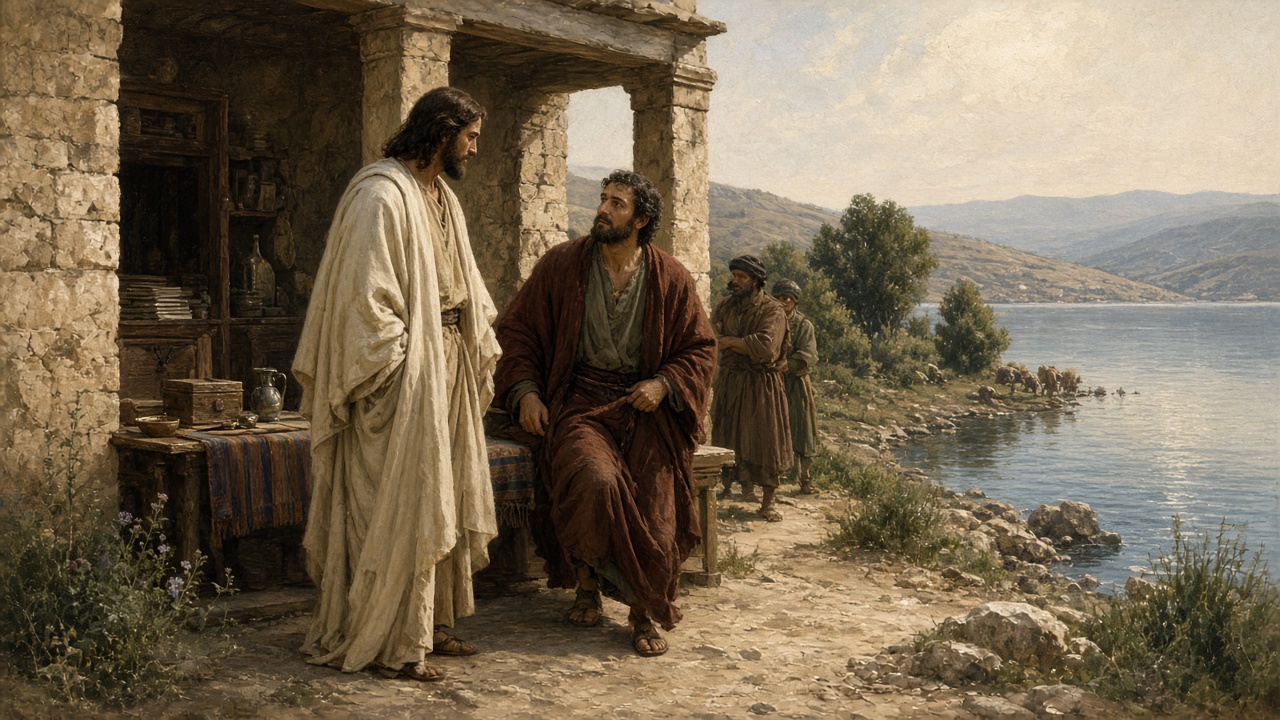
- Mateus, filho de Alfeu, era publicano, ou seja, cobrador de impostos, em Cafarnaum. Jesus, ao subir da beira do lago, passou pela coletoria onde Mateus estava sentado e disse: “Segue-me”. Antes, ele era conhecido como Levi; nesse mesmo dia ofereceu um grande banquete, descrito como uma despedida, a Jesus, aos discípulos e, provavelmente, a muitos dos seus antigos companheiros.Fontes: Matthew · o próprio texto bíblico
- Os que perguntam por que eles e os fariseus jejuam com tanta frequência, enquanto os discípulos de Jesus não jejuam, são discípulos de João Batista. João é chamado o precursor; era de descendência sacerdotal, seu pai Zacarias sacerdote do turno de Abias e sua mãe Isabel uma das filhas de Arão.Fontes: John the Baptist · o próprio texto bíblico
- Uma cronologia situa a cura do paralítico, o chamado de Mateus, a pergunta sobre o jejum e a parábola dos odres no ano 28 d.C.Fontes: Healing the Man with Palsy · Jesus Calls Matthew · Fasting Question · Parable of the Winseskins
Notas escritas com auxílio de IA a partir de fontes abertas (Theographic Bible Metadata, CC BY-SA 4.0; Easton’s Bible Dictionary, domínio público) e revisadas antes de publicar.
Lugares deste capítulo
- Sea of Galilee · 32.819, 35.590 · versículo 1
Só aparecem lugares com identificação de alta confiança (90% ou mais segundo as fontes acadêmicas reunidas pelo OpenBible). Mapa da época: DARE (Digital Atlas of the Roman Empire), CC BY 4.0; mapa atual: © colaboradores do OpenStreetMap; lugares: OpenBible.info (CC BY 4.0).
Créditos e licença desta tradução
Basa-Gurmana
The Gospel According To Matthew in the Basa-Gurmana language of Nigeria
copyright © 2025 The Word for the World International and The Word for the World Nigeria
Language: Basa-Gurmana
Contributor: The Word for the World International
This translation is made available to you under the terms of the
Creative Commons Attribution Share-Alike license 4.0.
You have permission to share and redistribute this Bible translation in any format and to make reasonable revisions and adaptations of this translation, provided that:
You include the above copyright and source information.
If you make any changes to the text, you must indicate that you did so in a way that makes it clear that the original licensor is not necessarily endorsing your changes.
If you redistribute this text, you must distribute your contributions under the same license as the original.
Pictures included with Scriptures and other documents on this site are licensed just for use with those Scriptures and documents.
For other uses, please contact the respective copyright owners.
Note that in addition to the rules above, revising and adapting God's Word involves a great responsibility to be true to God's Word. See Revelation 22:18-19.
2025-07-12
Fonte: http://ebible.org/buj/ · eBible.org