Apocalipse 11
Melɛ̌ Mékɔ̄ɔ̄lē · Toque num versículo para ver as referências cruzadas.
Jɔnɛ anyíné mbóŋ ébɛ
1Dɔ́ɔ bébágé mɛ ntóŋ ḿme ńdé nɛ́ɛ chǒm éche béhəgnɛɛ́ bwěm, boŋ bélāŋgē mɛ bán, “Kǎg éhəg ndáb e Dyǒb, éhəg-kɛ menyán mé eʼtwɛ́, étôŋ-ʼɛ bad ábe bébage Dyǒb edúbé áhed. 2Boŋ weéhə̄gēʼ eyáde pɛn áyə̄le nɛ́n bébágé chɔ́ wɛ́ɛ bad ábe béēbíi Dyǒb. Bɛ́dyaŋtéd Dyad áde Ásáá ámīn á etûn é móom mé ngɔn méniin ne ébɛ. 3Mɛ̌bɛ̌ échêm mbóŋ ébɛ kunze âhɔ́b mekan ḿme mɛ́bɛnléd á póndé echě ehúɛʼ á etûn é eʼpun ekə́lé ehɔ́g mbwɔ́kɛl ébɛ ne móom ntóób. Bɛ́wāā-ʼɛ mbɔ́té é melebe.” 4Échɛ́n mbóŋ ébɛ édíi mɛl mé menzab mébɛ ne metii mé etrúkáŋ mébɛ ḿme métyéémé áʼsō ábe Sáŋgwɛ́ɛ́ awě akamlan nkǒŋsé. 5Nzé mod awémtɛ́né-ʼɛ bɔ́ ebébtéd abɛl, muú ḿbíd bɔ́ á nsəl ḿme ńhyâŋte ábāb bad bé ekɔyí ḿmād-tɛ bɔ́ ásē. Nɛ́n dɔ́ɔ kénzɛ́ɛ́ awě awémtɛ́né bɔ́ ebébtéd abɛl bɛ́wūūʼɛ́ mɔ́. 6Ábɛ́n bad béwóó ngíne âkə́ŋ abobe ámīn ábɛl nɛ́n mbúú eechɔ́g á póndé echě bélâŋgɛɛ́ bad mam ḿme Dyǒb áhɔ́bé aá mɛ́bɛnléd. Béwóó-ʼɛ ngíne âbɛl eʼdíb éʼtim mekií, béwóŋ-ʼɛ âpɛɛn medim á nkǒŋsé póndé ké ehéé echě bédə́ə́.
7Áde bɛ́mǎd-taá mam ahɔ́b ḿme bélómé bɔ́ ahɔ́b, ene nyam echě ebídé á echóg échě éewóo asóg ětyēēmɛ̄n bɔ́ nzum, etóm bɔ́ áte ewúú-ʼɛ bɔ́. 8Ḿmāb ndim-mɛ mɛ́naá á nzii echě epooʼ á dyad ámbáá tê wɛ́ɛ bêmbomɛ́ɛ́ awab Sáŋgwɛ́ɛ́ á awɔg. Béchəge ádê dyad á ngan-tê bán Sodom káa Egipto. 9Á etûn é eʼpun éʼláán ne epɛd, bad bɛ́bīd meloŋ ne meloŋ, metúmbé ne metúmbé, mehɔ́b nyaa ne nyaa, ne bad nyaa ne nyaa bénɔ̄n ḿmāb ndim ésebán békwɛntan bán bélíme mɔ́. 10Bad ábe bédé á nkǒŋsé bɛ́wōgɛ̄n ábɛ́n bad bébɛ echab kwééd menyiŋge. Bɛ́chǎg ngande, bébāg-kɛ nhɔ́g ne aníníí ndɛ âlúmed menyiŋge. Bɛ́bɛ̌l nɛ̂ áyə̄le ábê bekal-bé-eʼdəə́dəŋ bébɛ bépíínádtáá bɔ́ metake bwâmbwam áde bébédé á nkǒŋsé te. 11Boŋ ámbīd e ábê eʼpun éʼláán ne epɛd, pemɛ e aloŋgé embíd wɛ́ɛ Dyǒb esɔ́l bɔ́ áte bépuu bétyéém-mɛ ámīn. Mbwɔ́g ń ngíne ménkōb bad ábe bényīn bɔ́. 12Dɔ́ɔ ábê bekal-bé-eʼdəə́dəŋ béwógɛɛ́ ehɔ́b échě échə́gké ébídé ádyōb nɛ́ɛ élâŋgɛɛ́ bɔ́ nɛ́n aá, “Nyéhyag ámīn hɛ́n.” Dɔ́ɔ bésɔ́lé á mbag-tê békɛ-ʼɛ ádyōb. Ábāb bad bé ekɔyí bényīn nɛ́ɛ békagké. 13Ábwɔ̄g-ábwɔ̄g ndɔɔb énəŋnéd ne ngíne. Epɛd é dyad ehɔ́g átîntê e eʼpɛd dyôm ábe ádê dyad ámbáá émpāŋtēd áte. Eʼkə́lé eʼ bad saámbé bénwɛ̄ áde ndɔɔb énə́ŋnédé nɛ̂. Mbwɔ́g ménkōb bad ábe bélyə́gé ásē, bébagé Dyǒb á ngumɛ, mɔ́ awě adé ámīn, edúbé.
14Medim ḿme mélóntɛ́né mébɛ méntōm. Boŋ nɔnéʼ! Medim ḿme mélóntɛ́né meláán mékwógé apɛ.
Ángɛl etóó eloŋ échě élóntɛ́né saámbé
15Ángɛl echě elóntɛ́né saámbé entóŋ éché eloŋ. Dɔ́ɔ ehɔ́b éche échə́gké ébídé ádyōb éhɔ̄bē nɛ́n bán, “Nkamlɛn mé nkǒŋsé ńtímé nkamlɛn ḿme awɛd Sáŋgwɛ́ɛ́, Dyǒb ne awě Krǐstəə, ǎkamlɛ́n-nɛ á ngíndé ne á ngíndé.” 16Hɛ̂ dɔ́ɔ ábê bad bémbáá móom mébɛ ne béniin ábe bédíídé metii mé nkamlɛn áʼsō éʼ Dyǒb békwédé ásē áʼsō éʼ Dyǒb bébagé mɔ́ edúbé. 17Béhɔ́bé nɛ́n bán,
“Sêságnɛ́né wɛ a-Sáŋ Dyǒb á Ngum, we awě edé ane ne awě ambɛ́.
Sêságnɛ́né wɛ áyə̄le ebɛ̌nlédé echôŋ ngum eboótédé akamlɛn.
18Bad ábe béebɛnlé wɛ bênlǐŋ áyə̄le meliŋgá ḿmōŋ mé ngíne mêmpɛ̌.
Póndé epedé echě békáadtɛɛ́ bad ábē béwédé.
Póndé epedé echě ábōŋ bembəledɛ, bekal béʼdəə́dəŋ,
ne bad ábe bébɛnle wɛ ábe bébage wɛ edúbé, bad bésyə̄ə̄l,
ken bad ábe bédé etógnɛ́n-ɛ kéʼɛ ábe béesɛ̌ etógnɛ́n, wɛ́sābɛ̄ɛ̄ bɔ́.
Ene póndé dɔ́ɔ wɛ́bēbēdtē bad ábe bébébte bad á nkǒŋsé te!”
19Hɛ̂ dɔ́ɔ ńnyíné ndáb e Dyǒb echě edé ádyōb nɛ́ɛ édíbnédé. Á ndáb-te wɛ̂-ʼɛ, nnyín Ntyə́g mé Melɛ̌. Emwɛdmwɛd étómáá, eʼsaád éʼbídeʼ, ádyōb ákuméʼ áte, ndɔɔb énəŋnád ásē, meláá mé mbúú mé ngíne-ʼɛ méhúne.
Você sabia?
As duas testemunhas e a grande cidade
- Apocalipse 11 diz que os corpos das duas testemunhas jazerão na rua da grande cidade, chamada em sentido figurado de Sodoma e Egito, onde o seu Senhor também foi crucificado. Um verbete de dicionário explica Sodoma como ardente, ou a murada, uma cidade destruída por fogo do céu por causa da maldade de seus habitantes, destruição que as Escrituras recordam com frequência. O Egito, terra do Nilo e das pirâmides, é igualmente descrito como um lugar de grande importância nas Escrituras.Fontes: o próprio texto bíblico
- As duas testemunhas recebem poder para profetizar durante mil duzentos e sessenta dias, vestidas de pano de saco. Elas são as duas oliveiras e os dois candelabros que estão diante do Senhor da terra, e têm poder para fechar o céu, de modo que não caia chuva, para transformar as águas em sangue e para ferir a terra com toda espécie de praga.Fontes: o próprio texto bíblico
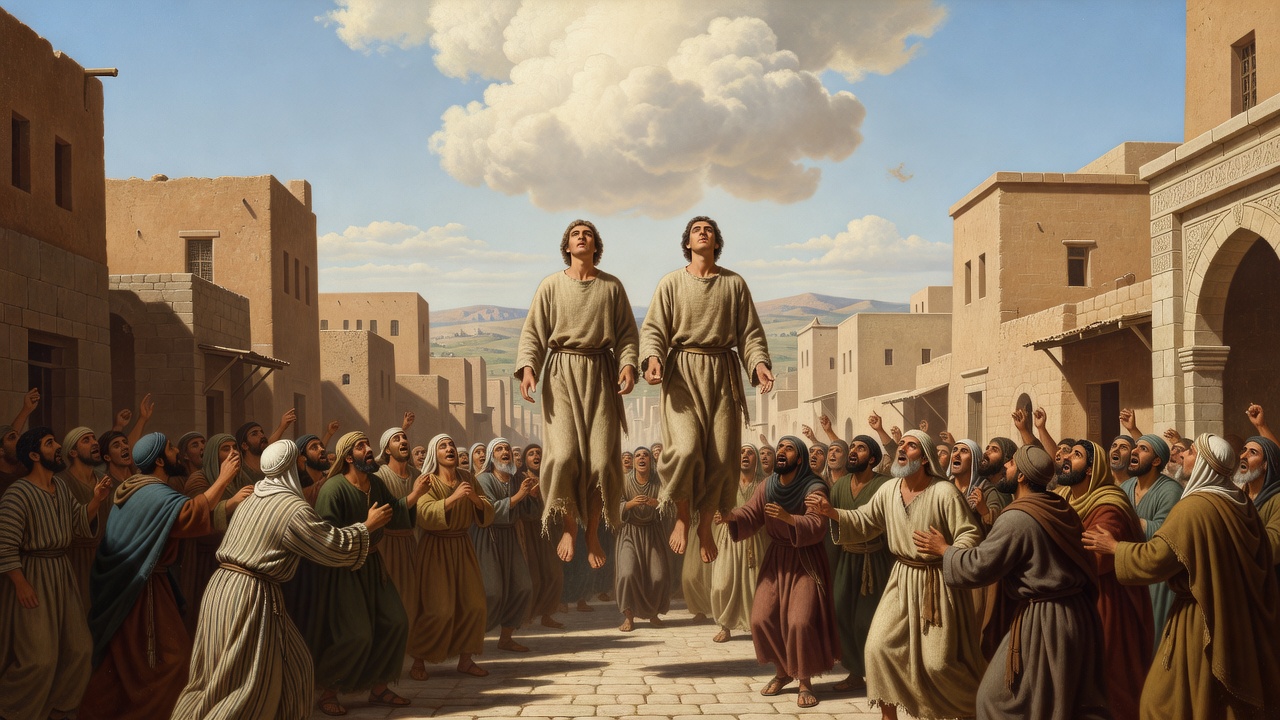
- Quando as duas testemunhas terminam o seu testemunho, a besta que sobe do Abismo as vence e as mata. Durante três dias e meio, povos, tribos, línguas e nações contemplam os seus corpos e não permitem que sejam colocados num túmulo, enquanto os habitantes da terra zombam deles, comemoram e mandam presentes uns aos outros, porque os dois profetas os tinham atormentado. Depois disso, o sopro de vida da parte de Deus entra nelas; elas se põem em pé e sobem ao céu numa nuvem, enquanto os seus inimigos as observam.Fontes: o próprio texto bíblico
Notas escritas com auxílio de IA a partir de fontes abertas (Theographic Bible Metadata, CC BY-SA 4.0; Easton’s Bible Dictionary, domínio público) e revisadas antes de publicar.
Lugares deste capítulo
Só aparecem lugares com identificação de alta confiança (90% ou mais segundo as fontes acadêmicas reunidas pelo OpenBible). Mapa da época: DARE (Digital Atlas of the Roman Empire), CC BY 4.0; mapa atual: © colaboradores do OpenStreetMap; lugares: OpenBible.info (CC BY 4.0).
Créditos e licença desta tradução
Melɛ̌ Mékɔ̄ɔ̄lē
New Testament in Akoose (CM:bss:Akoose)
copyright © 2011 Wycliffe Bible Translators, Inc.
Language: Akoose
Translation by: Wycliffe Bible Translators, Inc.
Akoose
bss
Cameroon
Copyright Information
© 2011, Wycliffe Bible Translators, Inc. All rights reserved.
This translation text is made available to you under the
terms of the Creative Commons License: Attribution-Noncommercial-No Derivative Works.
( http://creativecommons.org/licenses/by-nc-nd/3.0/ )
In addition, you have permission to port the text to different file formats, as long as you
do not change any of the text or punctuation of the Bible.
You may share, copy, distribute, transmit, and extract portions
or quotations from this work, provided that you include the above copyright
information:
You must give Attribution to the work.
You do not sell this work for a profit.
You do not make any derivative works that change any of the actual words or punctuation of the Scriptures.
Permissions beyond the scope of this license may be
available if you contact
us with your request.
The New Testament
in Akoose
© 2011, Wycliffe Bible Translators, Inc. All rights reserved.
This translation is made available to you under the terms of the
Creative Commons Attribution-Noncommercial-No Derivatives license 4.0.
You may share and redistribute this Bible translation or extracts from it in any format, provided that:
You include the above copyright and source information.
You do not sell this work for a profit.
You do not change any of the words or punctuation of the Scriptures.
Pictures included with Scriptures and other documents on this site are licensed just for use with those Scriptures and documents.
For other uses, please contact the respective copyright owners.
2014-04-21
Fonte: http://ebible.org/bssNT/ · eBible.org