Gálatas 6
Melɛ̌ Mékɔ̄ɔ̄lē · Toque num versículo para ver as referências cruzadas.
Kéchéé éche mod áwéné chɔ́ɔ áhūdtē
1A-baányaŋ, nzé nyé mod nhɔ́g nyêhúné á mbéb-te, nyé ábe nyêdíi nyêbɛleʼ mekan ḿme Edəə́dəŋ é Dyǒb éhɛdɛɛ́, nyêtə́ŋgɛ́né nɛ́ɛ nyéwóŋgɛ́né mɔ́ âhúd mɔ́ á mbéb-te. Nzé nyêwôŋgan mɔ́, nyéchēdɛ̄n mɔ́ yə̌l. Boŋ pɛn, nyétêd póndé âbɛl nɛ́n nyéběn ámpē nyéehúnéʼ á mekəgsɛn-tê âbɛl ḿmê mbéb. 2Nyéwôŋgan nhɔ́g ne aníníí âhide á ndutul-tê. Nzé nyêbɛle nɛ̂, ne nyêhídeʼ ngáne mbéndé e Krǐstəə éhɛdɛɛ́. 3Kénzɛ́ɛ́ awě awémtɛ́né aá mɔ́tōmtɛ̄nē abɛ́, adoge yə̌l. Ene ndín e mod eésaá dyamdyam. 4Mod tɛ́ɛ́ átôŋ yə̌l asimɛn. Nzé mod abɛlé nsɔ́n ḿ bwâm, né ǎwōgɛ̄n yə̌l menyiŋge. Né éehəgtán-aá yə̌l ne bad bémpēe. 5Nhɔ́be nɛ̂ áyə̄le mbɛltéd ḿmé mod tɛ́ɛ́ ńnɔneʼ měn.
6Kénzɛ́ɛ́ awě béyə́gtɛɛ́ Eyale é Dyǒb, atə́ŋgɛ́né nɛ́ɛ áhágké mod awě ayə́gteʼ mɔ́ chǒm é bwâm ké éhéé éche áwóó, âwóŋgɛn mɔ́.
7Mod eédōgē yə̌l. Mod eewémtán-nɛ aá mɔ́hɛle mɔ́dog Dyǒb. Kéchéé éche mod áwéné, chɔ́ɔ áhūdtē. 8Kénzɛ́ɛ́ awě abɛle mam mé mbéb ḿme ekob é yə̌l éhɛdɛɛ́, ábíi aá ḿmê mam měn mɛ́piinéd mɔ́ kwééd. Boŋ kénzɛ́ɛ́ awe mɔ́-ʼɛ abɛleʼ mekan mé bwâm ngáne Edəə́dəŋ é Dyǒb éhɛdɛɛ́, ábíi aá ḿmê mam mɛ́bɛ̌l mɔ́ɔ̄kǔd aloŋgé áde déemaáʼ. 9Deekɔ́mé bwâm abɛl. Nzé deétɛdnede âbɛl bwâm, né dɛɛ́kǔd nnam á póndé echě etə́ŋgɛ́né. 10Né-ɔɔ́ póndé tɛ́ɛ́ eche etə́l ébágnédé syánē âbɛl bwâm, débɛl bwâm wɛ́ɛ moosyəə́l, taŋge wɛ́ɛ bǎnned bé Krǐsto.
Elébé ne melɛntɛn mé asóg
11Nyéběn nyényîn mbóŋ mé eʼyale ábě ḿbɛ́nlédé âtele nyé enɛ́n kálag ne échêm ekáá. 12Bad ábe béhɛde nyé anyáged nɛ́n bán bétə́ŋgɛ́né nyé ayag, bébɛle nɛ̂ âlûmtɛn yə̌l, âbɛl boŋ békud dǐn á bwâm áʼsō éʼ bad. Bébáaʼ bán bad béēhāg bɔ́ á meséb nɛ́n bán bétúmé akal nɛ́n bán, kwééd eche Yesuɛ áwédé á awɔg chěnpɛn chɔ́ɔ ekəə boŋ mod ákūd eʼchoóchoŋ. 13Ké bad ábe béyágé běn béēhīdɛ̄ɛ̄ mbéndé, boŋ béhɛde bán béyag nyé âbɛl békume ekáá á tə̂l nɛ́n bán nyêkwɛ̌ntɛ́né nɛ́n bán béyag nyé. 14Dyam áde mɛ pɛn mɛ́kumɛ́nné ekáá á tə̂l ádíi kwééd echě awesyánē Sáŋgwɛ́ɛ́, Yesu Krǐstəə áwédé á awɔg áwɛd nló. Eche kwééd ebɛlé mam mé nkǒŋsé méesaá mɛ dyamdyam á dǐd-te, meewóo-ʼáa dyam âbɛlɛn nkǒŋsé. 15Ken béyágé mod, ken béeyagɛɛ́ mod-ɛ, nɛ̂ déewóoʼɛ́ dyamdyam âbɛl. Dyam áde ádé etógnɛ́n ádíi Dyǒb âtimed mod ekɔ́ɔ́lé. 16Nsaŋ ne ngɔl e Dyǒb ébɛ̂ ne bad bésyə̄ə̄l ábe béhíde ádɛ́n ayə́ge. Ábê bad bɔ́ɔ bédé bad ábe Dyǒb ápwɛ́dé.
17Âsóged enɛ́n kálag, nlâŋge nyé nɛ́n mɛɛ́, modmod eétagtán mɛ ḿmɛ́n mekan áyə̄le mebaŋ médé mɛ á yə̌l hɛ́n ḿme mélûmte nɛ́n bán mbɛnle Yesuɛ.
18A-baányaŋ, nsimé ḿme Sáŋgú Yesu Krǐstəə ḿbɛ̂ ne nyé moosyəə́l. Ébɛ̂ nɛ̂.
Você sabia?
Fardos, a colheita e a cruz
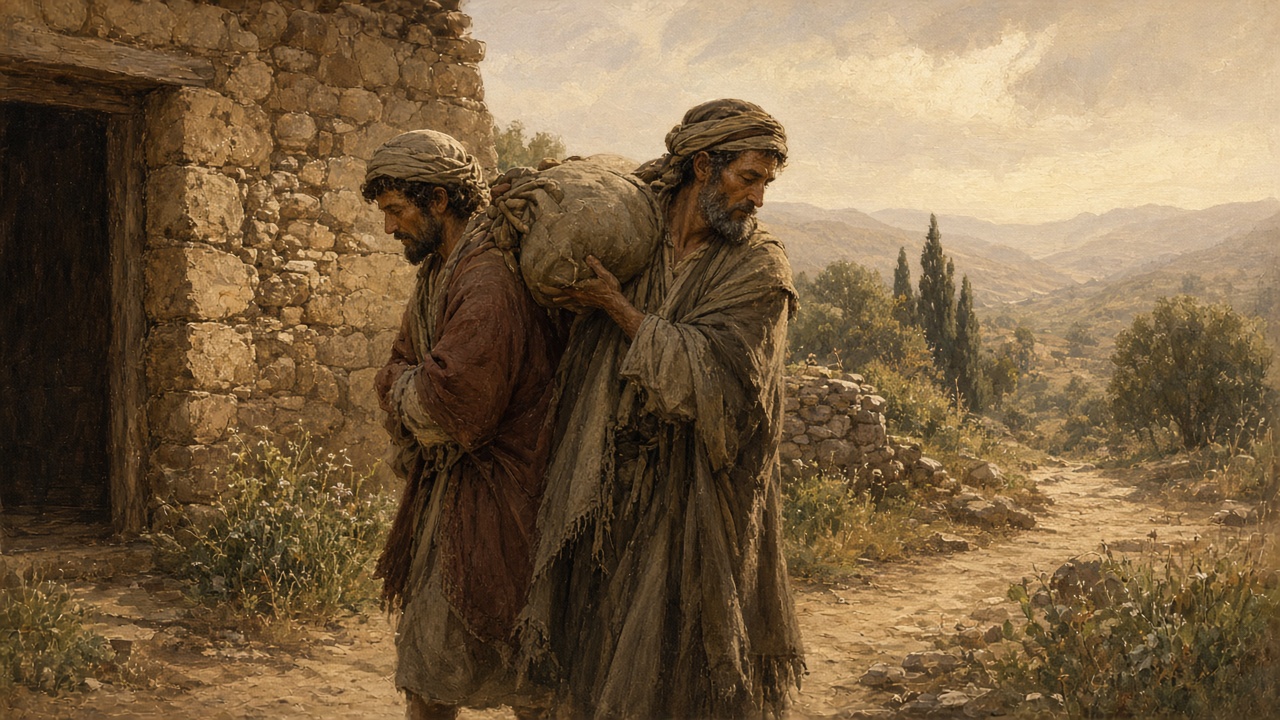
- O capítulo coloca dois deveres lado a lado. Os que são espirituais devem restaurar com mansidão quem for surpreendido numa transgressão e carregar os fardos uns dos outros, o que a carta chama de cumprir a lei de Cristo. Cada um, porém, deve examinar o próprio trabalho e carregar a sua própria carga, em vez de se julgar alguma coisa quando não é nada e se gloriar por comparação com outra pessoa.Fontes: o próprio texto bíblico
- O autor usa a imagem da semeadura e da colheita: Deus não se deixa zombar, e cada um colhe o que semeia. Quem semeia para agradar a carne, da carne colhe destruição; quem semeia para agradar o Espírito, do Espírito colhe a vida eterna. Os leitores são exortados a não se cansar de fazer o bem, pois no tempo devido colherão, se não desistirem, e a fazer o bem a todos, especialmente à família da fé.Fontes: o próprio texto bíblico
- O autor chama a atenção para as letras grandes que está usando ao escrever de próprio punho. Diz que alguns tentam impor a circuncisão para causar boa impressão exterior, evitar a perseguição por causa da cruz de Cristo e gloriar-se na carne dos outros, embora os circuncidados nem sequer guardem a lei. Ele pede para jamais se gloriar, a não ser na cruz de nosso Senhor Jesus Cristo, afirma que nem a circuncisão nem a incircuncisão significam coisa alguma e que o que importa é uma nova criação, e declara que traz no corpo as marcas de Jesus.Fontes: o próprio texto bíblico
Notas escritas com auxílio de IA a partir de fontes abertas (Theographic Bible Metadata, CC BY-SA 4.0; Easton’s Bible Dictionary, domínio público) e revisadas antes de publicar.
Créditos e licença desta tradução
Melɛ̌ Mékɔ̄ɔ̄lē
New Testament in Akoose (CM:bss:Akoose)
copyright © 2011 Wycliffe Bible Translators, Inc.
Language: Akoose
Translation by: Wycliffe Bible Translators, Inc.
Akoose
bss
Cameroon
Copyright Information
© 2011, Wycliffe Bible Translators, Inc. All rights reserved.
This translation text is made available to you under the
terms of the Creative Commons License: Attribution-Noncommercial-No Derivative Works.
( http://creativecommons.org/licenses/by-nc-nd/3.0/ )
In addition, you have permission to port the text to different file formats, as long as you
do not change any of the text or punctuation of the Bible.
You may share, copy, distribute, transmit, and extract portions
or quotations from this work, provided that you include the above copyright
information:
You must give Attribution to the work.
You do not sell this work for a profit.
You do not make any derivative works that change any of the actual words or punctuation of the Scriptures.
Permissions beyond the scope of this license may be
available if you contact
us with your request.
The New Testament
in Akoose
© 2011, Wycliffe Bible Translators, Inc. All rights reserved.
This translation is made available to you under the terms of the
Creative Commons Attribution-Noncommercial-No Derivatives license 4.0.
You may share and redistribute this Bible translation or extracts from it in any format, provided that:
You include the above copyright and source information.
You do not sell this work for a profit.
You do not change any of the words or punctuation of the Scriptures.
Pictures included with Scriptures and other documents on this site are licensed just for use with those Scriptures and documents.
For other uses, please contact the respective copyright owners.
2014-04-21
Fonte: http://ebible.org/bssNT/ · eBible.org