Gálatas 2
Melɛ̌ Mékɔ̄ɔ̄lē · Toque num versículo para ver as referências cruzadas.
Bembapɛɛ bé nlómag ábíníí // béchémé nsɔ́n ḿme Paalɛ
1Ámbīd e dyôm á mwɛ̌ ne ńniin, menkɛ̌ á Jerusalɛm ámpē. Ene póndé menkɛ̌ áwed ne Banabasɛ, menwálé-ʼɛ Titusɛ áyə̄l. 2Menkɛ̌ áwed áyə̄le Dyǒb dénhɔ̄b aá ńkɛ. Áde ḿbédé áwed, syáābe belyə́ged bé mwembé sênkɛ̌ kun. Mentə́nléd bɔ́ nkalaŋ ḿ bwâm ḿme mênkalɛ́ɛ́ bad ábe béesɛ̌ bad bé Israɛl. Membɛl nɛ̂ âbáŋ nɛ́n nsɔ́n ḿme ḿbɛ́lé, ne ḿme ńdíi mbɛleʼ, méēbɔ̄ɔ̄ʼ ngɛ̂n. 3Bênkǒb dyam áde ménlāāʼɛ́ bɔ́. Ké Titusɛ awě ambɛ́ mod a aloŋ á Grikia awě abédé ne mɛ, bénkênyágédté mɔ́ nɛ́n bán bétə́ŋgɛ́né mɔ́ ayag. 4Kénɛ̂, doŋge á bad bé metóm ábe bénsɔ̄l átîntê e bad bé Krǐsto byánán bɔ́mpē bédé bad bé Krǐsto béhɛ́déʼáá bán béyag mɔ́. Ábê bad bénsɔ̄l átîntê echɛ̂d á mesɔɔm-tê âbɛl bényîn ngáne débɛlɛɛ́ mekan ne kunze esyəə́l áyə̄le syánē dedé ne Yesuɛ. Béhɛ́déʼáá bán débɛ̂ betâŋ, déhídeʼ mbéndé e bad bé Israɛl. 5Boŋ sênkênháá bɔ́ etə́l ké mwǎmpīn, áyə̄le sêhɛdéʼáá nɛ́n bán nyébɛ̂ nyébíi ngáne mbále e nkalaŋ ḿ bwâm ékóó abɛ́.
6Bad-tɛ ámpē ábe bébédé áhed nɛ́ɛ belyə́ged bé mwembé, bénkênwóŋgé dyamdyam âbád ámīn e mam ḿme ń'yə́gté. Ké né-ʼɛ, abɛ́ áde bémbɛ̄ɛ̄ belyə́ged dénkênwóŋgé dyamdyam abɛl ne mɛ áyə̄le moosyəə́l adíi nyaa pɔ́g áʼsō éʼ Dyǒb. 7Boŋ bêntim anyín nɛ́n bán Dyǒb ábágé mɛ ekag âkale bad ábe béesɛ̌ bad bé Israɛl nkalaŋ ḿ bwâm. 8Édé nɛ́n bán, Dyǒb ádě ápwɛ́dé Petro âbɛ́ mbapɛɛ a nlómag wɛ́ɛ bad bé Israɛl, dɔ́-ʼaá ápwɛ́dé mɛ́mpē âbɛ́ mbapɛɛ a nlómag wɛ́ɛ bad ábe béesɛ̌ bad bé Israɛl. 9Áde Jemsɛ, Petro ne Jɔnɛ ábe bad bémbīīʼɛ́ nɛ́ɛ mekon mé mwembé bényíné bán Dyǒb ábágé mɛ ḿmē nsimé âbɛ́ mbapɛɛ a nlómag, bénhɛ̄ sé Banabasɛ ekáá-áte, âlúmed nɛ́n bán békóbé sé nɛ́ɛ bad ábe bɔ́bɔ̄ɔ bebɛleʼ nsɔ́n nhɔ́g. Syáābɔ̄ɔ sêntíi nɛ́n bán, sébɛ̂ sékanle bad ábe béesɛ̌ bad bé Israɛl nkalaŋ ḿ bwâm, bɔ́-ʼɛ bébɛ̂ békanle bad bé Israɛl. 10Bénlāā sé pɛn bán, séēchatán betóótōkɛ̄ bé bad awôŋgɛn. Nɛ̂ dɔ́-ʼaá ábédé dyam áde mêndəŋʼɛ́ abɛl bwâmbwam.
Paalɛ akánné Petro áte á dyad á Antyɔg
11Áde Petro ápédé á Antyɔg, menkáné mɔ́ áte átîntê e bad áyə̄le abɛléʼáá dyam áde déeboo. 12Áde ápédé áwed pɛɛ́n, ammɛntɛ́n ndyééd adyɛ́ ne bad bé Krǐsto ábe béesɛ̌ bad bé Israɛl. Boŋ áde doŋge á bad bé Israɛl bébídé wɛ́ɛ Jemsɛ á Jerusalɛm boŋ bépɛ á Antyɔg, Petro ambootéd mekuu adol ámbīd. Eedyágeʼaá ndyééd ámpē ne ábê bad ábe béesɛ̌ bad bé Israɛl. Ambɛl nɛ̂ áyə̄le abááʼáá epepé é bad ábe béhɔ́béʼáá bán bétə́ŋgɛ́né bad ábe béesɛ̌ bad bé Israɛl ayag. 13Nɛ̂ dêmbɛ̌l bad bé Israɛl ábe bémbē bad bé Krǐsto bɔ́mpē bêmbootéd mekuu adol ámbīd. Kə́ə́ŋne Banabasɛ mɔ́mpē anhíd bɔ́ âbɛl ádê awusé. 14Áde ńnyíné nɛ́n mɛɛ́ béebɛlɛɛ́ mam ngáne nkalaŋ ḿ bwâm ńhɔ́bɛɛ́ aá bébɛl, menláá Petro áʼsō wɛ́ɛ bɔ́ moosyəə́l mɛɛ́, “Kénɛ́ɛ édíí mod a Israɛl, etɛ̌dté mbeltéd ḿ bad bé Israɛl, ebɛle mam bɔɔb nɛ́ɛ bad ábe béesɛ̌ bad bé Israɛl. Chán-nɔ̄ éhɛle ényāgtēʼ bad ábe béesɛ̌ bad bé Israɛl âhíd mbeltéd ḿ bad bé Israɛl?”
15Sóo běn awě dedé bǎn bé Israɛl se á nchyáátɛ́n, deésaá nɛ́ɛ bad ábe béesɛ̌ bad bé Israɛl ábe débíí nɛ́n bán béēbíiʼɛ́ mbéndé é Dyǒb. 16Boŋ kénɛ̂, debíí nɛ́n bán Dyǒb déekobɛ́ɛ́ mod nɛ́ɛ mod awě asáá áyə̄le áhídɛɛ́ mbéndé. Adúbe áde mod ádúbpé Yesu Krǐstəə dɔ́ɔ ábɛleʼ boŋ Dyǒb ákōb mod. Né-ɔɔ́ ké syánē ámpē dedúbpé Yesu Krǐstəə âbɛl boŋ Dyǒb ákob syánē áyə̄le adúbe áde dédúbpé Yesuɛ saké áyə̄le dehíde mbéndé. Dyǒb déekobɛ́ɛ́ modmod áyə̄le áhídɛɛ́ mbéndé. 17Ahɛd áde déhɛdɛɛ́ bán désâŋ áʼsō éʼ Dyǒb áyə̄le adúbe áde dédúbpé Krǐstəə, ábɛlɛ doŋge á bad bé Israɛl bényíneʼ syánē nɛ́ɛ bebɛl bé mbéb áyə̄le deehídɛ́ɛ́ mbéndé é bad bé Israɛl ámpē. Nɛ́dē élûmteʼ bán Krǐstəə mɔ́ɔ abɛlteʼ syánē mbéb-ɛ? Aáy, nɛ̂ déehɛlɛ́ɛ́-sɛ ábɛ́. 18Boŋ nzé ntimé ámbīd ámpē boŋ nhídeʼ mbéndé éche mêmmadté atɛde, né nkwedé mbéndé. 19Nzé béhídé mbéndé chɔ́ ne chɔ́, né nwédé. Né mbéndé chěn-naá ewúú mɛ. Boŋ Yesu Krǐstəə anhúd mɛ á mbéndé-te, âbɛl ńhɛl Dyǒb abɛle. 20Awɛ́ áde Yesuɛ ánwɛ̄ɛ̄ á awɔg ádé nɛ́n bán mɛ́mpē menwɛ́. Meésaá á aloŋgé ámpē. Krǐstəə mɔ́ adé mɛ áte. Né-ɔɔ́, kéchéé éche ḿbɛlɛɛ́ á nkǒŋsé-te wɛ́n bɔɔb, mbɛleʼ chɔ́ ne adúbe áde ńdúbpé Mwǎn a Dyǒb awě adəə́ mɛ, boŋ awɛ́-ʼɛ á nló ḿmêm. 21Meésaá nhɔ́g awě ahɛle ahɔ́b nɛ́n aá nsimé ń Dyǒb méesaá dyamdyam. Áyə̄le nɛ́n, nzé émbɛ̄ nɛ́n bán Dyǒb áhɛlesɛ ákōb mod áyə̄le ahídé mbéndé, nɛ́dē né Yesuɛ awédé á awɔg ngɛ̂n.
Você sabia?
Gentios, comunhão e um confronto em Antioquia
- Tito foi com Paulo e Barnabé a Jerusalém. O Easton's Bible Dictionary (1897) diz que ele parece ter sido gentio e que seu nome não aparece em Atos. Paulo escreve que Tito, embora fosse grego, não foi obrigado a circuncidar-se.Fontes: Titus · o próprio texto bíblico
- O confronto posterior ocorreu em Antioquia da Síria, às margens do Orontes, a umas trezentas milhas ao norte de Jerusalém. A cidade ocupava o terceiro lugar entre as cidades do Império Romano, depois de Roma e Alexandria, e foi ali que os crentes foram chamados cristãos pela primeira vez.Fontes: Antioch (Syria) · o próprio texto bíblico
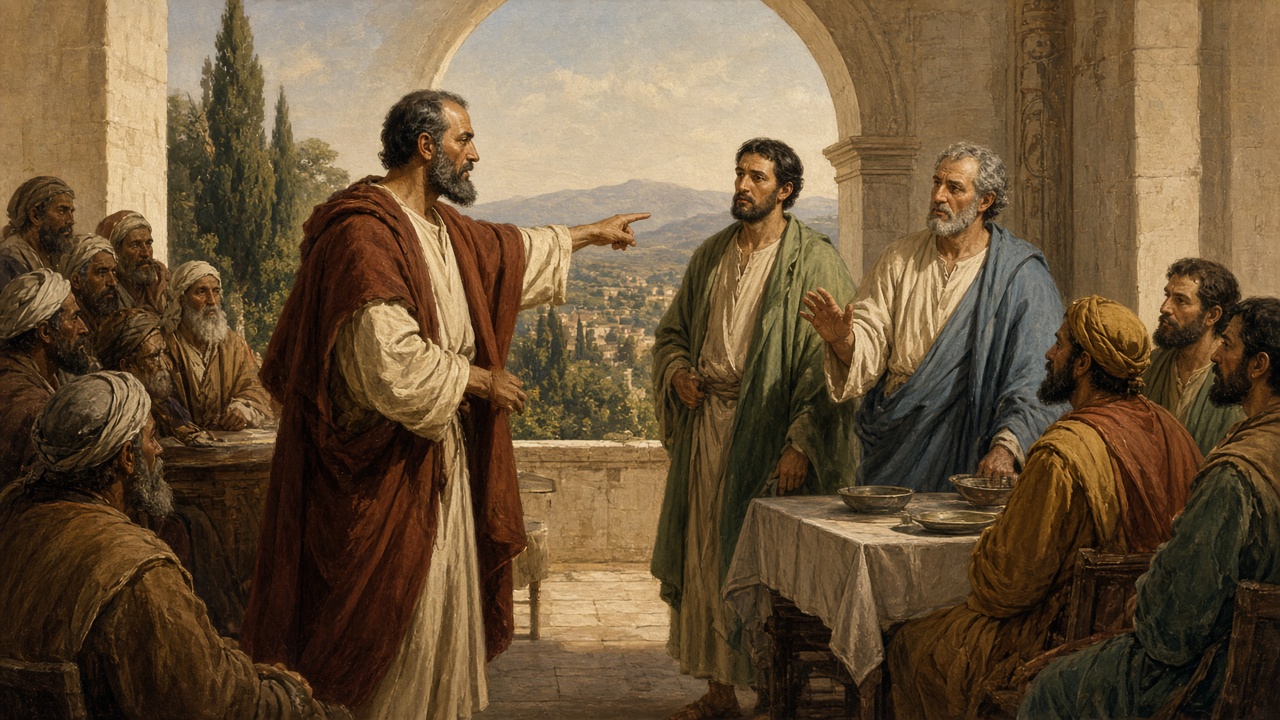
- O Easton's Bible Dictionary (1897) descreve Tiago, citado com Cefas e João como um dos pilares, como cabeça da igreja em Jerusalém, onde presidiu o concílio sobre os gentios. Paulo diz que, antes de chegarem certos homens da parte de Tiago, Cefas costumava comer com os gentios, mas depois se afastou por medo do grupo da circuncisão.Fontes: James (Brother of Jesus) · o próprio texto bíblico
Notas escritas com auxílio de IA a partir de fontes abertas (Theographic Bible Metadata, CC BY-SA 4.0; Easton’s Bible Dictionary, domínio público) e revisadas antes de publicar.
Lugares deste capítulo
- Jerusalem · 31.777, 35.234 · versículo 1
- Antioch · Hoje: Antioch on the Orontes · 36.227, 36.172 · versículo 11
Só aparecem lugares com identificação de alta confiança (90% ou mais segundo as fontes acadêmicas reunidas pelo OpenBible). Mapa da época: DARE (Digital Atlas of the Roman Empire), CC BY 4.0; mapa atual: © colaboradores do OpenStreetMap; lugares: OpenBible.info (CC BY 4.0).
Créditos e licença desta tradução
Melɛ̌ Mékɔ̄ɔ̄lē
New Testament in Akoose (CM:bss:Akoose)
copyright © 2011 Wycliffe Bible Translators, Inc.
Language: Akoose
Translation by: Wycliffe Bible Translators, Inc.
Akoose
bss
Cameroon
Copyright Information
© 2011, Wycliffe Bible Translators, Inc. All rights reserved.
This translation text is made available to you under the
terms of the Creative Commons License: Attribution-Noncommercial-No Derivative Works.
( http://creativecommons.org/licenses/by-nc-nd/3.0/ )
In addition, you have permission to port the text to different file formats, as long as you
do not change any of the text or punctuation of the Bible.
You may share, copy, distribute, transmit, and extract portions
or quotations from this work, provided that you include the above copyright
information:
You must give Attribution to the work.
You do not sell this work for a profit.
You do not make any derivative works that change any of the actual words or punctuation of the Scriptures.
Permissions beyond the scope of this license may be
available if you contact
us with your request.
The New Testament
in Akoose
© 2011, Wycliffe Bible Translators, Inc. All rights reserved.
This translation is made available to you under the terms of the
Creative Commons Attribution-Noncommercial-No Derivatives license 4.0.
You may share and redistribute this Bible translation or extracts from it in any format, provided that:
You include the above copyright and source information.
You do not sell this work for a profit.
You do not change any of the words or punctuation of the Scriptures.
Pictures included with Scriptures and other documents on this site are licensed just for use with those Scriptures and documents.
For other uses, please contact the respective copyright owners.
2014-04-21
Fonte: http://ebible.org/bssNT/ · eBible.org