Números 19
Kitabu ka Kanu · Toque num versículo para ver as referências cruzadas.
Kəlompəs ka domun ndɛ dɔŋsɔkəs mɔ
1Kɔ MARIKI oloku Musa kɔ Aruna: 2«Ntɛ t'ancic dəsariyɛ sa MARIKI nsɛ ɛncəmbər mɔ: Məloku aka Yisrayel, a ŋakɛr'am wana wɛran weyim nwɛ wɔntɔyɔ dolokəp, nwɛ wɛntatɔdəndɛ kel mɔ. 3Nəsɔŋ wi Elasar wəloŋnɛ, pəwurɛnɛ wi dəsaŋka, pafay wi fɔr yɔn kiriŋ. Pasu tɔbɔl mecir mamɔkɔ mɛbɛrɛ pi disrɛ. 4Elasar wəloŋnɛ pəlɛk mecir ma wana wawɔkɔ, pəwɛsəs mi camət-mɛrəŋ ntende dəkəbɛrɛ da aŋgbancan ŋɛbəpɛnɛ kɔ Kanu. 5Pacɔf wana wawɔkɔ fɔr yɔn kiriŋ, akata, sɛm ya wi, mecir kɔ yedisrɛ ya aputuk. 6Wəloŋnɛ pəlɛk kətɔk kəbotu ambɔnc ka sɛdər kɔ yika yobotu ambɔnc ya hisɔp kɔ tafəc peyim, pələm ca yayɔkɔ dənɛnc yɔcɔfɛnɛ kɔ wana wawɔkɔ. 7Wəloŋnɛ pəyakɛ yamos yɔn kɔ dis dɔn domun, a pədebɛrɛ saŋka disrɛ. Wəloŋnɛ ɔsɔk fɛ haŋ dec dɛkalɛ. 8Nwɛ ɛnacɔf wana mɔ pəyak yamos yɔn, pəbikɛ domun, ɔsɔk fɛ haŋ dec dɛkalɛ. 9Wərkun wəsoku wəkin pəwɛt kəbof ka wana wawɔkɔ, pəkɔ pəboc ki kəfo kəpus saŋka tadarəŋ. Pamɛŋkɛ ki kəloŋkanɛ ka Yisrayel teta kəlompəs ka domun dɔsɔksɛ. Kəloŋnɛ ka kiciya kɔ. 10Fum nwɛ ɛŋwɛt kəbof ka wana kaŋkɔ mɔ, pəyak yamos yɔn, ɔsɔk fɛ haŋ dec dɛkalɛ. Sariyɛ sa doru o doru sɔ nnɔ aka Yisrayel kɔ acikəra aŋɛ ŋandɛ ŋa dacɔ mɔ.»
Sariyɛ sa kəsɔkəsnɛ
11Nwɛ oŋgbuŋɛnɛ wəfi mɔ, ɔsɔk fɛ haŋ mata camət-mɛrəŋ. 12Tataka ta maas kɔ ta camət-mɛrəŋ, pəmar pəsɔkəsnɛnɛ domun ndɛ dɔŋsɔkəs mɔ. K'ɔntɔsɔkəsnɛ tataka ta maas kɔ ta camət-mɛrəŋ-ɛ, ɔfɔsɔk. 13Nwɛ o nwɛ oŋgbuŋɛnɛ wəfi ta ɔsɔkəsnɛ mɔ, eŋyik-yikəs dəkiyi da MARIKI. Aŋwurɛ wəkayi aYisrayel dacɔ, bawo awɛs-wɛsəsər fɛ kɔ domun dɔsɔksɛ, ɔsɔk fɛ: Kətɔsɔk kɔn kəyi kɔ sɔ kəroŋ.
14Sariyɛ sɔ nsɛ: Kɔ fum efi abal disrɛ-ɛ, nwɛ o nwɛ ɛmbɛrɛ abal ŋaŋɔkɔ disrɛ, nwɛ o nwɛ eŋyi di mɔ, ɔfɔsɔk haŋ mata camət-mɛrəŋ. 15Pɛbɛrɛ paka mpɛ o mpɛ peŋyi abal ŋaŋɔkɔ disrɛ ta aŋgbəpər pi mɔ, pɔsɔk fɛ. 16Nwɛ o nwɛ oŋgbuŋɛnɛ dəkulum fum nwɛ andif, kɔ pəyɔnɛ fɛ ti pəfinɛ defi dekifəli, bɛnt ya wəfi kɔ pəyɔnɛ fɛ ti kufu kɔn-ɛ, ɔsɔk fɛ haŋ mata camət-mɛrəŋ. 17Palɛkɛ wətɔsɔk, kəbof ka wana weyim nwɛ ancɔfɛ MARIKI teta kiciya mɔ, pabɛr ki dətaŋku, pabɛr ki kəroŋ domun decempi da dəkəŋgbɔkɔ. 18Wərkun wəsoku pəlɛk alɛ ŋa hisɔp, pəgbət ŋi dəromun. K'elip-ɛ, pəwɛsəsər abal, pənaŋkanɛ yosumpər-sumpər kɔ afum akɔ ŋayi di mɔ, nwɛ oŋgbuŋsərɛnɛ bɛnt ya wəfi, nwɛ andif kɔ pəyɔnɛ fɛ ti pəfinɛ defi dekifəli, kɔ pəyɔnɛ fɛ ti kufu kɔn mɔ. 19Fum wəsoku pəwɛsəsər wətɔsɔk tataka ta maas kɔ ta camət-mɛrəŋ, wəkakɔ ɔsɔk tataka ta camət-mɛrəŋ. Pəyak yamos yɔn, pəbikɛ domun, kɔ dec dɛŋkalɛ-ɛ, ɔŋsɔk.
20Wərkun wətɔsɔk nwɛ ɔntɔsɔkəsnɛ mɔ, andewurɛ kɔ aka Yisrayel dacɔ, bawo eyik-yikəs kəfo kəpus ka MARIKI. Bawo anawɛsəsər fɛ kɔ domun dɔsɔksɛ, ɔsɔk fɛ.
21Sariyɛ sa doru o doru sɔ nnɔ aka Yisrayel ŋayi mɔ. Nwɛ ɛwɛsəsər domun dɔsɔksɛ dadɔkɔ mɔ, pəyak yamos yɔn. Nwɛ oŋgbuŋɛnɛ domun dɔsɔksɛ mɔ, ɔsɔk fɛ haŋ dec dɛkalɛ. 22Mpɛ o mpɛ wətɔsɔk oŋgbuŋɛnɛ mɔ, pɔŋyɔnɛ pɔtɔsɔk. Nwɛ oŋgbuŋɛnɛ pi mɔ, ɔsɔk fɛ haŋ dec dɛkalɛ.
Você sabia?
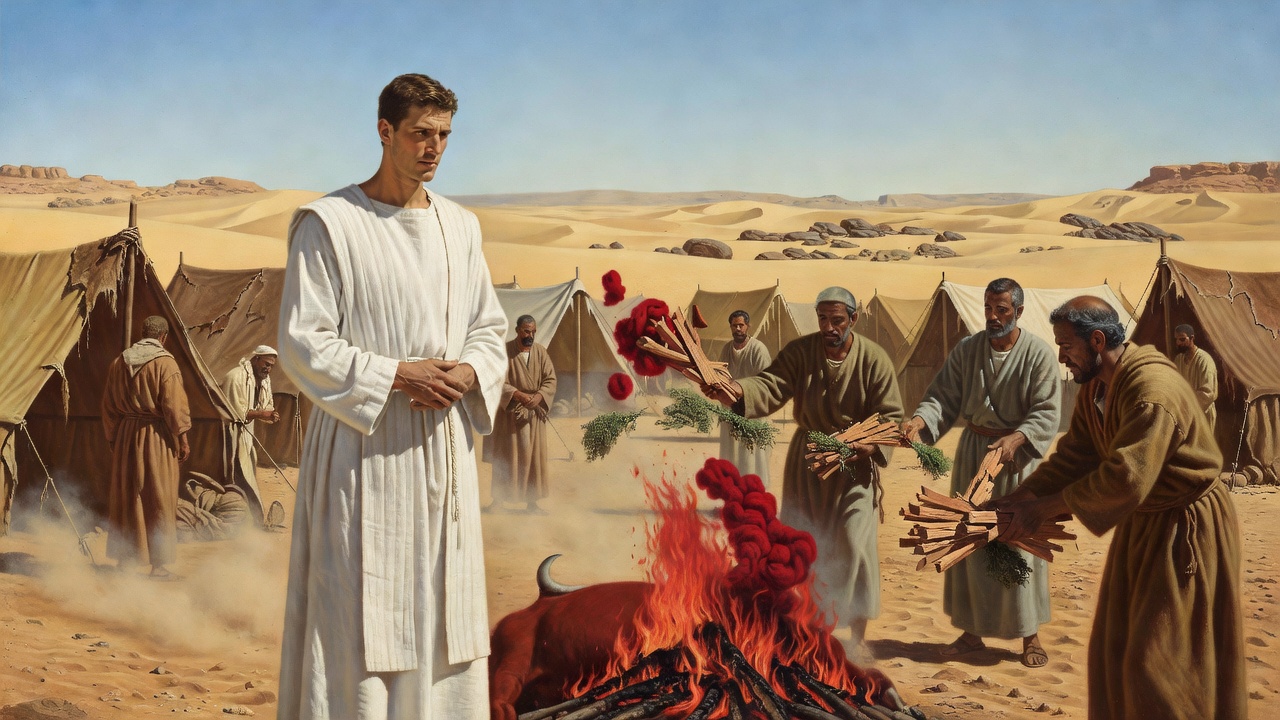
A novilha vermelha e a purificação da impureza
- Diferente dos sacrifícios habituais oferecidos no altar do tabernáculo, a novilha vermelha sem defeito e que nunca havia levado jugo era levada para fora do acampamento. Ali era sacrificada na presença do sacerdote Eleazar e queimada por inteiro com madeira de cedro, hissopo e lã carmesim.Fontes: o próprio texto bíblico · Eleazar
- As cinzas da novilha eram guardadas fora do acampamento para o preparo da água de purificação. Paradoxalmente, embora essa mistura purificasse os que haviam se tornado impuros pelo contato com a morte, todos os que manuseavam a novilha, recolhiam as cinzas ou aspergissem a água ficavam cerimonialmente impuros até o entardecer.Fontes: o próprio texto bíblico
- O contato com um cadáver, um osso humano, uma sepultura ou o simples fato de estar em uma tenda onde alguém morresse causava sete dias de impureza cerimonial. Para a purificação, a pessoa precisava ser aspergida com a água de purificação no terceiro e no sétimo dia, além de lavar suas roupas e banhar-se.Fontes: o próprio texto bíblico
Notas escritas com auxílio de IA a partir de fontes abertas (Theographic Bible Metadata, CC BY-SA 4.0; Easton’s Bible Dictionary, domínio público) e revisadas antes de publicar.
Créditos e licença desta tradução
Kitabu ka Kanu
Portions of the Holy Bible in the Baga Sitemu language of Guinea
Des portions de la Sainte Bible dans la langue Baga Sitemu de Guinée
copyright © 2015 Pioneer Bible Translators
Language: Baga Sitemu
Translation by: Traducteurs Pionniers de la Bible
Contributor: Pioneer Bible Translators
This translation is made available to you under the terms of the
Creative Commons Attribution Share-Alike license 4.0.
You have permission to share and redistribute this Bible translation in any format and to make reasonable revisions and adaptations of this translation, provided that:
You include the above copyright and source information.
If you make any changes to the text, you must indicate that you did so in a way that makes it clear that the original licensor is not necessarily endorsing your changes.
If you redistribute this text, you must distribute your contributions under the same license as the original.
Pictures included with Scriptures and other documents on this site are licensed just for use with those Scriptures and documents.
For other uses, please contact the respective copyright owners.
Note that in addition to the rules above, revising and adapting God's Word involves a great responsibility to be true to God's Word. See Revelation 22:18-19.
2025-04-29
Fonte: http://ebible.org/bsp/ · eBible.org