Gênesis 32
Kitabu ka Kanu · Toque num versículo para ver as referências cruzadas.
1Kɔ Labaŋ ɛyɛfɛ bətbət suy, k'oncup awut-sɔ ɔn arkun k'aran, k'ontolanɛ ŋa, k'osumpər dɔpɔ kəlukus ka nde ndɔrɔn.
Yakuba kəlompəsnɛ kɔn kəbəpɛnɛ kɔ Esayu
2Kɔ Yakuba sɔ ɛncəmɛ dɔpɔ dɔn darəŋ, kɔ mɛlɛke a Kanu ŋancɛpsɛ kɔ darəŋ. 3Yakuba endenəŋk mi, k'oloku: «Afan ŋa Kanu ŋɔ!» K'ɔsɔŋ tofo tatɔkɔ tewe ta Mahanayim.
4Yakuba pəyi tadarəŋ k'osom nda wɛnc Esayu nwɛ ɛnayi kulum ka Edɔm mɔ, atɔf ŋa Sehir. 5Kɔ Yakuba osom ŋa ntɛ: «Ntɛ tɔ nəŋkɔloku mariki wɛnc im Esayu: ‹A wəcar kam Yakuba-ɛ, a iŋkɔ iwon nda Labaŋ haŋ. 6Iyɔ cəna, sɔfale, ŋkesiya, cir, acar arkun kɔ aran. Ti t'isom'am nnɔ mariki wɛnc im eyi mɔ, pəctam kəwosɛ ibɛrɛ.›»
7K'asom ŋaluksərnɛ nnɔ Yakuba eyi mɔ, kɔ ŋaloku kɔ: «Səŋkɔ nda wɛnc əm Esayu, nkɔn sɔ kəlompəsnɛ k'ɛndɛ kədebəp əm, kɔ afum 400.» 8K'abəkəc ŋɔntɔfəntərɛ Yakuba, kɔ kənesɛ kəsumpər kɔ. K'eyer afum akɔ ŋanasol mɔ cəgba mɛrəŋ, kəbəp ŋkesiya, cir, cəna haŋ yɔkɔmɛ. 9Kɔ Yakuba oloku: «Kɔ Esayu ɛntam afum a kəgba kin-ɛ, a kɔ ŋaŋyɛksɛ.»
10Kɔ Yakuba oloku: «Kanu ka papa kem Abraham, Kanu ka papa kem Siyaka, MARIKI nwɛ olok'im: ‹Məlukus atɔf ŋam nde aŋkom əm mɔ, indeyɔn'am pətɔt!› 11Ifɛtər layidi kɔ pətɔt mpɛ məŋkɛr'em mɔ, ina wəcar kam. Bawo ntɛ inccepər Yurdɛn yayɛ mɔ, togbo tem gbəcərəm t'inatɔmpər, ndɛkəl oŋ iyer afum em cəgba mɛrəŋ. 12Ilɛtsɛn'am məbaŋ im, wɛnc im Esayu dəwaca! Bawo iŋnesɛ ta pədesut im, kɔ iya ka awut em. 13Kɔ məna Kanu mənalok'im: ‹Indey'əm pətɔt, indeyɔ yuruya yam ŋala pəmɔ asənc ŋa dəkəba, nŋɛ antɔtam kəlɔm mɔ.›»
14Difɔ Yakuba ɛnacepərɛnɛ pibi. K'ɛyɛk-yɛk daka dɔn dɔkɔ ɛnakɛrɛ mɔ dacɔ kəkɔpocɛ wɛnc Esayu: 15Cir masar mɛrəŋ (200), mbiyofo wəco mɛrəŋ (20), ŋkesiya yɛran masar mɛrəŋ (200) kɔ yorkun wəco mɛrəŋ (20), 16kɔ yɔkɔmɛ yɛran wəco maas (30) kɔ awut ayi akɔ yɛncmɛsər mɔ, cəna cəran wəco maŋkəlɛ (40), mura wəco (10), sɔfale səran wəco mɛrəŋ (20) kɔ sərkun wəco (10). 17Kɔ Yakuba ɔsɔŋ yɔcɔl yayɔkɔ fəp fa yi kɔ dokom da yi acar ɔn, k'oloku ŋa: «Nəy'im kiriŋ, nəsolɛ yɔcɔl yayɛ dokom dokom, nəbɔlɛnɛ yi kɔ yɔkɔ.» 18K'osom wəcɔkɔ-cɔkɔ: «Kɔ nəŋkɔbəpɛnɛ kɔ wɛnc im Esayu a pəyif əm: ‹An'ɔ məyɔnɛ? Deke məŋkɔ-ɛ? An'ɔyɔ yɔcɔl yayɛ məsolɛ mɔ-ɛ?› 19Məloku kɔ: ‹Ya wəcar kam Yakuba yɔ, kəpocɛ kɔ nkɛ ɔsɔŋ im a ikenɛ mariki mem Esayu mɔ. Mba nkɔn ɔfɔ wəkɔ ender im tadarəŋ mɔ.›»
20K'osom sɔ kəsom kin kaŋkɔ, asolɛ yɔcɔl ya mɛrəŋ, ya maas kəbəp ka alpəs akɔ ŋanayi tadarəŋ ŋasolɛ yɔcɔl mɔ: «Tatɔkɔ tɔ nəŋkɔloku Esayu kɔ nəŋkɔbəpɛnɛ-ɛ. 21Nəloku kɔ: ‹Wəcar kam Yakuba ender su wəkɔ tadarəŋ.›» Bawo Yakuba ɛnaloku: «Kəpocɛ kaŋkɛ kəy'im kiriŋ mɔ, ik'iŋkɔtor-torɛnɛ kɔ abəkəc, a sədenəŋkɛnɛ fɔr disrɛ. Tɔlɔma endekɔselɛn'em belbel.» 22Kɔ yopocɛ yayɔkɔ yeyi kɔ kiriŋ, k'encepərɛnɛ pibi papɔkɔ dəndo dəkulum.
Yakuba kəsiməs kɔn kɔ Kanu
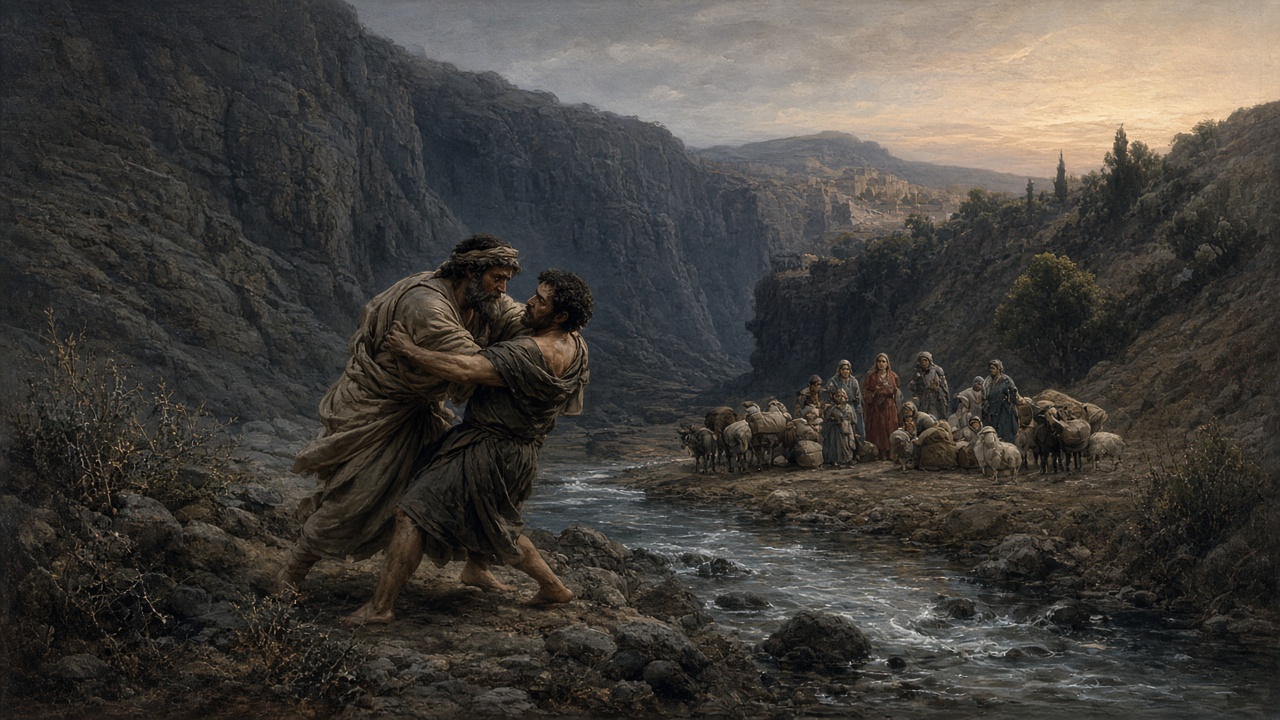
23Kɔ Yakuba ɛyɛfɛ pibi papɔkɔ, k'ɛlɛk aran ɔn mɛrəŋ, amarəs aran ɔn mɛrəŋ k'awut ɔn wəco kɔ pin, k'ɛncalɛnɛ ŋa dəŋgbəl da Yabɔk. 24Ntɛ Yakuba ɛlɛk aran ɔn, k'ɛncalɛnɛ ŋa dəŋgbəl kɔ daka dɔkɔ ɛnayɔ mɔ fəp. 25Kɔ Yakuba eyi di sona. Pəndebiyɛ, kɔ fum wəlɔma ɛyɛfɛ kəsiməs kɔ Yakuba haŋ dɔsɔka. 26Ntɛ wəsimsɛnɛ kɔn ɛnəŋk, eyi fɛ kətam kɔ mɔ, k'osut kɔ nnɔ dətɔkɔc. Kɔ tɔkɔc ta Yakuba towur pəcsiməs kɔ fum wəkakɔ. 27Kɔ fum wəkakɔ oloku: «Məsak im ikɔ, bawo pəyi kəyɔ panpan.» Kɔ Yakuba oloku kɔ: «Ifɔsak əm məkɔ ta məntolan'em-ɛ.» 28Kɔ fum wəkakɔ eyif Yakuba: «Cəke c'aŋw'am-ɛ?» Kɔ Yakuba oloku: «Yakuba y'aŋw'em.» 29Kɔ fum wəkakɔ oloku kɔ sɔ: «Yakuba yɔfɔsɔyɔnɛ tewe tam, Yisrayel ŋ'ande pacw'am, bawo məsiməs kɔ Kanu kɔ afum, kɔ məntam ŋa.»
30Kɔ Yakuba eyif fum wəkakɔ: «Ilɛtsɛn'am məboncər im tewe tam.» Kɔ fum nwɛ eyif kɔ: «Ta ake tɔ məfaŋɛ kəcərɛnɛ tewe tem-ɛ?» Kɔ fum nwɛ ontolanɛ Yakuba dəndo. 31Kɔ Yakuba ɔsɔŋ tofo tatɔkɔ tewe ta Peniyɛl, bawo nkɔn olokunɛ: «Inəŋk Kanu səgbətnɛnɛ, k'intɔfi.» 32Dec dɛncpɛ a pəccepər Peniyɛl. Yakuba pəctorər tɔkɔc tɔn. 33Ti tɔsɔŋɛ ntɛ awut a Yisrayel ŋantɔsɔm abənta ŋa dətɔkɔc mɔ, bawo abənta ŋa dətɔkɔc ŋɔ Kanu kənasut Yakuba, nde kəbɛnt ka dəkəcək kɔ kəbɛnt ka dəkumunt yɛmbəpɛnɛ mɔ.
Você sabia?
No Jaboque, a caminho de Esaú
- Maanaim significa “dois acampamentos”. Jacó deu esse nome ao lugar junto ao Jaboque, além do Jordão, quando os anjos de Deus vieram ao seu encontro e ele disse: “Este é o acampamento de Deus”. Ali também dividiu seu povo, os rebanhos, as manadas e os camelos em dois acampamentos, na esperança de que um escapasse se Esaú atacasse o outro.Fontes: Mahanaim · o próprio texto bíblico
- O Jaboque, cujo nome se explica como “um derramamento, ou uma luta”, é um ribeiro a leste do Jordão. Deságua no Jordão mais ou menos a meio caminho entre o mar da Galileia e o mar Morto, depois de um percurso de cerca de 65 milhas por um desfiladeiro selvagem e profundo. No vau, Jacó fez passar as duas esposas, as duas servas, os onze filhos e tudo o que possuía, e ficou sozinho, lutando com um homem até o amanhecer.Fontes: Jabbok · o próprio texto bíblico
- Jacó enviou mensageiros a Esaú na terra de Seir, o país de Edom, chamando-o senhor e a si mesmo servo. Seir é uma região montanhosa ao longo do lado leste da Arabah, da extremidade sudeste do mar Morto até perto de Akabah, o braço oriental do mar Vermelho; os edomitas a ocupavam, e ela foi destinada aos descendentes de Esaú. Esaú, o gêmeo primogênito e caçador, vendera o direito de primogenitura por um guisado de lentilhas vermelhas e também se chamava Edom, “vermelho”, enquanto Jacó — cujo nome significa “aquele que segue nos calcanhares de outro”, ou “suplantador” — conspirara com a mãe para enganar Isaque.Fontes: o próprio texto bíblico · Seir · Esau (Edom) · Jacob (Israel)
Notas escritas com auxílio de IA a partir de fontes abertas (Theographic Bible Metadata, CC BY-SA 4.0; Easton’s Bible Dictionary, domínio público) e revisadas antes de publicar.
Lugares deste capítulo
- Edom · 30.746, 35.604 · versículo 3
- Jordan · Hoje: Jordan River · 31.761, 35.558 · versículo 10
- Jabbok · Hoje: Zarqa River · 32.115, 35.543 · versículo 22
Só aparecem lugares com identificação de alta confiança (90% ou mais segundo as fontes acadêmicas reunidas pelo OpenBible). Mapa da época: DARE (Digital Atlas of the Roman Empire), CC BY 4.0; mapa atual: © colaboradores do OpenStreetMap; lugares: OpenBible.info (CC BY 4.0).
Créditos e licença desta tradução
Kitabu ka Kanu
Portions of the Holy Bible in the Baga Sitemu language of Guinea
Des portions de la Sainte Bible dans la langue Baga Sitemu de Guinée
copyright © 2015 Pioneer Bible Translators
Language: Baga Sitemu
Translation by: Traducteurs Pionniers de la Bible
Contributor: Pioneer Bible Translators
This translation is made available to you under the terms of the
Creative Commons Attribution Share-Alike license 4.0.
You have permission to share and redistribute this Bible translation in any format and to make reasonable revisions and adaptations of this translation, provided that:
You include the above copyright and source information.
If you make any changes to the text, you must indicate that you did so in a way that makes it clear that the original licensor is not necessarily endorsing your changes.
If you redistribute this text, you must distribute your contributions under the same license as the original.
Pictures included with Scriptures and other documents on this site are licensed just for use with those Scriptures and documents.
For other uses, please contact the respective copyright owners.
Note that in addition to the rules above, revising and adapting God's Word involves a great responsibility to be true to God's Word. See Revelation 22:18-19.
2025-04-29
Fonte: http://ebible.org/bsp/ · eBible.org