Gênesis 29
Kitabu ka Kanu · Toque num versículo para ver as referências cruzadas.
Yakuba kəbəpɛnɛ kɔ Rasɛl
1Kɔ Yakuba ɛyɛfɛ kəkɔt kəkɔ ka atɔf ŋa awut a nde dec dɛmpɛ mɔ. 2Kɔ Yakuba ɛnəŋk kələmp dəndo dəkulum, kɔ yɔcɔl yɛfɛt yɛfɛt yoloŋkanɛ mofo maas yɛcəmɛ kələmp kaŋkɔ kəsək, bawo kələmp kaŋkɔ kɔ yɔcɔl yoncmun. Tasar mpɛ pɛnayi kələmp dəkusu mɔ pɛnabɛk. 3Difɔ yɔcɔl fəp yɛncbəpɛnɛ. Pabiŋkəli tasar papɔkɔ anaboc kələmp dəkusu mɔ, cir kɔ ŋkesiya yomun. Kɔ yelip-ɛ paluksɛ tasar papɔkɔ sɔ kələmp dəkusu. 4Kɔ Yakuba eyif akɛk yɔcɔl: «Awɛnc im aŋa, aka deke ŋɔ nəyɔnɛ-ɛ?» Kɔ akakɔ ŋaloku kɔ: «Aka Haraŋ ŋɔ səyɔnɛ.» 5Kɔ Yakuba eyif ŋa: «Nəncərɛ Labaŋ, wan ka Nahor?» Kɔ ŋawosɛ: «Ɛy, səncərɛ kɔ.» 6K'eyif ŋa: «Cəke cɔ pəyi kɔ-ɛ?» Kɔ akakɔ ŋaloku kɔ: «Daka o daka! Wan kɔn wəran Rasɛl ender wəkɔ kɔ yɔcɔl yɛfɛt yɛfɛt.» 7Kɔ Yakuba oloku ŋa: «Dec dɔsɔrɔbɛk kərɛsna. Tɛm toloŋka yɔcɔl tɛntabəp fɛ. Nəsɔŋ yɔcɔl domun, kɔ nəlip-ɛ nəkekərɛ yi kərɛsna yɔkɔsɔmət.» 8Kɔ ŋaloku kɔ: «Səfɔtam ti kɔ yɔcɔl fəp yɔntɔloŋkanɛ-ɛ, bawo ti tɔ səmbiŋkəli tasar ntɛ aŋsuncɛ kələmp mɔ, a yɔcɔl yɛfɛt yɛfɛt yomun.» 9Yakuba eyi kəlok-lokər akɛk kɔ Rasɛl ɛmbɛrɛ kɔ yɔcɔl yɛfɛt yɛfɛt ya kas, bawo Rasɛl wəkɛk ɛnayi. 10Ntɛ Yakuba ɛnəŋk Rasɛl wan wəran wəka Labaŋ kɔ yɔcɔl yɛfɛt yɛfɛt ya Labaŋ mɔ, k'ɔncɔŋnɛ k'embiŋkəli tasar tatɔkɔ ancsuncɛ kələmp mɔ. Kɔ yɔcɔl yɛfɛt yɛfɛt ya Labaŋ yomun. 11Kɔ Yakuba oncup Rasɛl, k'ɛyɛfɛ kəfək, pəcbok. 12Kɔ Yakuba oloku Rasɛl: «Fum ka papa kam iyɔnɛ, wan ka Rebeka iyɔnɛ.» Kɔ Rasɛl ɛyɛksɛ kəkɔloku ti kas Labaŋ. 13Ntɛ Labaŋ ene kəder ka Yakuba wan ka wəkirɛ kɔn mɔ, k'ɛyɛksɛ k'ende pəsapnɛ Yakuba, k'ɛmakərɛnɛ kɔ. Kɔ Labaŋ eŋkekərɛ kɔ nde kəlɔ kɔn, kɔ Yakuba ɔlɔmər kɔ mes mɔkɔ mɛnasɔtɔ kɔ mɔ fəp. 14Kɔ Labaŋ oloku kɔ: «Kance kəsoku pɛs kɔ: Mecir min mɔ səmpaŋnɛ!» Kɔ Yakuba eyi ndena Labaŋ ŋof ŋin.
Kənɛncɛ ka Yakuba kəmɛrəŋ
15Kɔ Labaŋ ende pəloku Yakuba: «Bawo fum kem məyɔnɛ, məfɔdebəc'em kifəli? Məboncər im daka ndɛ məfaŋ da kəway kam mɔ.» 16Labaŋ ɛnayɔ ayecəra mɛrəŋ: Tewe ta Bɔmbɔ bɔn tɛnayɔnɛ Leya, kɔ Cayi cɔn Rasɛl. 17Leya ɛnatesɛ fɔr dəkəro, mba Rasɛl ɛnanaŋkanɛ kətesɛ. 18Rasɛl ɛnabɔt Yakuba mes. Kɔ Yakuba oloku Labaŋ: «Indebəc'am meren camət-mɛrəŋ, teta wan kam wəran Cayi: Rasɛl.» 19Kɔ Labaŋ oloku kɔ: «Kəsɔŋ əm kɔ kəncepər im tɔkɔ iŋkɔsɔŋ kɔ wərkun wəcuru mɔ. Məyi nnɔ nderem!» 20Kɔ Yakuba ɛmbəcɛ Labaŋ meren camət-mɛrəŋ teta Rasɛl. Kɔ meren camət-mɛrəŋ mamɔkɔ meyi, Yakuba dəfɔr pəmɔ mataka, bawo Rasɛl ɛnabɔt kɔ mes. 21Kɔ Yakuba ende pəloku Labaŋ: «Məsɔŋ im wəran wəkem bawo tɛm tem ta yɛbəc telip, ifaŋ kənɛncɛ kɔ.» 22Kɔ Labaŋ ewe aka tofo tatɔkɔ fəp, kɔ ŋambəpɛnɛ k'omboc kəsata. 23Pəndeyi dɔfɔy, k'ɛlɛk wan kɔn wəran Leya k'eŋkenɛ Yakuba, kɔ Yakuba ɛnɛncɛ kɔ. 24Kɔ Labaŋ ɔsɔŋ wan kɔn wəran Leya wəcar wəran nwɛ ancwe Silpa mɔ. 25Dec dendesɔk, kɔ Yakuba ɛnəŋk a bafɔ Leya asɔŋ kɔ. K'oloku Labaŋ: «Cəke cɔ məyɔ em ntɛ? Bafɔ teta Rasɛl t'imbəc'am? Ta ake tɔ məntiŋkər'em-ɛ?» 26Kɔ Labaŋ oloku: «Afɔsɔŋ səna ndorosu Cayi, ta antasɔŋ Bɔmbɔ-ɛ. 27Mələpəs tataka toluksər kɔ Bɔmbɔ, a sədesɔŋ əm sɔ Cayi kɔ məndewosɛ sɔ kəbəc'em tetɔn meren camət-mɛrəŋ-ɛ.» 28Kɔ Yakuba ɔyɔ tatɔkɔ, k'ɛləpəs tataka toluksər kɔ Leya, kɔ Labaŋ ɔsɔŋ kɔ sɔ wan kɔn wəran Rasɛl. 29Kɔ Labaŋ ɛlɛk wəcar kɔn Bilha k'ɔsɔŋ kɔ Rasɛl. 30Ka Yakuba ɛnɛncɛ sɔ Rasɛl nwɛ ɛnabɔt kɔ mes, pətas Leya mɔ. K'ɛmbəcɛ sɔ Labaŋ meren camət-mɛrəŋ.
Awut a Yakuba
31Kɔ MARIKI ɛnəŋk a ambɔtər fɛ Leya pəmɔ Rasɛl, k'ɔsɔŋ Leya dokombəra. K'osumpər Rasɛl dokombəra. 32Kɔ Leya ɛmbɛkəs. K'oŋkom wan wərkun, k'ewe wan wəkakɔ Ruben. Ti tɔ tatɔkɔ nnɔ eyi mɔ, «MARIKI ɛnəŋk kəlapəs kem. Ndɛkəl oŋ, wos im endebɔtər im.» 33K'ɔŋgbɔkərɛ sɔ kəbɛkəs, k'oŋkom sɔ wan wərkun. Kɔ Leya oloku a: «MARIKI ene a ambɔtər f'em, k'ɔsɔŋ im sɔ wəkawɛ.» Kɔ Leya ɔsɔŋ wəkakɔ tewe ta Simeyɔŋ. 34Kɔ Leya oluksərnɛ k'ɛmbɛkəs, k'oŋkom wan wərkun sɔ. K'oloku: «Tantɛ taŋ, wos im endegbɛkər'em, bawo iŋkomɛ kɔ awut arkun maas. It'anasɔŋɛ wan wəkakɔ tewe ta Lewy.» 35K'ɛmbɛkəs sɔ k'oŋkom wan wərkun sɔ. K'oloku: «Tantɛ taŋ indekor-koru MARIKI.» Ti tɛnawenɛ wan wəkakɔ tewe ta Yuda. Kɔ Leya ɛsak oŋ, kəkom.
Você sabia?
Os casamentos de Jacó em Harã
- Jacó fugiu para Harã, onde morava seu tio Labão, na terra do povo do Oriente. A cidade, também chamada cidade de Naor e identificada com Harran, ficava junto ao Belik, afluente do Eufrates, cerca de setenta milhas acima da junção do Belik com esse rio, na Alta Mesopotâmia. Labão era filho de Betuel e neto de Naor, irmão de Abraão; a irmã de Labão, Rebeca, era a esposa de Isaque.Fontes: Haran · Laban · Nahor (brother of Abraham) · o próprio texto bíblico
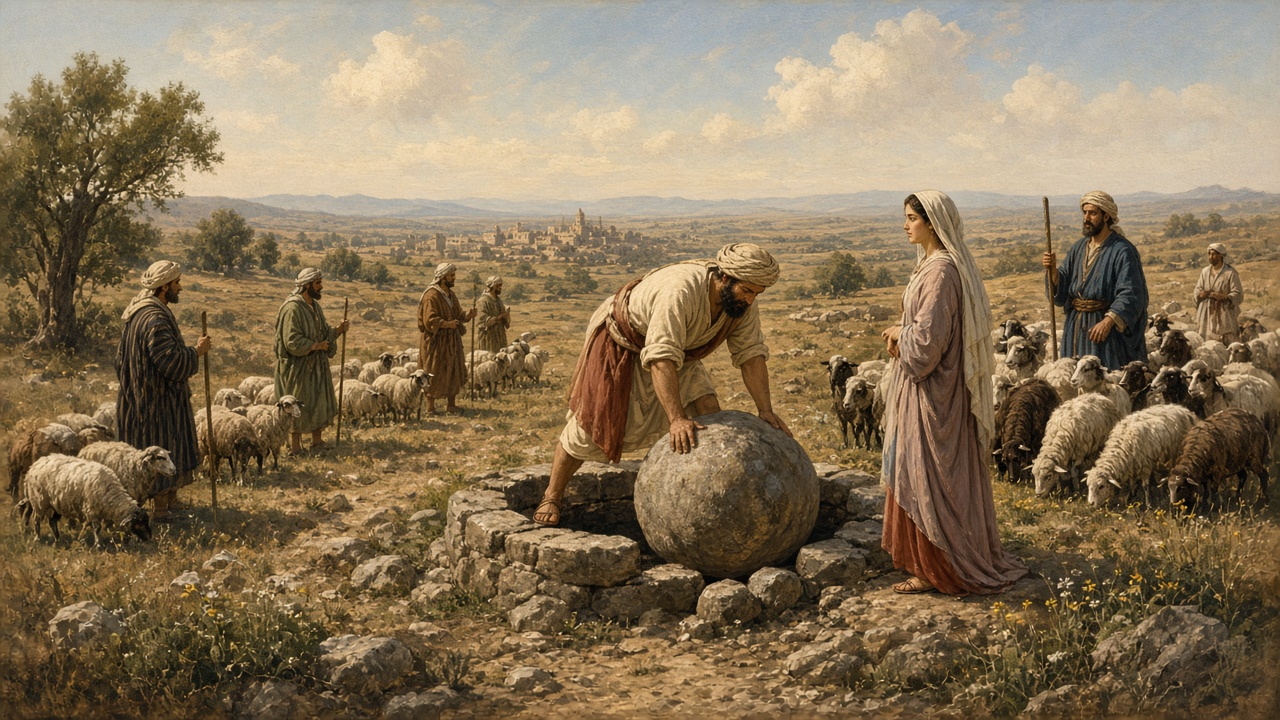
- O poço era fechado por uma grande pedra, que os pastores só rolavam para o lado depois que todos os rebanhos se reuniam, e depois recolocavam no lugar. Raquel, cujo nome é dado como “ovelha”, era pastora e trazia as ovelhas do pai; Jacó, que também vivera como pastor, removeu a pedra e deu de beber ao rebanho do tio.Fontes: Rachel · Jacob (Israel) · o próprio texto bíblico
- Lia, a irmã mais velha, é chamada “cansada”, e é descrita como de olhos fracos, ou tenros; Raquel, a mais nova, era de belo porte e formosa. Jacó serviu sete anos por Raquel, mas, no banquete da noite, Labão lhe deu Lia, dizendo que ali não era costume entregar a filha mais nova em casamento antes da mais velha, e depois lhe deu Raquel por mais sete anos — catorze ao todo. Os primeiros filhos de Lia foram Rúben, cujo nome é dado como “Eis um filho”, e depois Simeão, Levi e Judá; ao nomeá-los, ela falou de o SENHOR ver sua aflição, de ouvir que ela não era amada, de o marido se apegar a ela e de seu louvor ao SENHOR.Fontes: Leah · Rachel · Reuben · o próprio texto bíblico
Notas escritas com auxílio de IA a partir de fontes abertas (Theographic Bible Metadata, CC BY-SA 4.0; Easton’s Bible Dictionary, domínio público) e revisadas antes de publicar.
Lugares deste capítulo
- East · Hoje: region around Amman · 31.955, 35.934 · versículo 1
- Haran · Hoje: Harran · 36.864, 39.033 · versículo 4
Só aparecem lugares com identificação de alta confiança (90% ou mais segundo as fontes acadêmicas reunidas pelo OpenBible). Mapa da época: DARE (Digital Atlas of the Roman Empire), CC BY 4.0; mapa atual: © colaboradores do OpenStreetMap; lugares: OpenBible.info (CC BY 4.0).
Créditos e licença desta tradução
Kitabu ka Kanu
Portions of the Holy Bible in the Baga Sitemu language of Guinea
Des portions de la Sainte Bible dans la langue Baga Sitemu de Guinée
copyright © 2015 Pioneer Bible Translators
Language: Baga Sitemu
Translation by: Traducteurs Pionniers de la Bible
Contributor: Pioneer Bible Translators
This translation is made available to you under the terms of the
Creative Commons Attribution Share-Alike license 4.0.
You have permission to share and redistribute this Bible translation in any format and to make reasonable revisions and adaptations of this translation, provided that:
You include the above copyright and source information.
If you make any changes to the text, you must indicate that you did so in a way that makes it clear that the original licensor is not necessarily endorsing your changes.
If you redistribute this text, you must distribute your contributions under the same license as the original.
Pictures included with Scriptures and other documents on this site are licensed just for use with those Scriptures and documents.
For other uses, please contact the respective copyright owners.
Note that in addition to the rules above, revising and adapting God's Word involves a great responsibility to be true to God's Word. See Revelation 22:18-19.
2025-04-29
Fonte: http://ebible.org/bsp/ · eBible.org