Gênesis 18
Kitabu ka Kanu · Toque num versículo para ver as referências cruzadas.
Kanu kəndəŋk a Sara endesɔtɔ wan wərkun
1Kɔ MARIKI owurər Abraham nde tofo ntɛ ŋkiri ya Mamre yɛnacəmɛ mɔ, tɛtəŋnɛ Abraham pəndɛ nde kusuŋka ka abal ŋɔn daŋ, tɛm ntɛ pəŋwonɛ mɔ. 2Kɔ Abraham eyekti fɔr, k'ɛnəŋk arkun maas ŋacəmɛ ta ŋambɔlɛ kɔ-ɛ. Ntɛ ɛnəŋk ŋa mɔ, k'ewirnɛ kəkɔbəpɛnɛ kɔ ŋa, k'ontontnɛnɛ ŋa haŋ dəntɔf. 3Kɔ Abraham oloku wəkin ŋa dacɔ: «Mariki, ilɛtsɛn'am intam kəsɔtər əm kəwosɛn'em kəcəmɛ ka nnɔna wacar kam ba? 4Pakɛrɛ nu oŋ domun depic nəbikɛnɛ wɛcək, nəŋesəm nnɔ kətɔk nkɛ dəntɔf. 5Indesɔŋ nu sɔ peri, ntɛ tɔŋsɔŋɛ nu kəsɔtɔ sɔ fənɔntər mɔ, a nədekɔ tɛm tatɔkɔ nəfɔdecepər nnɔ nderem kifəli, iyi kiyi konu.» K'acikəra ŋaloku: «Tentesɛ! Məyɔ tɔkɔ məloku mɔ.»
6Kɔ Abraham ɔŋkɔ katəna katəna abal ŋɔn disrɛ nde Sara eyi mɔ, k'oloku kɔ: «Məkufɛ məlɛk kəmbefe kətɔt tafala kəmaas məgbɛntɛ akaŋɛ cəcom.» 7K'ɛyɛksɛ sɔ kəkɔ ka nde yɔcɔl yeyi mɔ, k'osumpər tana pɔtɔt dis nde yɔcɔl yɔn dacɔ, k'ɔsɔŋ pi wəcar kɔn wətɛmp wəkin kɔ wəkakɔ olompəs pi katəna katəna.
8Kɔ Abraham ɛlɛk fulaya kɔ mɛsɛ ma wana kɔ sɛm ya tana tatɔkɔ analompəs mɔ, k'ɔŋkɔ pəcəmbərər yi acikəra ɔn. Kɔ nkɔn Abraham ɛncəmɛ ŋa kəsək kətɔk dəntɔf, k'acikəra ŋacdi yeri. 9Ntɛ ŋalip kədi yeri mɔ, kɔ ŋayif Abraham: «Deke wəran kam Sara eyi-ɛ?» Kɔ Abraham oloku ŋa, «Eyi nde abal disrɛ.» 10Kɔ wəcikəra wəkin oloku: «Inder nnɔ ndaram dok tɛm tantɛ wəran kam Sara endekom wan wərkun.» Sara ɛnacəmɛ dəkusuŋka Abraham tadarəŋ pəccəŋkəl.
11Abraham kɔ Sara ŋanasikər, ŋabɛk, Sara ɛnawurɛnɛ fɛ sɔ wətam kəsɔtɔ awut. 12Kɔ Sara eselərnɛ pəcloku: «Ndɛkəl ntɛ isikər oŋ mɔ, pəbotu pendey'im sɔ ba? Mariki wos im sɔ, esikər.» 13Kɔ MARIKI eyif Abraham «Ta ake tɔ Sara eselɛ-ɛ a pəcloku: ‹Mba kance kɔ, indetam kəsɔtɔ wan nnɔ isikər mɔ ba?› 14Tes teyi ntɛ tɛntambər MARIKI mɔ ba? Dok tɛm tantɛ imboncər əm mɔ, inder nnɔ ndaram, Sara endesɔtɔ wan wərkun.» 15Kɔ Sara eyemɛ, k'ombupərɛ «Isel fɛ,» bawo ɛnanesɛ. Kɔ MARIKI ɔŋgbɔkərɛ: «Ala, məsel!»
16K'afum aŋɛ ŋayɛfɛ kəkɔ, kɔ ŋamɔmən kəca ka Sodom. Kɔ Abraham ɛncəmbər ŋa kəkɔlembərnɛ ŋa. 17Kɔ MARIKI eyifnɛ: «Imɛŋkər Abraham ntɛ ifaŋ kəyɔ mɔ ba? 18Abraham endeyɔnɛ kas ka afum a atɔf ŋɔpɔŋ, ŋa fənɔntər. Afum a doru fəp tetɔn tɔ ŋandesɔtɔnɛ kəpocɛ pətɔt. 19Bawo inasom kɔ pəloku awut ɔn kɔ afum ɔn, a ŋacəmɛ dɔpɔ da ina MARIKI darəŋ, ŋacəmɛ pəlompu darəŋ kɔ sariyɛ ntɛ tɔŋsɔŋɛ ina Kanu ilasɛ Abraham dim ndɛ ɛnasɔŋ tetɔn mɔ.» 20Kɔ MARIKI oloku Abraham: «Mes mmɛ amboncɛ Sodom kɔ Komora mɔ, mɛmbɛk kɔ kiciya ka mi kəyɔ wɛywɛy. 21Kətor k'inder dəntɔf idemɔmən kɔ pəyɔnɛ a ntɛ aŋloku taŋan mɔ kance kɔ-ɛ, kɔ pəntɔyɔnɛ ti-ɛ, ina sɔ icərɛ ti.»
22Kɔ acikəra aŋɛ ŋayɛfɛ tofo tatɔkɔ kɔ ŋantɛfərnɛ kəca ka Sodom. MARIKI pəsɔrɔyi kɔ Abraham. 23Kɔ Abraham ɔlɔtərnɛ k'eyif Kanu: «Məndekɔtɔrsɛnɛ sɔ fum wəlompu pəmɔ wəlɛc ba? 24Tɔlɔma afum atɔt wəco kəcamət (50) ŋayi afum aka dare dadɔkɔ dacɔ, məndekɔləsər sɔ dare dadɔkɔ ba? Məfɔtam kəŋaŋnɛnɛ ŋa teta afum alompu akaŋɛ wəco kəcamət (50) aŋɛ ŋayi ŋa dacɔ mɔ?» 25«Tɔbɔl'am məna kəyɔ ka tantɛ! Məfɔdedifɛnɛ fum wəlompu kɔ wətɔlomp, tɛm tatɔkɔ wətɔdəkət pəsɔtɔ pəcuy pin payi kɔ wədəkət. Tɔbɔl'am məna nwɛ məyɔnɛ wəboc kiti ka doru fəp mɔ, məfɔdeyi ta məleləs sariyɛ!» 26Kɔ MARIKI oloku: «K'imbəp nde dare da Sodom disrɛ afum alompu wəco kəcamət-ɛ (50), iŋaŋnɛnɛ alpəs akɔ tetaŋan.»
27Kɔ Abraham ɔŋgbɔkərɛ k'oloku: «Nəmɔmən ntɛ iyeŋk abəkəc kəlok-lokər Mariki Kanu mɔ, ina nwɛ iyɔnɛ kəbof ka dəntɔf kɔ ka dənɛnc dəm mɔ. 28Tɔlɔma afum alompu akaŋɛ wəco kəcamət (50) ŋandekɔbut afum kəcamət paləsər oŋ dare fəp ba?» Kɔ Kanu kəloku: «Ifɔləsər di k'imbəp di afum alompu wəco maŋkəlɛ kɔ kəcamət-ɛ (45).»
29Kɔ Abraham ɛncəmɛ kɔ darəŋ kəloku kɔ toloku ntɛ: «Tɔlɔma alompu wəco maŋkəlɛ (40) ŋ'andekɔbəp di?» Kɔ Kanu kəloku: «Ifɔləsər, k'imbəp di alompu wəco maŋkəlɛ-ɛ (40).»
30Kɔ Abraham oloku: «Ilɔktərn'am, Mariki Kanu! Ta pətɛl'am k'ilok-loku sɔ-ɛ! Tɔlɔma alompu wəco maas (30) ŋ'andekɔbəp di?» Kɔ Kanu kəloku Abraham: «Ifɔləsər di k'imbəp dɔtɔf afum alompu wəco maas-ɛ (30).»
31Kɔ Abraham oloku: «Mariki Kanu, məŋaŋnɛnɛ mɔcɔp mem. Tɔlɔma alompu wəco mɛrəŋ (20) ŋ'andekɔbəp di?» Kɔ Kanu kəloku Abraham: «Ifɔləsər di teta afum akakɔ wəco mɛrəŋ (20).»
32Kɔ Abraham oloku: «Ilɛtsɛn'am, Mariki mem! Ta pətɛl'am, tɛlpəs t'indelok-lokər əm. Tɔlɔma alompu wəco ŋayi di.» Kɔ Kanu kəloku sɔ Abraham, «Ifɔləsər di teta afum akakɔ wəco.»
33Ntɛ ŋalip kəlok-loku mɔ, kɔ MARIKI ɔŋkɔ, kɔ Abraham olukus nde ndɔrɔn.
Você sabia?
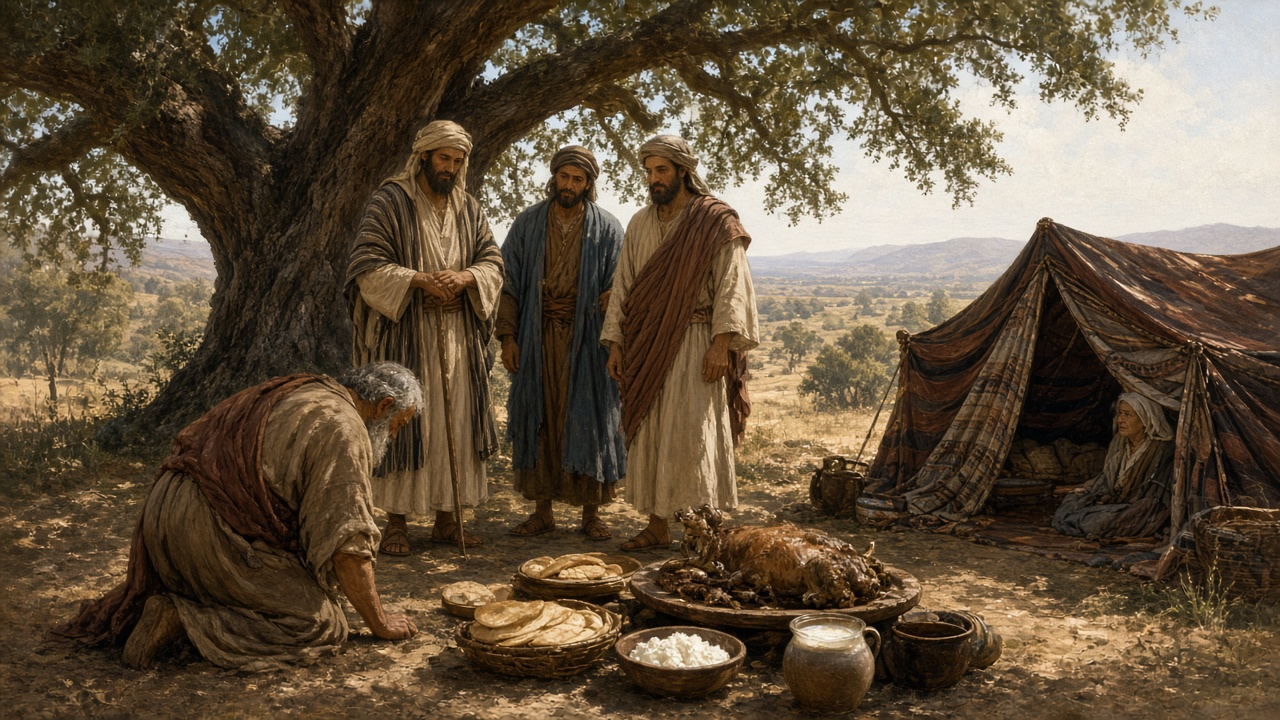
Visitantes em Manre e um apelo por Sodoma
- Em Gênesis 18, o Senhor apareceu a Abraão junto aos carvalhos de Manre, no calor do dia, enquanto Abraão estava sentado à entrada da sua tenda. Manre era um chefe amorreu em aliança com Abraão. Abraão correu ao encontro de três homens, inclinou-se até o chão, ofereceu-lhes água para os pés e descanso debaixo da árvore, e depois pôs diante deles pão, um bezerro tenro e escolhido, coalhada e leite.Fontes: o próprio texto bíblico · Mamre
- Sara, esposa de Abraão, recebe no Dicionário Bíblico de Easton (1897) o sentido de “Princesa”; o dicionário diz que esse nome lhe foi dado quando se anunciou que ela seria a mãe do filho prometido. Em Gênesis 18, o Senhor disse que voltaria dentro de cerca de um ano e que Sara teria um filho, embora os dois já fossem idosos e ela já tivesse passado da idade de ter filhos. Ela riu consigo mesma e, por medo, negou que tivesse rido.Fontes: Sarah · o próprio texto bíblico
- Sodoma, uma cidade no vale de Sidim, e Gomorra, uma das cinco cidades dessa planície, são mencionadas juntas em Gênesis 18 por causa do grande clamor contra o seu pecado grave. O Dicionário Bíblico de Easton (1897) diz que as cidades dessa planície provavelmente ficavam próximas umas das outras, perto da extremidade norte do que hoje é o mar Morto, e explica Sodoma e Gomorra como “Queima; a murada” e “Submersão”. Dois dos homens seguiram em direção a Sodoma, enquanto Abraão permaneceu e pediu ao Senhor que poupasse a cidade por causa dos justos, reduzindo o número de cinquenta para dez.Fontes: Sodom · Gomorrah · o próprio texto bíblico
Notas escritas com auxílio de IA a partir de fontes abertas (Theographic Bible Metadata, CC BY-SA 4.0; Easton’s Bible Dictionary, domínio público) e revisadas antes de publicar.
Créditos e licença desta tradução
Kitabu ka Kanu
Portions of the Holy Bible in the Baga Sitemu language of Guinea
Des portions de la Sainte Bible dans la langue Baga Sitemu de Guinée
copyright © 2015 Pioneer Bible Translators
Language: Baga Sitemu
Translation by: Traducteurs Pionniers de la Bible
Contributor: Pioneer Bible Translators
This translation is made available to you under the terms of the
Creative Commons Attribution Share-Alike license 4.0.
You have permission to share and redistribute this Bible translation in any format and to make reasonable revisions and adaptations of this translation, provided that:
You include the above copyright and source information.
If you make any changes to the text, you must indicate that you did so in a way that makes it clear that the original licensor is not necessarily endorsing your changes.
If you redistribute this text, you must distribute your contributions under the same license as the original.
Pictures included with Scriptures and other documents on this site are licensed just for use with those Scriptures and documents.
For other uses, please contact the respective copyright owners.
Note that in addition to the rules above, revising and adapting God's Word involves a great responsibility to be true to God's Word. See Revelation 22:18-19.
2025-04-29
Fonte: http://ebible.org/bsp/ · eBible.org