Êxodo 32
Kitabu ka Kanu · Toque num versículo para ver as referências cruzadas.
Aka Yisrayel kələsər kəŋan danapa kɔ Kanu
Tura ta kɛma
1Kɔ aka Yisrayel ŋanəŋk ntɛ Musa oncwon kətor kəyɛfɛ ka nde tɔrɔ kəroŋ mɔ. Awa, k'afum ŋaŋkɔ ŋaloŋkanɛ nnɔ Aruna eyi mɔ, kɔ ŋaloku: «Məlompsɛ su canu cəkɔt su fɔr kiriŋ, bawo Musa fum wəkawɛ ɛmpɛnɛ su Misira mɔ, səncərɛ fɛ ntɛ tɔsɔtɔ kɔ mɔ.» 2Kɔ Aruna oloku ŋa: «Nəwurɛ yadələŋəs ya kɛma nyɛ aran anu, awut anu arkun kɔ aran, ŋambɛrəsnɛ mɔ, nəkɛr'em yi.» 3K'afum aka Yisrayel fəp ŋawurɛ-wurɛ yadələŋəs ya kɛma nyɛ ŋanabɛrəsnɛ dələŋəs mɔ, kɔ ŋasɔŋ yi Aruna. 4Kɔ Aruna ɛmbaŋsər ŋa yi dəwaca, k'ɛŋgbɛcɛ tɛrəŋka ta tura towut anata. K'aka Yisrayel ŋaloku: «Kanu kam kɔ kaŋkɛ, Yisrayel, nkɛ kəmpɛn'am atɔf ŋa Misira mɔ.» 5Ntɛ Aruna ɛnəŋk ti mɔ, k'olompəs tetek toloŋnɛ tura tatɔkɔ tekiriŋ. K'oŋkulɛ: «Alna ambocɛ MARIKI kəsata!» 6Dɔckɔsɔk k'aka Yisrayel ŋayɛfɛ bətbət suy kɔ ŋaŋkɛrɛ yoloŋnɛ yɔcɔf kɔ yoloŋnɛ ya kəpaŋnɛ pəforu. Kɔ ŋandɛ, ŋandi yeri, ŋamun, kɔ ŋayɛfɛ kəwoləs-woləs.
7Kɔ MARIKI oloku Musa: «Mətor katəna katəna, bawo afum am aŋɛ məsolɛ kəwurɛnɛ atɔf ŋa Misira mɔ, ŋanciya pəpɔŋ. 8Ŋambɛlkər kəgbaymɛ dɔpɔ dɔkɔ imentər ŋa mɔ. Tɛrəŋka ta tura ta afɛc tɔ ŋalompəs, kɔ ŋantontnɛnɛ pi, kɔ ŋaloŋnɛnɛ pi, haŋ kɔ ŋaloku: ‹Canu conu cɔ cancɛ Yisrayel ncɛ cəwurɛnɛ nu atɔf ŋa Misira mɔ!›»
9Kɔ MARIKI oloku Musa: «Awa, inəŋk ntɛ afum akaŋɛ ŋayi mɔ, ataŋi ləŋəs ŋɔ ŋayɔnɛ fəp faŋan. 10Ndɛkəl oŋ məc'em, kətɛl'em kɔ pənder nnɔ ŋayi mɔ, kəmələk ŋa k'inder fəp faŋan, mba məna indesɔŋ'am kəyɔ yuruya yɛlarəm məyɔnɛ wəka atɔf ŋɔpɔŋ.»
11Kɔ Musa ɛlɛtsɛnɛ MARIKI Kanu kɔn kəŋaŋnɛ, k'oloku kɔ: «MARIKI, ta ake tɔ pəntɛlɛn'am nda afum am-ɛ, aŋɛ məwurɛnɛ Misira fənɔntər fam fəpɔŋ kɔ sɔkət sa kəca kam mɔ-ɛ?» 12Tendesɔŋɛ aka Misira ŋandeloku: «Kəyɔ kəŋan pəlɛc kɔ MARIKI owurɛnɛ aka Yisrayel atɔf ŋa Misira, kəkɔdif kəŋan nde dəmɔrɔ, pəmələk ŋa, pənim ŋa antɔf kəroŋ!» Mətorɛ abəkəc ta məyɔ ti, məbupərɛ kəyɔ ka afum am pəlɛc! 13Məcɛm-cɛmnɛ Abraham, Siyaka kɔ Yakuba, acar am aŋɛ mənaloku, məcdɛrəm mənasərka: «Indesɔŋɛ afum am kəla pəmɔ cɔs ca darenc. Indesɔŋ yuruya yam atɔf ŋaŋɛ fəp nŋɛ iloku ta ŋi mɔ, ŋɔyɔnɛ oŋ kɛ kəŋan doru o doru.» 14Kɔ MARIKI ombupərɛ sɔ pəlɛc pɔkɔ ɛnacɛm-cɛmnɛ kəyɔ afum ɔn mɔ.
15Kɔ Musa ontor kəyɛfɛ ka tɔrɔ kəroŋ, pətɔmpər walakɛ nwɛ mɛrəŋ, pacicəs wi bəkəc yayi mɛrəŋ fəp. 16Walakɛ wawɔkɔ mɛrəŋ, yɛbəc ya Kanu yɛnayi, nkɔn Kanu ɛnacicəs wi kəroŋ kəca kɔn. 17Ntɛ Yosuwe ene aka Yisrayel kəkulɛ-kulɛ mɔ, k'oloku Musa: «Sim sa kəwan s'iŋne saŋsɛ nde saŋka disrɛ.» 18Kɔ Musa oloku kɔ: «Ala bafɔ sim sa kəsɔtɔ kətam ka kəyɛfərɛnɛ sɔ, bafɔ sim sa kəpariya kəyɛfərɛnɛ sɔ ina iyi kəne. Sim sa kəsata sɔ ina iyi kəne.» 19Ntɛ ɔlɔtərnɛ saŋka mɔ, k'ɛnəŋk tɛrəŋka ta tura towut, k'ɛnəŋk sɔ afum ŋacpisɛ. Awa, kɔ pəntɛlɛ Musa, k'ɛŋgbal walakɛ wa masar wawɔkɔ ɛnatɔmpər mɔ, kɔ wɔŋkɔ wɛwɛslɛ-wɛslɛ nde tɔrɔ dəntɔf. 20Kɔ Musa ɛlɛk tɛrəŋka tatɔkɔ ŋanalompəs mɔ, k'ɔŋkɔ pəbɛr pi dənɛnc. Kɔ Musa embifəli yɛlpəs yɔkɔ yɛnacəmɛ mɔ, k'ɛlɛk yi k'ɛŋgbal dəromun ndɛ ɛnasɔŋ aka Yisrayel kəmun mɔ. 21Kɔ Musa ɛŋkafəlɛ nnɔ Aruna eyi mɔ, k'eyif kɔ: «Cəke cɔ aka Yisrayel ŋayɔ əm ntɛ məsɔŋɛ ŋa kiciya kəpɔŋ kaŋkɛ mɔ?» 22Kɔ Aruna oloku: «Ta pətɛl'am, mariki mem! Məna yati məncərɛ aka Yisrayel: Ŋambɔtər mes mɛlɛc. 23Ŋa ŋalok'im: ‹Məlompsɛ su canu ncɛ cəndekɔt su kiriŋ mɔ, bawo səncərɛ fɛ ntɛ tɔsɔtɔ Musa nwɛ ɛnawurɛnɛ su atɔf ŋa Misira mɔ.› 24K'iloku ŋa a nwɛ o nwɛ ɔŋyɔ peyesnɛnɛ pa kɛma mɔ pəwurɛ pi! Kɔ ŋasɔŋ im yi, k'imbɛr yi dənɛnc, kɔ tura towut tantɛ towur di disrɛ.»
Kətɔrəs
25Kɔ Musa ɛnəŋk ntɛ antɔsɔtam kədusum afum mɔ, bawo Aruna ɛnasak ŋa ŋacyɔ tɔkɔ ŋafaŋ mɔ, kɔ tɔsɔŋɛ ŋa kəyɔ tɔkɔ tɛŋlapəs ŋa nnɔ aterɛnɛ aŋan ŋayi mɔ. 26Kɔ Musa ɔŋkɔ pəcəmɛ dəkusuŋka da saŋka, k'oloku: «Nəna aŋɛ nəyinɛ MARIKI mɔ, nəder nnɔ iyi mɔ!» K'aka kusuŋka ka Lewy fəp ŋaŋkɔ ŋamɛpnɛ Musa dəntɔf. 27Kɔ Musa oloku ŋa: «Ntɛ tɔ MARIKI, Kanu ka Yisrayel kəloku: ‹Nwɛ o nwɛ pəlɛk dakma dɔn, pəcop nnɔ dəkusuŋka da saŋka haŋ dəkələpsər da si, kədifət awɛnc anu, anapa anu k'akomɛnɛ anu.›» 28Dɔsɔk dadɔkɔ k'aLewy ŋaleləs dim da Musa, kɔ tɔsɔŋɛ aka Yisrayel afum wul maas (3.000) kəfi. 29Kɔ Musa oloku aLewy: «Kəyɛfɛ mɔkɔ andəs nu nəyɔnɛ oŋ afum aŋɛ ŋandeyi yɛbəc ya MARIKI mɔ, bawo nənesərnɛ fɛ kədif ka awut anu kɔ awɛnc anu aŋa. MARIKI pəpocɛ nu mɔkɔ pətɔt!»
Musa ɛlɛtsɛnɛ Kanu kəŋaŋnɛnɛ ka aka Yisrayel
30Dɔckɔsɔk, kɔ Musa oloku aka Yisrayel: «Nənciya pəpɔŋ! Ndɛkəl oŋ kəpɛ k'inder nde MARIKI eyi mɔ. Tɔlɔma ikɔtam kəsɔtər kɔ kəsɔkəs ka kiciya konu.»
31Kɔ Musa oluksərnɛ nde MARIKI eyi mɔ, k'oloku: «Məŋaŋnɛ MARIKI! Afum akaŋɛ ŋanciya pəpɔŋ, ŋalompəs canu ca kɛma. 32Məŋaŋnɛnɛ ŋa kiciya kəŋan, ilɛtsɛn'am! Kɔ məyɔ fɛ ti-ɛ, mənim ina tewe nde buk bɔkɔ mənacic mɔ.» 33Kɔ MARIKI oloku Musa: «Fum nwɛ enciy'em mɔ, iŋliŋ tewe tɔn buk bem disrɛ. 34Ndɛkəl oŋ, məkɔ, məsolɛ afum am məkekərɛ ŋa kəfo nkɛ imentər əm mɔ. Mɛlɛkɛ mem mendekɔ yi nu kiriŋ, mba dɔsɔk ndɛ inder kəbocɛ nu kiti nde nəyi mɔ, indesɔŋ ŋa ayɛk ŋa kiciya kəŋan.»
35Kɔ MARIKI osut aka Yisrayel, bawo ŋanacəmɛ Aruna darəŋ, a wəkakɔ pəlompsɛ ŋa tɛrəŋka ta tura towut.
Você sabia?
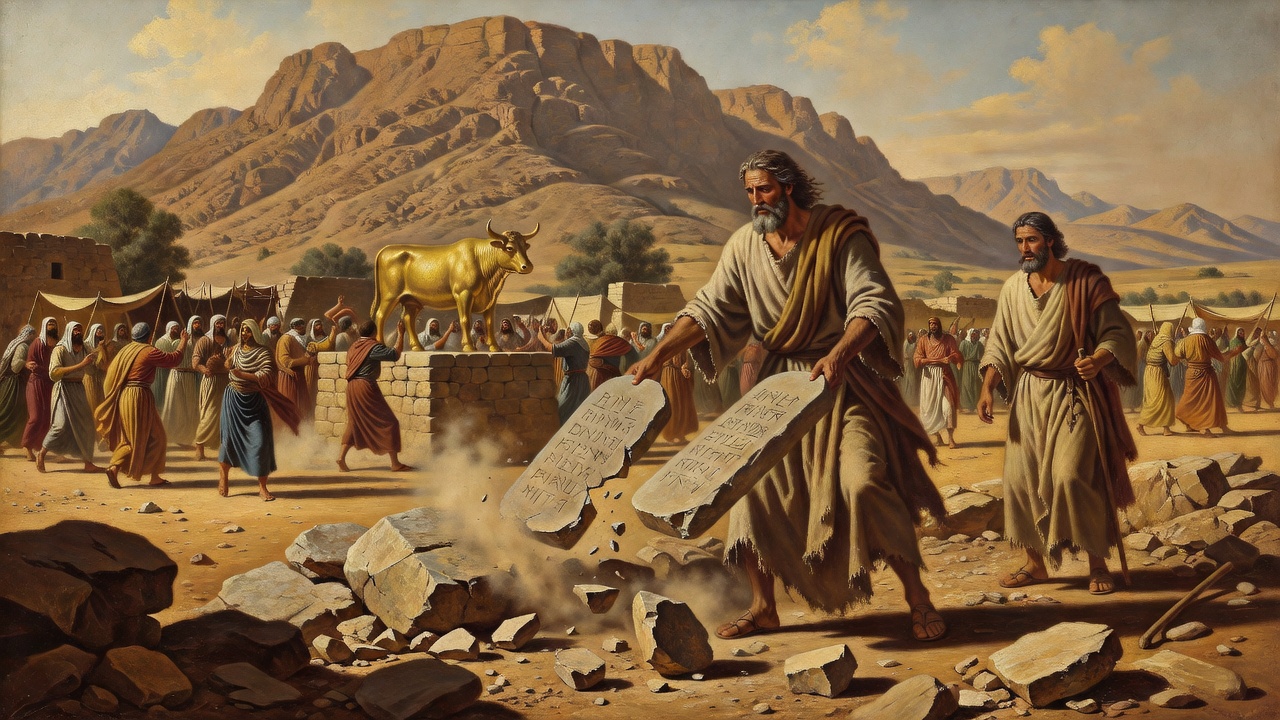
O bezerro de ouro e as tábuas quebradas
- Enquanto Moisés demorava no monte, os israelitas pediram a Arão que fizesse deuses para guiá-los, supondo que Moisés estivesse perdido. Arão recolheu os brincos de ouro do povo, fundiu e esculpiu um bezerro com uma ferramenta de gravar, e construiu um altar diante dele, proclamando uma festa.Fontes: o próprio texto bíblico · Aaron
- Ao descer do monte Sinai trazendo duas tábuas de pedra escritas de ambos os lados pela escrita de Deus, seu assistente Josué inicialmente confundiu os gritos de festa no acampamento com sons de guerra. Vendo o bezerro de ouro e as danças, Moisés arremessou e quebrou as tábuas ao pé do monte.Fontes: o próprio texto bíblico · Joshua
- Quando Moisés convocou na entrada do acampamento aqueles que estavam ao lado do Senhor, toda a tribo de Levi se reuniu ao redor dele. Eles executaram o julgamento pelo acampamento, resultando na morte de cerca de três mil homens, após o que Moisés declarou que eles haviam sido consagrados ao serviço do Senhor.Fontes: o próprio texto bíblico · Levi (patriarch)
Notas escritas com auxílio de IA a partir de fontes abertas (Theographic Bible Metadata, CC BY-SA 4.0; Easton’s Bible Dictionary, domínio público) e revisadas antes de publicar.
Lugares deste capítulo
Só aparecem lugares com identificação de alta confiança (90% ou mais segundo as fontes acadêmicas reunidas pelo OpenBible). Mapa da época: DARE (Digital Atlas of the Roman Empire), CC BY 4.0; mapa atual: © colaboradores do OpenStreetMap; lugares: OpenBible.info (CC BY 4.0).
Créditos e licença desta tradução
Kitabu ka Kanu
Portions of the Holy Bible in the Baga Sitemu language of Guinea
Des portions de la Sainte Bible dans la langue Baga Sitemu de Guinée
copyright © 2015 Pioneer Bible Translators
Language: Baga Sitemu
Translation by: Traducteurs Pionniers de la Bible
Contributor: Pioneer Bible Translators
This translation is made available to you under the terms of the
Creative Commons Attribution Share-Alike license 4.0.
You have permission to share and redistribute this Bible translation in any format and to make reasonable revisions and adaptations of this translation, provided that:
You include the above copyright and source information.
If you make any changes to the text, you must indicate that you did so in a way that makes it clear that the original licensor is not necessarily endorsing your changes.
If you redistribute this text, you must distribute your contributions under the same license as the original.
Pictures included with Scriptures and other documents on this site are licensed just for use with those Scriptures and documents.
For other uses, please contact the respective copyright owners.
Note that in addition to the rules above, revising and adapting God's Word involves a great responsibility to be true to God's Word. See Revelation 22:18-19.
2025-04-29
Fonte: http://ebible.org/bsp/ · eBible.org