Ezequiel 17
Luda yã takada kũ Bisã yão · Toque num versículo para ver as referências cruzadas.
Gunɔ bɑkeru kɑ resɛm
1Yinni Gusunɔ u geruɑ u nɛɛ, 2tɔnun bii, ɑ Isirelibɑ mɔndu kuo. 3A nɛɛ, ɑmɛniwɑ nɛ, Yinni Gusunɔ nɑ geruɑ. Nɑ nɛɛ, gunɔ bɑkeru gɑrɑ wɑ̃ɑ tɑ kɑsɑ dɛ̃u mɑ tɑ sɑn bɑkɑsu mɔ si su nɔni bwese bwesekɑ mɔ. Mɑ tɑ yɔ̃ɔwɑ tɑ dɑ sere Libɑnin guurun wii kpiirɔ. Mɑ tɑ dɑ tɑ dɑ̃ɑ ye bɑ mɔ̀ sɛdurun wii kpiiru wĩɑ. 4Mɑ tɑ dɑ̃ɑ ten kɑ̃ɑsɑ ye yɑ gunum bo wĩɑ tɑ kɑ dɑ tɑ yi tem mi bɑ rɑ tenkuru ko, wuu gè sɔɔ tenkubɑ bɑ wɑ̃ɑ. 5Mɑ tɑ dɑ̃ɑ kpii pɔturɑ gɑɑ suɑ tɑ dɑ tɑ girɑ nge dɑ̃ɑ ye yɑ rɑ n wɑ̃ɑ nim bɔkuɔ mi tem gem mu wɑ̃ɑ, mi nim mu yibɑ. 6Kpii pɔturɑ ye, yɑ seewɑ yɑ kpɛ̃ɑ nge resɛm koru te tɑ yɑsiɑ ɑdɑmɑ tɑ ǹ gunu. Mɑ ten kɑ̃ɑsi yi mɛɛrɑ gunɔ bɑke ten berɑ giɑ. Mɑ ten gbini yi duɑ tem mɛn sɔɔwɔ. Mɑ dɑ̃ɑ ye, yɑ gɔsiɑ resɛm, yɑ kpɑrɑ yɑ kɑ̃ɑsi kuɑ. 7Yen biruwɑ gunɔ bɑkeru gɑrɑ nɑ tɑ kɑsɑ dɛ̃u. Ten sɑnsu tɑɑsinɛ. Mɑ resɛm koo te, tɑ ten gbini kɑ ten kɑ̃ɑsi gɔsie gunɔ bɑke ten mi giɑ, domi tɑ tɑmɑɑ tɑ koo nim wɑ mi giɑ. 8N deemɑ tɑ rɑɑ girewɑ tem gem sɔɔ mi nim yibɑ kpɑ tu kɑ̃ɑsi geenu ko tu bii geenu mɑ kpɑ tɑ n sɑ̃ɑ resɛm geɑ.
9Wee ye nɛ, Yinni Gusunɔ nɑ bikiɑ. Nɑ nɛɛ, resɛm yen bweseru yɑ koo kpĩ yu kuurɑ? Gunɔ bɑke gbiikii te, tɑ koo wurɑ tu ye deri tɑ kun yen gbini wukurɑ? Tɑ koo wurɑ tɑ kun yen mɑrum go, kpɑ ten kpɑrɑ kpɛm mɛ, mu gberɑ? Ǹ n mɛn nɑ, n ǹ mɑɑ tilɑsi tɔn dɑbinu bu nɑ bu kɑ ye wukɑ. 10Wee tɑ duurɑ, ɑdɑmɑ tɑ koo kuurɑ? Sɔ̃ɔ yɑri yerun woo gɑ̀ n tu bɑbɑ, tɑ ǹ koo gberɑ? Geemɑ tɑ koo gberɑ mi tɑ duurɑ.
Mɔn ten tubusiɑnu
11Yinni Gusunɔ u mɑɑ nɛɛ, 12ɑ Yudɑn mɛm nɔɔ sɑri be bikio ɑ nɛɛ, bɑ mɔn ten tubusiɑnu yɛ̃? A bu sɔ̃ɔwɔ ɑ nɛɛ, wee Bɑbilonin sinɑ boko u dɑ Yerusɑlɛmuɔ. U ben sinɑ boko mwɑ kɑ win sinɑ ɑsɑkpɔbu mɑ u kɑ bu dɑ Bɑbiloniɔ. 13Mɑ u turo gɔsɑ wi u sɑ̃ɑ nge kpii pɔturɑ sinɑ bibu sɔɔ, u kɑ nùn ɑrukɑwɑni bɔkuɑ. U nùn bɔ̃rusiɑ. Mɑ Bɑbilonin sinɑ boko wi, u ben bukurobu gurɑ u kɑ dɑ win temɔ. 14Kpɑ Yudɑbɑn tem mu biru wurɑ, mu ku mɑɑ kuurɑ. Kpɑ bu win ɑrukɑwɑni ye mɛm nɔɔwɑ. 15Adɑmɑ be Yudɑbɑ bɑ Bɑbilonin sinɑ boko wi seesi bɑ sɔmɔbu gɔrɑ Egibitiɔ bu kɑ dumi kɑsumɑ kɑ sere mɑɑ tɔn dɑbinu. Wi u yen bweseru kuɑ, u koo kisirɑ? Domi u ɑrukɑwɑni kusiɑ.
16Nɛ, Yinni Gusunɔ nɑ nɛɛ, sere kɑ nɛn wɑ̃ɑru, sinɑ boko wi, u koo gbiwɑ sunɔ wi u nùn bɑndu wɛ̃n temɔ. Domi u ǹ win nɔɔ mwɛɛru yibie. Bɑbiloni miyɑ u koo gbi. 17Bɑɑ Egibitin sunɔ ù n tɑbu kowo dɑbiru mɔ be bɑ dɑm mɔ, u ǹ kpɛ̃ u bu somi bu kɑ tii yinɑ sɑnɑm mɛ Bɑbilonin sinɑ boko u koo nɑ u wɔrusu gbe u tɑbu sĩɑ kpĩ u kɑ tɔn dɑbinu go. 18Domi durɔ wi, u mɑɑ win nɔɔ mwɛɛru ɑtɑfiiru kuɑ, mɑ u ɑrukɑwɑni kusiɑ yè sɔɔ u rɑɑ win nɔɔ mwɛɛru doke. Yen sɔ̃, u ǹ kisirɑmɔ.
19Yen sɔ̃nɑ nɛ, Yinni Gusunɔ nɑ nɛɛ, sere kɑ nɛn wɑ̃ɑru, nɛn ɑrukɑwɑniwɑ Isirelibɑn sinɑ boko u ɑtɑfiiru kuɑ u kusiɑ. Yen sɔ̃, u koo yen ɑre wɑ. 20Kon nùn yinɑ bɛriɑ kpɑ u wɔri ye sɔɔ. Kon kɑ nùn dɑ Bɑbiloniɔ. Miyɑ kon nùn siri win nɑɑnɛ sɑri te u kuɑn sɔ̃. 21Win tɑbu kowo be bɑ koo duki su, kon bu nɑɑ swĩiwɑ n go kɑ tɑkobi. Be bɑ tiɑrɑ kpɑ bu yɑrinɑ nge woo. Sɑɑ ye sɔɔ, bɑ koo giɑ mɑ nɛnɑ nɑ yeni geruɑ.
Yinni Gusunɔn nɔɔ mwɛɛru
22Amɛniwɑ nɛ, Yinni Gusunɔ nɑ geruɑ. Nɑ nɛɛ, nɛn tiiwɑ kon dɑ̃ɑ kɑ̃ɑsɑ kpɛmɑ mɛɛri sɛduru yen wii kpiirɔ kpɑ n ye burɑ, kpɑ n dɑ n ye girɑ guuru gɑrun wɔllɔ te tɑ gunu. 23Kon ye girɑwɑ guuru gɑrun wɔllɔ te tɑ gunum bo Isireliɔ. Ten kɑ̃ɑsi yi koo kuurɑwɑ kpɑ tu binu mɑ tɑ n sɑ̃ɑ dɑ̃ɑ te tɑ wɑɑbu wɑ̃. Gunɔ bwese bwesekɑ yɑ koo sokuru ko ten kɑ̃ɑsi sɔɔ. Kpɑ su n kukuɑ ten sɑɑrɔ. 24Sɑɑ yerɑ dɑ̃nu kpuro nu koo giɑ mɑ nɛnɑ nɑ sɑ̃ɑ Yinni Gusunɔ. Nɛnɑ nɑ rɑ dɑ̃ɑ ni nu gunu kɑwe, kpɑ n ni nu piiburu bo gunum sosi. Mɛyɑ nɑ rɑ ni nu wuru bekusu sɑ̃ɑ gberɑsie, kpɑ n ni nu gbere bɔrɔm dokeɑ. Nɛ, Yinni Gusunɔwɑ nɑ yeni geruɑ. Mɛyɑ yɑ koo mɑɑ koorɑ.
Você sabia?
A parábola das águias e do cedro
- Ezequiel apresenta uma alegoria política em que a primeira grande águia representa o rei da Babilônia, que levou a liderança real de Jerusalém para o cativeiro e estabeleceu um rei vassalo sob uma aliança solene. A segunda águia representa o Egito e seu faraó, a quem o governante de Judá recorreu em busca de cavalos e auxílio militar, quebrando sua aliança.Fontes: o próprio texto bíblico · Babylon · Egypt · Pharaoh
- Na mensagem profética, romper um juramento de vassalagem firmado com a Babilônia foi considerado não apenas uma rebelião diplomática, mas uma traição espiritual contra Deus, que considerava o juramento prestado como Sua própria aliança.Fontes: o próprio texto bíblico
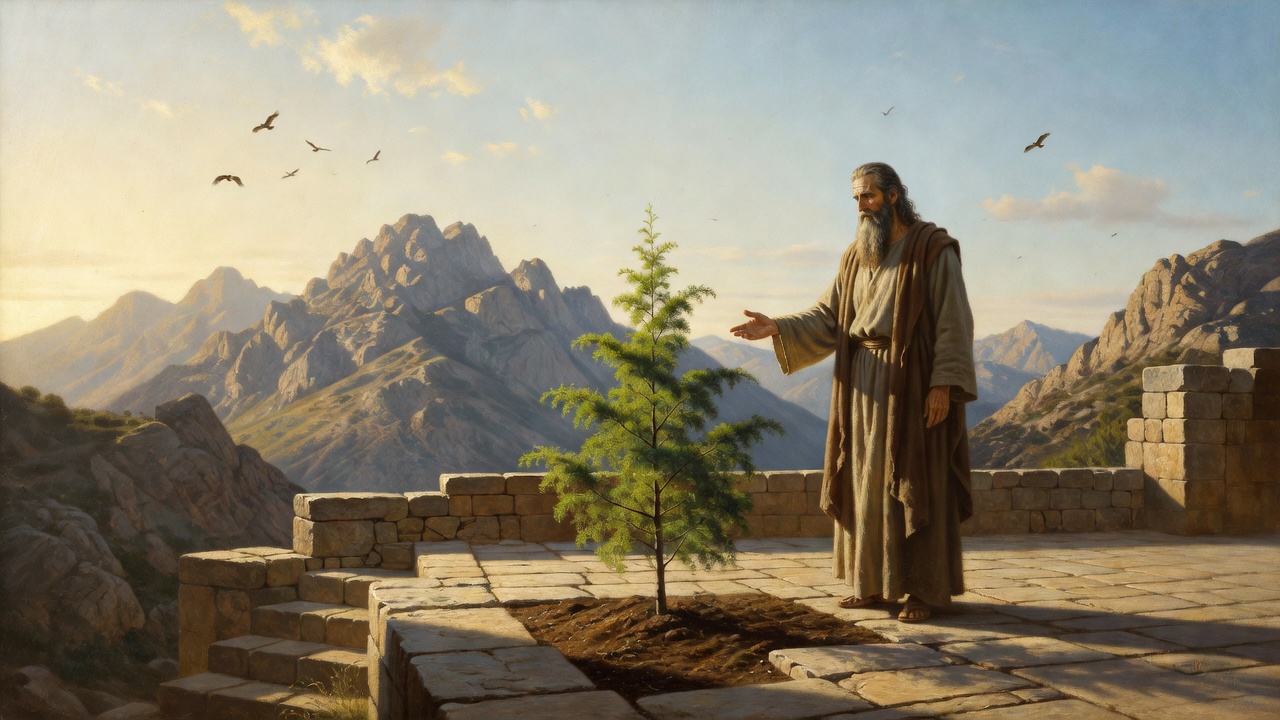
- O capítulo se encerra revertendo os planos políticos humanos: o próprio Deus promete tirar um renovo tenro do topo do cedro e plantá-lo nas alturas montanhosas de Israel, onde ele se tornará uma árvore majestosa que dará abrigo a aves de todo tipo.Fontes: o próprio texto bíblico
Notas escritas com auxílio de IA a partir de fontes abertas (Theographic Bible Metadata, CC BY-SA 4.0; Easton’s Bible Dictionary, domínio público) e revisadas antes de publicar.
Lugares deste capítulo
- Lebanon · 33.540, 35.584 · versículo 3
- Canaan · 32.767, 35.333 · versículo 4
- Babylon · 32.543, 44.422 · versículos 12, 14, 15, 16, 17, 20
- Jerusalem · 31.777, 35.234 · versículos 12, 17
- Egypt · 30.129, 31.308 · versículo 15
Só aparecem lugares com identificação de alta confiança (90% ou mais segundo as fontes acadêmicas reunidas pelo OpenBible). Mapa da época: DARE (Digital Atlas of the Roman Empire), CC BY 4.0; mapa atual: © colaboradores do OpenStreetMap; lugares: OpenBible.info (CC BY 4.0).
Créditos e licença desta tradução
Luda yã takada kũ Bisã yão
Portions of the Holy Bible in the Busa language of Nigeria
copyright © 2005 SIM International
Language: Bisã (Busa)
Translation by: SIM
This translation text is made available to you under the
terms of the Creative Commons License: Attribution-Noncommercial-No Derivative Works.
( http://creativecommons.org/licenses/by-nc-nd/3.0/ )
In addition, you have permission to port the text to different file formats, as long as you
do not change any of the text or punctuation of the Bible.
You may share, copy, distribute, transmit, and extract portions
or quotations from this work, provided that you include the above copyright
information:
You must give Attribution to the work.
You do not sell this work for a profit.
You do not make any derivative works that change any of the actual words or punctuation of the Scriptures.
Permissions beyond the scope of this license may be
available if you contact
us with your request.
This translation is made available to you under the terms of the
Creative Commons Attribution-Noncommercial-No Derivatives license 4.0.
You may share and redistribute this Bible translation or extracts from it in any format, provided that:
You include the above copyright and source information.
You do not sell this work for a profit.
You do not change any of the words or punctuation of the Scriptures.
Pictures included with Scriptures and other documents on this site are licensed just for use with those Scriptures and documents.
For other uses, please contact the respective copyright owners.
2014-10-10
Fonte: http://ebible.org/bqp/ · eBible.org