2 Crônicas 3
Luda yã takada kũ Bisã yão · Toque num versículo para ver as referências cruzadas.
1Sɑlomɔɔ u sɑ̃ɑ yee ten bɑnɑ toruɑ Yerusɑlɛmuɔ guu te bɑ mɔ̀ Mɔriyɑn wɔllɔ mi bɑ win tundo Dɑfidi sɔ̃ɔsi. N deemɑ yɑm mi n dɑɑ sɑ̃ɑwɑ Ɔɔnɑni, Yebusin doo soo yeru. 2U sɑ̃ɑ yee ten bɑnɑ toruɑwɑ win bɑndun wɔ̃ɔ nnɛsen suru yirusen sɔ̃ɔ yiruse sɔɔ.
3Bɑ dii te yĩirɑwɑ kɑ yellun yĩirutiɑ ye bɑ rɑ kɑ gɑ̃ɑnu yĩire. Ten dɛ̃ɛbu bu sɑ̃ɑwɑ gɔm soonu wɑtɑ. Ten yɑsum mɑɑ sɑ̃ɑ gɔm soonu yɛndu. 4Dii ten yɑsum kɑ ten duu yee gbiikirun dɛ̃ɛbu n nɛwɑ. N sɑ̃ɑwɑ gɔm soonu yɛndu. Mɑ ten gunum mu sɑ̃ɑ gɔm soonu wunɑɑ teeru. Mɑ Sɑlomɔɔ u ten sɔɔwɔ wurɑ geɑ pote. 5Mɑ u dii ten tiin gɑni dɑ̃ɑ ye bɑ mɔ̀ sipɛrɛ wukiri. Yen biru, u mɑɑ ye wurɑ ye yɑ geɑ sɑ̃ɑ pote. Mɑ u derɑ bɑ kpɑkpɑ wurusu kɑ yɔnin weenɑsii kuɑ kuɑ gɑni yi sɔɔ. 6Mɑ u tu burɑru kuɑ kɑ kpee gobiginu. N deemɑ wurɑ ye u kɑ sɔmɑ ye kpuro kuɑ mi, yɑ weewɑ sɑɑ Pɑɑfɑimun di. 7U dii te wurɑ potewɑ kɑ ten gberebɑ sɔɔ, kɑ ten kɔnnɔ suukusɔ kɑ ten gɑniɔ, kɑ ten gɑmbobɑ sɔɔ, mɑ u wɔllun kɔ̃sobun weenɑsibu kuɑ ten gɑni sɔɔ.
8Mɑ u dii te tɑ dɛɛre gem gem bɑnɑ mi. Ten dɛ̃ɛbu kɑ dii ten tiin yɑsum mu nɛwɑ. Mu sɑ̃ɑwɑ gɔm soonu yɛndu. Mɑ ten yɑsum mɑɑ sɑ̃ɑ gɔm soonu yɛndu. Mɑ u tu wurɑ geɑ pote. Wurɑ yen geerɑ sɑ̃ɑwɑ tɔnnu yɛndu. 9Wurɑ ye bɑ kɑ kulumbɑ kuɑn geerɑ sɑ̃ɑwɑ kilon bɔnu. Bɑɑ kɑ diɑ ye yɑ wɑ̃ɑ wɔllɔ kpuro bɑ ye wurɑ potewɑ.
10U mɑɑ kɔ̃sobun weenɑsibu yiru kuɑ dii te tɑ dɛɛre gem gem mi sɔɔ. Mɑ u ye wurɑ pote. 11Wɔllun kɔ̃so ben kɑsɑ nnɛ ye kpuron dɛ̃ɛbu bu sɑ̃ɑwɑ gɔm soonu yɛndu. Kɑsɑ yen tiɑn dɛ̃ɛbu bu sɑ̃ɑwɑ gɔm soonu nɔɔbu. Mɑ ben turon kɑse teeru tɑ gɑnɑ girɑri. Mɑ tee teni tɑ kɑ kɔ̃so yirusegirun teeru girɑrinɛ. 12Mɑ kɔ̃so yiruse win kɑse teeru tɑ mɑɑ dii ten goo teɔnɔ girɑri. N deemɑ ten yirusewɑ tɑ kɑ gbiikoo wigiru girɑrinɛ. 13Kɔ̃so be kpuron kɑsɑ yɑ dɛriɑrewɑ. Mɑ yen dɛ̃ɛbu kuɑ gɔm soonu yɛndu. Mɑ bɑ yɔ̃ bɑ wuswɑɑ tĩi dii ten kɔnnɔ giɑ. 14Mɑ u dii ten beku kɑreru kuɑ kɑ wɛ̃ɛ dɑmgii yi bɑ wɔ̃kuɑ kɑ gɑɑdurɑ kɑ wunɔm kɑ sere mɑɑ tom. Mɑ bɑ mɑɑ kɔ̃sobun weenɑsibu kuɑ beku te sɔɔ.
Dii ten gbere be bɑ kuɑ
kɑ sii gɑndu
15U dii ten wuswɑɑɔ gbere yiru kuɑ. Yen bɑɑyeren gunum mu sɑ̃ɑwɑ gɔm soonu tɛnɑ kɑ nɔɔbu. Mɑ bɑ ye furɔsu sɔndiɑ wɔllɔ. Sin gunum mu sɑ̃ɑwɑ gɔm soonu nɔɔbu. 16U mɑɑ yɔnin weenɑsiin burɑru gɑru kuɑ nge te u rɑɑ kuɑ sɑ̃ɑ yeru mi. Mɑ u burɑ te doke furɔ sin wɔllɔ. Mɑ u dɑ̃ɑ mɑrum gɑm weenɑsim kuɑ wunɔbu (100) u doke yɔni yi sɔɔ. 17Mɑ u gbere yiru ye girɑ sɑ̃ɑ yee ten wuswɑɑɔ. Tiɑ nɔm geuɔ, tiɑ mɑɑ nɔm dwɑrɔ. Mɑ u nɔm geugiɑ ye yĩsiru kɑ̃ Yɑkini. Mɑ u mɑɑ nɔm dwɑrugiɑ ye yĩsiru kɑ̃ Boɑsi.
Você sabia?
A construção do Templo de Salomão
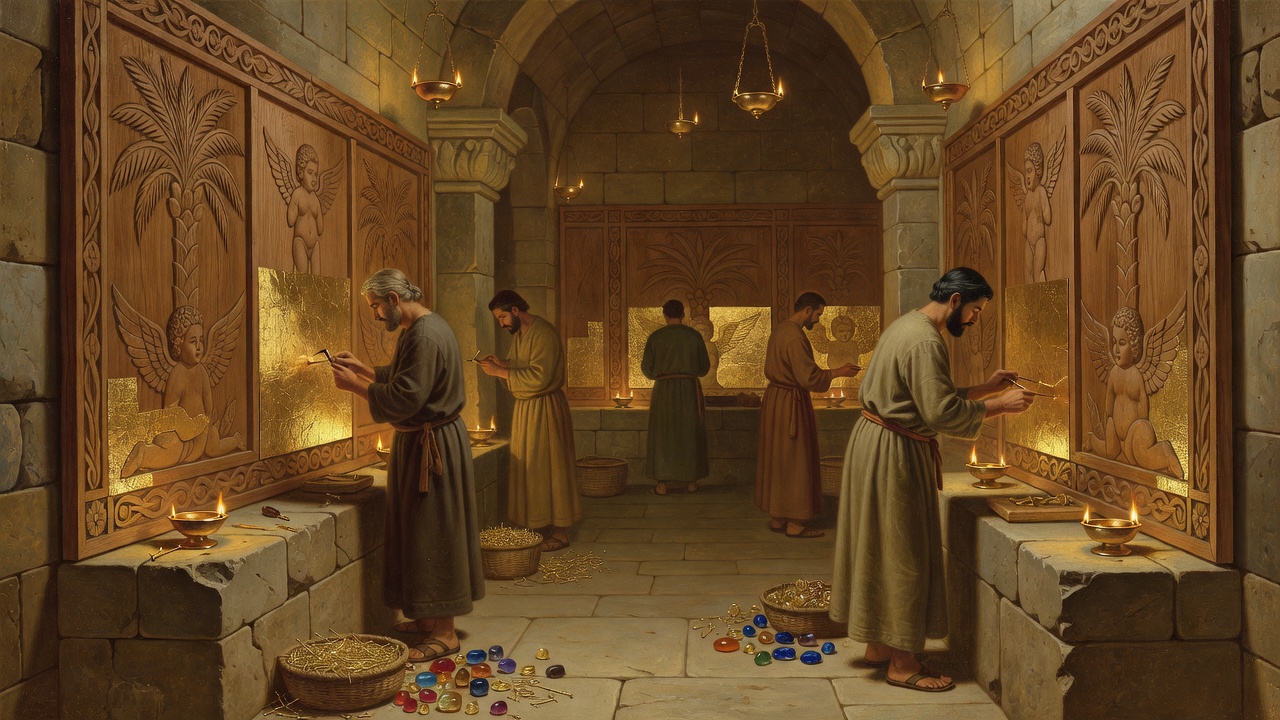
- Salomão começou a construir o templo em Jerusalém no monte Moriá, no local da eira de Ornã, o jebuseu. Davi havia insistido anteriormente em comprar essa propriedade pelo preço total depois que o anjo destruidor foi detido ali, preparando o lugar para a casa do SENHOR.Fontes: o próprio texto bíblico · Ornan · Mount Moriah
- O interior do templo foi revestido de ouro puro e decorado com pedras preciosas, com ouro trazido de Parvaim. A localização exata de Parvaim é incerta, embora alguns a tenham associado a Ofir ou entendido o termo como uma referência genérica a regiões orientais.Fontes: o próprio texto bíblico · Parvaim
- Em frente ao templo foram erguidas duas colunas imponentes com capitéis decorativos, correntes entrelaçadas e cem romãs esculpidas. Salomão chamou a coluna do sul de Jaquim e a do norte de Boaz.Fontes: o próprio texto bíblico
Notas escritas com auxílio de IA a partir de fontes abertas (Theographic Bible Metadata, CC BY-SA 4.0; Easton’s Bible Dictionary, domínio público) e revisadas antes de publicar.
Lugares deste capítulo
- Jerusalem · 31.777, 35.234 · versículo 1
- Mount Moriah · 31.778, 35.236 · versículo 1
- Most Holy Place · Hoje: on Mount Moriah · 31.778, 35.236 · versículos 8, 10, 14
Só aparecem lugares com identificação de alta confiança (90% ou mais segundo as fontes acadêmicas reunidas pelo OpenBible). Mapa da época: DARE (Digital Atlas of the Roman Empire), CC BY 4.0; mapa atual: © colaboradores do OpenStreetMap; lugares: OpenBible.info (CC BY 4.0).
Créditos e licença desta tradução
Luda yã takada kũ Bisã yão
Portions of the Holy Bible in the Busa language of Nigeria
copyright © 2005 SIM International
Language: Bisã (Busa)
Translation by: SIM
This translation text is made available to you under the
terms of the Creative Commons License: Attribution-Noncommercial-No Derivative Works.
( http://creativecommons.org/licenses/by-nc-nd/3.0/ )
In addition, you have permission to port the text to different file formats, as long as you
do not change any of the text or punctuation of the Bible.
You may share, copy, distribute, transmit, and extract portions
or quotations from this work, provided that you include the above copyright
information:
You must give Attribution to the work.
You do not sell this work for a profit.
You do not make any derivative works that change any of the actual words or punctuation of the Scriptures.
Permissions beyond the scope of this license may be
available if you contact
us with your request.
This translation is made available to you under the terms of the
Creative Commons Attribution-Noncommercial-No Derivatives license 4.0.
You may share and redistribute this Bible translation or extracts from it in any format, provided that:
You include the above copyright and source information.
You do not sell this work for a profit.
You do not change any of the words or punctuation of the Scriptures.
Pictures included with Scriptures and other documents on this site are licensed just for use with those Scriptures and documents.
For other uses, please contact the respective copyright owners.
2014-10-10
Fonte: http://ebible.org/bqp/ · eBible.org