Apocalipse 6
I tnalù dwata · Toque num versículo para ver as referências cruzadas.
Tingà Bilibili lamket i fitu fadkat
1Na kafnge én, teengu i Tingà Bilibili na lanketan i tnanin di fitu fadkat di sulat maglulun. Na di kalketan i fadkat lingegu talù i satu di fat gambet lmanaf, na gambet uni kilet, na manan, “Faflal ge, neyem ani.” 2Na di keyegu teengu i satu kudà bukay. Na i to smakay i kudà ani magot i bohol, na banlé kenen kyangen blawen du ilè kenen gmagan misan. Na mdà kenen du natun i kdee dmuen kenen.
3Kafnge én, lanket i Tingà Bilibili i galwe fadkat, na lingegu talù i galwe di fat gambet lmanaf, manan, “Faflal ge, neyem ani.” 4Na nun lamwà fulè kudà. Banlé kenen glal mwè i ktanak nawa di dad to di tah tanà, du fye gadlug i kasfati na sbanò ale. Na banlé kenen i tahà sundang.
5Kafnge én, lanket i Tingà Bilibili i gatlu fadkat. Na lêmangu linge i talù i gatlu di fat gambet lmanaf, manan, “Faflal ge, neyem ani.” Na di keyegu teengu i fitam kudà na i to smakay dun magot i timbang. 6Na lingegu i satu talù man nawam mdà di bleng i fat gambet lmanaf, manan, “Alò tlu sufa i mse trigu ku demen sgantang na tlu sufa i barli gwè satu to tadenan di sduh. Kabay nangam nket btas i tabè na binu.”
7Kafnge én, lanket i Tingà Bilibili i gfat fadkat. Na lêmangu linge talù i gfat gambet lmanaf, manan, “Faflal ge, neyem ani.” 8Na di keyegu teengu i kudà bukes, na i dagit i to smakay dun Fati, na nun tmadol kenen satu dnagit Hadis. Na i lwe ani banlé ale glal mati i tngà di kagatngà i dad to di tah tanà fagu di sundang, di kbitil, di dad tduk, na di dad labè lmanaf di bnas.
9Kafnge én, lanket i Tingà Bilibili i glime fadkat. Na teengu di dungan i gudamsù di Dwata i dad layef i dad to tafnati mdà di kafaglutla na i ktulenla i Tnalù Dwata. 10Na toola falbong i talùla, na manla, “E Amumi, i Too Mtulus, ge too mtiu du landè salaam, na too ge gsalig. Tan i klomi fatan i kablém flayam di dad to di tah tanà du balas di kfatila gami?” 11Kafnge én, gablé di kat man satu dale i klaweh bukay, na man i Amula di dale, fye ku ftud ale fa kel di ksikof kfati i kdee lifanan fnati gambet dale, i kdee flanekla di kafaglut di ku Dyisas Krayst.
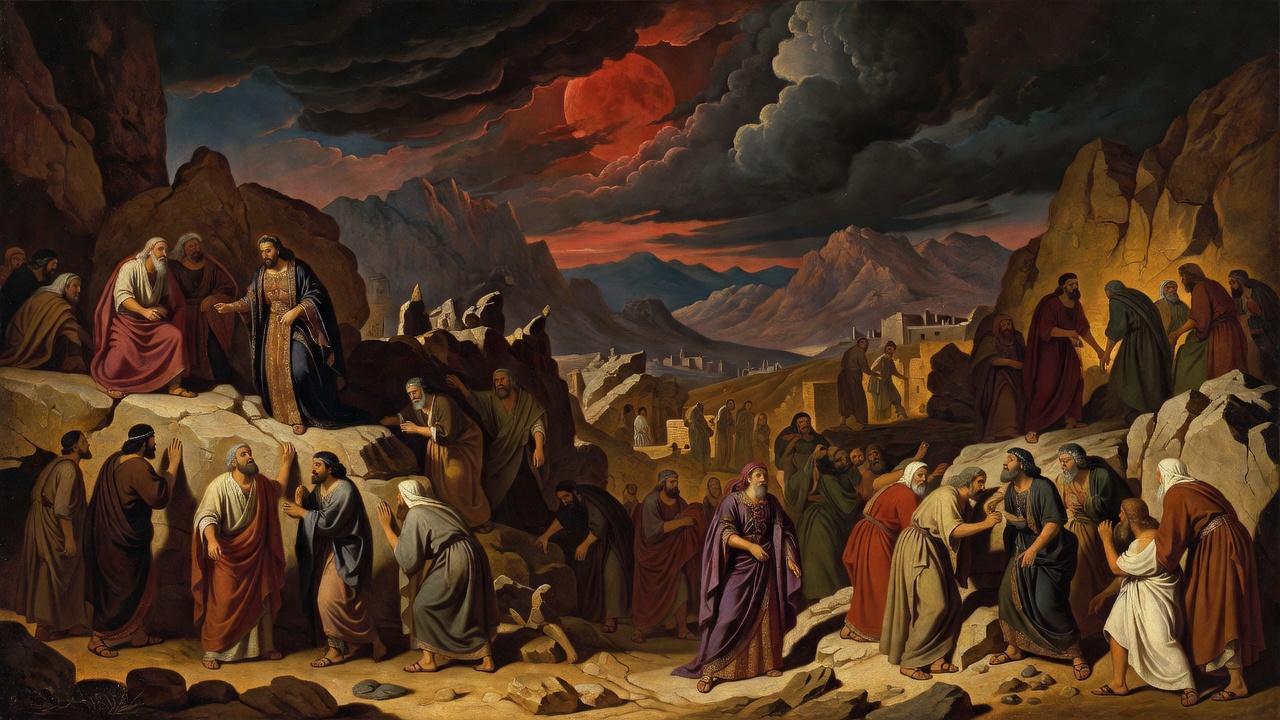
12Na kafnge én, lanket i Tingà Bilibili i gnam fadkat. Na di kimoan ani nun too bong linol, na i duh mbaling fitam salngad i safut too fitam, na i bulen mbaling fulè gambet litè. 13Na kdee blatik di langit tatek di tanà salngad i ktatek i bunge kayu fig muhad ku mbal i nus. 14Na i langit lana di mata sadi maglulun. Na i kdee bulul na dad fungul mgili mdà di tagnè gugkahla. 15Kafnge én, i kdee harì na dademe mdatah to di tah tanà, na i dad ulu di dad sundalu, na i dad to nun bong knun, na i dad to nun bong glal, na balù dad to fasak, na dad to ise fasak, kdeela slame salbuni déén di dad ilib, na di bleng i dad malbang batu di dad bulul. 16Na tlola i dad bulul na dad batu, manla, “Mtubak gamu di gami, du fye glidung gami di mata i sudeng di gusudeng i gumdatah, na mdà di klabè i Tingà Bilibili. 17Du takel i bangla mukum na mlayam gami, na landè fakay gamtayud i kaflayam bléla én.” Ani man i dad to di tah tanà.
Você sabia?
A Abertura dos Seis Selos
- Os primeiros quatro selos revelam quatro cavaleiros em cavalos branco, vermelho brilhante, preto e amarelo, convocados um a um pelos quatro seres viventes. Cada cavaleiro traz uma aflição distinta sobre a terra, desde a conquista e a retirada da paz até a fome generalizada, a peste e a morte.Fontes: o próprio texto bíblico
- O terceiro cavaleiro segura uma balança, acompanhado por uma proclamação que fixa o preço de uma medida de trigo ou três de cevada em um denário, refletindo uma grave escassez e racionamento de alimentos enquanto o azeite e o vinho são poupados.Fontes: o próprio texto bíblico
- Com a abertura do quinto e do sexto selos, o foco se volta para as almas dos mártires debaixo do altar e, em seguida, para imensas convulsões cósmicas e terrestres que levam pessoas de todas as classes sociais a se esconderem em cavernas nas montanhas.Fontes: o próprio texto bíblico
Notas escritas com auxílio de IA a partir de fontes abertas (Theographic Bible Metadata, CC BY-SA 4.0; Easton’s Bible Dictionary, domínio público) e revisadas antes de publicar.
Créditos e licença desta tradução
I tnalù dwata
New Testament in Blaan, Sarangani
copyright © 1998 Wycliffe Bible Translators, Inc.
Language: Sarangani Blaan (Blaan, Sarangani)
Translation by: Wycliffe Bible Translators
Contributor: Wycliffe Bible Translators, Inc.
Copyright Information
© 1998, Wycliffe Bible Translators, Inc. All rights reserved.
This translation text is made available to you under the
terms of the Creative Commons License: Attribution-Noncommercial-No Derivative Works.
( http://creativecommons.org/licenses/by-nc-nd/3.0/ )
In addition, you have permission to port the text to different file formats, as long as you
do not change any of the text or punctuation of the Bible.
You may share, copy, distribute, transmit, and extract portions
or quotations from this work, provided that you include the above copyright
information:
You must give Attribution to the work.
You do not sell this work for a profit.
You do not make any derivative works that change any of the actual words or punctuation of the Scriptures.
Permissions beyond the scope of this license may be
available if you contact
us with your request.
The New Testament
in Blaan, Sarangani
© 1998, Wycliffe Bible Translators, Inc. All rights reserved.
This translation is made available to you under the terms of the
Creative Commons Attribution-Noncommercial-No Derivatives license 4.0.
You may share and redistribute this Bible translation or extracts from it in any format, provided that:
You include the above copyright and source information.
You do not sell this work for a profit.
You do not change any of the words or punctuation of the Scriptures.
Pictures included with Scriptures and other documents on this site are licensed just for use with those Scriptures and documents.
For other uses, please contact the respective copyright owners.
2015-03-17
Fonte: http://ebible.org/bps/ · eBible.org