Salmos 80
I tnalù dwata · Toque num versículo para ver as referências cruzadas.
Salmo 80
I dasal satu to mni ku fasfulê Dwata i dad ton, i bel Israél, di ifatan
Ani satu lingag Asaf.
1E ge i Mifat Dad Bel Israél,
i malak dad to Dyosif gambet i kalak satu mifat dad bilibilin,
begam gami fanlinge.
Ge i sudeng di gusudeng i mdatah harì di tah i dad kafbaweh dad sérubim,
fitem i kdataham na i bong knengam.
2Fitem i bong enegam di dad bel Ifraim, Bénhamin, na Manasas,
na begam gami falwà di kaflayam nagumi.
3E Dwata, fasfuléam gami di ifatam;
fitem i kakdom di gami lêman du fye galwà gami.
4E Amumi Dwata, gumdatah i kdee di tah langit na tanà,
kel di kilen fa i kalbutam gami dad tom,
na laam fanlinge i dad dasalmi?
5Gambet én knaan blém gami i lwakmi,
na too fnò i tabù i lwak finumam gami mdà di klidù nawami.
6Mdà di kalbutam gami nadoy gami i dad to di dad masadfél banwe,
na dad dmuen gami tì ale sulé gablà di gami.
7E Dwata, gumdatah i kdee di tah langit na tanà, fasfuléam gami di ifatam,
fitem i kakdom di gami lêman du fye galwà gami.
8Tansoam gami gambet i walad grép mdà di banwe Idyif,
na tafalwaam i dademe to mdà di dad banwela, du én gufneam gami,
salngad di kfulem walad grép di tanàla.
9Salngad tanlanebam i gumulem walad,
na taman too fye kdalil i fulem na kmawal di klamang tanà.
10I dad bulul tamgalung i walad,
na i dad fanga i walad, nlimunla i dad malbang kayu sidar.
11I dad fangan gafat ditù di mahin Méditéranyu, na i tubadan kel di yéél Yufratis.
Salngad én i knèmi na kbelmi, gami dad tom, di banwe gufneam gami.
12Kabay di bang ani salngad ku talanbaam i labat glibut di fulem, du talaam gami nan nifat.
Kayeam kè ku i kdee magu mlius mifò i bunge grépam?
13I dad to dmuen, fansasèla na falmola gami salngad di sdè di bnas samdà i fule grép,
na i kdee lmanaf di bnas kmaan dun.
14E Dwata, gumdatah i kdee di tah langit na tanà, beg ge samfulê di gami;
lanngalungam gami mdà di langit na neyem i kagkahmi,
na fandufam gami i waladam grép tafule i kwananam,
i salngad tingà too mgifat.
16I kibò dad to dmuen gami salngad ku natela i walad grép fulem na snakufla di lifoh.
Fye ku falmom ale fagu di kafablatam i baweham di dale.
17Kabay kanlungam i dad to tamgalékam du nfunam,
i toom falnok fye too ale mgal.
18Ku ani nimoam là gami lêman kmagol ge:
tangalam gami lêman, na dmayen gami ge.
19Amumi Dwata, gumdatah i kdee di tah langit na tanà, fasfuléam gami di ifatam.
Léam fite i kakdom di gami du fye galwà gami.
Você sabia?
Uma oração pela videira devastada
- O salmo menciona especificamente Efraim, Benjamim e Manassés, tribos estreitamente ligadas pela descendência de Raquel por meio de José e Benjamim. Durante as peregrinações no deserto, essas três tribos ficavam acampadas e marchavam juntas no lado ocidental do tabernáculo.Fontes: Benjamin (patriarch) · Manasseh (son of Joseph) · o próprio texto bíblico
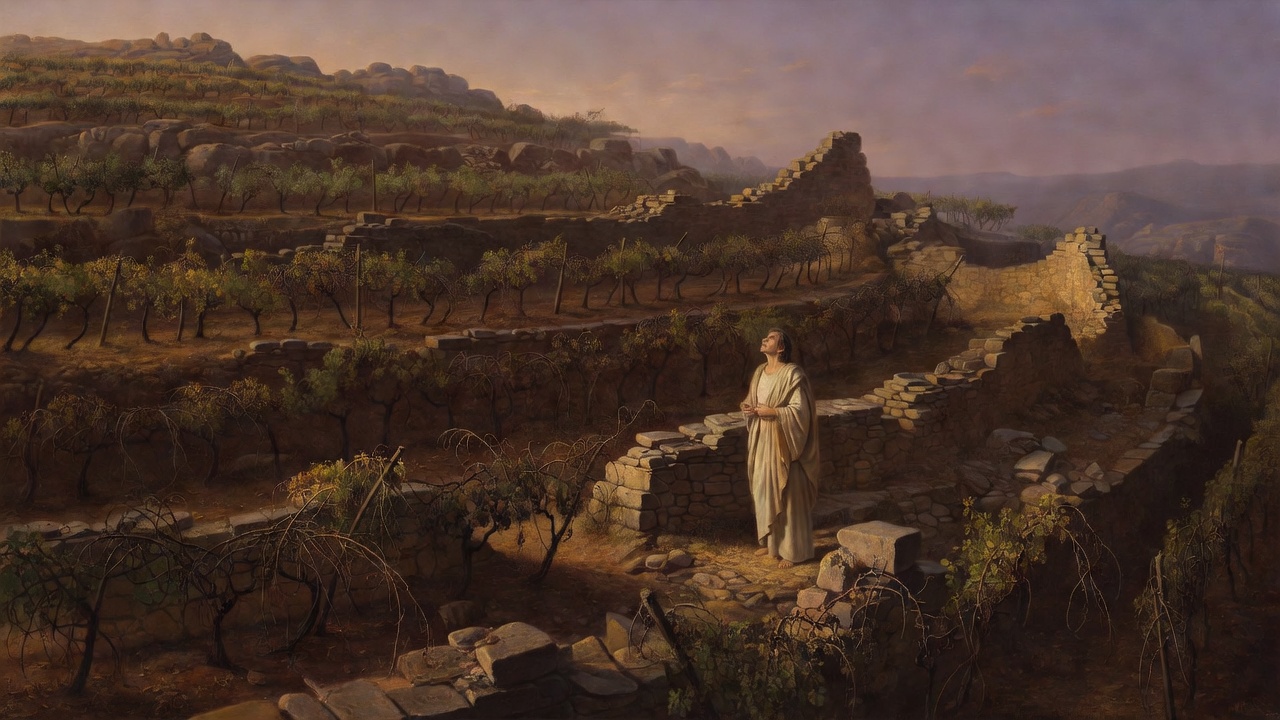
- O autor utiliza uma ampla alegoria comparando a nação de Israel a uma videira retirada do Egito e replantada em Canaã. O cântico lamenta que os muros de proteção da vinha tenham sido derrubados, deixando a planta frutífera exposta a animais selvagens e a transeuntes.Fontes: Egypt · o próprio texto bíblico
- Este poema faz parte de uma coleção específica que vai dos Salmos 73 a 83 atribuída a Asafe. O registro bíblico descreve Asafe como um líder dos músicos levitas na época do rei Davi, cuja guilda ou descendência deu continuidade à sua tradição no culto do templo.Fontes: Asaph (Levite) · o próprio texto bíblico
Notas escritas com auxílio de IA a partir de fontes abertas (Theographic Bible Metadata, CC BY-SA 4.0; Easton’s Bible Dictionary, domínio público) e revisadas antes de publicar.
Lugares deste capítulo
- Egypt · 30.129, 31.308 · versículo 8
- Euphrates · Hoje: Euphrates River · 31.004, 47.442 · versículo 11
- Great Sea · Hoje: Mediterranean Sea · 31.805, 34.170 · versículo 11
Só aparecem lugares com identificação de alta confiança (90% ou mais segundo as fontes acadêmicas reunidas pelo OpenBible). Mapa da época: DARE (Digital Atlas of the Roman Empire), CC BY 4.0; mapa atual: © colaboradores do OpenStreetMap; lugares: OpenBible.info (CC BY 4.0).
Créditos e licença desta tradução
I tnalù dwata
New Testament in Blaan, Sarangani
copyright © 1998 Wycliffe Bible Translators, Inc.
Language: Sarangani Blaan (Blaan, Sarangani)
Translation by: Wycliffe Bible Translators
Contributor: Wycliffe Bible Translators, Inc.
Copyright Information
© 1998, Wycliffe Bible Translators, Inc. All rights reserved.
This translation text is made available to you under the
terms of the Creative Commons License: Attribution-Noncommercial-No Derivative Works.
( http://creativecommons.org/licenses/by-nc-nd/3.0/ )
In addition, you have permission to port the text to different file formats, as long as you
do not change any of the text or punctuation of the Bible.
You may share, copy, distribute, transmit, and extract portions
or quotations from this work, provided that you include the above copyright
information:
You must give Attribution to the work.
You do not sell this work for a profit.
You do not make any derivative works that change any of the actual words or punctuation of the Scriptures.
Permissions beyond the scope of this license may be
available if you contact
us with your request.
The New Testament
in Blaan, Sarangani
© 1998, Wycliffe Bible Translators, Inc. All rights reserved.
This translation is made available to you under the terms of the
Creative Commons Attribution-Noncommercial-No Derivatives license 4.0.
You may share and redistribute this Bible translation or extracts from it in any format, provided that:
You include the above copyright and source information.
You do not sell this work for a profit.
You do not change any of the words or punctuation of the Scriptures.
Pictures included with Scriptures and other documents on this site are licensed just for use with those Scriptures and documents.
For other uses, please contact the respective copyright owners.
2015-03-17
Fonte: http://ebible.org/bps/ · eBible.org