Provérbios 26
I tnalù dwata · Toque num versículo para ver as referências cruzadas.
1Là gablà kel i bagyù di bang minit demen là
gablaan moon mulen di bang kaktu,
salngad i to là fulung faldam, là gablà dnayen kenen.
2Ku fanlagi i satu to i demen to na là glut i duenan mlagi kenen, landè gukel i kaflagin,
salngad anuk di bnas ku landè gumleenan fadlug mayeng na landègukelan.
3Sankélam i kudà, na knakangam i donki,
na fanlayamam i to là fulung faldam, du fye slame ale matdò.
4Ku tnimelam i salek i to là fulung faldam fagu di klandè ldam,
baling ge là fulung faldam.
5Kabay fye ku tnimelam kenen di fye
du fye gadean laan fulung fagu di ktimelam kenen.
6I to mdek i to là fulung faldam ftulen i tulen, baling di kenengukel i sasè,
salngad i ksasè ku kanlangan i kenen blì.
7I mabtas fngewe i man i to là fulung faldam, landè gukmamu dun,
salngad i dad blì i to kimay.
8I kdayenam i to là fulung faldam, landè gukmamu,
salngad i fintik, landè gukmamu ku batangam baling i batun.
9I mabtas fngewe man i to là fulung faldam, sadi landè btasan dikenen,
salngad i to langal magot i sual, du sadi laan nagot dun.
10I to gal fimò i balù simto to i là fulung faldam,
fsamukan i kdee dad demen.
11I to là fulung faldam samfulê di kulang nimoan,
salngad i ayem balù i utaan sanfuléan knaan.
12Fye fa i to là fulung faldam,
di to i man nawan kenen too fulung.
13I to là mayè mimò galan man, “Ku lamwà agu digumnègu ken nun labè liyun magu di dalan, na ken kamfèdeg,”
ani balibadan du fye là mimò.
14Gambet i takab magsayug na landè guflesan,
salngad i to là mayè mimò tatì blaling di gumilean na landègukelan.
15I to là mayè mimò,
balù fa smungit i knaan là mayè.
16I to là mayè mimò, man nawan too kenen fulung fa
di balù fitu lagi fulung tmimel.
17I to flabet di ksugak i landè kenen labet nun gaslokan,
salngad gaslok i satu to smabà klinge i ayem.
18I to mgaw i demen to, na kafnge én manan alò kenen sfuba, nungusasean,
salngad i to book agafan i tek gamfati.
20Landè gugadlug kdinè i lifoh ku landè dutungan,
na i ksugak landè gugadlugan ku landè kalsalék.
21Là mati bala lifoh ku nun using, na là mati kdinè lifoh ku nundutungan,
na là tlag i ksugak ku nun mayè sugak.
22I kastugad salék, too kanbayan fanlinge i dad to,
di dale salngad i knaan too fye neman na too fye nawala mlodun.
23Ku nun man i satu to, na bay ise én mnè di nawan fangawan idemen to,
salngad i to mimò tibud tanà fangawan i demen to, du di kimoandun alò di lwà too fye baweh, bay di lam sasè i bawehan.
24I to flingu muni i nun knang nawan fagu di fye taluan,
bay busekan di nawan i kafgawan demen to.
25Balù too fulung kenen talù, nang ge faglut di kenen,
du too fnò i nawan i knang nawa.
26Fakay sa ku laan fdilè nun knang nawan,
bay i dad sasè nimoan teen i kdee.
27I to mawel i demen to baling kenen mfawel i fawelan,
na i to flulid i bong batu di demen to baling di kenengumlulidan.
28I to tmulen kéng di demen to, du knangan nawa, én i gafatduknawa i demen to,
na i to too dmayen i demen to fagu di dee fye manan bay kadìlà mdà di nawan, gafalmo kenen.
Você sabia?
Tolos, Preguiçosos e Contendas
- Os versículos 4 e 5 apresentam instruções aparentemente contraditórias sobre responder ou não a um tolo. Juntos, esses provérbios mostram que a sabedoria prática exige discernir o momento: responder à insensatez pode rebaixar alguém ao nível do tolo, enquanto confrontá-la pode impedir que o tolo se considere sábio.Fontes: o próprio texto bíblico
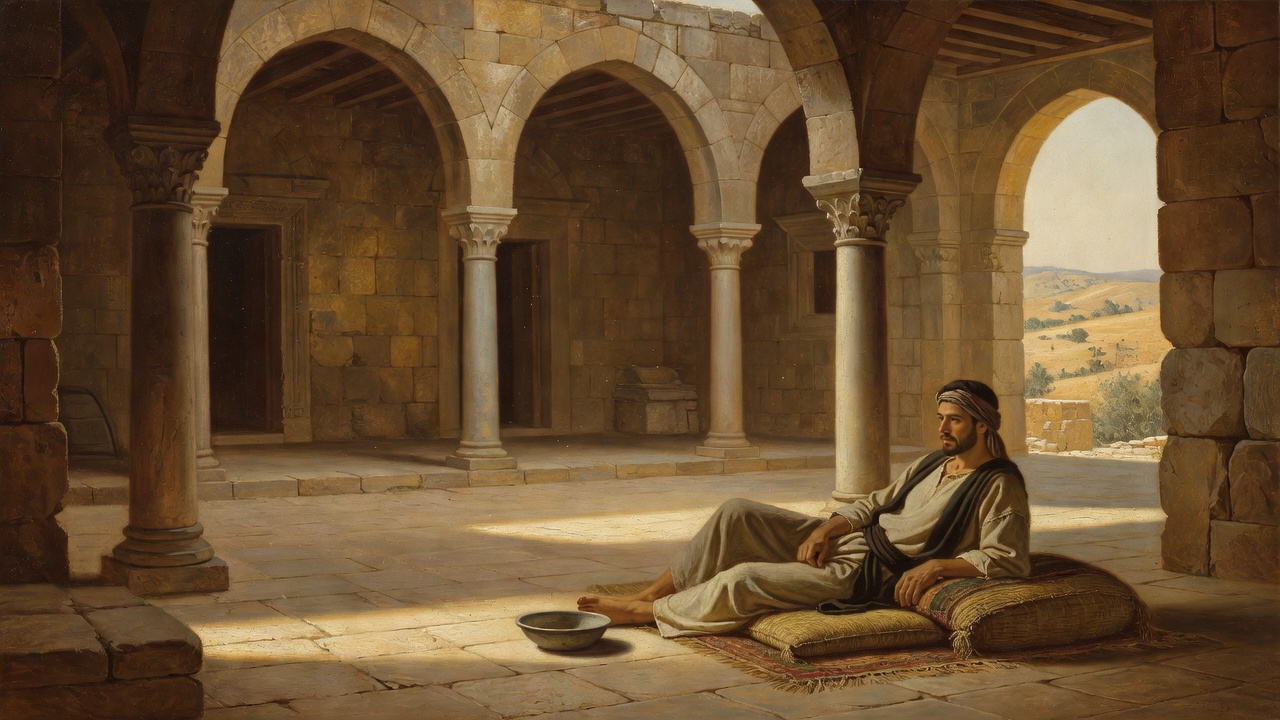
- O capítulo utiliza imagens vívidas e bem-humoradas para retratar o preguiçoso. Ele inventa desculpas exageradas, como um leão à solta na praça, gira na cama como uma porta sobre as dobradiças e acha exaustivo até mesmo levar a mão do prato à boca.Fontes: o próprio texto bíblico
- Provérbios 26 compara os conflitos humanos a uma fogueira que necessita de combustível constante. Sem boatos ou intrigas, a discórdia se apaga naturalmente, da mesma forma que o fogo se extingue quando não há lenha ou carvão.Fontes: o próprio texto bíblico
Notas escritas com auxílio de IA a partir de fontes abertas (Theographic Bible Metadata, CC BY-SA 4.0; Easton’s Bible Dictionary, domínio público) e revisadas antes de publicar.
Créditos e licença desta tradução
I tnalù dwata
New Testament in Blaan, Sarangani
copyright © 1998 Wycliffe Bible Translators, Inc.
Language: Sarangani Blaan (Blaan, Sarangani)
Translation by: Wycliffe Bible Translators
Contributor: Wycliffe Bible Translators, Inc.
Copyright Information
© 1998, Wycliffe Bible Translators, Inc. All rights reserved.
This translation text is made available to you under the
terms of the Creative Commons License: Attribution-Noncommercial-No Derivative Works.
( http://creativecommons.org/licenses/by-nc-nd/3.0/ )
In addition, you have permission to port the text to different file formats, as long as you
do not change any of the text or punctuation of the Bible.
You may share, copy, distribute, transmit, and extract portions
or quotations from this work, provided that you include the above copyright
information:
You must give Attribution to the work.
You do not sell this work for a profit.
You do not make any derivative works that change any of the actual words or punctuation of the Scriptures.
Permissions beyond the scope of this license may be
available if you contact
us with your request.
The New Testament
in Blaan, Sarangani
© 1998, Wycliffe Bible Translators, Inc. All rights reserved.
This translation is made available to you under the terms of the
Creative Commons Attribution-Noncommercial-No Derivatives license 4.0.
You may share and redistribute this Bible translation or extracts from it in any format, provided that:
You include the above copyright and source information.
You do not sell this work for a profit.
You do not change any of the words or punctuation of the Scriptures.
Pictures included with Scriptures and other documents on this site are licensed just for use with those Scriptures and documents.
For other uses, please contact the respective copyright owners.
2015-03-17
Fonte: http://ebible.org/bps/ · eBible.org