Gênesis 16
I tnalù dwata · Toque num versículo para ver as referências cruzadas.
Hagar na Ismaél
1Na Saray, yaan Abram, là mngà. Kabay nun libun lifanan i mdà di banwe Idyif dnagit ku Hagar. 2Taman man Saray di ku Abram, “Là faloh Amuta Dwata ku mngà agu, taman fye ku tanlaminam i lifangu, du ken nun belta fagu di kenen.”
Na nagin Abram i knayè nawa yaanan Saray. 3Taman fatlamin Saray i lifanan Hagar di ku Abram, du nimò yaanan. Di bang atù, tasfalò fali i klo Abram mnè di banwe Kanaan. 4Na tasatlamin ale Hagar na Abram, na kafnge én maltien Hagar.
Na di kgadè Hagar maltien kenen, too kenen fdag na toon sansilo Saray. 5Taman man Saray ku Abram, “Na ge banlégu salà duen Hagar samsilo deg. Deg i fatlamin dun ge, na di kgadean tamaltien kenen sansilon agu, na landè kafean deg. Dwata i Amu sa mukum gite.”
6Tmimel Abram, manan, “Ku én kadì, na du lifanam nimoam di kenen i knayeam nimò.” Na sasè kibò Saray ku Hagar, taman mila kenen.
7Na nun kasaligan i Dwata smitong ku Hagar di satu sfuten di banwe landè to di kilil i dalan magu salu di banwe Sur. 8Na man kasaligan di kenen, “Hagar lifan Saray, nè gufdum, na nè gusalum?” Na tmimel Hagar, manan, “Mila agu di amugu Saray.”
9Man i kasaligan i Dwata i Amu, “Samfulê ge di kenen na nimenam i dekan ge.” 10Na fadlug talù i kasaligan, manan, “Toogu fbel i belam satu duh kadang, na là ale gagan nse du too dee. 11Du di là mlo ani, mngà ge lagi, na dnagitam ku Ismaél, du i gumtatek i dagitan ani dunan, fanlinge sa Dwata i kaftabengam. 12Kabay i tingaam kadang gambet i satu lmanaf di bnas di là fa faknalam. Na là gdadong i kdee dad to di kenen, du mdà di klabean, na knang kenen i kdee dad to, na i kdee dad to mnang nawa kenen, na balù i dad flanekan knangan nawa.”
13Na én kdagit Hagar i Dwata i Amu i talù di kenen, dunan, “Ge i Dwata i mifat deg.” Manan ani du snalekan di nawan, manan, “Teengu kè gine Dwata i mifat deg?” 14Na ani i duen dmagit i ktufa én, Béér Lahay Roy, du i gumtatekan, dunan Ktufa Dwata i Mto na i Mifat Deg. Na i ktufa ani déén fa kel di bang ani di gutngà i banwe Kadis na Béréd.
15Kafnge én, sut i tingà Hagar lagi na dnagit Abram ku Ismaél. 16Na di ksut Ismaél di ku Hagar tawalu falò nam fali Abram.
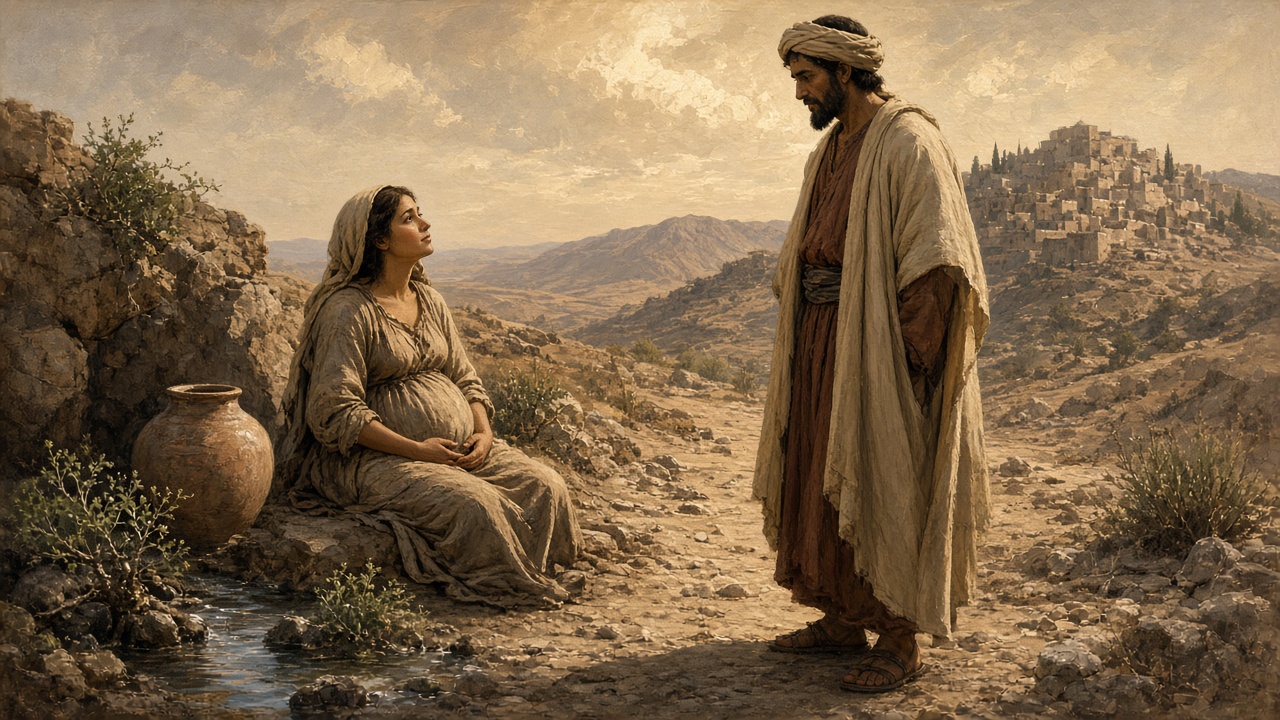
Você sabia?
A fuga de Hagar e o nascimento de Ismael
- Hagar, serva egípcia de Sarai, tem um nome entendido como “fuga” ou, segundo outros, “estrangeira”. Depois que Abrão viveu dez anos em Canaã, Sarai a entregou a ele como esposa secundária, na esperança de formar uma família por meio dela.Fontes: Hagar · o próprio texto bíblico
- Quando Sarai a tratou com dureza, Hagar fugiu pela estrada de Sur, pelo deserto que ficava entre ela e o Egito, aparentemente com a intenção de voltar para os parentes. O anjo do Senhor a encontrou junto a uma fonte de água. Sur, que significa “muro”, era um deserto na fronteira nordeste do Egito, provavelmente nomeado por fortificações de fronteira que iam de Pelúsio a Heliópolis.Fontes: o próprio texto bíblico · Hagar · Shur
- Hagar chamou o Senhor que lhe falou de “o Deus que me vê”, e o poço recebeu o nome de Beer-Laai-Roi, “o poço do Deus visível”, entre Cades e Berede, uma cidade no sul da Palestina, no deserto de Sur. Ela voltou à tenda de Abrão, e Ismael, o filho mais velho dele, nasceu em Manre quando Abrão tinha oitenta e seis anos; Abrão deu-lhe o nome que o anjo havia anunciado, porque o Senhor tinha ouvido a sua aflição.Fontes: o próprio texto bíblico · Hagar · Bered · Ishmael (Son of Hagar)
Notas escritas com auxílio de IA a partir de fontes abertas (Theographic Bible Metadata, CC BY-SA 4.0; Easton’s Bible Dictionary, domínio público) e revisadas antes de publicar.
Lugares deste capítulo
- Canaan · 32.767, 35.333 · versículo 3
Só aparecem lugares com identificação de alta confiança (90% ou mais segundo as fontes acadêmicas reunidas pelo OpenBible). Mapa da época: DARE (Digital Atlas of the Roman Empire), CC BY 4.0; mapa atual: © colaboradores do OpenStreetMap; lugares: OpenBible.info (CC BY 4.0).
Créditos e licença desta tradução
I tnalù dwata
New Testament in Blaan, Sarangani
copyright © 1998 Wycliffe Bible Translators, Inc.
Language: Sarangani Blaan (Blaan, Sarangani)
Translation by: Wycliffe Bible Translators
Contributor: Wycliffe Bible Translators, Inc.
Copyright Information
© 1998, Wycliffe Bible Translators, Inc. All rights reserved.
This translation text is made available to you under the
terms of the Creative Commons License: Attribution-Noncommercial-No Derivative Works.
( http://creativecommons.org/licenses/by-nc-nd/3.0/ )
In addition, you have permission to port the text to different file formats, as long as you
do not change any of the text or punctuation of the Bible.
You may share, copy, distribute, transmit, and extract portions
or quotations from this work, provided that you include the above copyright
information:
You must give Attribution to the work.
You do not sell this work for a profit.
You do not make any derivative works that change any of the actual words or punctuation of the Scriptures.
Permissions beyond the scope of this license may be
available if you contact
us with your request.
The New Testament
in Blaan, Sarangani
© 1998, Wycliffe Bible Translators, Inc. All rights reserved.
This translation is made available to you under the terms of the
Creative Commons Attribution-Noncommercial-No Derivatives license 4.0.
You may share and redistribute this Bible translation or extracts from it in any format, provided that:
You include the above copyright and source information.
You do not sell this work for a profit.
You do not change any of the words or punctuation of the Scriptures.
Pictures included with Scriptures and other documents on this site are licensed just for use with those Scriptures and documents.
For other uses, please contact the respective copyright owners.
2015-03-17
Fonte: http://ebible.org/bps/ · eBible.org